On the roaring dragon… (Part 2)

On the roaring dragon… (Part 2)

Like the thundering roar of a dragon, the resonant voice of the Dharma  

awakens us from afflictive emotions and frees us from the chains of karma.

Dispelling the darkness of ignorance, the sword of wisdom cuts through all our suffering.

How would I explain this to someone else?

i.

After the alarm goes off in the morning, do you ever fall asleep again and dream that you woke up, got ready for work and even went to work? That dream seems so real, doesn’t it? In fact, when the alarm goes off again (because you snoozed it), it can be downright annoying to have to actually get out of bed and get ready ‘again’.

Samsara is much the same way. We go about our daily lives believing we’re wide awake. But really we’re in a kind of deep sleep of afflictive emotions and wrong views. I don’t mean we’re some kind of zombies sleepwalking through life. But rather that afflictive emotions and wrong views distort our experiences into an almost dreamlike state.

ii.

Our prayer begins by telling us that the voice of the Dharma is “Like the thundering roar of a dragon.” Remember that in eastern lore, Japanese dragons for instance, aren’t big scary fire-breathing monsters, but rather, “…powerful and wise guardians that shield us from universal dangers and impart their wisdom.” Keeping this in mind, why does the voice of the Dharma have to be “Like the thundering roar of a dragon”? It’s mostly because, like we’ve talked about, we are almost wholly asleep in samsara. It’s difficult to awaken us from our dreamlike experiences of samsara.

Our prayer tells us that like a roaring thundering dragon, “the resonant voice of the Dharma awakens us. . .”.  Why resonant? Because the Dharma is the truth of how things are. A part of us is always awake, always knowing the truth of things as they truly are. We call this our Buddha Nature. More accurately, our Buddha Nature isn’t a “part of us”. It’s who we truly are. How do we know that? Because our prayer tells us of the “resonant voice” of the Dharma. What is it resonating with?

iii.

Where does the sky go on a cloudy, stormy day? Does it disappear? Well, yes and no. From our perspective, the sky disappears, but we know that once all the clouds blow away, what remains is a clear blue sky. Our Buddha Nature is like that. Just because we see rain clouds, we don’t believe the clouds are part of the sky. We know that in fact, nothing has changed about the blue sky. It’s still there. It’s just covered up by what one of our other prayers calls “incidental stains”.

Why is it so important to understand that the clouds are merely laid over the blue sky? Because our Buddha Nature is much the same way. The incidental stains of afflictive emotions and wrong views merely cover our unchanging, ever-present Buddha Nature. This is why the voice of the Dharma is “resonant”. It resonates with our Buddha Nature.

What’s this talk about how the voice of the Dharma “frees us from the chains of karma?” Don’t we want good karma? Don’t we want just our bad karma to go away? Remember, we were born into samsara, a realm of struggle and desire, because our karma drew us here to be born into bodies that are subject to birth, aging, disease, and death.  Even good karma is still karma, and it still binds us to samsara. What we want is to have no karma (or as little as possible) in the end.

iv.

If you lit a taper candle in a large blindingly dark room, would there be a little light? Or would that candle light up the whole room? We know from experience that we’d have a very small circle of light in a dark room. But the very last line of our prayer introduces us to the notion of a “sword of wisdom” that dispels “the darkness of ignorance.” Samsara is a dark place, full of the darkness of ignorance and the suffering of suffering. So what exactly does this sword of wisdom do? It dispels the darkness of ignorance. Our local friendly AI tells us that ‘dispel’ means to “make a (doubt, feeling or belief) disappear.”

Wow. That’s impressive. Our prayer is telling us that the “resonant voice of the Dharma awakens” us and the sword of wisdom banishes ignorance. To go back to our earlier example, a simple taper candle would create a small circle of light in a dark room. How much brighter must be the sword of wisdom to banish ignorance altogether?

In this new light we would see that our suffering mostly comes from our reluctance to see things as they are. This again is the power of wisdom – to turn the darkness of samsara into a brilliant light so that we can disentangle ourselves from the chains of suffering that bind us.

This isn’t to say that wisdom will banish our suffering in a moment. But it does mean that we can use skillful means to uncover our own Buddha Nature a bit at a time. Each and every one of us has the capacity to awaken from the stupor of samsara, and use the wisdom of our Buddha Nature to free ourselves of the darkness of ignorance and the suffering of suffering.

What are your thoughts?

On the fruit of purification. . .

On the fruit of purification. . .

The basis of purification is the universal-ground primordial awareness, like the sky;

the incidental stains are the object of purification, like clouds;

the purifying agent is the truth of the path, like a relentless wind;

and the fruit of purification is Perfect Enlightenment, like the sky free of clouds.

What does this mean to me?

When I lived in Florida, there was a mango tree in the backyard. And every summer it bore mangos. Never once did I go back there and expect to see an orange hanging from a branch. No. Of course not. The true nature of the tree is its mango-ness. If the tree is properly maintained it will bear mangos.

So too with enlightenment. Our prayer in the second line says that the objects of purification are “incidental stains”. If the tree becomes marked up in some way, we recognize those markings are not part of the tree. They’re just incidental stains. All we have to do is carefully clean it and it will still bear mangos. The third line speaks of a purifying agent that is like a “relentless wind”. By the time we get to the fourth line, we are ready to bear the “fruit of purification” which is “Perfect Enlightenment.”

I don’t remember ever seeing a perfect mango. But I do remember that every single fruit was purely a mango. It wasn’t mixed with anything else. From the seed at the core to the soft flesh to the protecting skin, it was perfectly mango through and through.

This short portion of the prayer talks about purifying or purification in four out of four lines. For such a short portion of the prayer, it really hones in on the idea of purification, what needs to be purified, and then finally the fruit of purification. Although it seems to beleaguer a point, a mango tree is exactly that – a tree that if properly cultivated (or purified) will inevitably bear mangos.

When we talk about enlightenment, it’s no different. The prayer starts out by telling us that the “basis of purification” is primordial enlightenment. The quality of enlightenment is already there. Or else what would be the point of purification? We take for granted that a lemon tree will bear lemons, a pear tree will bear pears, and so on. We never step back and say “hmmm. . . it’s a lemon tree, why isn’t it bearing cherries?”

The last line of this portion of the prayer comes right out and says that “the fruit of purification is Perfect Enlightenment”. Why is this possible? Because we are already enlightened. The clear blue sky of our enlightenment is obscured by clouds. But that doesn’t mean that on a cloudy day, the sky is somehow gone, does it? It’s merely obscured by clouds like wrong views and afflicted emotions. But with the right cultivation or “purification”, that clear blue sky of enlightenment is right there, as it always has been and always will be.

How would I explain this to someone else?

 Imagine that you wanted to plant a field of sunflowers. There’s a whole process, right? First you prepare the ground, then you plant the seeds, you water it, cultivate it and voila! Sunflowers.

Enlightenment is nothing like this. As our prayer tells us, “the fruit of purification is Perfect Enlightenment.” It’s already whole, already complete, already there. It’s more like wearing a very dirty pair of eyeglasses in a field of sunflowers. Once you remove the glasses (the obscurations) you immediately see the sunflowers. They are already there, already whole and perfect, and needing nothing to be added.

If this is true, you might wonder, why are we not fully and completely enlightened right now? Well, that’s kind of a trick question. We are at this very moment fully and completely enlightened. It’s like the dirty glasses I described. We’ve worn those glasses for innumerable lifetimes. And for many of us, we have no awareness that they’re even there. We take for granted that the distorted view through the glasses is reality as it truly is.

As I’ve already pointed out, this short section of the prayer talks about purifying and purification no less than four times in four lines. What’s so important about that? The Dharma or the “truth of the path” is all important in even coming to the realization that our view of reality is distorted. So much so that we don’t even know what true reality looks like.

Yet here we are in samsara day in and day out convinced that all we perceive has some inherent truth to it. This why is the Dharma has to be a “relentless wind” in samsara. We must let go of this belief. And once we do, our prayer tells us that enlightenment is inevitable. It tells us unequivocally that “the fruit of purification is Perfect Enlightenment”. When we follow the Dharma it is inevitable that we will experience the clear blue sky of our Perfect Enlightenment.

How do I bring this into my life?

There are some rough days when I’d like to get on a plane, not to go anywhere in particular. No. What I’d like to do is fly above the clouds and just see that clear, unobstructed blue sky.

When samsara wears me down, as it sometimes does, it feels like I’ll never get those glasses clean, never mind be able to take them off.  When this happens I’d like to say there’s a prayer I say, or I get out my prayer beads, or squeeze in a quick meditation. I don’t do any of those things. Even with all I’ve studied, even with all the insights I’ve had, I turn to samsara for relief. It could be anything – eating, watching YouTube, or even scrolling Facebook.

It usually takes about five to ten minutes of this before I feel myself sinking into the torpor of samsara. This instantly wakes me up. I instantly remember the suffering of living in samsara and unquestioningly believing my experience of reality. At that moment, I shift my focus to compassion both for myself and for those wandering lost in samsara with no idea of the Dharma. And I say a prayer that is very grounding for me, “May all be free of suffering and the causes of suffering. May all embrace happiness and the causes of happiness. . .” Doing this act of compassion for myself and others immediately draws my attention back to the Dharma and I bring that compassion to the path.

I feel sometimes that enlightenment is like a subtle, never-ending heartbeat. A heartbeat that has gone on through all our lifetimes and will continue through all our lifetimes to come. Like a cloud free sky, Perfect Enlightenment is always there ready to be realized, ready to give us glimpses when we’re receptive.

When I began working with this prayer I believed that we were like Perfect Enlightenment. Now I understand that we are Perfect Enlightenment simply being uncovered one tiny glimpse at a time.

On incidental stains. . .

On incidental stains. . .

The basis of purification is the universal-ground primordial awareness, like the sky;

the incidental stains are the object of purification, like clouds;

the purifying agent is the truth of the path, like a relentless wind;

and the fruit of purification is Perfect Enlightenment, like the sky free of clouds.

What does this mean to me?

White is not my color. No matter what I do or how careful I am, I always manage to stunningly stain whatever piece of white clothing I wear. This line of the prayer talks about stains. Interestingly, if we go back, the prayer tells us in the first line that the basis of purification is primordial enlightenment, which is stain-free. There’s nothing to add. Nothing to subtract. It is whole and complete.

The second line of the prayer tells us that any stain on this “primordial awareness” is simply incidental. What are these “stains”? The two biggest stains, or distortions that keep our ever-present enlightened nature hidden are wrong views and afflicted emotions. Why does the prayer call these things “incidental” stains?

One of the definitions of ‘incidental’, according to our local friendly AI is, “accompanying but not a major part of something.” When we look at a red stain on a white surface, we experience the illusion that a portion of the surface is actually red, not white.

However, the quality of whiteness remains. If it didn’t, we could never wash the cloth clean. Our prayer says that the stains to be purified are merely “incidental”. They are not part of the “primordial awareness” that is enlightenment, but rather wholly unrelated. When we look at a stained surface, do we believe the stain is part of the surface, or merely incidental, like red wine on a white tablecloth? We understand the stain overlays the white color of the cloth.

Enlightenment is no different. Wrong views and afflicted emotions may seem to exist on their own. But truthfully, those incidental stains merely overlay our inherent nature.

How would I explain this to someone else?

Our prayer is very specific about a “primordial” awareness, leaving no doubt that enlightenment pre-existed what we think of as ‘me’. Caught up in the illusions of samsara, we believe the distortions of our wrong views and afflicted emotions accurately represent reality. Our inherent true being is Buddha Nature. The more we cover that up with wrong views of ‘me’ and ‘mine’, or act on our afflicted emotions, the more we cover up our true nature with stains, the more we suffer.

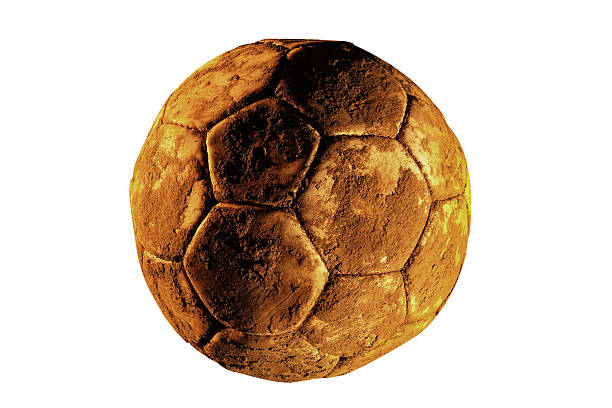
Imagine you had a sparkling clean white ball. Then you roll it in mud. Does that actually change the color of the ball? No. But because of how our afflicted emotions and wrong views work, we now see a brown ball, rather than a white ball covered in mud. And for lifetime after lifetime we have practiced this view to the point where we forget the ball is actually white. Truthfully, the mud is an incidental stain. It is not part of the ball. It is merely covering up the ball’s true color of white.

When it comes to enlightenment, it works the same way. Our prayer comes right out and tells us, “. . .the incidental stains are the object of purification.” We don’t need to be purified in some mysterious way to realize our enlightened nature any more than the ball needs to be dyed white. It is white. All we have to do is remove the mud of wrong views and afflicted emotions, both by-products of being born in samsara.

How do I bring this into my life?

I grew up Christian. In that religion you’re taught there is something inherently bad about you because you were ‘born in sin’. In my adult life, I refute that. I have experienced Buddha Nature in myself and others. In those moments of overwhelming compassion, I understand that enlightenment is primordial, already there.

When we see someone laboring under the delusions of samsara and suffering greatly, our Buddha Nature realizes something is wrong. Suffering is not inherent to what we are. It is an incidental stain upon our primordial enlightenment.

In samsara we have the Dharma as our guide to who we truly are. Does that mean we’ll wake up one day and float instead of walk? No. But it does mean that with the Dharma we can come to understand that what we experience in samsara is illusion. We can learn to see things as they truly are.

This happens to me in the ordinary course of my life. I could be in the supermarket, in traffic, or getting gas. Suddenly my experience of samsara will shift. And I notice that we are all, in some essential way, asleep. And we’re so caught up in the nightmare that we forget reality as it truly is even exists.

When I have these fleeting moments of insight, I pray that all may be free of suffering and the causes of suffering and that all may embrace happiness and the causes of happiness. In those few seconds I’m aware there is no ‘me’, no ‘them’, no separation.

Everyone has these moments of insight. The reason we’re all able to have these moments is that our true nature is always trying to shine through the mud of samsara. As my teacher the Venerable Tashi Nyima says, “It’s not going to be okay, it’s okay right now”. And that’s because enlightenment is never more than a breath away.

On Happiness. . .

On Happiness. . .

May all be free from suffering and the causes of suffering.
May all embrace happiness and the causes of happiness.
May all abide in peace, free from self grasping
May all attain the union of wisdom and compassion.

What does this mean to me?

Everyone, without exception, wants to be happy. Nobody wakes up in the morning and says over their coffee, “Gee. I hope I have a bad day. I hope nothing goes right.” That would be pretty bizarre.

If that’s so, why aren’t people happy? It’s certainly not for lack of trying. It’s definitely not because we don’t want to be. We all know that having even excessive wealth doesn’t make you blissfully happy. Imagine for a moment having all the material things you want: a high paying stress-free job; the million dollar home; the chauffer; the cook; the on call masseuse. Okay. Maybe the masseuse is just me.

But think about that. If you literally had every single thing you’d ever wanted, would you be deliriously happy? I know I wouldn’t be. The human mind is perverse. There would always be that one thing I want but can’t have. That’s the nature of the game of chasing happiness in samsara. We want happiness, but as Shantideva puts it, “With the very desire for happiness, out of delusion they destroy their own happiness as if it were an enemy.”

How would I explain this to someone else?

If you had your dream job interview tomorrow, would you spend tonight drinking to excess? Of course not. You don’t want to show up for your dream job interview with a hangover. Instead you’d probably make sure you get a good night’s sleep and eat a good breakfast. This is a gross example of putting in place and embracing causes of happiness. To get to the happy outcome of a smooth interview, you have to follow a path. The actions themselves are individual to everyone, but to get anywhere, you need a path to follow.

The Buddha taught that there is a path to the cessation of suffering. I think there are only two things that keep us from following the path the Buddha speaks of: wrong views and afflicted emotions. Isn’t that wonderful? No long lists to memorize, no complicated instructions, no fear you’ll fall into a lake of fire if you do it wrong somehow.

The Dharma keeps things simple. There are three afflicted emotions: attachment, aversion and indifference. Our afflicted emotions color everything we experience. We can’t just see a chair. The elaborations come: I don’t like that shade of blue; it should have arms, I like chairs with arms; it looks uncomfortable.

Our wrong views cause us to see separation and Other where there is none. Unfortunately lifetimes have worn grooves of afflicted emotions and wrong views into our consciousness. It’s to the point where we barely notice their distortion of our experience. But once we notice the distortions of afflicted emotions and wrong views, we’re more than halfway to embracing happiness and the causes of happiness.

How would I bring this into my everyday life?

The cause of afflicted emotions is wrong view. When we think about embracing happiness and the causes of happiness, it seems we should work with wrong views first. How do we do that?

When we practice the Dharma, we learn to see clearly. But I’ll be honest, a chair doesn’t look like a transformation of consciousness to me. It looks like. . . well. . . a chair. However I realize that “seeing” is really recognizing patterns of light. I know the chair is really a bunch of chair shaped atoms and molecules. Or something like that.

I use this understanding to guide me toward embracing happiness and the causes of happiness.

I think the biggest cause for happiness may simply be to see things as they are. Once we see the distortions of our wrong views and afflicted emotions, the illusions of samsara gradually fall away. We loosen our grip on samsara.

Does this mean that I wake up everyday and embrace happiness and the causes of happiness? No. But it does mean that we can view more plainly the causes for happiness when we recognize the distortions of our wrong views and afflicted emotions.

The beauty of the Dharma is that happiness and the causes of happiness look different for everyone. I believe that as we learn to see reality with less and less wrong views, the causes of happiness become clear. As we practice the Dhama, as we learn to clearly see our wrong views and afflicted emotions, we can bring happiness into our experience of samsara a bit at a time.

What are your thoughts?