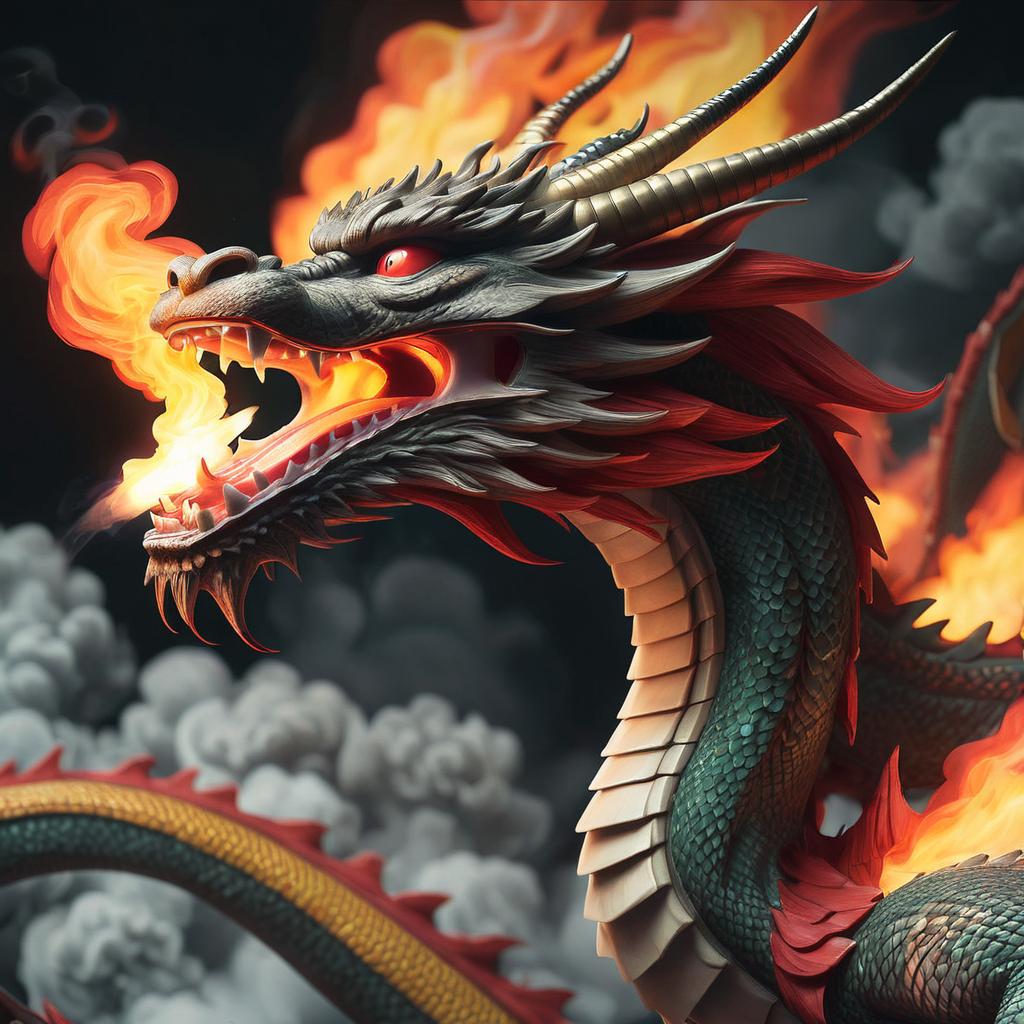
On the roaring dragon (Part 3). . .

On the roaring dragon (Part 3). . .

Like the thundering roar of a dragon, the resonant voice of the Dharma  

awakens us from afflictive emotions and frees us from the chains of karma.

Dispelling the darkness of ignorance, the sword of wisdom cuts through all our suffering.

How do I bring this into my life?

i.

When I think of bringing this prayer in my life, the words that jump out at me are “sword of wisdom” and “all our suffering.” Samsara is a realm of struggle and desire. Most chase after struggle and desire unceasingly. If samsara has existed for innumerable eons, what sword could be so powerful as to through “all our suffering?”

Our prayer tells us that only after “dispelling the darkness of ignorance” can this “sword of wisdom” cut through “all our suffering”. Remember that ‘wisdom’ has its roots in ‘vision’, as in to see things as they truly are.

If we go back further in the prayer there are four distinct parts to being freed of all our suffering. First we must be awakened “from the sleep of afflictive emotions. . .”. Second we must be freed from “the chains of karma.” Thirdly the “darkness of ignorance” must be dispelled. And fourthly we get to the sword of wisdom which “cuts through all our suffering.”

ii.

It’s kind of like a recipe, isn’t it? Or a set of instructions to build something. But do we want to build anything here in samsara where all is impermanent, insubstantial and dependent? That would be an exercise in futility and would only lead to more suffering.

What we want is a recipe. What does a recipe do? It shows you how to use what you already have to transform your ingredients into something different. This prayer introduces nothing new. We already have the Dharma all around us. The sleep of afflictive emotions lulls most of us into sleep. The chains of karma have entangled us all our lives in samsara. Ignorance can seem to be an impenetrable darkness. And of course suffering is the default setting in samsara. These are our ingredients.

When I think of bringing this into my life, there’s nothing to bring. All the ingredients of the recipe are already here. The tools of transformation are the “resonant voice of the Dharma” and the “sword of wisdom”. It’s interesting that the sword of wisdom dispels completely the darkness we call ignorance. Suffering, however is merely cut through by the sword of wisdom. Seeing clearly and seeing things as they truly are is enough to dispel ignorance and free us in an instant from suffering.

iii.

In bringing this little prayer into my life, I become aware, awake. The ingredients of afflictive emotions, the chains of karma, the darkness of ignorance, the suffering of being in samsara become starkly present for me. This prayer helps me the most I think in hearing the “resonant” voice of the Dharma. This prayer teaches me to attune to the resonant voice of the Dharma and let it resonate with my own Buddha Nature.

Perhaps the most important gift of bringing this prayer into my life is that quality of feeling starkly awake to samsara. Then there is the sleep of afflictive emotions. Again the prayer offers us the resonant voice of the Dharma to resonate with our own Buddha Nature and wake up and see what is. There are the chains of karma binding us to samsara. And once again the prayer offers us the “thundering roar” of the resonant voice of the Dharma. And lastly there is the darkness of ignorance and the suffering of suffering. And here the prayer offers the sword of wisdom that banishes ignorance. When it comes to suffering, no need to settle it bit by bit, but rather the sword of wisdom will cut a clear swath through suffering in an instant.

The beauty of this prayer is we don’t have to import anything from anywhere. Everything we need is already here in our enlightened Buddha Nature. We know how to wield the sword of wisdom: let the voice of the Dharma resonate with who we truly are.


On the roaring dragon . . . (Part 1)

On the roaring dragon . . . (Part 1)

Like the thundering roar of a dragon, the resonant voice of the Dharma  

awakens us from afflictive emotions and frees us from the chains of karma.

Dispelling the darkness of ignorance, the sword of wisdom cuts through all our suffering.

What does this mean to me?

i.

As a westerner, it’s hard for me to appreciate what dragons mean in eastern lore. My local friendly AI tells us that in Japan, dragons are “. . . powerful and wise guardians that shield us from universal dangers and impart their wisdom.”

Samsara is loud. Even if you live in a country setting, there’s noise, particularly today with electronic devices all but dominating our lives. And that’s on a ‘quiet’ day. When the storms of afflictive emotions rage within us, the noise can be unbearably loud.

Our prayer starts out strong and says, “. ..the resonant voice of the Dharma…” is heard in samsara “Like the thundering roar of a dragon.” Notice that it’s not just the roar of a dragon, but a thundering roar. That’s pretty loud. It’s certainly loud enough to be heard over even the most roiling violent storms of afflictive emotions.

What’s most interesting to me here is that the voice of the Dharma is “resonant”. What does it mean to resonate with something? It means there has to be a matching tone or feeling so the two can resonate together. In this case, I believe the prayer is talking about our inherent wisdom, as in the ability to see clearly, to see things as they truly are.

ii.

Our prayer tells us that even though we may feel we are awake to our afflictive emotions, samsara is very much a deep sleep in a loud storm. We sleep and have the nightmare of afflictive emotions. This is why the voice of the wisdom of the Dharma must be like the “thundering roar of a dragon.”

But even with all of this, our prayer reinforces that our inherent ability to see clearly, our wisdom, is already there. This is why the voice of the Dharma is “resonant”.

With just this line of the prayer, we are told that the “resonant voice of the Dharma” thunders like the roar of a dragon. Why does this roar have to be so loud? One of my favorite things to do during those sub-tropical storms we had in Florida was to sleep through them at night. The only sounds were the thunder, and rain, and wind. It blocked out everything else.

iii.

When I first started studying the Dharma, I wanted all my ‘bad’ karma to go away and to only have ‘good’ karma left. We were born into samsara, drawn to this realm of struggle and desire by our karma. As my teacher, the Venerable Tashi Nyima says, “chains of gold are still chains.” With our ‘bad’ karma, we live through it with as good a grace as we can.

‘Good’ karma on the other hand is not something valuable that we want to hold onto. After all, karma is karma. That’s why in our other prayers we “dedicate all merit to Great Benefit.” But why does the prayer say the “resonant voice of the Dharma” will “…free us from the chains of karma”?

I think we first have to ask, what is karma? Very simply put, karma is what arises when we put in place causes for suffering or causes for happiness in our life. So how does the thunderous sound of wisdom free us from suffering? Remember that ‘wisdom’ has its root in ‘vision’, as in to see reality as it truly is. Wisdom is necessary for enlightenment, as another of our prayer reminds us, “May all attain the union of wisdom and compassion.”

When we see things with our inherent wisdom, which this prayer tells us is possible because the voice of the Dharma resonates with something already within us, why would we ever place causes for suffering onto our path? We wouldn’t. As for ‘good’ karma, we would have the wisdom to always dedicate the merit. Like this, wisdom cuts through the chains of karma that bind us to samsara.

iiii.

The last line of the prayer talks about dispelling ignorance and cutting through “all our suffering.” That’s quite a claim to make, to be able to cut through all suffering. But the first line of the prayer already told us that wisdom is like, “the thundering roar of a dragon.” When I picture a roaring dragon, I get a mental image of a dragon spewing powerful flames.

By the time we get to this last line of the prayer, the roaring dragon is “dispelling the darkness of ignorance.” What is darkness, in general? It’s simply an absence of light. As I read this line, the sword of wisdom seems to be a fiery sword born of the “thundering roar” of the voice of the Dharma. This line seems to sum up the lines that have come before. Without the roaring dragon, before the “resonant voice of the Dharma” there is only the suffering of samsara, afflictive emotions, and the darkness of ignorance.

However, in this last line, this isn’t a tiny light that’s going to shine. It’s a full on fiery sword wielded by the power of a thundering, roaring dragon speaking the resonant truth of the Dharma. This is the power of wisdom, to cut through all suffering in a moment, if we let ourselves resonate with that resonant voice of the Dharma.

On enlightenment. . .

On enlightenment. . .

May all be free from suffering and the causes of suffering.
May all embrace happiness and the causes of happiness.
May all abide in peace, free from self grasping.
May all attain the union of wisdom and compassion.

What does this mean to me?

Although we’ve mostly forgotten, “wisdom” has its roots in vision. Not just any vision, but the ability to see things as they truly are. Compassion lets us act on wisdom in a way that reduces suffering.

Wisdom without compassion is like a doctor whose bedside manner could use a little improvement. Imagine your doctor, truthfully, said to you, “You’ve got three months to live. That’s the end of our appointment. Schedule a follow up at the front desk on your way out.” Does the doctor know lots and lots of stuff? He sure does. But his bedside manner – yikes! I don’t think this even rises to the level of wisdom. This is simply knowledge. When we have true wisdom we understand that wisdom without compassion is cruel.

When we have compassion, we feel for the sufferings of our fellow travelers in samsara. But what does that really mean? For me, the biggest part of compassion is generosity. Whether it’s sharing your skills, giving what’s needed, or seeing to it that a turkey survives Thanksgiving.

How would I explain this to someone else?

When we study the Dharma, we’re perpetual students of what is. We don’t have a word for it, but what we’re actually studying is reality ‘is-ing’ in every moment. Reality is dynamic, never static. From this point of view it’s impossible not to see that all in samsara arises and dies. It happens in every moment. It’s happening to us right now.

Recognizing this truth with a compassionate heart moves us to ease the suffering in samara with whatever skillful means we have. Do we walk by a homeless person and say to ourselves, “Well, they’re dying anyway, so why bother doing anything?” Compassion allows us to see this differently as in, “We’re all on the same journey. I’ll do what I can to ease the suffering of our fellow travelers”.

This is the power of the union of wisdom and compassion. We see things as they truly are and at the same time we recognize our joyful obligation to help.

How do I bring this into my everyday life?

My teacher, the Venerable Tashi Nyima teaches that the union of wisdom and compassion is true enlightenment.

Wow, this little prayer isn’t playing around, right?  When I look at this prayer I ask myself why is the order of things the way they are? First we free ourselves from suffering. Then we are instructed to embrace happiness. Then the instruction is to abide in peace. Only after all of this does the prayer talk about the union of wisdom and compassion.

Why was this order of things chosen? Well, it’s very hard to ease the suffering of others if you yourself are suffering terribly. Suffering can disturb the mind. Without a clear mind, how do we see the way to ease the suffering of others?

As to happiness, if you’re desperately unhappy, how can you help others to be happy? If you’re constantly grasping onto “my story”, or the idea of “this is my experience”, then how can you have peace much less offer peace to others?

This, I think is what they tell us on airplanes. If those oxygen masks fall, put your own mask on first, then attempt to help others. The Dharma is much the same way. We must remedy ourselves before seeking to remedy others. Or, as Christianity puts it, ‘remove the beam from your own eye so that you can see clearly to remove the mote from your brother’s eye.’

In whole, this prayer gives us instruction to attain enlightenment in three easy steps. And for just the price of studying and practicing the Dharma, you too be enlightened. Okay, they’re not particularly easy steps. And this isn’t a late-night TV commercial, although I’d argue it ought to be.

In my day to day life, as part of my job, I talk to many people who are suffering terribly . When I take those calls, I focus on answering in a way that gives information and at the same time acknowledges their suffering, their basic humanity, their buddha nature.

Do I get enlightened when I manage to accomplish this? No. But it does shift my world view from ‘me’ and ‘mine’ to ‘all’.  As in may all be free from suffering . We all have these small experiences in samsara where practicing shifts our world perspective and we have a moment of enlightenment. Our buddha nature peeks out and connects to the buddha nature in others, reassuring us that enlightenment is only ever a moment away.