On dying . . .

On dying . . .

All notions of subject and object, self and selves, phenomena and characteristics are mere transformations of consciousness.

By this truth may I know that all appearances are vanity;

may I know that I dream while dreaming; may I know that I die while dying.

i. What does this mean to me?

The first time I heard this prayer, this line hit me pretty hard. ‘No,’ I wanted to argue, ‘I’m not dying. I’m fine.’ Then I thought, ‘Oh, wait.’ And the truth of it hit me. With every breath, every heartbeat, every tick of the clock, I am dying. I’d like to say that I straightened up, meditated and prayed everyday, and went out of my way to perform acts of kindness and generosity. But that didn’t happen.

The mind is funny that way. I fell back into my usual day-to-day complacence. It’s only as I got older – into my fifties – that I began to appreciate this line. Samsara is full of distractions that hide many truths. One of the things samsara hides best is the undeniable fact of our mortality. There are no TV shows called, Dying Well or How to Have a Good Death. Just the opposite in fact. If we go by samsara’s fictions, everyone will remain at best middle-aged and healthy forever, and they will somehow find that elusive dream. And live happily ever after.

Fortunately, we have the Dharma  to keep us informed of the truth even in the midst of samsara’s distractions. In samsara, there are lots of pretty, shiny things to chase after. Samsara is seductive and very addicting. But in this realm of struggle and desire, we will never have enough bright, shiny things. We will always be chasing after something empty and meaningless if we get sucked into samsara.

ii. How would I explain this to someone else?

I’d start with an exercise my teacher, the Venerable Tashi Nyima did with us years ago. It went something like this. Make a list of the top five things you want or want to get done. Now, what if you only had a year to live, how would the list be different? What if you had one week?

We came back with our carefully thought out lists. Our teacher’s comment, after listening to us for a while, was that all the lists should be the same. That’s how much samsara sucks us in. We assume that, at any given time, we know how far we have to go before death catches up to us. But the truth is that a one year old and an eighty year old have the same mortality. Either one could die at any moment.

Samsara seduces us into believing otherwise with thirty year mortgages, five year plans and retirement. At my age of sixty, retirement planning should be practically a hobby, with all the media, virtual and printed that I get inundated with. Many strangers invite me to sumptuous lunches at very nice places to talk about how to plan for retirement.

This is what samsara does. We are lulled into a false sense of complacency about death. Instead of being urged to live with a sense of urgency, we’re encouraged to make plans – mortgages, investments, five year plans – it goes on and on.

This is not the truth. Death stalks us in every heartbeat, every breath. Our prayer says, “…may I know that I die while dying…”. Why is this important? It’s not just doom and gloom and woe is me. In fact, the Dharma teaches us, it’s just the opposite.

With this clear view of reality, we are encouraged to live our lives with a sense of urgency. The shiny baubles in samsara are ultimately empty. They are “…mere transformations of consciousness…”. Knowing and understanding this, how do we proceed? With great clarity. When we realize at a deep level that every moment draws us closer to death, our ‘I Have To’ or ‘I Want’ list becomes much shorter. Some items fall off altogether. This line of the prayer is not to sadden us, but rather to wake us up from the stupor of samsara and point out the Path as the only thing worthy of being on any list.

iii. How do I bring this into my life?

I’ve only recently turned sixty. It gives me a new perspective on life. Things that seemed important just five or six years ago no longer matter. I left off studying the Dharma for some years. I say that, but I never really did. I left off formally studying the Dharma and attending sangha. But I saw the Dharma everywhere. Samsara felt so empty and uninspiring. There was nothing that gave me any sense of meaning. In a sense, samsara drove me back to studying the Dharma. It’s the only thing in samsara that holds any meaning for me.

With the knowledge at a very fundamental level, that I’m closer to death with every breath, I have a certain urgency in my life. I heed the warnings of the Dharma. The Dharma is repeatedly warning us of the illusory, dreamlike quality of samsara. We are urged in every prayer, every teaching to look to the Dharma as a guide to how we live our lives. Be kind. Be generous. Avoid attachment, aversion and indifference. Get out of the burning house of samsara where we will only find suffering.

The Buddha told us that there is cessation of suffering and a path to the cessation of suffering. The Dharma doesn’t direct us to be perfect. It urges us to move through samsara with compassion and kindness. The Dharma assures us that there is true purity, true bliss, true permanence and true being.

When I pray “…may I know I die while dying…”, I am praying that my own Buddha Nature helps me see through the illusions of samsara. I am praying that in my journey on the path, I may come to truly see that there is freedom from the cycle of birth, disease, aging, and death. In doing this I bring a sense of urgency to my steps on the path. The blessing of this prayer is to remind us that all in samsara is insubstantial, impermanent and dependent on causes and conditions.

Once we realize the truth of this line of prayer, samsara’s illusions fall away. We can come to understand that there is only one way out of samsara: the Path. For me, this is comforting and reassuring. Am I still afraid of death? For sure. But with the Dharma awakening me to my own Buddha Nature, I know that I can be free of the cycle of death and rebirth. I can one day return to samsara of my own will with the intent to liberate all those who suffer.

On suffering…

On suffering…

May all be free from suffering and the causes of suffering.
May all embrace happiness and the causes of happiness.
May all abide in peace, free from self grasping
May all attain the union of wisdom and compassion.

What does this mean to me?

I guess the first question to ask is, what is suffering? Hunger, anger, jealousy, greed, envy, fear – these are all forms of suffering. But perhaps the greatest suffering is wandering lost in samsara. Just the feeling of being lost is suffering. It’s that sinking feeling you get when you’re following GPS and suddenly there’s a ROAD CLOSED sign ahead.

Now what? Which way do you go? In samsara, we have GPS. It’s called the Dharma.

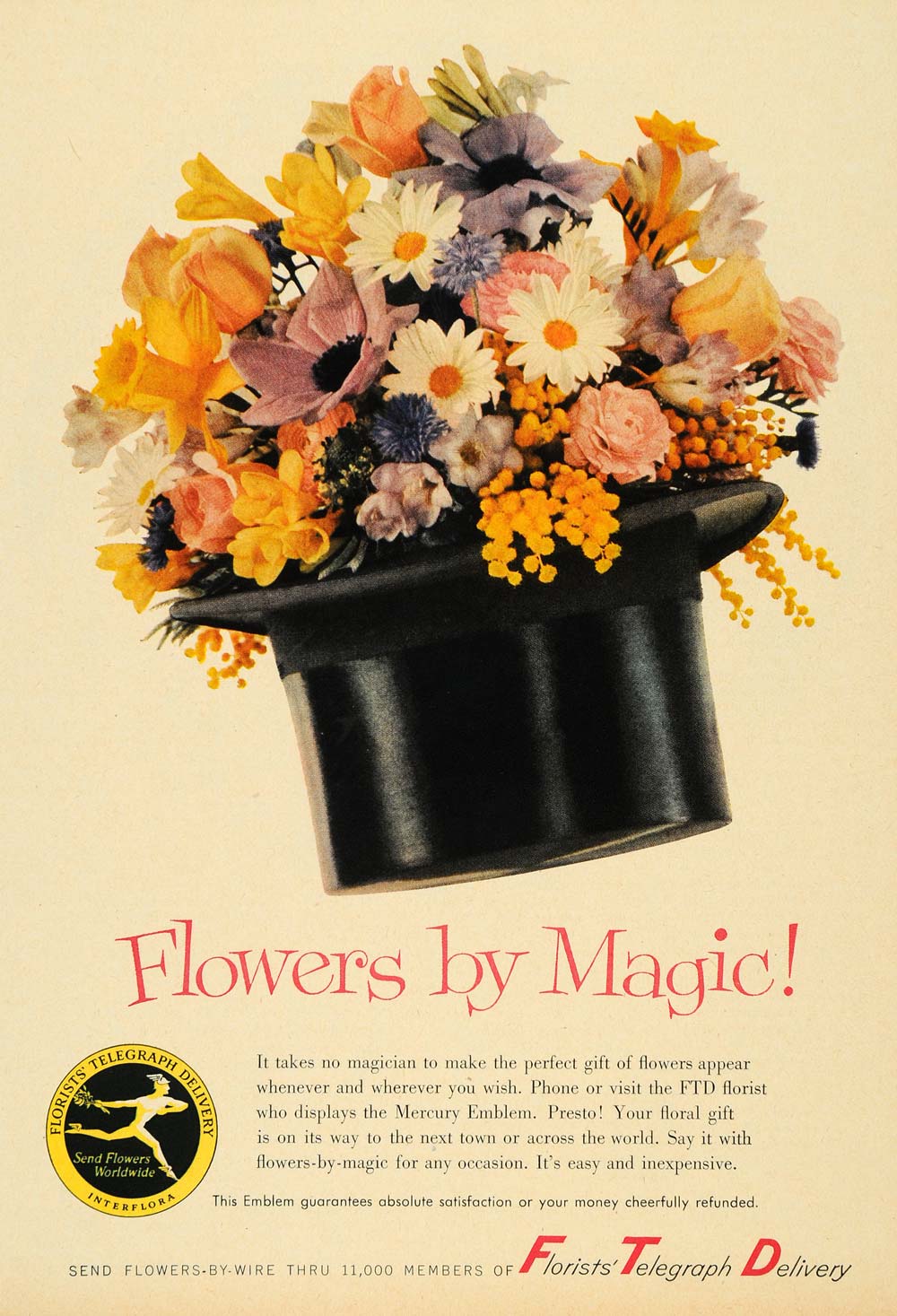
We spend much of our lives suffering needlessly. The Dharma isn’t a guarantee against suffering. The promise the Dharma offers is to show us things as they truly are. It’s kind of like knowing how a magic trick works. When you see the flowers come out of an empty hat, you know there’s a hidden compartment. You know it’s an illusion. This is what the Dharma offers, a chance to see clearly. When we see clearly, we can see the path to the cessation of suffering.

How would I explain this to someone else?

What’s the point of praying for all to be free of suffering when we are surrounded by suffering in samsara? We pray that all will be free not only from suffering, but the causes of suffering.

Samsara is a place of actions (or causes) and consequences. I’ve battled my weight all my life. And at this point, Type II Diabetes is writ large in my life. Every time I test my sugar, I know the result has a cause. Ninety eight percent of the time the cause is what I choose to eat or drink.

For years and years, I made terribly unhealthy choices about my diet. What was I actually doing? I was putting in place causes for suffering. I was making a choice between instant gratification and my long term health. Unfortunately, I made the wrong choices most of my life.

And that’s okay. The Dharma is nothing if not free of irrevocable choices. Will you have karma from a poor choice? Absolutely. Do you have a chance to make different choices? Always. Every time we make a choice we are either putting in place causes for suffering or causes for happiness. Mostly, we choose suffering and we wander lost in samsara.

And that’s okay too. The Dharma teaches us how to recognize choices for what they really are. The act of choosing will certainly create a cause of suffering or a cause of happiness. When we practice the Dharma, we learn discernment. We learn to see the causes of suffering for what they are. Today’s choice is tomorrow’s consequence.

How would I use this teaching in my life?

Today, when I think about suffering, it comes down to small choices.

Does it feel good to lie in bed under the covers at five AM? It sure does.

Each day I know that because of my job, I’ll most likely talk to someone who is suffering terribly. It’s the nature of my job. In those moments I have a chance to make things better, or at least a chance to not make it worse. I can do this by seeing clearly.

I know I have a long day ahead of me. If I get out of bed and say my prayers and meditate, I know I will see more clearly. Does it guarantee I’ll say the right thing? No. But I have less of a chance of saying something that makes things worse.

I’m learning each day how to avoid placing causes of suffering in my life. I don’t always do it. I don’t get out of bed every morning, but mostly I do. And that’s okay. We call it ‘practice’ for a reason, right?

I bring this teaching into my daily life by asking myself a simple question throughout the day: How much do I want to suffer? We can either wander blown about by the winds of samsara or we can use the GPS of the Dharma to put our feet on the path to the cessation of suffering.

What are your thoughts?

On the presence of dew. . .

Written Saturday, October 31, 2015, 11:00 AM

Currently I’m studying The Supplication with a Dharma friend, the Venerable Tashi Nyima.

This is my contemplation on the third verse.

I bow at the feet of the masters who carefully teach that

All conditioned entities are impermanent, unstable, changeable

Phenomena—like a mountain waterfall, like a cloud, like

Lightning, and like dew on a blade of grass.”

Full Disclosure: This is my first contemplation on a whole verse!

Explain to someone else (making it my own)

When I knew I was going to write about this, the first thing I set out to do was to prove it wrong. But to do that, I had to understand it better. What’s this ‘conditioned entities’ thing all about? Well, it’s anything that arises from cause and effect. What? No. That definitely can’t be true because absolutely everything arises from cause and effect. If this is true, that would have to mean that every thing is impermanent, and unstable, and changeable.

I tried really hard (I had two weeks) to think of some ‘unconditioned entity’. But no go. I couldn’t think of one single thing. The moment when my mind was finally forced to that conclusion was pretty heavy duty. I think I was driving home from somewhere and I thought to myself…Yes, it’s true. And…wonderful!

 The tail end of that thought caught me by surprise. Wonderful? Yes! Imagine if the pyramids in Egypt were still sparkling brand new, fresh as the day the Pharaohs got buried there, wouldn’t that be weird? Worse yet, imagine if that really truly horrible meal you ate last year to be polite and not hurt any feelings were still there in your stomach undigested!

dandelion girlYes, I thought to myself, yes. This conditioned thing is good. Imagine a world where cause and effect had no…well…no effect. Ice would never melt, even in hot sun. Our bodies would never age. No. That’s not a good thing—you like having teeth don’t you? And worst of all, I think, karma would be carved in some kind of unforgiving, immutable stone.

This would mean that whatever direction we chose for our lives, we’d be stuck with it. Think about that. Do you really still want the things you wanted when you were sixteen?

In our existence here in samsara, our biggest tug of war with impermanence is that we want selective impermanence. You know, like—I want to age to 25, stop there, never grow older, but keep learning and becoming wiser. But that’s not how it is. We age, we grow, we learn, and if we’re very fortunate, we gain some wisdom along the way. It’s a package deal.

Conditioned existence itself, “like dew on a blade of grass” passes moment to moment without our ever seeing it. The great benefit, the great joy of this is that every moment that arises can become a cause of suffering or a cause of happiness. It’s our choice.

Every moment, it’s our choice.

***

 Apply to a past situation (how would it have been different?)
There’s a scene in an old movie called “The Time Machine”. In it the time traveler moves through hundreds of years in a matter of seconds. You see buildings melt into rubble, then brand new sparkling time machinebuildings rise, then crumble into rubble as he jets forward in time. I was fascinated by that. I wondered when my house would crumble like that, and what would rise in its place.
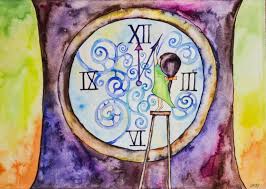
Decades later I got involved in a relationship. We both vowed that not only would we love each other forever, but we would love each other in EXACTLY the same way we loved each other that day at that moment.

Talk about naïve, right?

I spent a horribly tortuous decade of my life struggling to keep that vow. It was terrifying. As soon as something changed, I felt like—no. No! Things have to stay just like they are—forever. If I could have found Old Man Time, I would have done him in.pushback time

And change did of course come, but not in the way I feared it would. I changed. I wanted different things. I wasn’t in love. I grew tired of the struggle.

All of this struggle had a predictably disastrous outcome—what else could the ending have been but disastrous and painful, and heartbreaking?

If I could go back and whisper in the ear of my younger idealistic self, I would tell her that change is part of life. I would tell her that when we try to hold back the rhythms of cause and effect, we will bring upon ourselves a Tsunami of pain and suffering. I would tell her that in the end change will come, better to welcome it, no matter how frightening. I would whisper that anything permanent is a delusion, fueled by hope and fear. And I would certainly tell her that change, as fraught with danger as it may seem, is better than entombing yourself in a delusion of unchanging permanence.

***

 Apply to an (ongoing) present situation (how does it matter today?)

Since 2012 (maybe 2011), I have been through layoffs that included hundreds of people, other layoffs that came once a quarter, and finally the sale of the company I worked for. The very first layoff was terrifying. Even though I knew I’d get a good severance package—still—it was heart stopping and heartrending to see people be escorted out.

By the third or fourth layoff, I just kind of waited to see if my name was on The List. When the company got sold, I was furious! What? Getting sold to some rinky dink, nouveau riche, mom & pop family-owned operation whose true name should be Greedsters, Inc.? And who, I might add, was (and continues to be) very evasive about the whole idea of a severance package.

It took me a long time, a few months to realize the truth of the situation I’m in. I find myself at a point in my life where anything is possible. Of course, it’s always been that way. But now, I’m aware of it.

Aside from the overt acts of not showing up and/or not doing my work, whether or not I have a job is utterly beyond my control. Of course, it always has been. But awareness has a certain magic about it, or maybe I should say a certain grace. But more on that later.

The truth about my job is that the position I fill is on someone’s spreadsheet beside my Greedster, Inc. Employee ID Number. When the formulae in that spreadsheet indicate that my position can be filled for much cheaper in say. . . Mumbai or Puerto Rico. . .the Greedster, Inc. Employee ID Number will be changed and my steady paycheck will evaporate—kinda like dew on a blade of grass.

So each day, I work with what I have. This situation forces me to bow to impermanence and cause and effect.

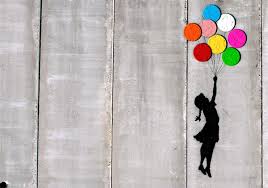
balloongirlIn doing this, I am finding that when we bow to impermanence, our life takes on a certain grace, a certain lightness of being. Not to wax too poetic here, but we come to realize that we came to samsara with nothing, and we will leave with nothing. Rather than being depressing, as I thought that realization would be, it is in fact buoyant. I mean that literally. When we become aware of the true state of conditioned existence, then we can let of the terrible weight of hope and fear. Why? Because there’s no question: Yes. You are to lose absolutely everything you have acquired in samsara. No one gets out alive.

There. Now you know how the movie ends. The only question remaining is: do you want to struggle against impermanence until your last breath, or, do you want to live with the grace of impermanence and use your every moment to move toward true bliss, true permanence, true purity, true self.

***

 Apply to a potential situation (bringing it home to play)

Last year I took a vow to give 125 hats / scarves to the Jonang Monastery in Tibet. I took that vow in December, 2014. At the outset, I couldn’t turn the little wheel on my Addi knitting machine fast enough. Wow! I thought, at this rate, I’ll have 250 hats and scarves to give. In other words, I believed with a brand of blind faith, that things would remain exactly as they were.

As you may imagine, things changed. Depression snuck up on me. The slough of despondencymenopause baseball bat smacked me around. In short, I spent four months of my life in a quicksand morass of depression and despair.

With the help of a very good friend, I was able to make my way out of the deepest bits of the quicksand. As I lay panting on the shore, recovering, rediscovering my life—I panicked. Four months! And not one hat or scarf had rolled off my Addi. I was a long, long, way from 125. I wasn’t even in shouting distance.

I almost wanted to just let myself slide back into the quicksand. But before I did, I asked in desperation—how do I give back a vow? I tell you, that vow was wrecking my nerves.

The answer was so simple, I missed it. When my friend repeated it, I was just about bowled over. Change the vow. That was the answer. That’s it. Just change it. [Disclaimer: This is not true for all vows.]

Well, I tell you, that’s given me a world of relief. I feel the shore expanding, the quicksand drying on my legs and falling away as I pull myself free of the slough of despondency.

This seems like a small thing, but it made me think of all the other absolutes we have in our lives. We come up with all these “Have To” things in our lives, and somehow we come to have a faith in the imputed immutability we grant them. We will even change our lives to match the “Have To”. Wow. That’s a little bit crazy.

No. I say no to that. All that we see around us is, by its very nature, subject to cause and effect. All that we witness in samsara not only will pass away, but is passing away before our very eyes, with every breath.

Would we try to hold onto a wave in an ocean? Or a breeze rattling the leaves of a tree? These things and all that we see in samsara are ephemera. Their permanence arises from our deluded mind.

Once we understand this, we can appreciate the fleeting beauty of a waterfall, or a cloud, or a drop of dew on a blade of grass. We can appreciate each moment as it arises and falls away, and know that within each and every moment there exists a cause for our suffering or a cause for our enlightenment.

Which will we choose?

paths

On happiness and suffering and our past actions…

Currently I’m studying Heart Treasure of the Enlightened Ones with a Dharma friend, the Venerable Tashi Nyima.

This is my contemplation on the third line of verse 19 of the root text of Heart Treasure of the Enlightened Ones.

heart treasure

“There’s no time to be happy; happiness is over just like that;

You don’t want to suffer, so eradicate suffering with Dharma.

Whatever happiness or suffering comes, recognize it as the power of your past actions,

And from now on have no hopes or doubts regarding anyone at all.”


Explain to someone else (making it my own)

When I was a little kid, I thought things just kind of happened. Actually, what I thought was, things happen, but if I really want something, I mostly can’t make it happen. My world—full of the constant upheaval of bickering parents—seemed to be a stormy sea that tossed me to and fro like a rudderless, leaky boat.

My parents mercifully got a divorce, and of course went right on being miserable with two other unfortunates.

I grew up.

For many decades I still believed things just sort of happened randomly. I made absolutely no connection between what came into my life and what I’d done.

Well, sometimes I did.

When I was in school, I understood that if I studied, I’d get a good grade. Later, when I entered the corporate scheme of things, I understood that if I did my job, got to work on time, and met deadlines, I’d get the (dubious) privilege of keeping my job.

But in my personal life, I kept engaging in the same negative acts again and again. Then I’d cry and wonder…why does this keep happening to me?

I’ve told my mother to stay out of my life, but there she is—interfering. Again.

I’ve told my boyfriend (du jour) to stop pissing me off, but there he goes. Again.

It was a very bewildering and frightening world in which I was agent of absolutely nothing. Suffering came at me constantly. It was everyone else’s fault. My mantra in those years was…if he (or she) would just [fill in the blank], then everything would be okay.

It never occurred to me, even as a passing thought, that I was the agent of my own suffering. I never paused to look at my own actions and how they were clearly linked to the consequences I experienced. My mind was a constant whirlwind of afflicted emotions—anger, frustration, resentment, aggression. There was no end to it.

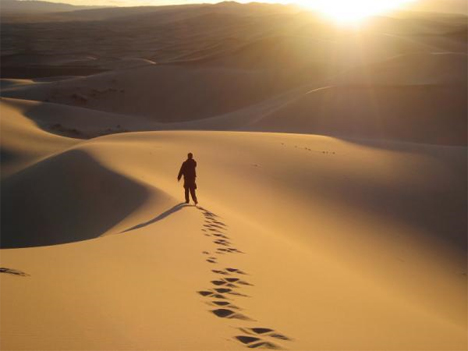
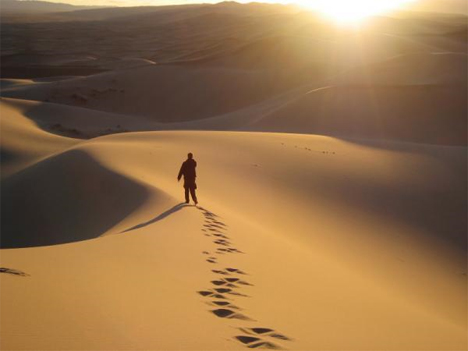
wandering desertWithout pausing to look at how we cause all the suffering in our lives, we are doomed to wander samsara lifetime after lifetime, suffering terribly.

***

Apply to a past situation (how would it have been different?)

Where do I start?

There have been so many times in my life when, if I’d just paused and noticed the connection between the causes of suffering I was putting in place and the consequences that were manifesting, I could have freed myself of that particular suffering.

I guess the time in my life just before I came to Texas is a place to look at.

I was about two weeks from leaving (fleeing, actually) a scarily bad relationship. It was a kind of caesura in my life. Everything was on hold. I was simply counting down the clock to my booked airplane flight to Dallas. I was participating in the relationship only in the most superficial ways. In my mind, it was over, like a corpse ready for burial.

This meant I was no longer caught up in the emotional dynamics such a relationship exhaustingly demands. I really didn’t care what the other person said or what they did, because I was on a countdown to freedom.

In those two weeks, I unintentionally gained an analytical distance from a very entangled situation. I was able to see with almost perfect clarity how my own actions had led to exactly where I was. It was like seeing a map that I had drawn and then navigated with precision. At the time, this insight came with a lot of shame and blame and guilt and feelings of worthlessness.

Looking back on those two weeks, I might have noticed how the connections I’d seen weren’t just true of the last ten years. It was true of my entire life. Having noticed this, I might have breathed, and taken another small step back. Had I taken a step back from the afflicted emotions that arose, I may have noticed that I’d just discovered the key to my true freedom. I may have noticed that since my actions had brought me to the misery I was experiencing, I could choose different acts that would lead to different consequences. yellow brick road

I might have noticed that I wasn’t Dorothy helplessly caught up in the tornado of my life. Rather, I was a pilgrim setting out on a brand new road.

***

Apply to an (ongoing) present situation (how does it matter today?)

The ongoing situation in my life right now is the Pilgrimage of 62. Wow. It’s nothing like I thought it would be. I had so many doubts when I started with this idea. The biggest (and perhaps silliest) was…what if I’m not holy enough? Now, on day four of the pilgrimage, that makes me laugh. How could I not be holy enough (and what I really meant was good enough) to take time twice a day to touch in with my true nature?

When I began this a scant three days ago, I was focused on my twice daily mediation and prayer activities—the 62. In the beginning, a couple of weeks ago, I had to readjust my schedule and condition my life to the pilgrimage. What I’m finding now is that the pilgrimage is conditioning my life to it. It is in fact becoming the action of my ordinary life. I didn’t foresee that.

As I go about my ordinary life, there is so much clarity about what will put in place causes for suffering, and what will put in place causes for happiness. And it’s nothing like I thought. I can’t say that enough.

Last night I was very tired so I decided not to do the dishes. Now, there’s nothing that bothers me more than walking into the kitchen in the morning and seeing even one dish in the sink, let alone the mess that’s in there now. In choosing to leave the dishes in the sink last night, I knew I was putting in place a cause for suffering this morning.

In seeing that, I was able to go back to the choices that had led to so many dishes in the sink so late. I was able to clearly see how I’d started baking late, then chosen to do other things instead of cleaning up as I went along.

buddha globeThis is a very mundane example of how our choices bring suffering into our lives. But I think suffering is always mundane. No choice is made in a vacuum. We are surrounded by conditions at every moment. And those conditions are a culmination of our smallest choices. From this, I am absolutely coming to see that whatever happiness or suffering comes, it is the power of my past actions bringing it to manifest. We all have an incredible power for happiness or suffering. The choice is always ours.

Isn’t that awesome?

***

Apply to a potential situation (bringing it home to play)

A funny thing’s happening on the pilgrimage. I’m getting to know my ego very well. The catalyst for this is none other than my cubicle-mate Salem. She knows how to push all my buttons, even the ones I didn’t know I had. At the end of the pilgrimage, I should really get her a gift because she is turning out to be an invaluable traveling companion.

At least once a day, Salem will do or say something that ticks me off. Well, that’s what used to happen. These days, I can usually the catch the afflicted emotion before it’s full blown and giving rise to discursive thoughts.

Yesterday was my first day at work and on the pilgrimage. The day before, on Sunday, I took Bodhisattva vows for the first time. The two together are very powerful agents in my ordinary life.

At work yesterday, Salem did her usual awesome job of pushing my “Are you ever going to take responsibility for what you do?” button. I was almost off and running. The fuse was lit and sizzling, burning its way toward a tightly packed bundle of Self Righteousness TNT. But these days it’s a pretty long, pretty slow-burning fuse with Salem. She’s given me so much practice that I was able to pause and ask myself—did I really want to plant seeds of frustration and resentment with my thoughts? Did I want to put in place causes of my own suffering? Did I have so little suffering in my life that I wanted to add to it? And finally, did I want to add to Salem’s suffering? [that was a first]

There was a moment when ego flashed a thought, “Damn right I do! She deserves it.” Ouch.

Then I remembered the pilgrimage, my Bodhisattva vows, and I realized that no, she didn’t deserve it. None of us do. Even ego piped up (grudgingly) with, “I guess not”.

Today as I go to work, I will work with having gratitude for Salem. Without her presence in my life, I wouldn’t have learned nearly so quickly the intimate connection between the causes I put in place in my life, and the consequences that manifest.

I know there’ll be moments like what happened yesterday, but when they arise, it is my intent to use those moments to train my mind to make choices that lead to peace and clarity rather than to suffering and confusion.chain 2

Can I actually do that?

We’ll see.