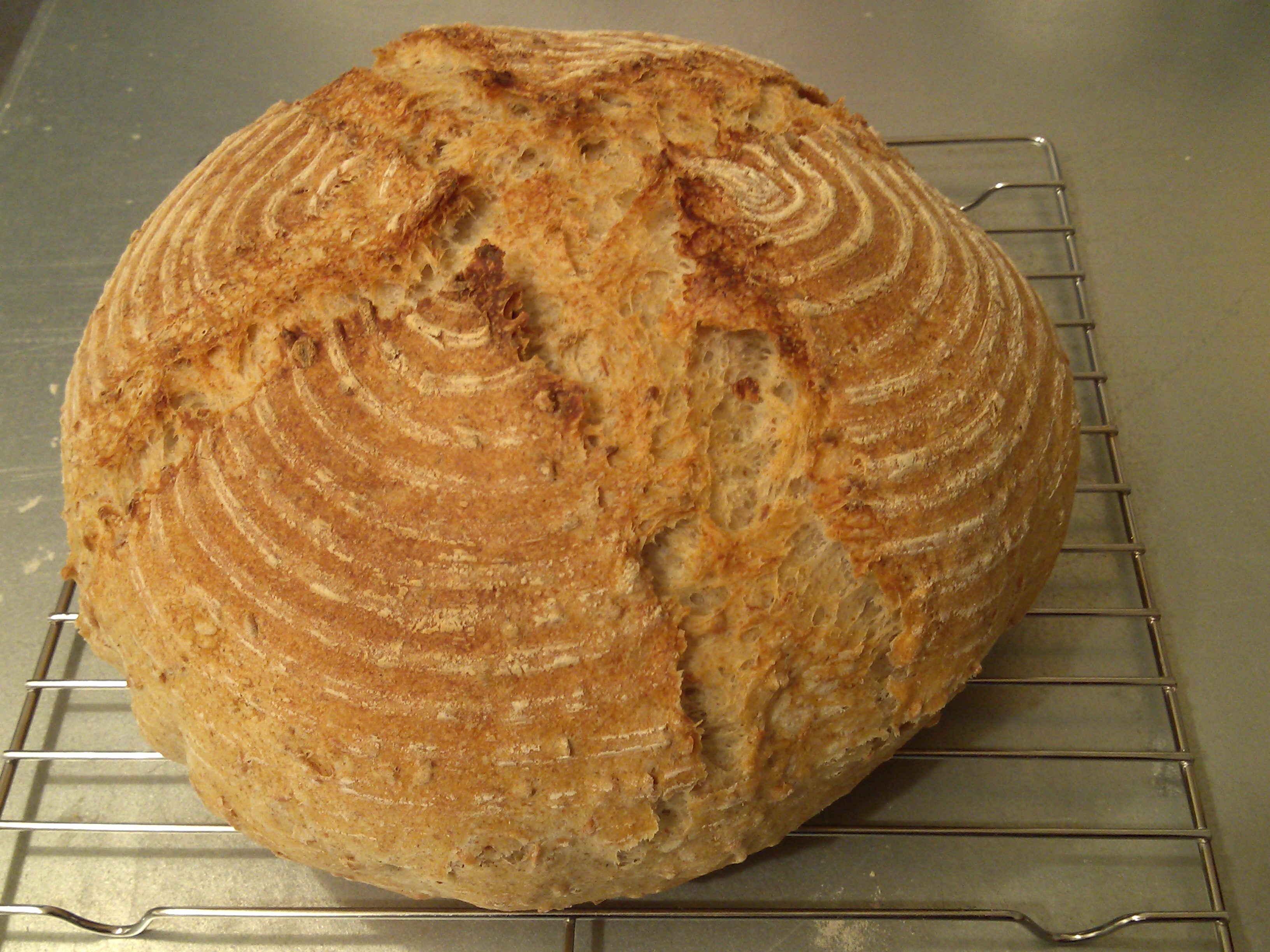
On a heart always joyful and confident…

Currently I’m studying Heart Treasure of the Enlightened Ones with a Dharma friend, the Venerable Tashi Nyima.

This is my contemplation on the fourth line of verse 21 of the root text of Heart Treasure of the Enlightened Ones.

heart treasure

“Even if you die today, why be sad? It’s the way of samsara.

Even if you live to be a hundred, why be glad? Youth will have long since gone.

Whether you live or die right now, what does this life matter?

Just practice Dharma for the next life—that’s the point.


Explain to someone else (making it my own)

How many times have we said to someone, “that’s not the point”? This inevitably leads to the question, “then what is the point?” It seems this should be an easy question to answer especially if you’re in the process of doing something, and we’re always in the process of living our lives. We don’t do things unless there’s a point to doing it, a motivation. Would we take out all the ingredients for a cake then leave them on the counter, untouched? Of course not. The point of taking out the ingredients is to make a cake.

tragedyYet this is how we live our lives. The main ingredients in our lives are karma and skillful means. These ingredients are so powerful, we could mix and bake the equivalent of a thousand-layered wedding cake the size of the moon. But do we? No. We spend our lives pointlessly caught up in the mini-dramas that arise from our afflicted emotions. And since there’s no time in the mind (or anywhere else, really), these dramas can stretch over lifetimes, creating an epic soap opera that spans eons.

Is that the point? Is that why we’re here—to engage our afflicted emotions and generate negative karma, perpetuating our personal hell lifetime after lifetime? The fact that we indisputably have Buddha Nature, which therefore makes enlightenment inevitable at some point, offers a resounding no to this question.

If that’s not the point, that what is? Dilgo Khyense offers this point of view. If, he says, our mind is “…filled with faith in the Three Jewels…” then we “…will both live and die with…” our heart “…always joyful and confident.” This is the point. This is why we’re here. We were drawn back to birth in samsara because we were so firmly bound to and engaged by the drama of our afflicted emotions. Now that we’re here, the point is to avoid harm, do good, and purify our minds of wrong views.

***

Apply to a past situation (how would it have been different?)

When I was a little girl, I wanted to fix myself. I didn’t exactly know what was wrong with me, but my mother would always say to me, “What’s wrong with you, child?” In broken dollEnglish, this comes across as pretty benign. But in Patois (a blend of broken English and French, a language of native Jamaicans, and also the language of my mother’s anger), it has more the flavor of…have you lost your freakin’ mind, acting like that, kid? So obviously, if she thought something was wrong, there had to be something to fix. I’m not assigning blame here. My mother was in nursing school, and I was five, and let’s just say I went on the theory that her books could be colored in too. She had good reason. This continued through my teen years—me wanting to fix myself I mean, not coloring pictures in medical textbooks. I went through more than four and a half decades of my life firmly believing there was something broken about me, something to be fixed and made right.

This state of disrepair manifested as being too dumb, so I went to college. In college, I was too fat, so I lost weight. After school, I was too single, so I proceeded from one romantic debacle to another. Mercifully, I never married.

Looking back on those decades, I can notice mind at work, doing what mind does best—being a peerless servant. Because I believed there was something very broken about me, mind did me the service of constantly showing me what needed to be fixed. In this way, the point of my life, for many decades, was to endlessly improve myself, as if I’d moved into the Fixer Upper from Hell.

Having noticed that the source of my sense of being ‘broken’ in some way came from my thoughts, I might have taken a breath, and allowed a moment of peace and clarity to arise. In that moment I might have taken a step back and noticed that the thoughts were not me. They were just thoughts arising in mind. Had I seen this, I may have noticed that nothing needed to be fixed—not even the thoughts. All I had to do was let them go. If I’d been able to see that and notice the source of the thoughts, and notice that mind was simply showing me what my thoughts said I wanted to see, I might have been able to change my thoughts. I might have been able to send my good and faithful servant, mind, on a new quest to uncover my natural perfection.

***

Apply to an (ongoing) present situation (how does it matter today?)

The biggest ongoing situation in my life at this writing is the Pilgrimage of 62. The pilgrimage ends tomorrow. As the end approaches, looking back and asking myself—what was the point?—is unavoidable.

In a way, I think I began the pilgrimage to answer a question. If I framed the question in hindsight, it would be something like…I’m about to turn fifty. What is the point of having been in this world for five decades? It’s been a difficult question to answer. One of the gifts of the pilgrimage has been a marked increase in peace and clarity in both my mind and my ordinary life. A while back, I used to believe that having a peaceful existence was the point of life. But I’ve come to realize that in samsara, a realm whose very fabric is a complex weave of eons of afflicted emotions, true lasting peace is impossible.

As I’ve taken this pilgrimage, I’ve been able to experience this line from Patrul Rinpoche in the workings of my ordinary life. He advises us to practice the Dharma for the next life. On March 1st when I began the pilgrimage, I didn’t have nearly the focus on prayer and meditation that I have had these past thirty days. This has inevitably led to a deeper focus on the Dharma and bringing it into my ordinary life. As I did that day in and day out, I found that I was avoiding harm, doing good, and purifying my mind of wrong views.

Hmmmm….that sounds familiar, doesn’t it?

buddha goldenI took a vow on March 1st that I would finish the pilgrimage. Short of some cataclysmic nuclear event, I’ll finish the pilgrimage tomorrow. On April 1st, I will experience, I think, birth into my “next life” after the pilgrimage. Knowing that, I have proceeded with extreme caution in my ordinary life because I want that birth to have in place many causes for happiness. And how did I do that? Gee…what a surprise…I did it by avoiding harm, doing good, and purifying my mind of wrong views.

To paraphrase my Dharma friend Tashi, the “next life” is the boundless life, the life that’s meant to be lived, not this constrained facsimile. Yes, indeed. And that next life of true purity, true bliss, true self, and true permanence is the point of this life.

***

Apply to a potential situation (bringing it home to play)

On April 1st, in just one more day, the Pilgrimage of 62 will end. This has been a spectacular month of insight, struggle, and discovery. As the end approaches, there’s the feel of stepping into the unknown. There’s also a feeling that I don’t want the pilgrimage to end. Living life with the Dharma as the central focus has been an experience of swimming with the current of my life rather than against it.

So what about April? What about May? What about December? I think taking a vow to meditate and pray every single day for the rest of my life is just plain silly. Life happens. I learned that in just these short thirty days.

But now that I’ve done these thirty days, one of the wonderful gifts of the pilgrimage is that mind is onboard with meditating and praying. It doesn’t fight me anymore. It still comes up with some hilarious distractions in sitting meditation (think Shirley Temple singing and dancing to Michael Jackson’s ‘Thriller’), but that’s just mind being mind.

I have to admit that when I began the pilgrimage, I gave absolutely no thought to bringing it into the rest of my life beyond March. But with the rest of my life rapidly looming on the horizon, it’s time for a plan. So this is what I’ve decided. I’ve taken a vow to meditate and pray in April as I did this month. The only difference is that if I’m really tired or sick or whatever, I can take a step back and do a mala and a short version of my recitations.

I’ve taken this vow because I’ve really enjoyed feeling like my life has a point these last thirty days. I enjoyed feeling that I was living my life in a way that was of benefit not joyful5only to myself, but to others as well. I don’t know if I’ll feel this way forever, but I know the Dharma is that which holds, and I know it’s always there holding out the promise of a life lived with a heart always joyful and confident.

On an immeasurably precious chance…

Currently I’m studying Heart Treasure of the Enlightened Ones with a Dharma friend, the Venerable Tashi Nyima.

This is my contemplation on the second line of verse 21 of the root text of Heart Treasure of the Enlightened Ones.

heart treasure

“Even if you die today, why be sad? It’s the way of samsara.

Even if you live to be a hundred, why be glad? Youth will have long since gone.

Whether you live or die right now, what does this life matter?

Just practice Dharma for the next life—that’s the point.”


Explain to someone else (making it my own)

Vampnosferatuires have changed a lot over the decades. I believe the very first vampire movie was a silent black and white, Nosferatu.  That vampire was one scary looking dude. He was bald and wrinkled, and you got the impression (even in black and white) that he was the color of spoiled milk. In today’s beauty-obsessed world, vampires are Calvin Klein models with lustrous hair, six-pack abs, and deep brown eyes with just the barest hint of menace. Even their blood sucking fangs are sexy. What a difference a few decades make! Vampires have gone from terrifying blood-sucking creatures to Harlequin cover models. And what’s more, they won’t ever get old. They’re young and hot…ahhh…excuse me…young and beautiful forever! How cool is that?

The paradigm shift in how immortality is handled in our storytelling speaks, I think, to our own samsaric wish to not only live forever, but to be beautiful and young forever. Having just turned fifty, I can tell you—that ain’t how it is. Our bodies start to hurt in places we didn’t even know we had. Eyesight declines. Skin dries out. In the parlance of ordinary life—getting old sucks.

But it doesn’t have to. Dilgo Khyentse reminds us, “…once you start to practice the Dharma, then however long you live, every instant of every day will be an immeasurably precious chance to …practice…until the day of your death.” In the dependent, insubstantial, impermanent realm of samsara, this is very good news indeed. In fact, I’d go so far as to say it’s the best news we’ll ever hear in our embodied state. Yes, our bodies are subject to aging. No, youth and all of its pleasures doesn’t last forever. But the Dharma—that which holds—is not subject in any way to the nightmare vagaries of samsara. If we come to understand this, and come to make the Dharma our constant activity, then each moment of our lives becomes an immeasurably precious chance to manifest the inherent perfection of our Buddha Nature.

***

Apply to a past situation (how would it have been different?)

A little less than thirty years ago, when I was in my mid-twenties, I was obsessed with being thin and in shape. I ran. I did aerobics. I lifted weights. I drank disgusting yogurt / protein shakes. I taught aerobics (the better to stay fit). I thought of almost nothing else but being fit and most important, staying fit. I spent hours in the gym. I even had the proverbial (and disastrous) relationship with a personal trainer at the gym. I had a killer body, but I was miserable, insecure, and terrified that I wouldn’t be able to keep it.

Looking back on those years in my life, I can notice how my all-consuming desire to maintain my body was really ansnow white mirror expression of a wish not to age. I can notice that staying young and attractive was an attachment that bound me to incredible suffering. If I had been able to breathe and take a step back from the constant fury of my life, I might have noticed that my goal was meaningless.

If I had let a moment of peace and clarity arise, I might have noticed that staying young and attractive forever held out no hope for lasting happiness. I may have noticed that even though I was already where I wanted to be, it brought me only anxiety, angst, and the constant suffering of the fear of losing it. Had I been able to notice this, I may have been able to begin to free myself of a draining, pointless obsession in my life.

***

Apply to an (ongoing) present situation (how does it matter today?)

The biggest ongoing situation in my life at this writing is the Pilgrimage of 62. The main reason for beginning this pilgrimage was because of my pending fiftieth birthday. I felt I needed to take some sort of journey. At twenty-five days into the pilgrimage, and having turned fifty last week, this line takes on a special significance for me.

big five ohI only began studying the Dharma a couple of years ago. Until then, there was the nagging sensation that the ‘big five-oh’ was getting closer, and I’d done nothing with my life. I’d published three or four books and about a dozen short stories, and I was working on yet another book, but that underlying certainty that I’d done nothing with my life was only getting stronger. At first I attributed it to getting old. Maybe, I thought, it’s just part of the process. Maybe old age hormones are kicking in. What do I know?

Then I began to study the Dharma. And—horror of horrors—I saw that I’d been right. I’d totally wasted my life up until then, and the big five-oh was looming on my horizon like the iceberg that gave the Titanic a monstrously bad day. I began to panic. To be honest, when the realization that I’d been wasting my life began to dawn on me, I nearly walked away from studying the Dharma. I nearly said to myself—no, I did say to myself—I don’t need this bad news. I need to go find something meaningful to do with my life.

But I didn’t walk away. I came back week after week because a new realization began to dawn. Studying the Dharma was actually working on a very subtle level to decrease my suffering. I wasn’t Cinderella fitting into the glass slipper or anything, but things in my life that I’d thought I had no chance of ever changing were gradually improving.

After that I was hooked, and here I am on a pilgrimage at fifty, more than halfway into my life. As I take this pilgrimage, I can utterly understand how much richness the Dharma brings to our lives. I can see that if I live to be hundred, youth will have gone, but the Dharma will remain.

***

Apply to a potential situation (bringing it home to play)

I return to work today after three days off. It’s been a hectic but peaceful three days. I’ve officially shifted the paradigm of my life from fiction-writing and holding out hope of blinding success in samsara to Dharma writing and baking. I’ve done this by clearing books from shelves in a kitchen nook, taking out a second bread machine, and collecting my recipes into a binder. Containers for my collection of flours, grains, add-ins, etc. are on the way in the mail. Now there’s space for them.

Those empty shelves are something I never thought I’d see. I thought I’d write romance about twenty-somethings and thirty-somethings forever. I think this was my way of making youth last.

Now, as I prepare to move into a new phase of my life, I’m aware that it’s the autumn of my life. As I take on this new adventure, it’s my intent to make the Dharma the activity of my life. I’ve found that doing this lends a feel of authenticity to whatever is done.

Specifically, when I sit down to work on a collaboration writing project with a Dharma friend, I will bring to my awareness that I am doing that project for the benefit of others. As my Dharma friend likes to say, the Dharma is meant to be shared. As I work on new recipes to perfect them, I will work knowing that I use my baking to bring benefit to others.

What does any of this have to do with Patrul Rinpoche’s line? Maybe nothing at all. But I believe if we live to be a hundred bee in jarand the Dharma has not been the activity of our life, then not only will youth be gone, but we can be assured of one thing. As Dilgo Khyentse reminds us, “…if you have not practiced the Dharma, there is at least one thing you do not need to worry about—leaving samsara behind. There is no chance of that; you are in it now, and you will be in it for many lifetimes, like a bee trapped in a jar…”

I want out of the jar.

I think we all do.

And this very lifetime is an immeasurably precious chance to get out.

How are we going to use it?

On one Dharma…

Currently I’m studying Heart Treasure of the Enlightened Ones with a Dharma friend, the Venerable Tashi Nyima.

This is my contemplation on the second line of verse 21 of the root text of Heart Treasure of the Enlightened Ones.

heart treasure

“Even if you die today, why be sad? It’s the way of samsara.

Even if you live to be a hundred, why be glad? Youth will have long since gone.

Whether you live or die right now, what does this life matter?

Just practice Dharma for the next life—that’s the point.”


Explain to someone else (making it my own)

It’s always been fashionable in the west to find some way to discover the meaning of life. In the sixties, it was the hippies and acid trips and smoking pot. With the seventies came the New Age movement. Now over four decades later, the New Age movement has borne fruit like retreats to take a journey to find the meaning of life, to find your purpose in being here.

nascar 2Nowadays, this approach makes me scratch my head a little. It’s part of our make-up that we would search for the meaning of things. Our mind works like a mega-size engine that is in perpetual, eternal motion. I believe this ceaseless motion continues until enlightenment. Given a question that has no actual answer, the mind is off and running. It revs up like a Nascar engine and roars with questions. This seems to be the mind’s idea of fun. It’s just doing what it does.

As it searches for the answer to the meaning of life, I believe we perceive this perpetual motion of mind as a nagging “not quite there yet” restlessness. This manifests in our lives as a string of failed relationships in which no meaning was found; an endless go-round of jobs in which no true sense of ‘who we really are’ was found; a constant repetition of entertainment meant to escape the nagging dissatisfaction with our lives. Year after year, this leaves us feeling hollow and unsatisfied.

The problem isn’t so much that the question has no answer. The problem is our conviction that the answer lies outside us. This sends mind off on a wild goose chase to find meaning in a world that is dependent, insubstantial, and impermanent. It’s as though we were caught in a dream and we tried to figure out what the dream means, using only the distorted representations of the dream world.

The ‘meaning of life’ is enlightenment. That’s why we’re here. If we’re not going about the task of working on our own enlightenment in this lifetime, then we’re squandering our time in secondary practices. Dilgo Khyentse puts it like this, “…to practice with the idea of gaining enlightenment solely in order to benefit others is to aspire to the most worthwhile goal of all. This is…the essence of all the paths, the one Dharma that accomplishes them all.” Seen from this perspective, if you haven’t been practicing the Dharma, what does this life matter?

***

Apply to a past situation (how would it have been different?)

When I first moved to Texas, I was convinced that the meaning of life was to find happiness. I even thought I knew how. It was easy. I’d shut everything and everyone out of my life, then I would go about the business of finding happiness. After all, I’d just escaped Relationship From Hell, hadn’t I? There wasn’t anyone around telling me they’d kill me if I left, was there? No. Time to get down to the very serious business of being happy.gladiator

What a disaster that turned out to be. I was a Happiness Zealot, a gladiator in the Happiness Games. But no matter what I did, I was lonely. I was scared, lest something disturb whatever scrap of happiness I managed to wrestle into my life. A strange brand of despair began to seep into my life. It was like storm clouds covering the brilliant sun of my newly found freedom.

Looking back on those years, I might have paused in my desperate chase after happiness, and I might have breathed. Had I done that, I may have noticed how my determination to keep all the ‘bad things’ out of my life was causing a lot of fear and hope and angst and anxiety. Had I been able to take another breath and take a half-step back from my life, I might have noticed that even though I was living pretty much the way I’d decided I needed to in order to be happy, I was miserable and lonely and worn down by constant anxiety.

Having seen this, I might have noticed that I needed to look for a different way to live my life because if I died as I had lived up until then, I would have died full of anxiety and oppressed by regret.

***

Apply to an (ongoing) present situation (how does it matter today?)

The Pilgrimage of 62 is the biggest ongoing situation in my life as I write this. At twenty-three days into the pilgrimage, this line is particularly significant for me. One of the things that’s coming out of a commitment to meditate and pray twice a day is a shift in my perspective.

Before the pilgrimage, when I would sit to meditate, I experienced it as a sort of waking, lucid dream. It was a calming break from the ‘real’ world. I listened to mind’s dream-like babble for a while, let go of thoughts, then went back to my ‘real’ life.

dreamerNow I’m finding that the opposite is happening. When I mediate now, I have very clear awareness that I am watching the mechanism of mind at work. I am aware that I am ‘back stage’ at the production show of Reality. In post meditation, I am more and more aware of the dream-like texture of samsara.

Having a growing awareness of the dream-like quality of my post-meditation world has made me completely realize that finding any ‘happiness’ let alone ‘meaning’ in samsara is a fantasy of a deluded mind. I am gradually coming to see that when we begin to experience the dependent, insubstantial, impermanent nature of samsara, at the same time we begin to have a ghostly experience of our inherent Buddha Nature. These are bare glimpses, but each time it is powerful enough to convince me, without doubt, that the aspiration to gain enlightenment solely for the benefit of others is the only worthwhile endeavor in the nightmare of samsara. Everything else dissolves into the dream that it really is.

I’m also beginning to see this lifetime as a chapter in a book. I think when Dilgo Khyentse says, “…what does this life matter?”, he’s encouraging us to look at our lifetime from the point of view of simply a moment in a continuum. Understanding this, we can ask ourselves a simple question. Where do we want to direct the continuous stream of our lifetimes—toward enlightenment, or toward suffering?

***

Apply to a potential situation (bringing it home to play)

Bringing the one Dharma into my everyday life in the workplace is extremely difficult. Salem—my co-worker—triggers my habitual responses of aggression, resentment, and frustration. About eighty-five percent of the time now, I can defuse my afflicted emotions before they’re full blown and going off like a nuclear strike.

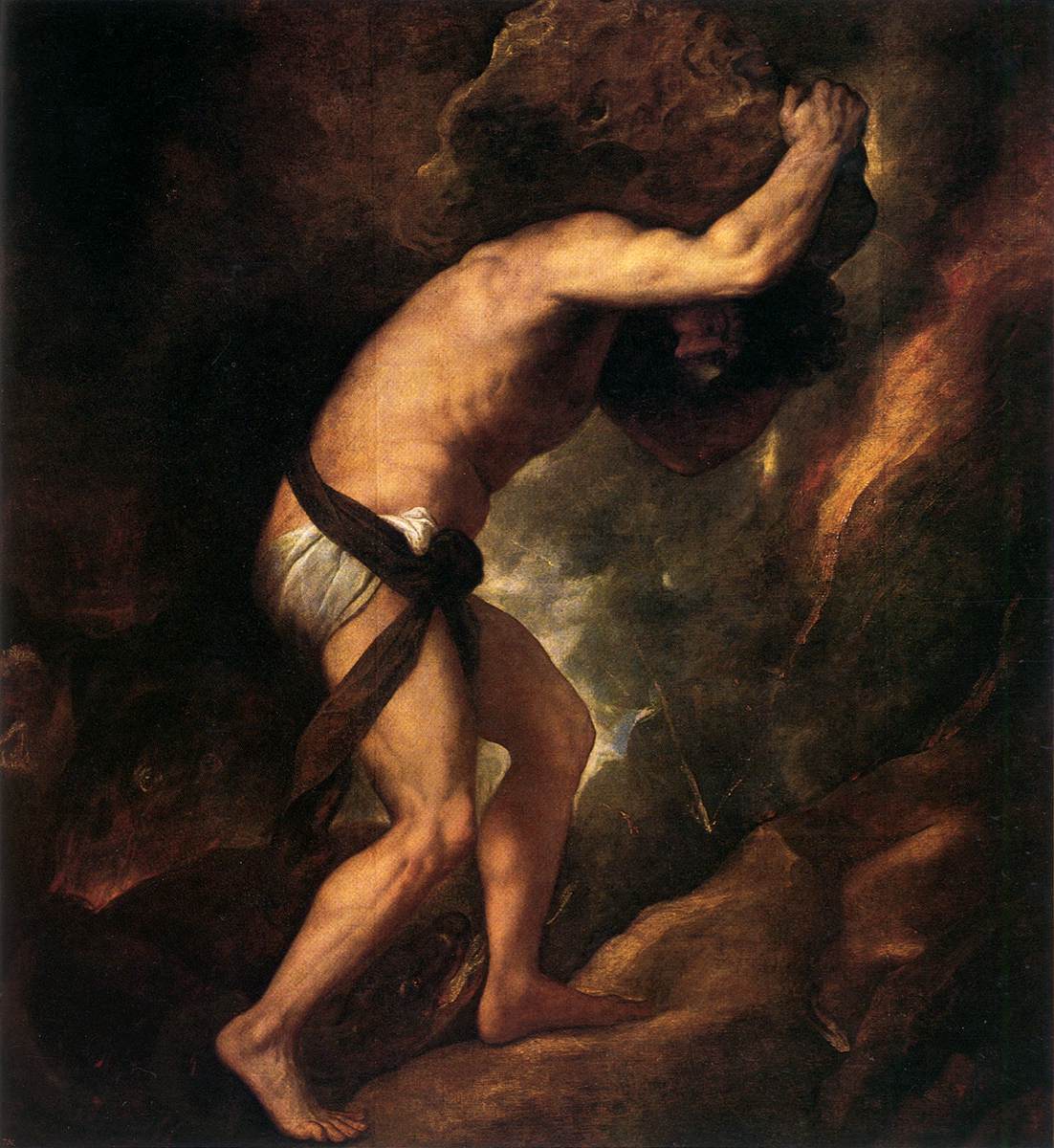
But then there’s that fifteen percent…oh boy. Sometimes I think to myself, this enlightenment thing about including everyone in your compassion can’t sisyphuspossibly apply to Salem. She’s the exception. She’s got to be. This really bothers me. Just as I think I’ve found a way to disentangle myself from her drama, she starts a new one, and I have to start all over again. It’s like that guy in Hell pushing the boulder uphill. When he finally gets it to the top, the boulder rolls right back down the hill.

Honestly, I don’t know what to do about that fifteen percent. But I do know this: if I were to die right this second, Salem would be my biggest regret. In the eight-five percent of the time when my afflicted emotions are not obscuring my view, I can so very clearly see Salem’s anxieties, her fears, her constant struggle to do a job for which she doesn’t have the skills. I can see how incredibly brave she is to even show up to work every day. I can see, in a word, her constant suffering.

But then there’s that nagging fifteen percent of the time when my afflicted emotions completely obscure that view. So maybe I’ll try this. The next time I recognize I’m caught in that fifteen percent, instead of getting mad at myself, and being pissed off at Salem for blowing my trip, I’ll recognize that I have the opportunity to make that fifteen percent into fourteen point five percent.

I don’t know if I can do this.

I don’t know if it will work.

But I do know that working toward enlightenment is the reason I’m here. It’s why we’re all here.

Even Salem.

On running to find the end of the rainbow..

Currently I’m studying Heart Treasure of the Enlightened Ones with a Dharma friend, the Venerable Tashi Nyima.

This is my contemplation on the third line of verse 20 of the root text of Heart Treasure of the Enlightened Ones.

heart treasure

“Expecting a lot from people, you do a lot of smiling;

Needing many things for yourself, you have many needs to meet;

Making plans to do first this, then that, your mind’s full of hopes and fears—

From now on, come what may, don’t be like that.”


Explain to someone else (making it my own)

“What do you want to be when you grow up?” That’s the question most of us in the west first learn to answer as we move toward maturity. When we’re grown up and we go for a job interview, the question becomes, “Where do you see yourself in five years?” And then, let’s say your five year plan for world domination is well under way, the question becomes, “What are your plans for retirement?” Then, after you’ve conquered the world and you’ve retired, the question is, “Have you planned to provide for your loved ones when you pass on?” Essentially this question is, “What are your plans after you die?”

From birth, literally up through death, we are taught to put long-range, long-term plans in place. Where does this get us? What exactly is a plan? It’s disguised hope, isn’t it? If I plan to be Vice President of Corporate Central in five years, then I better hope I don’t make any enemies who are more powerful than me. I better hope I make every deadline. I better hope my family doesn’t mind me working 55 hour weeks. I better hope I don’t die.

nervous babyThat’s a lot of hoping. What’s the flipside of hope? Fear. What my five year plan really says is, I’m afraid I won’t be Vice President in five years. I’m afraid I’ll make a powerful enemy. I’m afraid my husband (wife) will leave me. I’m afraid I’ll die before I’m Vice President.

That’s a lot of fear to live with. Fear in the mind is like the agitator in a washing machine. It churns our thoughts constantly, uselessly. It saps our energy. It mires us in the quicksand of the suffering of samsara.

What is the way out of the cycle of hope and fear? The answer is deceptively simple. Our only ambition, the only thing worth doing, should be to do the right thing. When we do the right thing, we put causes for happiness and peace and clarity into our karma stream. Our five year plan should be to take Dilgo Khyentse’s advice to heart and stop exhausting ourselves uselessly with five year plans “…like a child running to find the end of the rainbow…”.

***

Apply to a past situation (how would it have been different?)

I wanted to write a bestseller. I don’t just mean I wanted to write a good book. I mean I wanted to write a bestseller that would make Twilight look like a flash in the pan; a bestseller that would put Harry Potter in the shade of my brilliance.

Writing a bestseller is different than writing a mere book. For one thing, you have to read until you’re cross-eyed, so you can see what the competition is doing. You have to write to a trend. Got your own story to tell? Too bad. You’ve got a bestseller to write. But most important of all, you have to have The Plan. It’s so important, it gets capital letters.

bestse;;erThe Plan consists of your daily writing schedule, your daily reading schedule, your daily writing exercise, and your daily review of where you are on The Plan. I was so caught up in writing a bestseller that my entire life was one long cycle of hope and fear. I’d wake some mornings entirely convinced I’d hit on the right story. And I’d hope that feeling would last, because I knew what came next. A few weeks later, I’d up convinced I’d wasted the last year of my life, and that I needed a new Plan because all the trends said the market was glutted with vampire paranormal romance.

I spent nearly a year and a half of my life like that. As it turned out, I finished the book, sold it, and…it’s not a bestseller. So much for The Plan.

Looking back on that situation, I might have noticed that I could have freed myself of the suffering of hope/fear at any time simply by breathing and taking a step back from my life. If I’d done that, I might have noticed that I spent more time dreading the prospect of writing than I did enjoying it. I might have noticed that I’d become a slave to the tyranny of The Plan. I might have noticed that I was using The Plan to cling to something that no longer spoke to my interests in life.

Had I done this, I might have noticed that letting go of The Plan was the right thing to do.

***

Apply to an (ongoing) present situation (how does it matter today?)

The biggest ongoing situation in my life right now is the Pilgrimage of 62. When I began the pilgrimage, I like to think I didn’t have any grandiose plans. I like to think I wanted to do it in the ongoing quest to be a more skilled practitioner, to develop my skillful means.

But now, sixteen days into it, I think maybe there was a plan. Actually, I’m sure of it. My unspoken plan was to become ‘more holy’. This is a hard thing to describe. It doesn’t have anything to do with peace or clarity or skillful means, or even decreasing my suffering in samsara.

lucifer3I grew up Christian. I’ve been reading about pilgrimages since I was a little girl. I thought it was amazing that Jesus went on his pilgrimage way out into the desert all by himself, and he got to talk to Lucifer in person. Sure he was a fallen angel, but he was an angel. How cool was that? Of course, back then, I didn’t dare say I thought talking to the Devil in person was cool.

Now, lo these many decades later, taking my own pilgrimage, I’m starting to think my unspoken plan was to meet my dark angel. It’s difficult to escape the Christian idea of epiphany. I keep vaguely thinking that if I pray enough and meditate enough, the true source of the error of my ways will be revealed unto me. When that happens (according to my plan), I’ll be completely free of afflicted emotions. I won’t be enlightened, but I won’t get angry anymore, or resentful, or envious, or frustrated, or anxious.

What’s actually happening on the pilgrimage is that I can see my afflicted emotions with far more clarity than I ever have. Many of them are not pleasant, but—and this was so unexpected—they’re not frightening either.

From this I’m experiencing how it feels when we do the right thing. I began the idea of the pilgrimage because I felt it was the right time in my life to do something like this. The unspoken plan came later. What I’m experiencing is that when we do the right thing in our lives, we have more clarity, therefore we’re able to do more of the right thing which leads to more clarity. This has nothing to do with morality, and everything to do with the Dharma.

When we do the right thing, we gain the clarity to see the utter futility of the five year plan in the chaos of samsara. We begin to develop a mind of renunciation toward hope/fear. We begin to have the capacity to free ourselves of the suffering of the cycle of hope/fear.

***

Apply to a potential situation (bringing it home to play)

Currently I’m working on a writing project that is a collaboration with a Dharma friend. I’ve resisted writing non-fiction for a while now. There are few things more intimidating to a fiction writer than stepping into the world of writing non-fiction. I took on the project with much fear and trembling, not to mention trepidation. A month or so ago, when I sat down to begin, I thought—What am I doing? I don’t know how to do this.

What actually happened was, not only did I know how to do it, it’s like rekindling a romance. Writing is like anything else in our lives. It’s a relationship. For romance2me, it was a relationship that had gone bad. I was the injured, betrayed party. Now, working on this project, it’s like rediscovering the romance I once had with writing. Even more than that, it feels that it’s what I’ve been waiting all my life to write. It’s an incredible feeling of freedom to write without a Plan. That’s one thing I hadn’t counted on.

Another thing I hadn’t counted on happening is this almost irresistible urge to put a Plan in place. As I move forward with this project, it is my intent to keep it as free from a Plan as it’s possible to keep any writing project. Right now, when I sit down to write, there’s such an incredible feeling of doing the right thing. It is my intent as this project continues to let that be the working plan: do the right thing.

This project is really teaching me the difference between skillful means and futile planning. My skillful means is to work with 500 words of the source text at a time. My plan is…do the right thing.

Post Script:

When I shared this contemplation with my Dharma friend Tashi, he offered this about my take on Lucifer and meeting my ‘dark angel’:

What if ‘Jesus speaking face to face with Lucifer’ is a way of saying that he saw his afflicted emotions (more) clearly?

 When the Buddha says “Mara, I see you”, that is what he/you is saying.

This has really helped to see my ‘dark angel’ from a different perspective.

On ambrosia of the gods…

Currently I’m studying Heart Treasure of the Enlightened Ones with a Dharma friend, the Venerable Tashi Nyima.

This is my contemplation on the second line of verse 20 of the root text of Heart Treasure of the Enlightened Ones.

heart treasure

“Expecting a lot from people, you do a lot of smiling;

Needing many things for yourself, you have many needs to meet;

Making plans to do first this, then that, your mind’s full of hopes and fears—

From now on, come what may, don’t be like that.”


Explain to someone else (making it my own)

I’ve recently fallen in love. His name is King Arthur. I confess, he’s not an actual king. In fact, my true love isn’t actually a person. Nevertheless, I pursue King Arthur with the ardent enthusiasm of a virgin chasing after her first love. I’ve recently discovered baking as a passion in my life. The King Arthur Flour website is my baking hang out. If you don’t think you need anything, if you think you’ve got everything you need to bake, just one click on their “SHOP” link will show you just how wrong you are. I once had twenty-seven items in my cart. I’d thrown caution well beyond the winds and clear into the next galaxy.

king arthur2We all have a King Arthur in our lives. Sometimes we call it a career. If we meet enough deadlines, go to enough meetings, network with the right people, we’ll make it. Sometimes we call it our dream house, and we’ll do anything, drive any number of miles to get just the right antique for that corner near the front door. Sometimes we call it marriage, and our whole life becomes a search for the ‘perfect’ partner.

In this chase through life, we convince ourselves of all the things we ‘need’. If I’m going to be CEO, I need the right clothes, the right car, the right house. If I’m going to fill my house with antiques, I need the money to buy them. I better work overtime. If I’m going to find the perfect marriage, I need to be beautiful. I better go to Macy’s and shop.

We go on and on like this our whole lives. And each need we satisfy creates yet another need. Dilgo Khyentse puts it like this, “If we could taste the ambrosia of the gods, we would long for something even more delicious…”.

Our chase through samsara only leads us deeper into our own suffering. Isn’t it time we realize that “…the only worthy aim in life is to practice the Dharma in order to help all beings”?

***

Apply to a past situation (how would it have been different?)

pillars of the earthA while back, in my early days here in Texas, I wanted to listen to Ken Follet’s book World Without End. It’s the sequel to Pillars of the Earth. I decided that since I hadn’t read Pillars of the Earth in a couple of decades, I’d go back and re-read it before moving on to World Without End. Next I decided that if I was going to listen to over eighty hours of audio books, I’d need a project to work on. Knitting a blanket sounded good. Since they were such long books, it would need to be a pretty big blanket. Also, since I wanted to be able to mostly concentrate on the books, rather than a complex knitting pattern, I needed to do something in garter stitch (knit every row). But garter stitch is really boring to look at unless you have interesting yarn, and of course since it was going to be such a big project, I’d need a special long circular needle. These wouldn’t be Walmart buys.

Off I went to Woolie Ewe, a sort of boutique knitting store. I got really interesting yarn on sale and the circular needle.knitting

Then I decided…well, sitting all those hours at night, I’d need a good light and a comfortable chair. Off I went to Ashley, a local furniture store. I found the perfect chair. But then, all those long hours sitting and listening and knitting, my back might start hurting. So I found the perfect ottoman too, and a beautiful lamp. I didn’t have a table for the lamp, but the Ashley salesman was of course, happy to help me with that problem. About twelve hundred dollars later, I decided to go home and think about it.

I never got the furniture or the lamp. I downloaded Pillars of the Earth and listened to about one hour of forty. I started the blanket, which I now call my Eight Year Blanket because it’s not finished yet.

Looking back on this time in my life, I could have asked myself if I really ‘needed’ all of that to listen to a book. Having noticed that I didn’t actually ‘need’ any of it, I could have asked myself what discomfort I was trying to escape.

If I’d breathed and let a moment of peace and clarity arise, I might have noticed that I’d just escaped a nightmare relationship and moved to a brand new place where there was nothing familiar. I learned to knit when I was a little girl. Pillars of the Earth was my favorite book in high school. (I even thought about becoming a nun!) All of those needs were my attempts to barricade myself from the unknown by immersing myself in the familiar so that the unknown wouldn’t seem so terrifying.

Having noticed this, I might have been a little bit free of my fear.

***

Apply to an (ongoing) present situation (how does it matter today?)

meditatorThe biggest ongoing situation in my life right now is the Pilgrimage of 62. I remember when I first started planning it. I thought I needed so many things. Should I get special clothes for meditation? Maybe some scented candles? How about a special chair? Well, I obviously needed a dedicated notebook; a pretty one. Or maybe one that looked like a pilgrim’s notebook, uncut pages, sewn together with rustic thread. Should I get a Buddha poster so that my meditation / writing / prayer space would be inspiring? Or how about music? Maybe I needed authentic meditation music so I could seriously meditate. It went on and on.

Looking at the actual situation of the pilgrimage now, I can see that I didn’t need any of those things. In fact, if I’d bought a fancy notebook, a poster or two, a chair, and all of that, I would feel obligated to do it. A big part of the pilgrimage would have become, “Well, I bought all this stuff, so I guess I better do it.” At the time, I just wanted things to be ‘right’. As it turned out, things don’t need my help to be ‘right’.

I think a lot of our needs come from that very strong urge to make things ‘right’. We believe that if we get the right props for our life, then somehow, like a stage play, we’ll come out with a happy ending. Unfortunately, what needing things actually leads to is a pointless drama of needing more things. It leads to deeper entanglement in samsara. Dilgo Khyentse says we exhaust ourselves uselessly like children, “…running to find the end of the rainbow…”.

Before the pilgrimage, I barely escaped the drama of need, but only because time was short. However, having escaped the drama of need, I have seen the wisdom of not bringing it into my life.

***

Apply to a potential situation (bringing it home to play)

There are around thirteen items in my cart at King Arthur’s. This weekend I will be shopping. I don’t need Ancient Grains flour to make bread, or an oblong clay baker, or a nine flour grain blend. But I’ll probably purchase them. They’re within my budget. On my King Arthur wish list is the Kitchen Aid wedding ringsProfessional model stand mixer they recommend, and for $549, it can be mine. I swear, if someone gave that to me, I’d marry him. Or her. Hey, it’s a Kitchen Aid.

This weekend as I do my shopping at the KAF website, I will bring to my awareness that not one thing I buy on the website (even, sadly, the Kitchen Aid) will satisfy me. I will bring Dilgo Khyentse to mind and realize that KAF is my ambrosia of the gods.

In shopping this weekend, I will turn my mind to the Dharma, and bring to my awareness what will actually be done with the flour and other things I buy. I rarely keep what I successfully bake. I either bring it to work to share or I give it to a Dharma friend in support of his life’s work in teaching the Dharma. Recently I’ve begun baking bread that I donate for a meal for the homeless. Each loaf is a chance for me to work with my indifference to the homeless around the world.

In other words, when I shop on KAF this weekend, it won’t be with the intent to satisfy a need that can never be met. It will be with the intent that what I buy will be used to benefit others. I’ve never done this before, so I’m not sure, but I think shopping for baking supplies this way will lead to an even more satisfying experience of baking.

I don’t think, while we’re embodied, that we can ever eliminate “I need”. But I know we all have the capacity to at least ask, “This is what I think I need. How can I use this to benefit others?” I suspect if we did this consistently, we would find our needs shifting away from “What do I need?” toward the other end of the spectrum, “How can we all benefit?”

Give karma a chance…

Currently I’m studying Heart Treasure of the Enlightened Ones with a Dharma friend, the Venerable Tashi Nyima.

This is my contemplation on the final line of verse 19 of the root text of Heart Treasure of the Enlightened Ones.

heart treasure

“There’s no time to be happy; happiness is over just like that;

You don’t want to suffer, so eradicate suffering with Dharma.

Whatever happiness or suffering comes, recognize it as the power of your past actions,

And from now on have no hopes or doubts regarding anyone at all.”


Explain to someone else (making it my own)

When I was a little girl I had a book about dinosaurs. It was beautifully illustrated. It talked about how big they were, how it would have felt like an earthquake if a herd of them ran past your house, and how some of them could fly. This fascinated me. I would spend hours looking out my bedroom window, sort of wishing a T-Rex would rumble past. I’d go to sleep and dream of dinosaurs, then I’d wake up mildly disappointed because there weren’t any in my waking world.

dinotopiaWe all have dinosaur-dreams. We all spend a lot of energy and time wishing for the impossible. Then when we don’t get it, we feel betrayed, disappointed, angry, even disillusioned. We wish for the perfect marriage, then when the other person doesn’t fulfill our dreams of perfect love and happiness, we feel they have betrayed us. We look for the perfect job, only to find that the same annoyingly petty nonsense is in the new workplace and the only change is cosmetic.

We go on and on like this without ever paying attention to the causes for happiness or suffering we’re bringing into our lives. If we change workplaces, but have the same mental habits of aggression, jealousy, and envy, then the new workplace will be the same (or worse). If we are unhappy with ourselves, and we get married, then we’ll be even more unhappy because the other person will simply mirror our unhappiness.

Karma is inescapable cause and effect. It is inevitable activity. This sounds like doom and gloom, but it’s actually the key to freeing ourselves of the cycle of hope and fear that is such a constant in the suffering of samsara. In the sixties, the chant to end a war was “Give peace a chance”. To this I say, let’s end our constant battle with hope and fear and give karma a chance.

***

Apply to a past situation (how would it have been different?)

Like most people, my entire life has been a drama defined by the supporting players of hope and fear. But if I had to point to just one situation, I’d say it was when I wanted to start my own business selling handmade children’s clothes. When I left school, I was disillusioned with academia. I decided to leave it behind and go into business for myself. The product was upscale dresses for little girls about aged three to ten. I was very good at sewing. The dresses I made were gorgeous. I chose good fabric. I followed the patterns. I had a good product.

At the time I believed that just by wanting something badly enough, it would happen. I wasn’t into crystals or beads, but I was definitely influenced by New Age thinking. I might have even considered making a vision board. I knew nothing about marketing. I had no investors. I had no overall plan for my dress‘business’. But I figured if I stuck with it, good things would happen. After about six months, I gave it up. I’d only sold a few dresses. And lost money. I felt stupid. I wanted to throw away my sewing machine.

Looking back at that situation, I can notice that I had put no causes in place for a business to flourish. I didn’t network with any local business people. I didn’t do any market research. I didn’t take actions that would lead to a business coming into being. Had I noticed that, I could have taken a step back and asked myself what ‘starting a business’ was really all about. If I’d been honest with myself, I would have seen that the business was a way of escaping the discomfort of leaving school before I finished my PhD studies.

Having noticed this, I might have breathed with that discomfort, gotten to know it well, and eventually, I would have been able to free myself from it. Had I done this, the epic drama of hope and fear, driven by the attempt to escape that deeply painful discomfort of leaving school with ‘only’ a Masters would have had less power in my life. I would have had more peace and clarity. More peace and clarity would have led to more skillful acts. More skillful acts would have led to more causes for my future happiness.

***

Apply to an (ongoing) present situation (how does it matter today?)

The biggest ongoing situation in my life right now is the Pilgrimage of 62. At nine days into it, there is much greater clarity of the connection between what I do now, and what “happens” to me tomorrow or an hour from now.  What I’m really learning these past few days is that there are no exceptions to karma. That should be self-evident. But in a way, before the pilgrimage, I’d sort of disregard ‘little’ things. Recently I left the pen that I use to write in my journal on a different table, and I thought, “I don’t feel like putting it back. I’ll forget I left here, but that’s okay.” But the consequence was bigger than I thought it would be. What actually happened was that I finished meditating, I was ready to write, and…no pen. It took me a minute to remember where it was. I got agitated, and I forgot what I’d originally started out to write.

This sounds very mundane, but I think our whole lives are like this. Most times we don’t even notice the tiny causes for suffering that we put in place. This lack of clarity leads us to have hopes and fears regarding everyone. We become sort of professionally paranoid. We hold others responsible for the outcome of our own past actions.

On the flip side, by scrutinizing my actions, I have been able to put in place small causes for happiness. This doesn’t lead to a fairytale life of ongoing ecstasy, but it does lead to fewer struggles in my ordinary life. I’m tempted to say things fall into place. But I think what’s actually happening is that the causes for broken chainshappiness I put in place are constantly manifesting. Ordinary life feels like less work.

When something unpleasant does happen, I’m able to pause for a moment and recognize that the unpleasantness is a result of my past action. And this is where the Dharma really supports us. If we come to see the Dharma—which is to say, see the world as it truly is—we gain the power to free ourselves of the entanglements of hope and fear in samsara.

***

Apply to a potential situation (bringing it home to play)

On Friday in a meeting at work a topic was brought up by our manager. I pointed out that it was a non-issue because it was standard procedure to do what she was telling us to do. I asked why it was being brought up. After much hemming and hawing, it turned out that Salem [my co-worker] had made a very basic mistake in handling a whole slew of emails. This is something I went over with her constantly in the beginning. She blew it off. Then I decided to let go, and just let what happened, happen. Her mishandling of the emails resulted in double-billing for a whole bunch of products to the client.

Wow.fury 2

Sitting in the meeting, ego was on it. How dare you point this out to me? When did I ever do something so idiotic as not check dates? When did I ever open orders that didn’t need to be opened? How many mistakes will it take before you notice Salem’s utter incompetence? And on and on and on.

Then I noticed something.

The meeting was still going on. Salem was doing her usual smoke and mirror “it’s not my fault” routine. My manager was doing her usual routine of buying into it. The only one suffering intensely with thoughts of aggression and frustration and resentment was…me.

Hmmmmm…this ain’t right, I thought. And right then and there I realized I could go on thinking those thoughts for years, eons, and all that would change was the degree to which I would suffer. Those same thoughts came up all day long. Each time they came up I worked with them by breathing and doing mantra. Sometimes I had to escalate the situation to the Dharma Brigade and recite a verse of prayer.

My normal reaction to an incident like that would be to go to work tomorrow morning with a demeanor of rejoicing in Salem’s mistake, and hoping she makes an even bigger mistake that makes the client complain all the way to the top. But, especially after working with this stanza, I can see how that would be putting in place causes for my own future suffering.

So I’ve decided that tomorrow I’m going to be like a farmer clearing rocky ground for planting. Tomorrow when I go to work, I am going to genuinely look for three things to do that will help Salem. My only guideline is that it has to be of genuine help (not a smarmy…here, looks like you need this), and that I offer these three things with the intent to help. I’ve already thought of one thing, possibly two.

I am going to do this for purely selfish reasons. I am coming to see very, very clearly that the only way to decrease my suffering in samsara is to offer my help to the Salems who manifest in my life due to my past actions. I didn’t get it right before, but now karma is giving me a second chance.

I don’t know if karma can be healed, but just the genuine intent, the desire to help Salem feels very healing.

Post Script: 

I went to work with the intent to do three helpful things, but before I knew it, mind was on the job! It was subtle at first, but by the end of the day, mind was like an enthusiastic child…’this would be helpful…and this..and this…how about this?’ I actually did five things.

The same mind that had unleashed fury the day before became a torrent of helpful, right in line with my intent. There were so many things, I couldn’t do them all in a day. And what really surprised me was that they weren’t out of left field. Every ‘suggestion’ was right on.

I’m glad I gave karma a chance…

On happiness and suffering and our past actions…

Currently I’m studying Heart Treasure of the Enlightened Ones with a Dharma friend, the Venerable Tashi Nyima.

This is my contemplation on the third line of verse 19 of the root text of Heart Treasure of the Enlightened Ones.

heart treasure

“There’s no time to be happy; happiness is over just like that;

You don’t want to suffer, so eradicate suffering with Dharma.

Whatever happiness or suffering comes, recognize it as the power of your past actions,

And from now on have no hopes or doubts regarding anyone at all.”


Explain to someone else (making it my own)

When I was a little kid, I thought things just kind of happened. Actually, what I thought was, things happen, but if I really want something, I mostly can’t make it happen. My world—full of the constant upheaval of bickering parents—seemed to be a stormy sea that tossed me to and fro like a rudderless, leaky boat.

My parents mercifully got a divorce, and of course went right on being miserable with two other unfortunates.

I grew up.

For many decades I still believed things just sort of happened randomly. I made absolutely no connection between what came into my life and what I’d done.

Well, sometimes I did.

When I was in school, I understood that if I studied, I’d get a good grade. Later, when I entered the corporate scheme of things, I understood that if I did my job, got to work on time, and met deadlines, I’d get the (dubious) privilege of keeping my job.

But in my personal life, I kept engaging in the same negative acts again and again. Then I’d cry and wonder…why does this keep happening to me?

I’ve told my mother to stay out of my life, but there she is—interfering. Again.

I’ve told my boyfriend (du jour) to stop pissing me off, but there he goes. Again.

It was a very bewildering and frightening world in which I was agent of absolutely nothing. Suffering came at me constantly. It was everyone else’s fault. My mantra in those years was…if he (or she) would just [fill in the blank], then everything would be okay.

It never occurred to me, even as a passing thought, that I was the agent of my own suffering. I never paused to look at my own actions and how they were clearly linked to the consequences I experienced. My mind was a constant whirlwind of afflicted emotions—anger, frustration, resentment, aggression. There was no end to it.

wandering desertWithout pausing to look at how we cause all the suffering in our lives, we are doomed to wander samsara lifetime after lifetime, suffering terribly.

***

Apply to a past situation (how would it have been different?)

Where do I start?

There have been so many times in my life when, if I’d just paused and noticed the connection between the causes of suffering I was putting in place and the consequences that were manifesting, I could have freed myself of that particular suffering.

I guess the time in my life just before I came to Texas is a place to look at.

I was about two weeks from leaving (fleeing, actually) a scarily bad relationship. It was a kind of caesura in my life. Everything was on hold. I was simply counting down the clock to my booked airplane flight to Dallas. I was participating in the relationship only in the most superficial ways. In my mind, it was over, like a corpse ready for burial.

This meant I was no longer caught up in the emotional dynamics such a relationship exhaustingly demands. I really didn’t care what the other person said or what they did, because I was on a countdown to freedom.

In those two weeks, I unintentionally gained an analytical distance from a very entangled situation. I was able to see with almost perfect clarity how my own actions had led to exactly where I was. It was like seeing a map that I had drawn and then navigated with precision. At the time, this insight came with a lot of shame and blame and guilt and feelings of worthlessness.

Looking back on those two weeks, I might have noticed how the connections I’d seen weren’t just true of the last ten years. It was true of my entire life. Having noticed this, I might have breathed, and taken another small step back. Had I taken a step back from the afflicted emotions that arose, I may have noticed that I’d just discovered the key to my true freedom. I may have noticed that since my actions had brought me to the misery I was experiencing, I could choose different acts that would lead to different consequences. yellow brick road

I might have noticed that I wasn’t Dorothy helplessly caught up in the tornado of my life. Rather, I was a pilgrim setting out on a brand new road.

***

Apply to an (ongoing) present situation (how does it matter today?)

The ongoing situation in my life right now is the Pilgrimage of 62. Wow. It’s nothing like I thought it would be. I had so many doubts when I started with this idea. The biggest (and perhaps silliest) was…what if I’m not holy enough? Now, on day four of the pilgrimage, that makes me laugh. How could I not be holy enough (and what I really meant was good enough) to take time twice a day to touch in with my true nature?

When I began this a scant three days ago, I was focused on my twice daily mediation and prayer activities—the 62. In the beginning, a couple of weeks ago, I had to readjust my schedule and condition my life to the pilgrimage. What I’m finding now is that the pilgrimage is conditioning my life to it. It is in fact becoming the action of my ordinary life. I didn’t foresee that.

As I go about my ordinary life, there is so much clarity about what will put in place causes for suffering, and what will put in place causes for happiness. And it’s nothing like I thought. I can’t say that enough.

Last night I was very tired so I decided not to do the dishes. Now, there’s nothing that bothers me more than walking into the kitchen in the morning and seeing even one dish in the sink, let alone the mess that’s in there now. In choosing to leave the dishes in the sink last night, I knew I was putting in place a cause for suffering this morning.

In seeing that, I was able to go back to the choices that had led to so many dishes in the sink so late. I was able to clearly see how I’d started baking late, then chosen to do other things instead of cleaning up as I went along.

buddha globeThis is a very mundane example of how our choices bring suffering into our lives. But I think suffering is always mundane. No choice is made in a vacuum. We are surrounded by conditions at every moment. And those conditions are a culmination of our smallest choices. From this, I am absolutely coming to see that whatever happiness or suffering comes, it is the power of my past actions bringing it to manifest. We all have an incredible power for happiness or suffering. The choice is always ours.

Isn’t that awesome?

***

Apply to a potential situation (bringing it home to play)

A funny thing’s happening on the pilgrimage. I’m getting to know my ego very well. The catalyst for this is none other than my cubicle-mate Salem. She knows how to push all my buttons, even the ones I didn’t know I had. At the end of the pilgrimage, I should really get her a gift because she is turning out to be an invaluable traveling companion.

At least once a day, Salem will do or say something that ticks me off. Well, that’s what used to happen. These days, I can usually the catch the afflicted emotion before it’s full blown and giving rise to discursive thoughts.

Yesterday was my first day at work and on the pilgrimage. The day before, on Sunday, I took Bodhisattva vows for the first time. The two together are very powerful agents in my ordinary life.

At work yesterday, Salem did her usual awesome job of pushing my “Are you ever going to take responsibility for what you do?” button. I was almost off and running. The fuse was lit and sizzling, burning its way toward a tightly packed bundle of Self Righteousness TNT. But these days it’s a pretty long, pretty slow-burning fuse with Salem. She’s given me so much practice that I was able to pause and ask myself—did I really want to plant seeds of frustration and resentment with my thoughts? Did I want to put in place causes of my own suffering? Did I have so little suffering in my life that I wanted to add to it? And finally, did I want to add to Salem’s suffering? [that was a first]

There was a moment when ego flashed a thought, “Damn right I do! She deserves it.” Ouch.

Then I remembered the pilgrimage, my Bodhisattva vows, and I realized that no, she didn’t deserve it. None of us do. Even ego piped up (grudgingly) with, “I guess not”.

Today as I go to work, I will work with having gratitude for Salem. Without her presence in my life, I wouldn’t have learned nearly so quickly the intimate connection between the causes I put in place in my life, and the consequences that manifest.

I know there’ll be moments like what happened yesterday, but when they arise, it is my intent to use those moments to train my mind to make choices that lead to peace and clarity rather than to suffering and confusion.chain 2

Can I actually do that?

We’ll see.

On getting everything you want…

Currently I’m studying Heart Treasure of the Enlightened Ones with a Dharma friend, the Venerable Tashi Nyima.

This is my contemplation on the third line of verse 18 of the root text of Heart Treasure of the Enlightened Ones.

heart treasure

“Disgust, because there’s no one to be trusted,

Sadness, because there’s no meaning in anything,

Determination, because there’ll never be time to get everything you want;

If you always keep these three things in mind, some good will come of it.”


Explain to someone else (making it my own)

One day, I’ll die. I’ll be alone at the moment of my crossing into death. All that I know will be left behind. All that I have done will be left behind. All that I have wished for, even those secretly cherished dreams that I don’t dare speak aloud—of true love, of unending happiness, of an end to heartbreak—will be left behind. Knowing this, how am I to live my life?

grim reaperI tell myself I’m not afraid to die but…a couple of days ago I went to the doctor. When she walked in and looked at my EKG print out, her normally smiling, welcoming face was deadly serious. In those moments of stone silence, death’s cold draft blew through my life. I had regrets, anxieties, and so much fear. It was a routine test. But I was suddenly, unexpectedly face to face with my mortality. A brief thought ran through my mind…My god. I’ve been f**king around. Is it too late?

I finally managed to say to her, “What? What’s wrong?” As it turned out, nothing was wrong. “Just concentrating,” she said. She was having a busy day.

Ever since that moment, I’ve really thought of what this line says. There’ll never be time to do it all. And even if there was, how much of it is worth doing? It’s funny how that moment of utter terror left in its wake a gift of total clarity. For long moments on that day, I was able to realize that we are all like travelers on a short trip. It’s really a very short journey from birth to death.

In a couple of weeks, I will have journeyed around this world’s star fifty times. There’ll come a time when I don’t make the journey all the way around. When that time comes, I don’t want to leave this realm full of anxiety and regret. That’s where a life full of wishes for samsaric happiness leads: dying full of regret for what you could have done. Instead, we can choose to live so that our every step brings us closer to a death that will lead us to enlightenment and freedom from the suffering of the cycle of birth and death.

***

Apply to a past situation (how would it have been different?)

There was a time in my life, almost a decade ago now, when I wanted True Love. Yes. With the capital letters. Think Cinderella. Think Sleeping Beauty. Think Prince Charming. On steroids.cinderella

When Prince Charming came into my life, I was so swept off my feet, I breathed fairy dust. There was nothing in my life but roses and romance. And I thought, this is it. I found him. All that time looking, and here he is at last. Cinderella fitting into her glass slipper had nothing on me.

When Prince Charming’s glamour began to wear off, I refused to see it. I literally closed my eyes to anything that didn’t fit with my idea of True Love. Even though after a year I was living with all the classic signs of abuse—isolation, low self-esteem, fear for my safety—I still thought I could make things right. As nine years of my life crept by, I would think…I’m over forty. I won’t have time to find True Love again so I better stick with what I have.

Looking back on that situation in my life, I can notice how my own fear of my time running out to get what I wanted imprisoned me in misery. I can notice how I was willing to delude myself into believing I had what I’d wished for. All I had to do was make it right.

I could have taken a step back, breathed and noticed that the situation I found myself in was based on two afflicted emotions: hope and fear. Having noticed this, I might have asked myself…I got what I wanted, it wasn’t what I thought, did I want to spend the rest of my life chasing an illusion?

***

Apply to an (ongoing) present situation (how does it matter today?)

kitchen aidI want a Kitchen Aid stand mixer. I’ve looked at so many of them on E-bay, I get Kitchen Aid ads in my Gmail sidebar. I mean, really. I want one. Not the giant 7.5 quart Professional series. That’s around $700.00. No. I just want the classic. Well, the Artisan model, with the planetary motion (so I don’t have to scrape the bowl) would be nice. But it’s around a hundred bucks more than the classic. Or I could get a classic and upgrade to an Artisan later. I may even go to the Salvation Army and check out their appliances.

These thoughts go around in my head quite a bit lately. When I first started baking outside my bread machine, I had to have a cast iron Dutch Oven so that my breads would have a good crust. But…the bottom crust would burn; too much radiant heat on such a dark color. So, I wanted a ceramic Emile Henry pot. I got that. Works like a dream…except…the baking was still a little uneven because I have a cheap oven. What I really needed was a ceramic baking stone. It came in the mail yesterday. Wow. It’s sweet! I bake like a pro now; crispy top crusts, tender bottom crusts.

So now, all I need is…those artisan flours from the King Arthur Flour website. Just a few. And of course there’s the oblong clay baker, so I can make a real Italian loaf of bread and…there is no end to it.KA Flour

Working with my baking practice as I work with this line has really helped me to see how absolutely pointless it is to try and get everything we want. Our mind will never run out of things to want.

Having noticed this, I can take a step back and notice how every loaf of bread I make brings me a sort of ephemeral peace. It’s not the bread itself. It’s baking. Each loaf is a chance to perfect something, but then, you have to let it go. It won’t last. It’s not meant to. There’s something very satisfying in that arising of perfection, and the letting go of it.

I can notice that no thing in the phenomenal world can last because entropy rules the day in samsara. Having noticed this, I can turn my attention to ‘that which holds’—the Dharma. I can swiftly develop the mind of renunciation, and realize that any happiness that arises in samsara is fleeting, deceptive, illusory. There will never be time to get all I want, and even if I did, it wouldn’t be worth having.

***

Apply to a potential situation (bringing it home to play)

Today after sangha, I’ll be trying out a test bread. It was pretty bad the last time I made it, but I’ve got a pretty good idea of what went wrong. Typically when I bake, all sorts of thoughts go through my head: if I had that metal set of measuring cups and spoons from the King Arthur Flour website, I could just toss them in the dishwasher. I should get another banneton. A back up would be great. Wonder what this recipe would be like with an ancient grain flour. I really need a stone crock so I can try out sourdough….and on and on.

Today when I’m baking, I’m going to notice how those thoughts habitually get in the way of doing something I really enjoy. I’m going to notice how they lead to a dead end. I’m going to notice how I could fill an entire industrial-size kitchen with every baking implement I can think of or dream up, and still, it wouldn’t be enough.

I can notice how these thoughts aren’t about baking. They’re about dying. When we want something, we are fantasizing a future. And if there’s going to be a future, there’s going to be a ‘me’ to live it. Our thoughts of wanting things and chasing after them allow us to exit the discomfort of coming face to face with our own inevitable mortality.

Having noticed this, when those thoughts come up, I’ll breathe, do a quick mantra, and remind myself that there is only one way out of the suffering of samsara. It’s not the next Kitchen Aid, or the next clay baker, or the next bag of artisan flour. These are pleasant distractions. The only way out of the suffering of samsara is to study the Dharma and let it permeate and eventually dissolve our delusions and wrong views.

Having reminded myself of this, I can bake, finish that test bread and know that I have used the practice of baking to increase my peace and clarity by bringing baking to the path. Then I can dedicate the merit. The path is wherever you find your feet to be. My footsteps happen to be made in flour. SRL 03 08 14

On hiding your mind…

Currently I’m studying Heart Treasure of the Enlightened Ones with a Dharma friend, the Venerable Tashi Nyima.

This is my contemplation on the third line of verse 17 of the root text of Heart Treasure of the Enlightened Ones. 

I thought it was interesting to see how much of a HUGE part speech plays in our life. I also think that in this case “hide” can be read as “guard”, as in having vigilance. That’s the point of view in this contemplation.

heart treasure

“Hide your body by staying alone in a mountain wilderness;

Hide your speech by cutting off contact and saying very little;

Hide your mind by being continuously aware of your own faults alone.

This is what it means to be a hidden yogi.”


Explain to someone else (making it my own)

We’re always talking. There’s a twenty-four hour Weather Channel, a twenty-four hour CNN channel, a twenty-four hour cooking channel. If you’re willing to, you can spend twenty-four hours a day watching sports on ESPN. And that’s just television. There are twenty-four hour radio stations. We are inundated by seas of words constantly, whether it’s television, radio, or a text message on our cell phone that of course, can’t wait.

Where does all this talk come from? Is it anything more than pointless chatter? Sadly, probably about ninety-eight percent of what we say is utterly pointless and doesn’t need to be said.words tiles

If we think about how the mind works, all talk originates in our mind. Our own words begin with our thoughts. The words of others can only be understood when we take them into our mind, pass them through the filters of our prejudices, our likes and dislikes, our life experience, our mood, our tendencies, then finally arrive at ‘understanding’. This happens so lightning-fast, that most times we’re not aware of it.

Unfortunately for us, these filters work both ways. Every word we say is an impromptu autobiography. We continually reveal ourselves in our speech. If we know this to be true, then it’s a good idea to constantly, relentlessly examine our mind, and become aware of our faults. This awareness will lead us to a skillful discrimination in what faults we reveal, and what faults we choose not to reveal.

If we ask ourselves before we speak, “what is the state of my mind?”, we will find many times that we want to speak out of envy, jealousy, resentment, anger, fear, or some other afflicted emotion. If we hide (or guard) our mind by being continually aware of our faults, then monkey-mind has less of a chance to gibber pointlessly.

***

Apply to a past situation (how would it have been different?)

speech bubble 3There have been so many times when my speech has led to trouble in my life; it’s hard to point to just one situation.

I remember a fight I had with my mother when I was in my mid-twenties. I said something that made her cry and her tears infuriated me. Seeing her tears, I said something very like, “I don’t care if I make you cry. You’ve made me cry enough.” Then I stormed out the door to work.

Looking back at that unskillful speech, I can notice that I was so overwrought with emotion that it would have been better to super glue my tongue to the roof of my mouth than to utter a single word. I can notice that the state of my mind was frustration and anger. I can notice that my words were purposely chosen to inflict pain.

Having noticed this, I might have taken at least a half-step back, and before I spoke, I might have become aware of the faults of my mind in those moments. I could have breathed with the hot-prickly sensation of anger. Doing this would have given me a brief moment of clarity. In that moment I could have asked myself what choice I wanted to make. Did I want to continue my habitual actions, which would only lead to more suffering? Or did I want to guard my mind at that moment and move toward weakening my habitual tendency?

Having asked myself these questions, I could have taken another half-step back and breathed. Just one breath. The average rate of human speech is 225 words per minute. In that one breath, that one skillful act, I may have stopped my monkey-mind from pointlessly gibbering at least a hundred unskillful words, words that would have led to nothing but suffering.

***

Apply to an (ongoing) present situation (how does it matter today?)

Words are how I make a living. Throughout my work day, I resolve issues by answering questions either on the phone or via email. I process on average, about fifty email interactions a day. And every single email is a conversation in my mind. With over two hundred emails a week, sometimes over a thousand emails a month, my job could easily become monkey-mind’s playground. In fact, it has been exactly that in the past.

At times I catch monkey-mind up to its old tricks. Thoughts zing through my mind:

What a stupid question.

Seriously, are you telling me you have enough time in your day to sit down and type such a dumb question?

Good god lady, I told you that last week!

You need a friend. I’m not your pen pal.

Please. Go be stupid on your own time.

What I’ve noticed as I study the Dharma and get to know my mind, is that the emails don’t substantially change. It’s the same questions over and over, the same requests. What changes is my state of mind. These days when a thought like this comes up, I know I need to pause. I know I need to examine the state of my mind. And sure enough I’ll find I’m irritated because my back hurts, I have a headache, the test bread I baked over the weekend burned to charcoal on the bottom…whatever. The point is if I answer an email in that state of mind, I will show my faults. And since my faults of aggression and irritation and frustration are not unique to me, my faults will resonate with the person reading my words, and my email will in turn evoke their anger, their aggression, their frustration.

Instead, I choose to take a step back. I read most emails for tone before I send them out. This continuous awareness does not lead to a perfect work day, but shhhhit does lead me to do my job with a measure of compassion and empathy. Am I able to do it on every single email? Of course not. But, with awareness, by continually guarding my mind, continually being aware of my own faults, I keep monkey-mind’s gibbering to a minimum.

***

Apply to a potential situation (bringing it home to play)

The ongoing situation in my life is Salem. A few months ago, it felt like that situation was completely unworkable. I remember thinking something like ‘working with my mind is one thing, but I ain’t a freakin’ saint’. The situation with Salem remains unchanged. What has changed is the state of my mind.

In working with what I felt was an external ‘enemy’, it became clear to me that the ‘enemy’ was an internal representation that had very little to do with the person sitting next to me. After months and months of hard work, I can finally examine the state of my mind before I interact with Salem.

As this happens, I’m finding that I want to progress beyond simply not disliking her. I’m not sure what the next step is. On Thursday, she shared a recipe book with me. That felt really good, as if all my hard work had paid off.

This situation has gone from being very closed in, with both of us locked into adversarial roles to being very open-ended. But now, I feel like I’m at a stalemate. Salem is a drama-junkie. This isn’t maligning her. It’s based on observation. I don’t want to become part of that. It would just lead back to afflicted emotions.

truceOn Tuesday when I go to work, perhaps I can bring her a King Arthur Flour recipe. Baking has become a big part of my life and doing that would be like reaching across a great divide. This is definitely an experiment with state of mind. I have never before gone from adversarial to truce with anyone in my life. In the past, it’s always reached an unbearable crisis where the only option was to walk away. This time I find that the only way to work with this is to be continually aware of my faults, lest monkey-mind spews words that will lead away from the Dharma, away from peace and clarity. With relentless vigilance, monkey-mind doesn’t get to be in charge. I have a choice.

On being in this degenerate age…

Currently I’m studying Heart Treasure of the Enlightened Ones with a Dharma friend, the Venerable Tashi Nyima.

This is my contemplation on the first two lines of verse 6 of the root text of Heart Treasure of the Enlightened Ones.

heart treasure

Alas! How depressing to see the beings of this degenerate age!
Alas! Can anyone trust what anyone says?
It’s like living in a land of vicious man-eating demons–
Think about it, and do yourself a big favor.”


Explain to someone else (making it my own)

You know how you’re just walking along in Walmart or Target or wherever, then all of a sudden you overhear a couple having a vicious fight? I mean awful, terrible things spew from their mouths in seconds. Then they retreat into a sulky silence which feels like two wounded tigers retiring to lick their wounds and consider a better strategy for an even deeper, more clawing strike next time.

I like to think about light, and romance and peace, and  love. Heck. I write romance. And in a way, witnessing these anonymous mini-nuke strikes just bursts my bubble. I used to look for the inevitable gold bands on the obligatory finger and think, “wow…a long time ago, she dressed in white, he got in a tux, they spent gads of money, and stood in a front of a whole bunch of people and promised to love one another until death parted them. Huh. Better to let common sense part them now.”

Now when I witness things like that, I think to myself, “May we all be free of suffering and the causes of suffering.”

optical illusionOne of the basic truths, maybe the only truth of samsara is that absolutely nothing is as it appears to be. It’s not even that it’s dream-like. It’s more like we’re caught in an ongoing cycle that consists of short-lived happiness, followed by terrible suffering, followed by short-lived happiness. There is never no suffering. Not ever. Yet we live as though there were, and it was a goal to be striven for.

There is an entire industry on Madison Avenue who lure people into the false hope of buying just the right dress, getting just the right body, the right partner, the right—whatever. Then, the promise goes, you’ll be happy.

But these merchants are just as caught up in the delusion as everyone else. Absolutely nothing they say can be trusted.

There is only one truth to be found in samsara, in the phenomenal world, and that is the truth of suffering. Whatever you attach yourself to, whatever you hold onto in the phenomenal world will lead to suffering. The stronger the attachment, the tighter your hold, the more suffering you’re setting yourself up for.

So, sadly, the truth is, trust no one who promises a path to happiness in samsara. See beings for what they are: deluded, afraid, desperately defending their tiny patch of samsaric happiness, and willing to inflict whatever vicious strike is necessary to hold on grimly.

Is that what we want for our lives? Do we want to spend lifetime after lifetime snapping and snarling at anyone who threatens our grip on “happiness”?

***

Apply to a past situation (how would it have been different?)

I went through a time in my life, many decades, when I thought writing fiction would lead me to ultimate happiness. And I’m not kidding around here. I’m rose colored glassestalking Nirvana, unending perpetual. Forget about peace beyond understanding, this would be happiness beyond apprehension. I was one hundred percent convinced of this. My rose-colored glasses were locked on so tight, they were melded to my eye sockets.

To this end, my life became a perpetual battle of sweeping ‘obstacles’ out of my way. What? Participate in life? Out of my way! Make way! Can’t you see I’m on my way to Nirvana here?? I was hardcore.

Then suddenly, everything in my life was ‘right’. I had the perfect job situation, the perfect zero-personal relationship situation, the perfect story to write, and the perfect plan for doing it. And, oh yeah, I was dabbling in learning this new thing: the Dharma.

Then a strange thing started happening. For the first time in decades, I started suspecting that…hmmm…there could be another way to perpetual happiness. This whole Dharma stuff…there could be something there. It had quite the ring to it.

But I steamed ahead, finished the book, and it was rejected around thirty times before I sold it.

Hmmmm….something wrong there. Book sold. No Nirvana. No happiness beyond apprehension. Agents had lied to me like back alley dogs.

But…and here was something odd…the Dharma was still there, and I could suddenly see what I’d been doing for decades of my life. Upon seeing that, truly seeing it for the first time, the suffering was epic.

As I continue to go through the quieting storm of letting go my delusions about writing fiction, I can notice that having any attachment to any idea of happiness in samsara will inevitably lead to dire consequences. It will never, ever lead to happiness.

Had I taken just a half-step back, I could have noticed how incredibly unhappy writing fiction made me because I wanted so badly to write the New York Times bestseller that would blow the charts.

Having noticed my own suffering, I might have asked myself how such unhappiness could possibly lead to happiness?

Seeing the path I was on, I could have simply shifted my perspective about fiction writing, changed my state of mind from one of…this will bring me lasting happiness… to …this is a pleasant second job, a fun way to make extra money to pay off debt, and to boot, an excellent vehicle for sharing the Dharma.

Had I seen the true state of my mind earlier, I would have gradually disentangled myself sooner. I would have seen the basic truth of samsara: the more attachment, the more suffering.

***

Apply to an (ongoing) present situation (how does it matter today?)

The biggest situation in my life right now is looking for a new job. As I look, it is so easy to fall into the thinking that a new job will bring me happiness. About a thousand times a day I think, “When I leave here then, I won’t have to put up with [fill in the blank].”

Fortunately for me, I can catch those thoughts about 80 percent of the time and realize that, unless I die at my current job and manifest from a golden lotus in the Pure Land of Bliss, wherever I go, there will be some crap to put up with. There just will be. It’s the nature of phenomenal existence.

Remembering this brings a lot of humor and lightness into my day and it turns my mind to the Dharma. Dilgo Khyentse could have been standing beside my desk writing when he said “Alas! How depressing to see the beings of this degenerate age! Alas! Can anyone trust what anyone says?”

rainbowAs ordinary people, we tend to believe quite fervently that if we could just change our outer situation, then that elusive perpetual happiness we’ve been seeking all our lives will suddenly, magically be there. We listen to our thoughts about happiness, about how we can go about finding it. But alas, we can’t trust thoughts that arise in a deluded mind.

As I go through this time of transition out of my workplace, I keep my eyes open to what habits I’m forming, because that’s what I’ll be taking with me when I leave my job, and when I leave this lifetime. I work with aggression, hope, fear and a myriad of others when they come up by breathing, doing mantra, and turning my mind to the Dharma. This works. In fact, a funny thing happens. The outer situation seems to dissolve into a totally neutral environment and I become one hundred percent aware that only my deluded thoughts are giving it a positive or negative charge. In those very fleeting moments I am filled with compassion for myself and for all of us who suffer so needlessly in samsara because we believe so much in our thoughts.

When I turn my mind to the Dharma at work, the suffering dissolves completely. And I even wonder why I should bother to leave…and go to a different shade, a different flavor of suffering.

I think when Dilgo Khyentse wrote these lines, he wrote them from a place of compassion—Alas, this is where you find yourself my friend. Let it go, renounce it and return to your true self.

***

Apply to a potential situation (bringing it home to play)

When I go to work today, Salem will be there with her usual Shakespearean drama, doing her personal best to top Lady Macbeth. I have to say, she would have done the bard proud.

In a most uncompassionate way, when I look at her, I see the horrible suffering that she inflicts on herself and others with her struggles to find happiness in samsara. I see how she has identified herself completely with her very strong ego as The Martyr Who Tries and Tries but is failed by all. And of course, since she tries and tries (her very hardest, she’ll be happy to tell anyone who has the patience to listen), then nothing is ever her fault. She is a perpetual victim, and she tries her very hardest to draw everyone around her into her drama of martyrdom.

This is brutal.

Without the Dharma and without my practice, I would have been sucked in long ago and I would be playing Antigone to her Lady Macbeth. Salem has been a big lesson in letting go. No matter what she does wrong, what mistakes I see, I do mantra and I breathe because I’m coming to clearly see that the ‘mistakes’ are simply the steps she uses to mount her stage and play out her drama.

Today, as I enter the theater of the workplace, I will keep Dilgo Khyentse’s words in the back of my mind, or maybe in a corner of my heart. I will remember, “Alas! How depressing to see the beings of this degenerate age!” I will remember that Salem is no different than me, no less a Buddha than Shakyamuni Buddha.

That I can remember these things, I have no doubt. But I don’t know that I can work with this particular being with compassion.

There’s this bread recipe that I want to make. I have all the ingredients. I have the recipe. I’ve read it over several times, almost prayerfully at this point. But I’m afraid to mix it up and try it. The flour is a special flour and it’s very expensive. I don’t want to try the recipe until I’m absolutely positive it will come out. Of course, like that, I’ll never make No Knead Oat Bread.

These lines are helping me to see the same thing is true with the situation with Salem. I fully understand intellectually that “Salem” is a mental representation, a part of myself that I blame greatly for much pain in my past.

So here I am. I’ve got Dilgo Khyentse’s great recipe in these two lines for seeing Salem compassionately, but in a way, I’m afraid to do it because…what? I’m afraid of what seeing that aspect of myself compassionately would cost me?mirror

Yeah. I think so.

So today, I’ll keep these lines in my heart, and … like baking bread…I’ll see what rises.