On renunciation…

On renunciation…

The weakness of samsara is impermanence. That is the key observation that allows us to cultivate renunciation. Everything flows; everything changes; nothing remains the same. Why be attached or averse?

Venerable Tashi Nyima

i. What does this mean to me?

I grew up in the Bronx in New York state. By the time I was in high school, I was going into ‘the city’ (Manhattan) on the subway by myself. When I was in the city, I was a total tourist. My favorite place to go was the touristy part of Times Square, especially at night.

At night Times Square came alive with marquees full of flashing lights. All the stores lit up. It was a little magical. There was always something bright and shiny and new going on. Not to mention the smell of street foods and the strains of music. There were people walking down the street offering cards or flyers for the latest Broadway show, or the newest place to buy some touristy “I Love New York” t-shirt.

Times Square is a microcosm of samsara. There’s always the next new thing. There are always shiny new houses, shiny new cars, shiny new jobs. All this glitter hides the truth of samsara. It’s like going to Times Square in the daytime. The streets are dirty and littered, and in the bright light of day, the shiny objects of the night are merely dull and uninteresting.

As the writer says, “The weakness of samsara is impermanence”. Nothing stays the same in samsara. The shiny new house comes with a thirty-year mortgage that will turn you gray eventually. The shiny new car comes with eye-watering payments, not to mention insurance.

The writer talks about cultivating renunciation. Renunciation of what? It’s not so much the bright shiny things, it’s how they enthrall us almost to the point of legitimate concerns fading away. The writer isn’t suggesting that we go around in hair shirts and ashes. That would serve no purpose. It would be just another form of attachment. Rather the writer is pointing out that all bright shiny things will one day turn to rust. And knowing this, “Why be attached or averse?” Instead, shouldn’t we renounce the enthrallments of samsara and turn our minds to the true bliss, true permanence, true being, true purity that is the Dharma?

ii. How would I explain this to someone else?

Renunciation comes with a negative connotation in our society. We think of hermits on mountaintops or out in the desert wearing rags, having ‘renounced’ the world. Our local friendly AI tells us that renunciation means, “the formal rejection of something, typically a belief, claim, or course of action.”

Renunciation is simply a rejection or a knowing choice to stop doing something or to stop believing something. In this case we’re talking about formally and consciously rejecting the idea that samsara has anything to offer. So many times, we make the mistake of believing what we experience in samsara and taking that for the truth of things.

This inevitably leads to unhappiness because, as the writer reminds us, “Everything flows; everything changes; nothing remains the same”. Whenever we accept anything in samsara at face value, we are placing causes for suffering into our lives. How many outfits do we have in our closets that are pushed all the way to the back, just a car ride away from Goodwill? Not only is everything we experience an internal mental representation, but “Everything changes; nothing remains the same”. What is it that remains the same with no retrogression? The Dharma. While in these limited bodies with our limited senses, the Dharma is the only reliable, unchanging thing we have.

Samsara, like Times Square at night, is very seductive. It appeals to the senses, attracts the mind, dominates our thoughts. It’s hard to remember that samsara is merely superimposed upon ultimate reality – the truth of how things are.

iii. How do I bring this into my life?

For me, the lure of samsara used to be nearly irresistible, like some powerful addiction. Like any addict, I was lost in the delusions of samsara, drowning in an ocean of misery. Now, after having had the good fortune to encounter and study the Dharma, I understand samsara for the illusion it is.

I won’t be running out and buying a hair shirt anytime soon though, but I will use the teachings of the Dharma, through wisdom and compassion, to help others. Helping others is the only true cause for happiness in samsara.

In my day-to-day life, what hooks me the most into being lured by samsara are my comforts. I like air conditioning. I like shopping for yarn, and knitting. I like, overall, being comfortable. I think we all do. But at what cost does our comfort come? Does it make us so indolent that we don’t ‘feel’ like studying the Dharma? Or acting compassionately? Or we feel like ignoring our own Buddha Nature when it becomes uncomfortable to help others?

As I study, meditate and practice, samsara becomes more and more transparent. The tricks of seduction become clear. Knowing these things, and having seen samsara for what it is, what is the best way to behave to bring me closer to expressing my Buddha Nature and recognizing it in others?

The writer reminds us that “The weakness of samsara is impermanence”. So, we know samsara is an illusion that will fade away like mist in the trained mind. Knowing this, we must turn to our conduct. We must move through samsara with wisdom and compassion for those caught up in the illusion. We must be patient and compassionate with our own progress on the path. We must cultivate renunciation and peace and renounce attachment and aversion. We must do these things because, as Shantideva reminds us, the Lord of Death is always at hand. We don’t know when his scythe will fall, only that it will inevitably fall. Knowing this, shouldn’t we do what we can for as long as we can?

On all the Buddhas. . .

On all the Buddhas. . .

Contemplate all phenomena as devoid of inherent nature.

The same is true of their arising and cessation.

False  designations are merely used to describe them.

All phenomena do not come into being; all phenomena do not cease to exist.

If we understand in this way, all the Buddhas appear before us.

Avatamsaka Sutra

i. What does this mean to me?

So far in this scripture we’ve come to understand from the previous lines that all our experience of phenomena is an internal mental representation. We can see this if we imagine things that are not in the so-called real world. For instance, if we think of a pink and white striped elephant, the mind will immediately ‘create’ an image. The mind is very accommodating that way.

When we look at the lines of scripture we’re contemplating today, they are merely describing our experience of ‘reality’. Let’s go back to the striped elephant. Can we say the elephant came into being? No. It’s simply a thought we made up. Can the elephant cease to exist? No. Because the only existence the striped elephant has is as an internal mental representation. The moment we turn our attention to something else –poof!—it’s gone. An internal mental representation can neither be said to “come into being” nor “cease to exist”.

Striped elephants are one thing. But what about our day-to-day existence? How is that different? Our experience of the world is the same coming and going of internal mental representations. After all, do we go around and think ‘I have to hold on to this image so that…” No. There’s no realistic end to that thought. We have to hold on to the thought so that…what? A striped elephant is going to come through the door just because we keep thinking about it? Literally, the only place that happens is in a dream. Why is that? It’s because, like a dream, the elephant is a mere transformation of consciousness, which is to say it’s an internal mental representation.

ii. How would I explain this to someone else?

There’s a story my teacher, the Venerable Tashi Nyima, first told me. It’s the story of the snake and the rope. If you go into a dark shadowy place and a rope is coiled up in the shadows, it can look very much like a big, coiled snake. All sorts of things happen if we experience this. The heart rate goes up, adrenaline is released, the fight or flight instinct kicks in. Before you know it, you’ve run from the dangerous coiled snake, feeling lucky to escape with your life.

Now comes the daytime, bright and sunny, and you go to the same place. There you find a harmlessly coiled rope in the corner. So where did the snake come from? The same place as the elephant. It was an internal mental representation caused by the mind misunderstanding reality.

Can we say that the snake came into being? Or that it ceased to exist? No. The snake was only happening in the mind. Most importantly here, notice that the snake didn’t come out of thin air. There was an actual rope there. The mind simply misinterpreted reality based on our limited senses. Buddhism does not claim that there is nothing there. Rather, the thought is that some ultimate reality (like the rope) is there, but with our limited senses in a limited body, we misinterpret what is actually there

iii. How do I bring this into my life?

I bring this teaching into my life by realizing that absolutely nothing is as it appears. That’s not the same as saying there’s nothing there. It means I’m not understanding what’s there. The mind is simply projecting and superimposing my thoughts on ultimate reality.

When I’m feeling stressed at work, I take a step back and take a couple deep breaths. And for a quick moment, I ask myself is there really anything to be stressed about? We all have Buddha Nature, it’s just covered over by samsara and lifetimes of habit. We will all realize liberation and enlightenment eventually.

Samsara tricks us into believing that everything we see is real. It deludes us into thinking that everything has an arising, and everything sooner or later ceases to exist. This is not true. Existence is an unceasing ebb and flow. The mind chops this flow into pieces like days, years, months, even lifetimes.

When I take a few moments at work (or whenever I’m stressed) I slowly become aware that all I experience is a superimposition of my own mind’s internal mental representations onto ultimate reality. When we can understand phenomena and ultimate reality this way, “…all the Buddhas appear before us”. If we can notice the relationship between our thoughts and ultimate reality, we can realize we are all awake, we are all Buddhas.

On reality…

On reality…

“Such ones do not take anything seen, heard, or thought to be ultimately true or false. But others get attached, thinking it is the truth, limited by their preconceptions.” Buddha Shakyamuni, Angutarra Nikaya

i. What does this mean to me?

This is a direct quote from the historical Buddha. What did he mean by “such ones”? The Buddha is referring to those who, like him, are enlightened. We call these enlightened ones ‘Buddhas’, which simply means those who are awake.

If we look carefully at the scripture, it’s saying that enlightened ones or ‘Buddhas’ don’t take anything they see, hear, or even think “to be ultimately true or false.” Why not? All that we see, hear or think are internal mental representations. We can understand this by considering how we interact with the known world. There’s no question that we can’t physically fit a dining room table into our head. Even if it’s from a dollhouse, it still won’t fit.

But yet, we know what a dining room table is. How do we know that? Because we’ve seen countless dining room tables. This being the case, we’ve created a mental image and labeled it ‘dining room table’. The same is true of any phenomenon. If you think about windchimes in a mild breeze, you’d hear the sound of windchimes, right?

But is the sound really there at that moment? No. The sound itself is an internal mental representation. With thoughts, it’s a lot easier to understand this. The only interactions we ever have with our thoughts are as internal mental representations. After all, we can’t take a thought out of our head and hold it in the palm of our hand, can we?

If we look back at the verse, this is what the Buddha is saying. Buddhas (those who are awake) understand that all their experience is internal mental representations. This is why Buddhas don’t take anything in their experience to be “ultimately true or false.”

Buddhists are not nihilists. We know there is an external ultimate truth. But due to the limitations of our mind and bodies, we can’t know what it is. Those who are enlightened understand that the internal mental representations we experience are nothing but ideas about what ultimate reality might be. Based on our everyday experience, we can’t say whether or not our internal mental representations reflect some truth about ultimate reality.

The Buddha goes on to say that “others” (those who have not yet realized their own enlightenment) “get attached, thinking it is the truth, limited by their preconceptions.” All that stops us from realizing our enlightenment are our preconceptions, namely wrong views and afflicted emotions. If, the Buddha is saying, we can resolve just these two things, we will realize the truth of our own enlightenment.

ii. How would I explain this to someone else?

I’d start by asking them to describe a dining room table. If they describe a rectangular table, I’d ask if a dining room table could be round. Of course, the answer is yes. Now there’s a dilemma. Which table is the ‘real’ dining room table? Is it the round one or the rectangular one? This is kind of a trick question. The answer is that neither is the ‘real’ table. We know there is an ultimate truth that ‘dining room table’ refers to, but we don’t know what that ultimate truth is.

The Buddha says that “…others get attached thinking it is the truth, limited by their preconceptions.” In the world as we experience it, there is entropy. Things fall apart. Even people fall apart. The Buddha taught that there are four signs of ultimately reality: true purity, true bliss, true permanence, and true being. I like to add a fifth one to help me understand, “no retrogression”. Ultimate reality is not subject to entropy.

Because entropy is our only experience with ‘reality’, we become attached to this point of view and take it to be the truth of how things are. But ultimate reality is not subject to anything in samsara. In fact we could argue whether or not ultimate reality is part of samsara. It’s not. Samsara is a realm of illusion. Ultimate reality is . . . well . . . real.

iii. How do I bring this into my life?

Samsara gets so much airtime in the mind. It surrounds, inundates and penetrates the mind until through sheer repetition, we believe it to be true.

This is why it’s so important to recite prayer or mantra whenever we can, wherever we can. I have a wonderful new practice (new to me) that helps a great deal. It’s called Ten by Ten. It means ten times a day pause to take ten slow deep breaths. For me, I recite “Ohm” with each in-breath.

I find this helpful because it ‘pokes holes’ in the false reality of samsara. For a few moments at a time, I can focus on just my breath, just rest in the empty luminosity of the mind. And in those fleeting moments I see through the illusion of samsara, a few seconds at a time.

And really, that’s all it takes. Enlightenment is easy. If we can, for any length of time escape the illusion of solidity that samsara imposes, we can see through the illusory quality of samsara. And with this clear seeing, we can experience our true enlightened selves, our own Buddha Nature, if only for a few moments.

On Compassion . . .

On Compassion . . .

May all disease, famine, belligerence, wrong views,

impairments, transgressions, downfalls, harmful actions,

self-cherishing, obstacles, harmful influences and impediments,

all ripen on me and me alone!

Dilgo Khyentse Rinpoche, The Blissful Path to the Ocean of Bodhicitta

i. What does this mean to me?

I grew up in a religion where everything was my fault. Everything that I did wrong was due to my sinful nature, and I could only ever be saved by Grace. When I first read this verse of the prayer I thought, ‘Geez, I have enough of my own suffering, I’m not taking on anymore’.

In Buddhism there is no one to save you. ‘Buddha’ simply means ‘awakened one’. We all have the capacity to be awake because we all share the perfection of Buddha Nature. When we are fully awakened, it’s said that all afflictive emotions and wrong views fall away. Perhaps the most harmful wrong view that causes us suffering is the idea of separation or ‘me’ and ‘you’.

But as we move along the path of awakening we slowly come to realize that there is no true separation, no duality, as it appears in samsara. Once we come to this realization, the meaning of these lines becomes clear. We’re here in samsara because of our karma, our previous actions.

In these lines the writer is urging us to let go of the ideas of ‘you’ and ‘me’. If I were to shorten the verse to one sentence, it would be, ‘May I come to realize there is no ‘my suffering’ and ‘their suffering’, there is only suffering’. Putting it this way reveals an essential truth. It’s not so much that we pray in these lines to take on the suffering of others, but that we realize we are all in the swamp of suffering that is samsara.

II. How would I explain this to someone else?

I’d start by asking, ‘Can you fit an elephant inside your head?’ Besides the look of are you crazy, the answer would be ‘Of course not’.

The answer is patently obvious to anyone who gives the question even a passing thought. How then, do we know what an elephant is? Well, at some point we eight saw an actual elephant or an image of one on TV, YouTube, or any of the plethora of media we have available to us. When that happened, if we were paying attention, we created an internal mental representation and labeled it ‘elephant’.

How many minds are involved in this internal mental representation thing? Only one. Yours. This is true of all that we perceive. This being the case, does it make sense to separate our perceptions into yours and mine?

The writer goes all out in this verse. He names just about all there is on the spectrum of suffering from physical to psychological to shortcomings of the mind. Why do that? I think it’s to remind us again that everyone’s suffering is of the same nature. Since this is true, if we make just a drop of difference by decreasing suffering of any kind, we have dropped a drop of pure water into the swamps of samsara. This makes it better for all.

iii. How do I bring this into my life?

The Buddha taught that there is suffering, the cessation of suffering and a path to the cessation of suffering. When I think of bringing this this into my life, a recent teaching with my teacher the Venerable Tashi Nyima comes to mind. We were talking about including all in our compassion.

My question was, even Ted Bundy? Him too? Because I kind of feel like he was a bad person and did bad things. To sum up my teacher’s response, he said (a) why are you passing judgment on Ted Bundy; (b) who else isn’t good enough to be included in your compassion; and (c) Isn’t he among those deserving the most compassion because his actions, his karma, will bring him untold suffering.

Now, serial killers used to be a sort of hobby of mine. So immediately I started thinking. Wow, I thought to myself, that includes John Wayne Gacy, Jeffrey Dahmer, the Riverside Strangler, and yes, even Jim Jones. They are all most deserving of our compassion. But a tiny part of me still said, ‘but I would never do anything like that.’

Not two days later I was sitting at my desk working when I tiny fly went by. I swatted at it. Given our difference in size, I probably caused a hurricane for the insect. And it hit me, I am the Ted Bundy of the insect world. I try not to, but despite myself, I still swat at them, completely disturbing their world. Now I had to ask myself, am I less worthy of compassion for having done that countless times? Should I take my place next to the Ted Bundy of my mind who is worthy only of unending suffering?

That gave me pause. This writer is imploring us to let all suffering ripen, or mature, on us. If we did that, are we changing anything other than our perception and awareness? Aren’t we already in the swamp of suffering that is samsara? Can we avoid experiencing the miasma of the suffering that is samsara? No. We can’t. This prayer is simply reminding us to decrease suffering, whenever, wherever we can. There are no corners in a swamp. You can’t just decrease suffering in your corner of samsara. We have to realize the truth of interdependence. If one suffers, all suffer.

Having lived with this prayer for a week now. I bring it into my life by reminding myself of a quotation of the Dalai Lama, “Be kind whenever possible . . . it is always possible.” All week at work I really paused to ask myself, how can I be kinder in this interaction? I paused to remind myself to mind the suffering of the person at the other end of the email. This was quite the feat, since I work from home. It really struck me that these people were internal mental representations, actually faceless, since we’ve never met.

This week it occurred to me that true compassion is exactly that – faceless. We may not know every being in samsara, but we know the feel and flavor of suffering. I have to admit that just one week of living with this prayer isn’t enough. It feels like there is so much to do in samsara, and so little time. We can live with this illusion of futility by relying on our Buddha Nature. It is whole and perfect and lacks compassion for no one.

On the bardo…

On the bardo…

Now when the bardo of this life is dawning upon me,

I will abandon laziness for which life has no time,

enter, undistracted, the path of listening and hearing,

reflection and contemplation, and meditation,

making perceptions and mind the path,

and realize the “three kayas”: the enlightened mind.

Now that l have once attained a human body,

there is no time on the path for the mind to wander.

Guru Rinpoche Padmasambhava

i. What does this mean to me?

I can be the ultimate procrastinator. Why do today what you can do next week, or maybe the week after, is what I say to myself. Just the idea that we can do something tomorrow assumes a lot. For one thing, it assumes we’ll wake up the next day. What makes us so sure of that?

The first line of this proverb says, “Now when the bardo of this life is dawning upon me. . .”. What’s a bardo? Our local friendly AI tells us that a bardo is a “gap, interval, intermediate state, transitional process, or in between…”. That’s a mouthful, isn’t it? A bardo is an interval that has a beginning and an end. Sleep, for instance, is a bardo. It’s an interval that begins when we fall asleep and ends when we wake up. Sleep is usually in between one day and the next. We take this bardo for granted. We assume we’ll awaken the next day.

The writer talks about “…the bardo of this life…”. What does he mean? What is life between? Well, we’re born, we die, and in between there’s the bardo of life. The writer says that the bardo of this life is “…dawning upon me…”. Many times we go about our lives in a routine that’s day-to-day. We usually don’t pause to look at life itself, especially when we’re younger. It doesn’t dawn on us that life is a bardo. We can’t even be certain of our next breath, let alone our next day

But samsara with its distractions, sucks us in. We enter a cycle that begins with struggle. When we struggle for something, there are only three possible outcomes. First, and most common, we don’t get it. Or, you get what you want, but it’s not what you thought it would be. And the least common outcome is you get what you want, it’s exactly what you thought it would be, but then you lose it because nothing lasts forever in samsara. When this happens, we are undeterred. We simply find something else to want, thinking this time I’ll get it. This time it will be what I want and it will last forever. We do this because we mistakenly believe that if we look hard enough, we’ll find something in samsara that will make us happy. Sadly, this isn’t so.

The writer goes on to say that now with the bardo of this life “…dawning upon me, I will abandon laziness for which life has no time…”. Once we remember or once it dawns on us that life is just a bardo between birth and death, our perspective can change. We can start seeing that life itself is only a limited time and we have no time to waste.

Does this mean we should all become monastics and pursue spiritual matters the rest of our lives? No. To me it means that this bardo of life that we take so much for granted is exactly that – a bardo. It’s going to end sooner than we think. So why waste time on the shiny distractions of samsara? How will that prepare us for the end of this bardo?

ii. How would I explain this to someone else?

Life is like a vacation from work. Why do I say that? When we go on a vacation, we make all sorts of plans so that everything goes just so. Some people even have very strict itineraries for vacation. Why is that? Because we recognize that, compared to the rest of our work-a-day life, vacation is very short.

When we believe we have an entire lifetime yawning out before us, it’s easy to be lazy. It’s easy to watch Netflix instead of meditating or doing mantra or even contemplating the Dharma. If we believe that our lives will just go on and on, we live our lives with a complete lack of urgency.

But the writer here uses strong language about life. He says he will “abandon” the habit of laziness. He’s not saying, ‘maybe I won’t be so lazy’. No, he says he’ll abandon laziness. To abandon is to “…give up completely…” according to our local dictionary. This is a pretty radical statement to make. The writer is not going to do his very best not to be lazy anymore. He is going to give up completely the habit of being lazy. Why is that? Because no one gets out of samsara alive.

This may sound doom and gloom, but really it’s an encouragement. We’re all here in this realm of struggle and desire because of our karma. Does that mean we’ve been lazy in previous lifetimes? Hard to say. But once we are blessed with the perspective that life is a bardo, a short time between birth and death, that can really light a fire under us. And we can live our lives accordingly.

iii. How do I bring this into my life?

Like I said, I can be the ultimate procrastinator. I used to wait until the absolute last second to get something done. But like the writer I’m blessed to know the Dharma and understand that life is a bardo. It’s a very short time. Some turtles live to be hundreds of years old. Compared to that, the lifespan of the human species is a flash in the pan.

I would like to say that having come to understand the truth of life as a bardo by studying the Dharma, I really lived life with a sense of urgency. But I didn’t. It’s only now as I have come into old age that I feel a sense of urgency. I have so few years left compared to what I’ve already lived. And now, I’m starting to wake up and truly realize that life is a bardo and there is no time for laziness.

When is it time to study the Dharma? It’s always time to study the Dharma. It’s unavoidable. The truth of it rings out all around us every day. As I work to bring this teaching into my life, I find that it’s a matter of priority. Without ever leaving my house and with an internet connection, I quite literally have thousands of distractions at my fingertips. I also have the Dharma which is nothing more than an undistorted view of reality.

When I first began studying the Dharma, my teacher the Venerable Tashi Nyima called it ‘mind training’. There was so much to learn. It seemed overwhelming. I thought I had to know all of it, chapter and verse. But gradually as I began  to study and meditate, I saw that no matter what ‘part’ of the Dharma you study, you’re studying all of it.

Because the Dharma is seeing reality as it truly is, there’s no way to break down the Dharma and say, ‘I’m only going study this part’. Since studying the Dharma really is mind training, it doesn’t matter where you start. It’s said that there are 84,000 gates to the Dharma. No matter which gate works for you, you will encounter the entire Dharma. This is because studying the Dharma, after a short while, shifts your perspective. The minds starts to see things differently. The Dharma is a point of view.

From this point of view we can understand that life really is a bardo, and there really is no moment to waste. This is the blessing for me of bringing these lines into my life. Once we see things as they truly are, samsara gradually loses its hold on us. We begin to see that the distractions of samsara are but a waste of our time. And our time here is very short.

On dying . . .

On dying . . .

All notions of subject and object, self and selves, phenomena and characteristics are mere transformations of consciousness.

By this truth may I know that all appearances are vanity;

may I know that I dream while dreaming; may I know that I die while dying.

i. What does this mean to me?

The first time I heard this prayer, this line hit me pretty hard. ‘No,’ I wanted to argue, ‘I’m not dying. I’m fine.’ Then I thought, ‘Oh, wait.’ And the truth of it hit me. With every breath, every heartbeat, every tick of the clock, I am dying. I’d like to say that I straightened up, meditated and prayed everyday, and went out of my way to perform acts of kindness and generosity. But that didn’t happen.

The mind is funny that way. I fell back into my usual day-to-day complacence. It’s only as I got older – into my fifties – that I began to appreciate this line. Samsara is full of distractions that hide many truths. One of the things samsara hides best is the undeniable fact of our mortality. There are no TV shows called, Dying Well or How to Have a Good Death. Just the opposite in fact. If we go by samsara’s fictions, everyone will remain at best middle-aged and healthy forever, and they will somehow find that elusive dream. And live happily ever after.

Fortunately, we have the Dharma  to keep us informed of the truth even in the midst of samsara’s distractions. In samsara, there are lots of pretty, shiny things to chase after. Samsara is seductive and very addicting. But in this realm of struggle and desire, we will never have enough bright, shiny things. We will always be chasing after something empty and meaningless if we get sucked into samsara.

ii. How would I explain this to someone else?

I’d start with an exercise my teacher, the Venerable Tashi Nyima did with us years ago. It went something like this. Make a list of the top five things you want or want to get done. Now, what if you only had a year to live, how would the list be different? What if you had one week?

We came back with our carefully thought out lists. Our teacher’s comment, after listening to us for a while, was that all the lists should be the same. That’s how much samsara sucks us in. We assume that, at any given time, we know how far we have to go before death catches up to us. But the truth is that a one year old and an eighty year old have the same mortality. Either one could die at any moment.

Samsara seduces us into believing otherwise with thirty year mortgages, five year plans and retirement. At my age of sixty, retirement planning should be practically a hobby, with all the media, virtual and printed that I get inundated with. Many strangers invite me to sumptuous lunches at very nice places to talk about how to plan for retirement.

This is what samsara does. We are lulled into a false sense of complacency about death. Instead of being urged to live with a sense of urgency, we’re encouraged to make plans – mortgages, investments, five year plans – it goes on and on.

This is not the truth. Death stalks us in every heartbeat, every breath. Our prayer says, “…may I know that I die while dying…”. Why is this important? It’s not just doom and gloom and woe is me. In fact, the Dharma teaches us, it’s just the opposite.

With this clear view of reality, we are encouraged to live our lives with a sense of urgency. The shiny baubles in samsara are ultimately empty. They are “…mere transformations of consciousness…”. Knowing and understanding this, how do we proceed? With great clarity. When we realize at a deep level that every moment draws us closer to death, our ‘I Have To’ or ‘I Want’ list becomes much shorter. Some items fall off altogether. This line of the prayer is not to sadden us, but rather to wake us up from the stupor of samsara and point out the Path as the only thing worthy of being on any list.

iii. How do I bring this into my life?

I’ve only recently turned sixty. It gives me a new perspective on life. Things that seemed important just five or six years ago no longer matter. I left off studying the Dharma for some years. I say that, but I never really did. I left off formally studying the Dharma and attending sangha. But I saw the Dharma everywhere. Samsara felt so empty and uninspiring. There was nothing that gave me any sense of meaning. In a sense, samsara drove me back to studying the Dharma. It’s the only thing in samsara that holds any meaning for me.

With the knowledge at a very fundamental level, that I’m closer to death with every breath, I have a certain urgency in my life. I heed the warnings of the Dharma. The Dharma is repeatedly warning us of the illusory, dreamlike quality of samsara. We are urged in every prayer, every teaching to look to the Dharma as a guide to how we live our lives. Be kind. Be generous. Avoid attachment, aversion and indifference. Get out of the burning house of samsara where we will only find suffering.

The Buddha told us that there is cessation of suffering and a path to the cessation of suffering. The Dharma doesn’t direct us to be perfect. It urges us to move through samsara with compassion and kindness. The Dharma assures us that there is true purity, true bliss, true permanence and true being.

When I pray “…may I know I die while dying…”, I am praying that my own Buddha Nature helps me see through the illusions of samsara. I am praying that in my journey on the path, I may come to truly see that there is freedom from the cycle of birth, disease, aging, and death. In doing this I bring a sense of urgency to my steps on the path. The blessing of this prayer is to remind us that all in samsara is insubstantial, impermanent and dependent on causes and conditions.

Once we realize the truth of this line of prayer, samsara’s illusions fall away. We can come to understand that there is only one way out of samsara: the Path. For me, this is comforting and reassuring. Am I still afraid of death? For sure. But with the Dharma awakening me to my own Buddha Nature, I know that I can be free of the cycle of death and rebirth. I can one day return to samsara of my own will with the intent to liberate all those who suffer.

On dreaming. . .

On dreaming. . .

All notions of subject and object, self and selves, phenomena and characteristics are mere transformations of consciousness.

By this truth may I know that all appearances are vanity;

may I know that I dream while dreaming; may I know that I die while dying.

i. What does this mean to me?

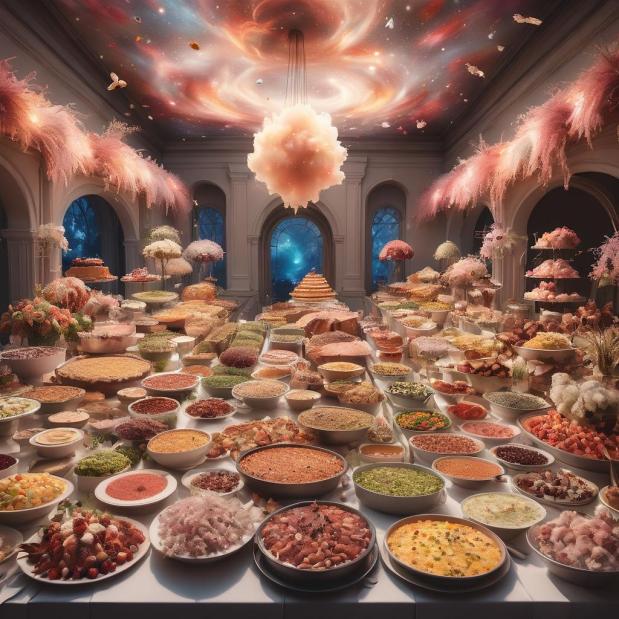
Dreams can be so weird. I’m a Type 2 Diabetic, so there are lots and lots of foods I can’t eat. I have this constantly recurring dream of a buffet so big, it’s the size of a mall. You have to ride a bicycle from one end to the other. And it smells amazing. And it’s all vegan. But in my dream, I never get to eat. I’ve had this dream so often, that many times I know it’s a dream.

Our local friendly AI tells us that a dream is, “a series of thoughts, feelings, or images that the mind creates. . .”. Despite that, they seem so real, don’t they? Samsara is no different. Everything we experience – thoughts, feelings, encounters with objects or other people – are all mental representations. They are transformations of our own consciousness.

It’s very hard to realize the dreamlike quality of samsara. Most of us go through our entire lives never once questioning the so-called ‘reality’ we experience. What does our prayer mean when it says “may I know that I dream while dreaming”? To me it means to remember that in samsara the struggle may seem real, but it’s not. Nothing is ‘real’ as we experience it. That is not to say that we’re all dreaming samsara into being. There is an Absolute Truth, but with our limited senses, we’re not able to perceive it.

Why pray to know we’re dreaming while dreaming? Although I have nightmares at times, most of my dreams are like the buffet. They’re tantalizing to my senses. They seem to satisfy some longed for wish. Dreams are seductive and to a degree hypnotic. And they’re all-encompassing. That seductive quality draws us in deeper and deeper. We never question the dream. I never question who would build a buffet the size of a mall. I simply accept it as what is.

In samsara, we behave the same way. If we buy into the dream of constant unending struggle and desire, we suffer. We lose track of who we truly are. The Dharma is always there to remind us of the dreamlike quality of samsara. It keeps us from investing ourselves entirely in a dream that will never satisfy. Samsara covers up who we truly are. The Dharma uncovers who we truly are and helps us discover our own Buddha Nature in the midst of the nightmare that is samsara.

ii. How would I explain this to someone else?

I’d start by asking them to name one thing that has remained the same throughout the years of their life. I don’t know of anyone who can give an honest answer to that question.

After all, what has stayed the same for any of us? Certainly not our bodies, not our dreams and aspirations, not even our perception of reality remains the same. The cool thing about the Dharma is that it is unchanging. The Dharma is that which holds. It underlies and supports all that we experience. When we have those vague feelings of dissatisfaction with a life that feels empty, this is the Dharma peeking through the dream of samsara. All in samsara is impermanent, insubstantial and dependent on causes and conditions.

We bear witness to this everyday in even the simplest of things. The sun shines in the day, but at night it’s gone from our skies. We’re born tiny babies, but we grow up, grow old and eventually die. Nothing in samsara is unchanging.

In samsara, we are drunk on distraction. Our cravings know no bounds, and this drives us to struggle ever harder, and we suffer. Then we seek distraction from our suffering and a new craving arises and on and on. This is the vicious cycle of samsara. We can free ourselves by studying the Dharma. Nothing else can free us from the nightmare of samsara. The blessing of the Dharma is that in the midst of the nightmare of samsara, it shows us what truly is and frees us of the cycle of struggle and desire.

iii. How do I bring this into my life?

When food is used on TV such as a Thanksgiving ad, the turkey is not cooked. A blow torch is used to ‘brown’ the outside, toilet paper is stuffed in the cavity to give it a nice plump appearance, shoe polish is used to get that perfect brown look. Back when I ate meat, I would have totally tried to eat that raw shoe polish covered turkey. And it would have poisoned me.

Just so in samsara. Nothing is what it seems to be, yet most of us gorge on seductive dreams that poison us with greed, envy, or craving for things we can’t have. When I began to study the Dharma, I gradually lost ‘faith’ in the illusions of samsara.

I bring this into my life by reciting prayers, by practicing, by reminding myself throughout the day that nothing is as it seems. This may seem pretty basic, but here’s the thing. When I’m on the cushion meditating, I totally understand and even experience the dreamlike quality of samsara. But my mind still gets caught up in samsara. I still forget sometimes that nothing is as it seems. When afflictive emotions arise, it’s tempting sometimes to let myself get sucked in by them.

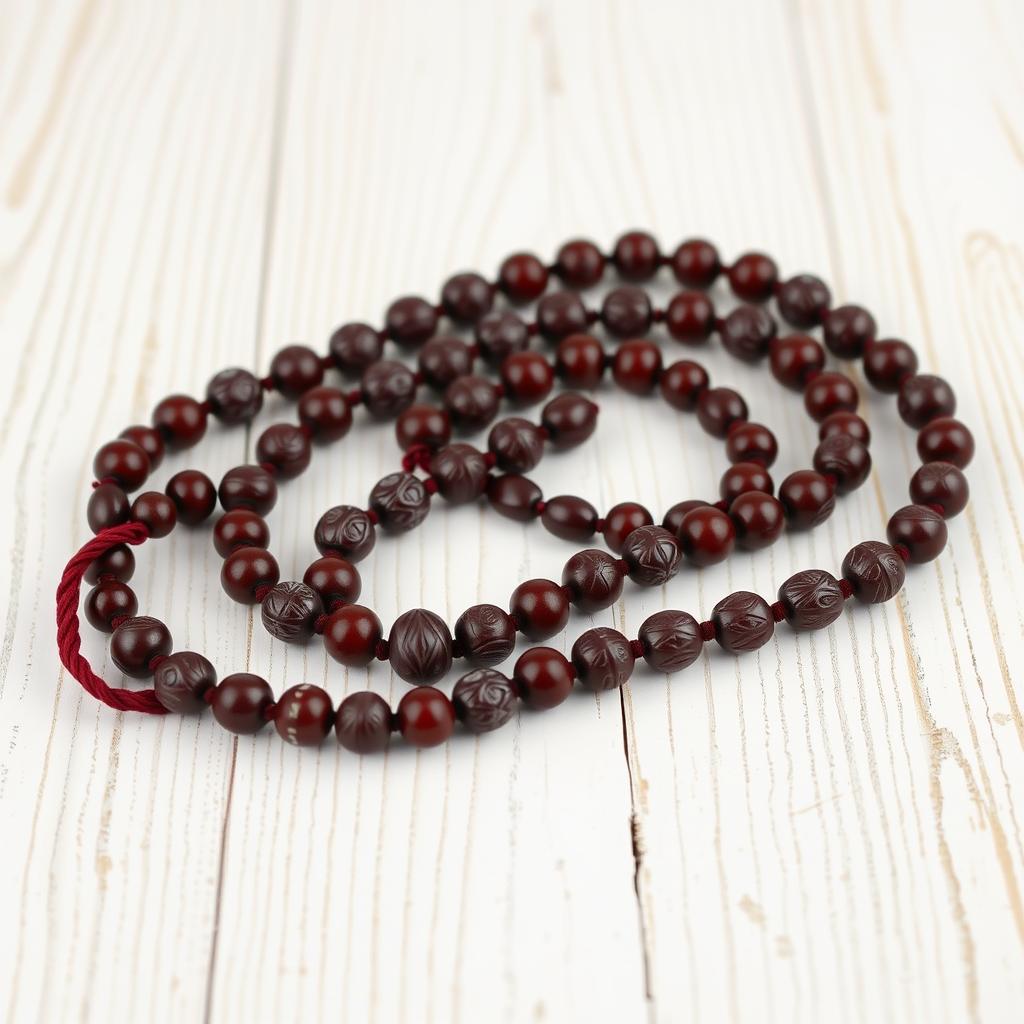
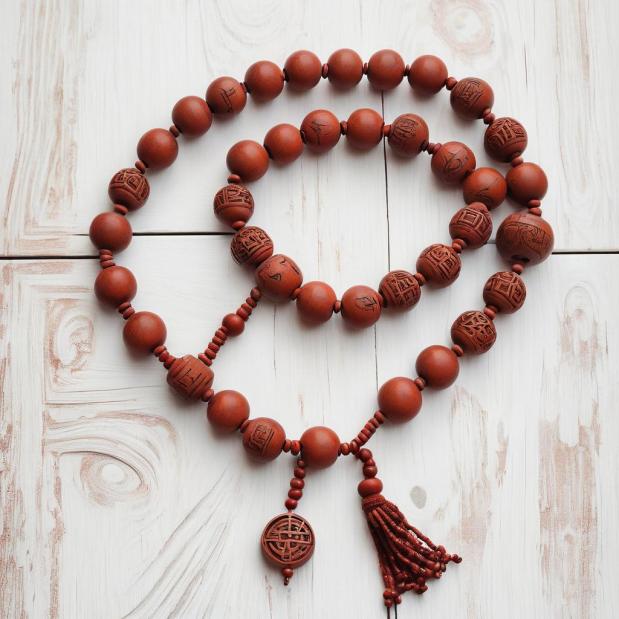
When these things happen, I take a step back, breathe and recite mantra. Or I pick up my prayer beads and do mantra for a couple of minutes. For me, it still takes effort to live in samsara and not be sucked in by it. Despite that, my Buddha Nature is always trying to break through.

I’d like to say that once I feel my Buddha Nature peeking through, samsara falls away and dissolves like the dream that it is. That’s not what happens. But samsara does lose a lot of its grip on me. It becomes more transparent and less substantial. This is something we can all do. Buddha Nature is always there, shining through samsara, trying to give us liberation, if only for a few moments at a time.

On vanity . . .

On vanity . . .

All notions of subject and object, self and selves, phenomena and characteristics are mere transformations of consciousness.

By this truth may I know that all appearances are vanity.

i. What does this mean to me?

I’m not sure what I expect from our prayers when I sit down to write a contemplation. At first I thought the simplicity of the words hid some grand esoteric, deeply philosophical truth. But no. I find that the prayers form mostly a “How To” guide for living in samsara without becoming lost in the illusion.

The line of the prayer before this one tells us that all we see and experience is “mere transformation of consciousness only.” Last time we talked about how there are two kinds of truth when watching a magic show. There’s the ‘truth’ that your eyes see. And there’s the underlying process of what the magician is actually doing.

Well, that’s nice to know, we might think, but – so what? Of course there’s no such thing as magic. We all know that. And with something as obvious as a magic show, it’s easy to understand that no one is really being sawed in half. Not so in samsara.

This line of our prayer reminds us of the nature of samsara. Our local friendly AI tells us that one of the meanings of vanity is “the quality of being worthless or futile.” Samsara is a realm of struggle and desire. We desire something, we get it, we move on to wanting something else, and then we go struggle until we get it. That cycle is exhausting and it’s only halted by death.

So what is our prayer telling us about living in samsara? It’s telling us that the appearances we experience do not have the qualities we assign to them. Another way to say appearance is to talk about the “outward form” of something.

This takes us back to the magic show. The appearance is magic. But magic in and of itself  is a worthless understanding of how things are. We know the magician is doing something, but we don’t know what he’s actually doing.

In the same way, samsara is all appearance. This is not to say that we dream reality into existence. Rather it’s to point out that what we experience in samsara is merely the outer form. Like the magic show, there is an underlying truth, but in our limited minds and bodies, we don’t have access to that Absolute Truth.

ii. How would I explain this to someone else?

I’d start by saying ‘the devil is in the details’. The line of the prayer before this one tells us that all we experience is mere transformation of consciousness. That is to say there is an underlying truth in samsara, but our experiences in samsara arise in the mind.

Once we accept this as true, then it becomes fairly obvious that all the appearances we experience couldn’t possibly live up to the qualities we assign to them. If I have two clear glasses, and I fill one with green liquid and the other with blue liquid, are the glasses themselves now green and blue? No. But the appearance is that we now have two different color glasses. Is it wrong to assign the glasses the colors of blue and green? Not exactly. But it’s futile to proceed as if the glasses are now green and blue. That would be a fundamental misunderstanding of what is.

In samsara, we do this all the time with just about everything. We absolutely and unquestionably believe that there are two glasses of different color. To the degree that we live our lives believing in fundamental untruths, we suffer. The source of our suffering comes from trying to work with or shift a ‘reality’ that we believe. In this realm of struggle and desire, there is no satisfaction, no peace, no end to suffering. The Dharma teaches us that the glasses are clear and furthermore, the glasses themselves are merely the outward form that arises in the mind of some Absolute Truth.

iii. How do I bring this into my life?

Before I began studying the Dharma, no matter what I did, there was this horrible feeling of emptiness and dissatisfaction in my life. Materially, I was fine, but I couldn’t escape those feelings. Only when I began studying the Dharma did those feelings subside. Once I began to understand about the illusory qualities of samsara, I no longer desperately searched for ‘happiness’ in samsara.

I try to remind myself of this prayer when samsara starts getting to me. ‘No,’ I say to myself, ‘what I’m experiencing right now is not what it appears to be.’ My job can be very frustrating at times because I feel like I’m not getting enough stuff done that has to be done. Then I take a step back, breathe and remind myself that there is no point in fighting against how things are. My experience of reality, I remind myself is exactly that, an experience. This helps me to refocus my attention on what is, rather than what I want it to be.

This can be very liberating. There is simply no amount of emails that I can answer that will be satisfying. Not in samsara. This is where the Dharma and our prayers become important guides to living in samsara. The more we realize that nothing in samsara is substantial, or permanent or independent, the more we free ourselves of the pangs of living in samsara.

With this prayer reminding us that “all appearances are vanity”, we have the freedom to rely on our own Buddha Nature. It is complete and whole, nothing missing, nothing to add. In this way, we can live in samsara with compassion, wisdom and open hearts.

On the roaring dragon . . . (Part 1)

On the roaring dragon . . . (Part 1)

Like the thundering roar of a dragon, the resonant voice of the Dharma  

awakens us from afflictive emotions and frees us from the chains of karma.

Dispelling the darkness of ignorance, the sword of wisdom cuts through all our suffering.

What does this mean to me?

i.

As a westerner, it’s hard for me to appreciate what dragons mean in eastern lore. My local friendly AI tells us that in Japan, dragons are “. . . powerful and wise guardians that shield us from universal dangers and impart their wisdom.”

Samsara is loud. Even if you live in a country setting, there’s noise, particularly today with electronic devices all but dominating our lives. And that’s on a ‘quiet’ day. When the storms of afflictive emotions rage within us, the noise can be unbearably loud.

Our prayer starts out strong and says, “. ..the resonant voice of the Dharma…” is heard in samsara “Like the thundering roar of a dragon.” Notice that it’s not just the roar of a dragon, but a thundering roar. That’s pretty loud. It’s certainly loud enough to be heard over even the most roiling violent storms of afflictive emotions.

What’s most interesting to me here is that the voice of the Dharma is “resonant”. What does it mean to resonate with something? It means there has to be a matching tone or feeling so the two can resonate together. In this case, I believe the prayer is talking about our inherent wisdom, as in the ability to see clearly, to see things as they truly are.

ii.

Our prayer tells us that even though we may feel we are awake to our afflictive emotions, samsara is very much a deep sleep in a loud storm. We sleep and have the nightmare of afflictive emotions. This is why the voice of the wisdom of the Dharma must be like the “thundering roar of a dragon.”

But even with all of this, our prayer reinforces that our inherent ability to see clearly, our wisdom, is already there. This is why the voice of the Dharma is “resonant”.

With just this line of the prayer, we are told that the “resonant voice of the Dharma” thunders like the roar of a dragon. Why does this roar have to be so loud? One of my favorite things to do during those sub-tropical storms we had in Florida was to sleep through them at night. The only sounds were the thunder, and rain, and wind. It blocked out everything else.

iii.

When I first started studying the Dharma, I wanted all my ‘bad’ karma to go away and to only have ‘good’ karma left. We were born into samsara, drawn to this realm of struggle and desire by our karma. As my teacher, the Venerable Tashi Nyima says, “chains of gold are still chains.” With our ‘bad’ karma, we live through it with as good a grace as we can.

‘Good’ karma on the other hand is not something valuable that we want to hold onto. After all, karma is karma. That’s why in our other prayers we “dedicate all merit to Great Benefit.” But why does the prayer say the “resonant voice of the Dharma” will “…free us from the chains of karma”?

I think we first have to ask, what is karma? Very simply put, karma is what arises when we put in place causes for suffering or causes for happiness in our life. So how does the thunderous sound of wisdom free us from suffering? Remember that ‘wisdom’ has its root in ‘vision’, as in to see reality as it truly is. Wisdom is necessary for enlightenment, as another of our prayer reminds us, “May all attain the union of wisdom and compassion.”

When we see things with our inherent wisdom, which this prayer tells us is possible because the voice of the Dharma resonates with something already within us, why would we ever place causes for suffering onto our path? We wouldn’t. As for ‘good’ karma, we would have the wisdom to always dedicate the merit. Like this, wisdom cuts through the chains of karma that bind us to samsara.

iiii.

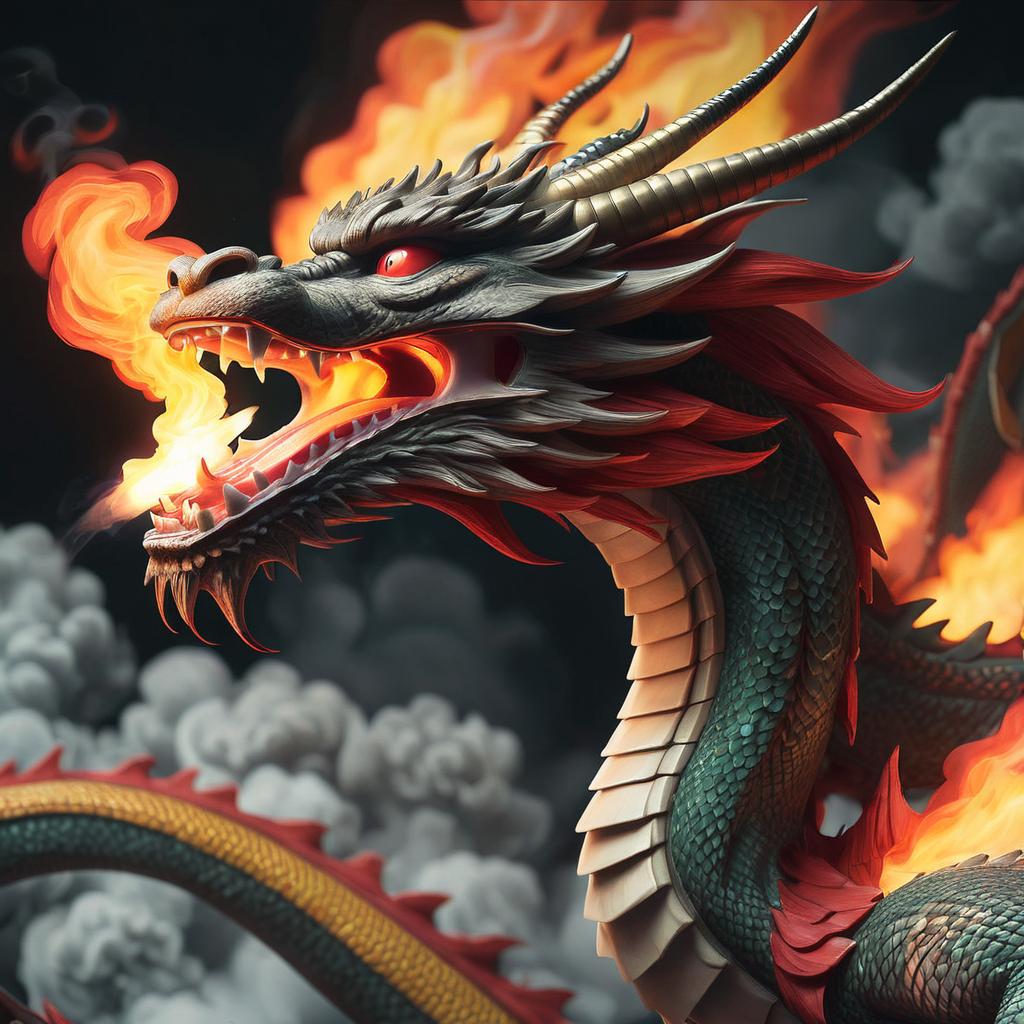
The last line of the prayer talks about dispelling ignorance and cutting through “all our suffering.” That’s quite a claim to make, to be able to cut through all suffering. But the first line of the prayer already told us that wisdom is like, “the thundering roar of a dragon.” When I picture a roaring dragon, I get a mental image of a dragon spewing powerful flames.

By the time we get to this last line of the prayer, the roaring dragon is “dispelling the darkness of ignorance.” What is darkness, in general? It’s simply an absence of light. As I read this line, the sword of wisdom seems to be a fiery sword born of the “thundering roar” of the voice of the Dharma. This line seems to sum up the lines that have come before. Without the roaring dragon, before the “resonant voice of the Dharma” there is only the suffering of samsara, afflictive emotions, and the darkness of ignorance.

However, in this last line, this isn’t a tiny light that’s going to shine. It’s a full on fiery sword wielded by the power of a thundering, roaring dragon speaking the resonant truth of the Dharma. This is the power of wisdom, to cut through all suffering in a moment, if we let ourselves resonate with that resonant voice of the Dharma.

On the presence of dew. . .

Written Saturday, October 31, 2015, 11:00 AM

Currently I’m studying The Supplication with a Dharma friend, the Venerable Tashi Nyima.

This is my contemplation on the third verse.

I bow at the feet of the masters who carefully teach that

All conditioned entities are impermanent, unstable, changeable

Phenomena—like a mountain waterfall, like a cloud, like

Lightning, and like dew on a blade of grass.”

Full Disclosure: This is my first contemplation on a whole verse!

Explain to someone else (making it my own)

When I knew I was going to write about this, the first thing I set out to do was to prove it wrong. But to do that, I had to understand it better. What’s this ‘conditioned entities’ thing all about? Well, it’s anything that arises from cause and effect. What? No. That definitely can’t be true because absolutely everything arises from cause and effect. If this is true, that would have to mean that every thing is impermanent, and unstable, and changeable.

I tried really hard (I had two weeks) to think of some ‘unconditioned entity’. But no go. I couldn’t think of one single thing. The moment when my mind was finally forced to that conclusion was pretty heavy duty. I think I was driving home from somewhere and I thought to myself…Yes, it’s true. And…wonderful!

 The tail end of that thought caught me by surprise. Wonderful? Yes! Imagine if the pyramids in Egypt were still sparkling brand new, fresh as the day the Pharaohs got buried there, wouldn’t that be weird? Worse yet, imagine if that really truly horrible meal you ate last year to be polite and not hurt any feelings were still there in your stomach undigested!

dandelion girlYes, I thought to myself, yes. This conditioned thing is good. Imagine a world where cause and effect had no…well…no effect. Ice would never melt, even in hot sun. Our bodies would never age. No. That’s not a good thing—you like having teeth don’t you? And worst of all, I think, karma would be carved in some kind of unforgiving, immutable stone.

This would mean that whatever direction we chose for our lives, we’d be stuck with it. Think about that. Do you really still want the things you wanted when you were sixteen?

In our existence here in samsara, our biggest tug of war with impermanence is that we want selective impermanence. You know, like—I want to age to 25, stop there, never grow older, but keep learning and becoming wiser. But that’s not how it is. We age, we grow, we learn, and if we’re very fortunate, we gain some wisdom along the way. It’s a package deal.

Conditioned existence itself, “like dew on a blade of grass” passes moment to moment without our ever seeing it. The great benefit, the great joy of this is that every moment that arises can become a cause of suffering or a cause of happiness. It’s our choice.

Every moment, it’s our choice.

***

 Apply to a past situation (how would it have been different?)
There’s a scene in an old movie called “The Time Machine”. In it the time traveler moves through hundreds of years in a matter of seconds. You see buildings melt into rubble, then brand new sparkling time machinebuildings rise, then crumble into rubble as he jets forward in time. I was fascinated by that. I wondered when my house would crumble like that, and what would rise in its place.
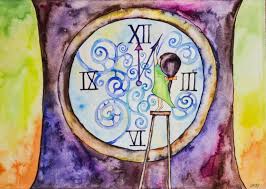

Decades later I got involved in a relationship. We both vowed that not only would we love each other forever, but we would love each other in EXACTLY the same way we loved each other that day at that moment.

Talk about naïve, right?

I spent a horribly tortuous decade of my life struggling to keep that vow. It was terrifying. As soon as something changed, I felt like—no. No! Things have to stay just like they are—forever. If I could have found Old Man Time, I would have done him in.pushback time

And change did of course come, but not in the way I feared it would. I changed. I wanted different things. I wasn’t in love. I grew tired of the struggle.

All of this struggle had a predictably disastrous outcome—what else could the ending have been but disastrous and painful, and heartbreaking?

If I could go back and whisper in the ear of my younger idealistic self, I would tell her that change is part of life. I would tell her that when we try to hold back the rhythms of cause and effect, we will bring upon ourselves a Tsunami of pain and suffering. I would tell her that in the end change will come, better to welcome it, no matter how frightening. I would whisper that anything permanent is a delusion, fueled by hope and fear. And I would certainly tell her that change, as fraught with danger as it may seem, is better than entombing yourself in a delusion of unchanging permanence.

***

 Apply to an (ongoing) present situation (how does it matter today?)

Since 2012 (maybe 2011), I have been through layoffs that included hundreds of people, other layoffs that came once a quarter, and finally the sale of the company I worked for. The very first layoff was terrifying. Even though I knew I’d get a good severance package—still—it was heart stopping and heartrending to see people be escorted out.

By the third or fourth layoff, I just kind of waited to see if my name was on The List. When the company got sold, I was furious! What? Getting sold to some rinky dink, nouveau riche, mom & pop family-owned operation whose true name should be Greedsters, Inc.? And who, I might add, was (and continues to be) very evasive about the whole idea of a severance package.

It took me a long time, a few months to realize the truth of the situation I’m in. I find myself at a point in my life where anything is possible. Of course, it’s always been that way. But now, I’m aware of it.

Aside from the overt acts of not showing up and/or not doing my work, whether or not I have a job is utterly beyond my control. Of course, it always has been. But awareness has a certain magic about it, or maybe I should say a certain grace. But more on that later.

The truth about my job is that the position I fill is on someone’s spreadsheet beside my Greedster, Inc. Employee ID Number. When the formulae in that spreadsheet indicate that my position can be filled for much cheaper in say. . . Mumbai or Puerto Rico. . .the Greedster, Inc. Employee ID Number will be changed and my steady paycheck will evaporate—kinda like dew on a blade of grass.

So each day, I work with what I have. This situation forces me to bow to impermanence and cause and effect.

balloongirlIn doing this, I am finding that when we bow to impermanence, our life takes on a certain grace, a certain lightness of being. Not to wax too poetic here, but we come to realize that we came to samsara with nothing, and we will leave with nothing. Rather than being depressing, as I thought that realization would be, it is in fact buoyant. I mean that literally. When we become aware of the true state of conditioned existence, then we can let of the terrible weight of hope and fear. Why? Because there’s no question: Yes. You are to lose absolutely everything you have acquired in samsara. No one gets out alive.

There. Now you know how the movie ends. The only question remaining is: do you want to struggle against impermanence until your last breath, or, do you want to live with the grace of impermanence and use your every moment to move toward true bliss, true permanence, true purity, true self.

***

 Apply to a potential situation (bringing it home to play)

Last year I took a vow to give 125 hats / scarves to the Jonang Monastery in Tibet. I took that vow in December, 2014. At the outset, I couldn’t turn the little wheel on my Addi knitting machine fast enough. Wow! I thought, at this rate, I’ll have 250 hats and scarves to give. In other words, I believed with a brand of blind faith, that things would remain exactly as they were.

As you may imagine, things changed. Depression snuck up on me. The slough of despondencymenopause baseball bat smacked me around. In short, I spent four months of my life in a quicksand morass of depression and despair.

With the help of a very good friend, I was able to make my way out of the deepest bits of the quicksand. As I lay panting on the shore, recovering, rediscovering my life—I panicked. Four months! And not one hat or scarf had rolled off my Addi. I was a long, long, way from 125. I wasn’t even in shouting distance.

I almost wanted to just let myself slide back into the quicksand. But before I did, I asked in desperation—how do I give back a vow? I tell you, that vow was wrecking my nerves.

The answer was so simple, I missed it. When my friend repeated it, I was just about bowled over. Change the vow. That was the answer. That’s it. Just change it. [Disclaimer: This is not true for all vows.]

Well, I tell you, that’s given me a world of relief. I feel the shore expanding, the quicksand drying on my legs and falling away as I pull myself free of the slough of despondency.

This seems like a small thing, but it made me think of all the other absolutes we have in our lives. We come up with all these “Have To” things in our lives, and somehow we come to have a faith in the imputed immutability we grant them. We will even change our lives to match the “Have To”. Wow. That’s a little bit crazy.

No. I say no to that. All that we see around us is, by its very nature, subject to cause and effect. All that we witness in samsara not only will pass away, but is passing away before our very eyes, with every breath.

Would we try to hold onto a wave in an ocean? Or a breeze rattling the leaves of a tree? These things and all that we see in samsara are ephemera. Their permanence arises from our deluded mind.

Once we understand this, we can appreciate the fleeting beauty of a waterfall, or a cloud, or a drop of dew on a blade of grass. We can appreciate each moment as it arises and falls away, and know that within each and every moment there exists a cause for our suffering or a cause for our enlightenment.

Which will we choose?

paths