
Currently I’m studying Heart Treasure of the Enlightened Ones with a Dharma friend, the Venerable Tashi Nyima.
This is my contemplation on the first line of verse 24 of the root text of Heart Treasure of the Enlightened Ones. This contemplation focuses on the second jewel, the Dharma.

“The only never-failing, constant refuge is the Three Jewels.
The Three Jewels’ single essence is Chenrezi.
With total, unshakeable trust in his wisdom,
Convinced and decisive, recite the six-syllable mantra.”
Explain to someone else (making it my own)
I’m the kind of person who should have GPS to cross the street. No, really, I have absolutely no sense of direction. People give me directions, and they say things like, “Head north about two miles, then you’ll see it right there on the southwest corner”.
What??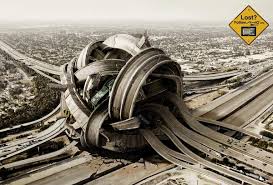
I nod politely, all the time thinking, you know, cartography isn’t really my thing. Then I ask for a physical address, which goes in my GPS. Now, once the address is in my GPS, I am absolutely fearless. I follow the directions (which are sensible like, “turn left in .5 miles”) faithfully and without question because GPS always, always gets me where I want to go.
In samsara, our GPS, the path that will lead us to our own Buddha Nature is the Dharma, the second of the Three Jewels. And it’s better than GPS! The satellite connection never gets lost, you never run out of battery power, and you don’t need to be near a Buddha Broadcast tower. The Dharma is never-failing because it’s based on what is. It doesn’t need artificial support.
In samsara, when I want to go to that really great vegan bakery I keep hearing about, I completely take refuge in my GPS. I have utter faith and trust that if I put in the right address, GPS will get me there.
On the path, I take refuge in Dharma GPS. The Dharma lies well beyond the fictional truth of samsara. The Dharma is not subject to birth, aging, disease, or death. It is the one true path to our Buddha Nature. Why take refuge? Why not simply have faith, I used to ask myself.
Faith, coming from my Christian background, is tainted with fear and hope—the fear of a powerful God outside myself and the hope that I can appease Him and cajole Him into doing what I want. Refuge is a relationship based on trust that arises from experience. For instance, if we see a mountain cave withstand many hurricanes, we would take refuge from a storm there because our experience tells us the mountain can withstand the storm.
There are 84,000 ways for us to have our own experience with what is—the Dharma. The truly wonderful thing about the Dharma is that once we have our very first experience with it, we are drawn to take refuge, and trust spontaneously arises.
***
Apply to a past situation (how would it have been different?)
Last June, I had to train a new person in my department at work. Layoffs have reduced the size of the department to two people. This new person—Salem—is fifty percent of the department.
Salem has been with the company for fourteen years. The company I work for is a title company. After working with her for nearly a year, I can unequivocally say that she doesn’t have the first clue about even the most basic principles of real property title examination.
There is a guide at work that I designed that has hundreds of scripted responses to clients. In her training, Salem refused to use them as is. She constantly altered them in ways that resulted in ‘bounce-back’ emails from confused clients. When I pointed out what she’d done, she’d launch into a twenty-minute, extraordinarily convoluted explanation of why she was right. I spent about six months in a Hell of frustration and resentment. Salem, completely in her comfort zone, spent those same six months in our manager’s office constantly reshaping events so that she was right. It was exasperating and infuriating.
Finally, I decided to put mind-training in the place where the rubber hits the road. I stopped trying to make things work out my way. I began to recite mind training prayers and mantra hourly at work. I stopped engaging Salem altogether. I stopped trying to get her to do things the “right way” (ie: my way). This was an extremely difficult process for me. My old habits rose up with a vengeance. I had to literally bite my tongue sometimes to keep my mouth shut. I had to get up from my desk and take long walks and recite mantra. I had to write reams in my journal. I had to constantly bring mind back to the task of reciting mantra or prayer.
 At first, it was like trying to drag an angry Rottweiler along behind me, all the time its heels dug in, teeth bared, snarling at me. But gradually, that Rottweiler got smaller, less angry, less stubborn. Today, as I write this, it’s more like herding along a wandering puppy…no, this way, over here, come here…good girl.
Salem continues to make gross errors, and our manager continues to cover them up. Gaining a sense of perspective has helped me to realize that it is beyond my current level of skillful means to do anything but observe the unhealthy relationship of guilt and blame developing between them.
When the rubber hit the road, mind training worked with an effectiveness beyond anything I could have dreamed when I first leashed that pissed off Rottweiler. It continues to work.
Had I taken refuge in the Dharma about five months sooner, I would have saved myself (and Salem) a lot of suffering that arose from the constant aggression I was experiencing. Had I taken a step back sooner, I would have clearly seen that Salem is in my life to give me an opportunity to purify my karma. Had I sought refuge in the Dharma sooner, I may have noticed that the agitation in my mind was making it impossible to resonate with my inherent Buddha Nature.
Had I been willing to let go of my self-grasping sooner, I might have noticed that getting Salem to do the right thing was an idea based on wrong view. I may have noticed that taking refuge in the Dharma was the right thing for me to do, the only thing to do.
***
Apply to an (ongoing) present situation (how does it matter today?)
The biggest ongoing situation in my life is the sale of the company I work for to Interplanetary Title, Inc. This has been a time of great anxiety for me and everyone else at work.
The anxiety we are all experiencing has one basic source: we don’t know what comes next. What will the new company be like? What if we hate it? What if we can’t do the job? What if we get laid off? What if the sun doesn’t rise and the power goes out and civilization falls and we have to use carrier pigeons because there’s no internet? Okay. That last one may be a bit of an exaggeration; but only a bit.
Here’s the thing about taking refuge in the Dharma: we know exactly how things will go. Taking refuge in the Dharma is a little like reading an historical account of Anne Boleyn and Henry VIII. No matter how good the writer is, no matter how skillfully they write the lead-up to the romance—you know the ending. The guy with the sword comes from France, and off goes her head. No surprises.
 Taking refuge in the Dharma—what is—works the same way. We get so caught up in chasing after refuge in samsara with the 210 channel satellite TV packages, the car with the You Never Die Anti-Death brakes, the house in the You’re A Success neighborhood, the vitamins from You’ll Live Forever, Inc., that we forget. We are so caught up in turning to samsara for refuge from our anxieties that we forget there’s no reason for anxiety over what the future holds. The Dharma tells us exactly how things are in samsara, how they have always been, and how they always will be. There is birth; there is aging; there is disease; there is death. Everything else, as my Dharma friend Tashi enjoys saying, is…entertainment. The burning house of samsara is blazing, the Dharma tells us again and again. Get out.
These days at work, I bring my mind to the Dharma over and over. I recite mantra. I recite mind training prayers. It has been very slow, but gradually I’m beginning to see quite clearly that this transition to a new company is no cause for anxiety. It changes nothing. It’s like changing the back drop on a stage on which the same drama of birth, aging, disease, and death will relentlessly continue to play out.
***
Apply to a potential situation (bringing it home to play)
Tomorrow when I go to work, the same anxieties will arise. I don’t even have to be in the building. The parking garage is close enough for it to begin.
If I wanted to completely put things in perspective, I could remind myself that even if there is a total apocalypse, even if all the volcanoes on the planet erupt at noon, and volcanic ash totally blocks out sunlight and sets off a nuclear winter, and civilization completely collapses, there will still be birth, aging, disease, and death. That wouldn’t work for me. The idea of apocalypse is far too intellectual a concept for it to have any real impact on my thinking.
Instead when those anxieties arise, I can simply let it happen. The mind loves to elaborate. It can come up with a thousand Dire Consequences scenarios in the moment between heartbeats. Once that’s happened, I can take refuge in the Dharma by realizing that in samsara, all things are impermanent—even anxiety. All I have to do is give impermanence a chance to prove itself.
This sounds easy, but I know from experience that my habitual response to anxiety is to get caught up in it and try to find solutions to the Dire Consequences mind conjures up. Tomorrow, when I feel this nearly irresistible tug to go with my anxiety, I will recite mantra. When I do this, I will pay attention to the resonance that arises, and I will know that I am resonating with my Buddha nature, my true self, who is not subject to birth, aging, disease, or death.
 We can all do this. Taking refuge in the Dharma is as simple as turning our attention to what is. It’s no different than changing a channel on TV, or tuning in a different radio station. We can take refuge in the Dharma by texting to our true selves. Instead of ‘i♥u’, to our Buddha Nature we say the six-syllable mantra and then wait in the silence that arises. If we wait long enough, we will begin to experience the resonance with our true self that is always there, the text from our Buddha Nature which speaks without words.
 dharma pen