Currently I’m studying Heart Treasure of the Enlightened Ones with a Dharma friend, the Venerable Tashi Nyima.
This is my contemplation on the third line of verse 39 of the root text of Heart Treasure of the Enlightened Ones.

“
“Your own mind, aware and void inseparably, is Dharmakaya.
Leave everything as it is in fundamental simplicity, and clarity will arise by itself.
Only by doing nothing will you do all there is to be done;
Leaving everything in naked void-awareness, recite the six-syllable mantra.”
”
Full Disclosure:
As someone who’s spent decades devotedly chasing sticks, working with this verse was a real eye-opener.
Written Sunday, September 21st, 5:30 AM
Explain to someone else (making it my own)
A little less than two decades ago, I had a Stephen Covey calendar. If you’ve never heard of a Stephen Covey calendar, they’re marketed as the ultimate time management tool. At the time I was in a training class in the workplace whose goal was to teach effective management. The Stephen Covey calendar literally lets you schedule every moment of your day. I’m not kidding. Every. Single. Moment.
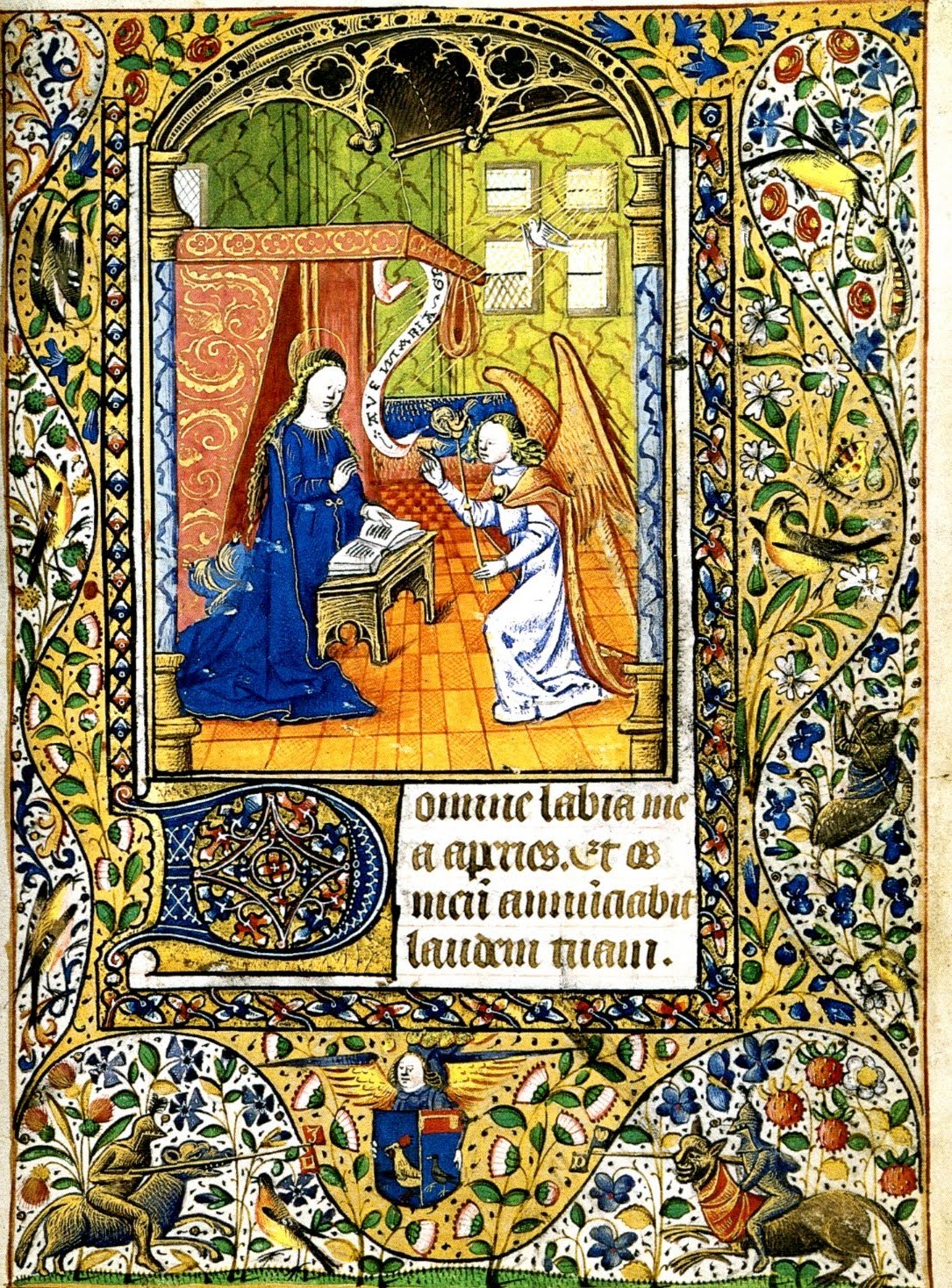
 Of course, as an effective manager, you would have every moment of your day scheduled. This way, you see, you would be the most efficient, most effective manager possible. At first, I loved my Stephen Covey. No devout Christian ever used their Book of Hours with more devotion than I used my Stephen Covey. I wrote in it every day. I scheduled each day down to the minute. I took notes from meetings in it. I noted where I didn’t meet my schedule and why.
But gradually I noticed the calendar was becoming more and more like a slave’s collar. I was utterly enslaved to it. It wasn’t that the Covey system didn’t have flexibility. It was more like I began to feel there was something very wrong with going through a day with every moment scheduled, and then if you didn’t meet The Schedule, being called to account for it. After a bit, it became claustrophobic. After a longer while, it felt the slightest bit silly.
For a long time, even though I gave up the Covey system, I had the typical western ‘You manage the day or it manages you’ attitude to living my life. There was always a schedule to be met, a deed to be done, a pointless errand to be run.
Now, after studying the Dharma for a couple of years, I’m beginning to see that all that chasing around was a way of pandering to mind’s infinite capacity to create things to be done, or thoughts to be thought. On western time management calendars there are no hardwired time slots labeled ‘pause and look at your mind’ or ‘it’s 5 PM, what is the state of your mind?’ There ought to be.
In our constant, ceaseless frenzy of doing, we are like dogs forever chasing the next stick our mind throws out into our awareness. Dilgo Khyentse puts it like this, “If you throw a stick at a dog, he will chase after the stick; but if you throw a stick at a lion, the lion will chase after you. You can throw as many sticks as you like at a dog, but at a lion only one. When you are completely barraged with thoughts, chasing after each one in turn with its antidote is an endless task. That is like the dog. It is better, like the lion, to look for the source of those thoughts, void awareness, on whose surface thoughts move like ripples on the surface of a lake, but whose depth is the unchanging state of utter simplicity.”
Stephen Covey, dogs chasing sticks, puppies chasing their tails—this is how we live our lives. We chase after illusions created by the mind, fervently believing we will find peace one day. We will not. We will find peace only when, like the lion, we realize there are incalculable sticks, but only one source.
***
Apply to a past situation (how would it have been different?)
I’ve written five books. Writing a book is grueling, exhausting work. My writing schedule was mornings. I’d get up at 4 AM, make coffee and trudge to my computer. I’d read over the last couple pages from the day before, then I’d start writing. My daily morning target was fifteen hundred words, or about three pages. On my afternoon break at work, I’d do a daily fifteen minute writing exercise. After work, I’d write for a minimum of thirty minutes or five hundred words, whatever came first.
 Once you commit to writing a book, your life is no longer your own. The activities of daily life like laundry, groceries, eating, etc. had to be done on a rigorous schedule. On weekend days, my writing target was three thousand words each day. When I wasn’t writing, I had books to read, either technical (How To Write a Scene) or just fiction, so I could pick up rhythms, plot devices, character portraits.
The one thing writing a book did not allow for was peace. There was always a stick to be chased down. In fact there were more sticks than anyone could chase in a single lifetime. Don’t believe me? Try Googling ‘Writer Workshop’. They’re like rabbits; they breed exponentially.
Looking back on that time in my life, I can notice that the moment the Dharma came into my life, it was a disruption, a very pleasant one. Suddenly, there was this eight gazes meditation thing and for twenty-five whole minutes a day, I wasn’t exhausting myself chasing after my thoughts. I wasn’t visualizing anything. I wasn’t engaging mind. There wasn’t peace, not at that early stage, but there was the profound relief of just resting in the mind, instead of constantly going after it, or desperately wanting it to be quiet.
During that time in my life, if I’d been able to take a step back, I may have noticed that the latest book project wasn’t really about writing at all. The book was only a manifestation of the terrible suffering that came from chasing after the next thing I believed would make me happy. In the storm of being so busy, visibility was nearly zero. Clarity was non-existent. Peace was a rumor. If I’d been able to breathe in and out until the tiniest bit of clarity arose, I may have noticed that writing fiction was a failed attempt to escape the pain of the dissatisfying experience of living in samsara. Had I noticed this, I may have sought out the actual cause of my suffering and learned how to stop chasing so many sticks.
***
Apply to an (ongoing) present situation (how does it matter today?)
The biggest thing going on in my life right now is the transition from Interplanetary Title, Inc. to Big Sky, Inc. The new job doesn’t start until the end of October. My salary will drop by twenty-two thousand dollars. This has made me pay much more attention to how I live, what I do.
I’ve been trying to prepare for my new lifestyle. I’ve taken practical steps like buying a slow cooker to cook in big economical batches. I’ve consolidated all my debt into one low monthly payment. I’m even learning to knit economically, even though ‘boutique’ yarns are my favorites.
This week in working with this verse I realized something. While it’s true that all the things I’ve done so far are practical and reasonable, it’s also true that I’m looking for that one significant act that will guarantee—absolutely guarantee—that this move to a new job will go perfectly. Underneath all of the practicality there’s been a wild scent of frenzied anxiety. I’ve been having anxiety dreams where I’m lost and can’t find my way. Of course, that’s exactly what I’m afraid of—that I’ll get lost and won’t be able to find my way.
This week I’ve really worked with ‘doing nothing’. I’ve worked with being the lion and looking at the source of the anxious  thoughts. I’ve worked with recognizing that they are just thoughts—appearances arising in the empty luminosity of mind. This last has helped me quite a bit. There’s something about pulling back and realizing that thoughts are arising in a limitless emptiness that is unimaginably brilliant. Once you move beyond this as a concept, then there can be moments when no thought seems to have any more weight than another.
I’m beginning to feel like I’m seeing all these sticks go whizzing by in brilliant, infinite colors. And after a while, I can say to myself—wow…that was a pretty color. I can’t do this all the time. About eighty percent of the time I’m the puppy chasing after the sticks and their shadows racing along the ground. But that twenty percent when I’m the lion, it’s as though I can stand back and watch my mind put on the most dazzling fireworks show and just say…will you look at that…
***
Apply to a potential situation (bringing it home to play)
Tomorrow, I’ll go to work. I won’t want to be there. More and more lately, when I get to work, mind really kicks into planning mode. Suddenly there are all these ideas about what needs to be done, phone calls to be made, things to be bought, prices to be checked…and on and on. If I wrote out all the lists mind came up with, I’d go through every legal pad at Interplanetary Title. At times there are so many thoughts, it feels like I’m in a very crowded mall at 11:50 P.M. on Christmas Eve. Oh, the frenzy.
This constant onslaught makes me irritable. It’s a combination of not really wanting to be at work and the very strong feeling that I’m sitting there wasting time when there are THINGS TO BE DONE! NOW! There is also, as the countdown to leaving progresses, a revisiting of the catalog of wrongs of which mind (of course) has kept a most detailed ledger. A Mafia accountant dodging the IRS couldn’t keep more careful ledgers than mind has kept over the years at Interplanetary Title.
All of this means that each day when I go to work now, it’s like stepping into very rough seas. At first I tried the classic, “I’m not going to think about that” method aka the “Will you shut up!” method. Do I really need to say how this spurred mind to gleefully barrage me with even more sticks?
When I lived in Fort Lauderdale, I’d go to the beach on windy days. You couldn’t really get in the water and swim because the sea was just too rough. But it was great to stand on the shore about knee deep in the ocean and feel the waves come and go. On those days it was easy to tell which people in the water were tourists and which were natives. The tourists would try to stand really still, rigidly resisting the waves, and they’d get knocked over by the force of the water. The natives knew better. We didn’t try to stand still. We didn’t try to do anything except let the waves come and go.
This week when I go to work, it’s my intent to be like a native in the rough waters of my mind. I know thoughts will buffet me, waves will come, and some of them will seem huge. This week when the waves come, I’ll try doing nothing. I’ll try letting them wash over me and run back out to sea as waves always do. I’ll know that some may knock me over. And that’s all right. I’ll get up again and go back to doing all there is to do…nothing.







 dharma pen