On making a precious investment…

Currently I’m studying Heart Treasure of the Enlightened Ones with a Dharma friend, the Venerable Tashi Nyima.

This is my contemplation on the first line of verse 21 of the root text of Heart Treasure of the Enlightened Ones.

heart treasure

Even if you die today, why be sad? It’s the way of samsara.

Even if you live to be a hundred, why be glad? Youth will have long since gone.

Whether you live or die right now, what does this life matter?

Just practice Dharma for the next life—that’s the point.”


Explain to someone else (making it my own)

“I’m really sad. The sun’s out right now, but later it’ll be sunset, then twilight, then night will fall.” If we heard someone say that, we’d think it was absurd. If it were said by a child, we’d explain how sunset is just part of how things are.

lamentBut don’t we kind of live our lives this way? Aren’t we in a constant race to outrun death? Even though we know it’s inevitable, we find it all but impossible to face the prospect of our own death with anything but anxiety, fear, and maybe even resentment. It’s not fair I should have to die and leave all this behind, we say; why does it have to be this way? Our laments over death are endless.

But none of this does us any good. If we wake up on any given day and say to ourselves, “Today before the sun goes down I’m going to help at least one person.” Or if we begin our day with the aspiration that whatever we do in the course of the day will bring benefit to others, then at night we could go to our rest knowing that we at least aspired to be of benefit.

What’s true of one day is also true of our lives. Dilgo Khyentse points out that once we start to practice the Dharma, then however long we live, we will know “…that there is nothing more worthwhile than the Dharma and that practicing it to perfect yourself is a precious investment…”.

Does this mean we should spend our lives in one long meditation in a cave someplace, making the investment? I don’t think so. Knowing that the road from birth to death is one way; knowing that our death is certain and the hour is unknown; knowing that at the moment of death we will be utterly alone—we ought to take each day as a precious chance to do no harm, do good, and purify our minds.

***

Apply to a past situation (how would it have been different?)

About fifteen years ago, something went horribly wrong with my thyroid. I’m not sure exactly what the thyroid does, but I’ve never been so conscious of my heart. I’d be sitting perfectly still, and it would race along. I once clocked my heart at 150 beats per minute. I wasn’t even standing up. I couldn’t sleep. I could barely stand to eat. I couldn’t stand the smell of food cooking. I lost weight so fast, I had no clothes that fit. I poured sweat. Even though the endocrinologist told me I wasn’t dying, only a tight rein on my temper kept me from calling her a liar to her face.

Then the treatment took hold. You go through…I don’t know—some kind of ‘tuning’ to get the hormone balance right. Oh god. That was worse. I was death's scytheexhausted all the time. I had blinding headaches. I could barely keep my eyes open, but I still couldn’t sleep. All I could do was lie in a stupor and feel my heart pound so hard in my chest actually hurt. At those times, I was certain Death, with his cold scythe, was just one bare step behind me. If I turned, I was sure, I’d see his grinning skull-face.

I was terrified. I couldn’t die. Not now. Not yet. I’d wasted my whole freakin’ life!

Looking back on the whole thyroid episode (which lasted months), I can notice that not once did it occur to me to simply say, “Yes. I could die from this. What can I do to prepare for the moment of my death?” Had I noticed this was an option, I could have shifted my perspective. Instead of spending those long weeks of forced inactivity in mortal terror of dying, I could have worked with understanding that even if I survived the whole thyroid thing, I would eventually die.

The only options I had, I might have noticed, were to go to my death kicking and screaming…or not. I could have used those long hours and days in bed as a precious opportunity to examine the nature of mortality, to come face to face (as we so rarely do) with the simple fact of death as the inevitable outcome of birth. Had I been able to do that, a few harrowing weeks could have turned into a really cool chance to hang out on Death’s turf.

***

Apply to an (ongoing) present situation (how does it matter today?)

The biggest ongoing situation in my life as I write this is the Pilgrimage of 62. At eighteen days into it, I feel as though another dimension has been revealed in my life. It’s not that it wasn’t always there. It’s more like now my vision is clear enough to see it. It’s kind of like when you get an eye exam and they play with the lenses on that big machine. When they get to the right lens combination for both eyes, everything suddenly snaps into focus and you think to yourself, “Wow. Those are letters on the screen, not  shapeless black squiggles.”

eye examThat’s how I’m starting to feel about my life. I’m starting to realize that countless things I’d thought were insignificant are actually important indicators, signs along my path. Tomorrow I turn fifty. My pending birthday was the driving reason behind the pilgrimage. I felt I needed to do something both to amplify my practice and to celebrate it in my life. I felt I needed to take a journey whose outcome I couldn’t possibly know.

What I didn’t realize eighteen days ago was that the pilgrimage is also a gradual, gentle way for me to come to terms with the inevitability of my own death. I’m finding that as I walk this road of pilgrimage, samsara’s illusions and delusions become more and more transparent. As that happens, I find that I can clearly see where the road of my life—everyone’s life—leads.

I never thought that death would be something I would want to know intimately. But as more clarity arises in my mind, I’m beginning to think that maybe the best way to live in samsara is to live cheek and jowl with the inevitability of your own mortality.

Eighteen days ago, I would have thought this a terrifying prospect. But today, having made the journey of this pilgrimage more than halfway now, I find the process of coming to terms with my own death very liberating.

It would be a lie to say my own death doesn’t frighten me. But, who wouldn’t be frightened knowing you have to take a journey to a far place, all by yourself, and that you could be thrust into that foreign land at any time without so much as a pocket translator? It would be insane not to be afraid.

Lately my perspective on death has changed. It’s almost as if I can say, “Yeah. I’m gonna die. I’ve lived longer than I have left. Yes. I’ll be scared. Yes. I’ll be alone at the moment of death. But I’m not dead yet. I’ve got things to do: do no harm, do good, purify my mind. That’s why I’m here. Let’s get to it.

***

Apply to a potential situation (bringing it home to play)

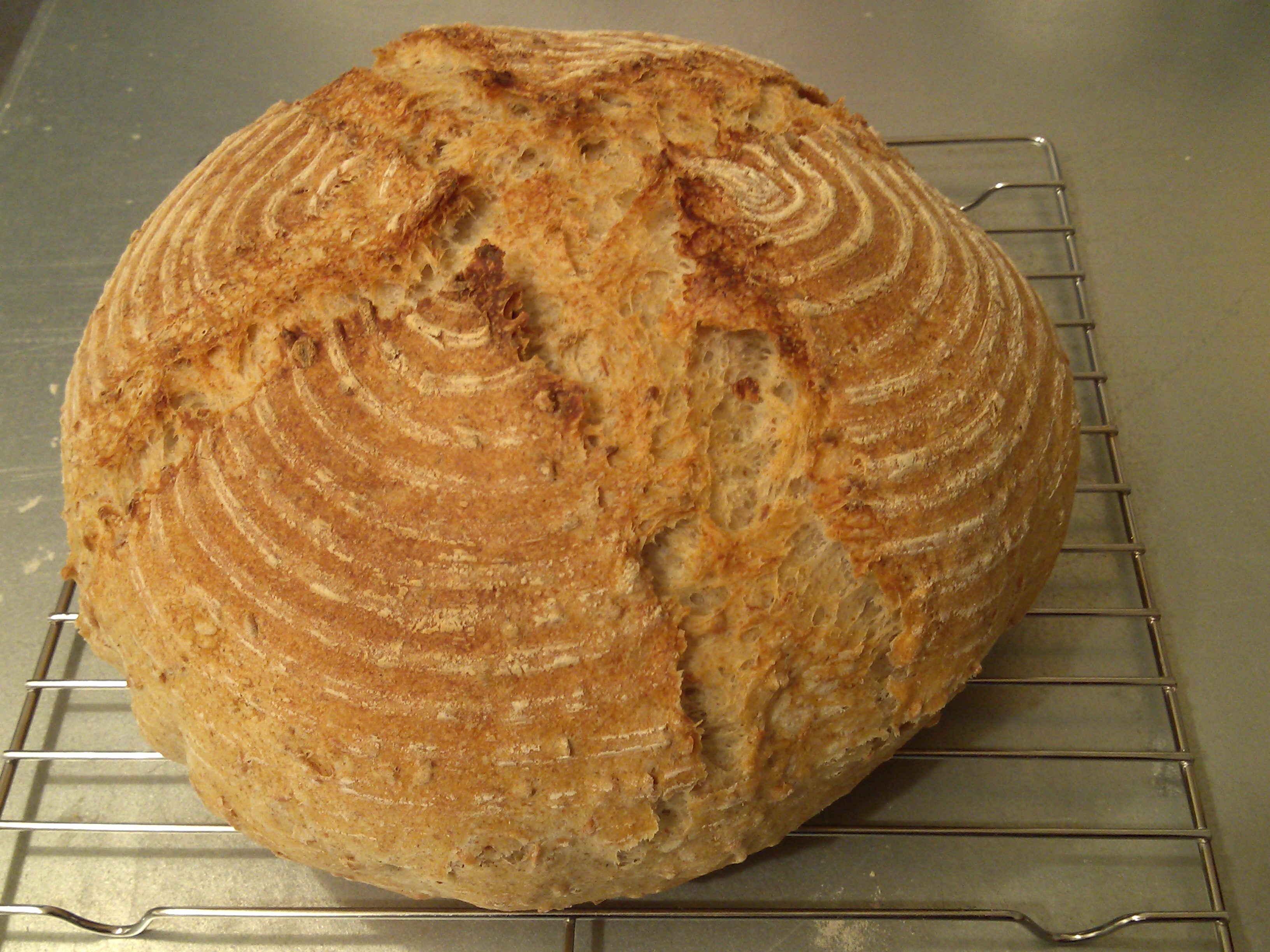
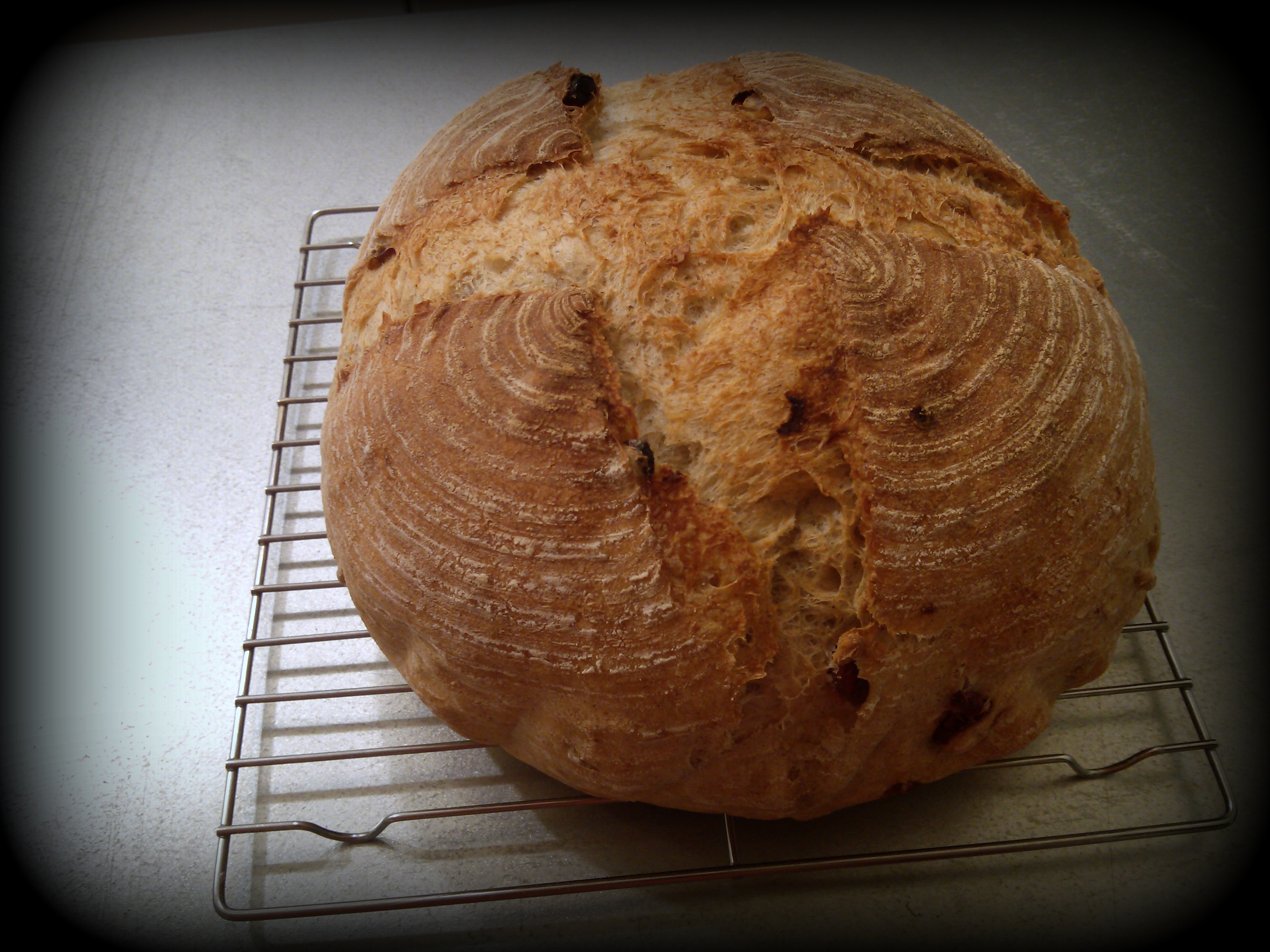
On Sunday I baked a test bread (Applesauce Oatmeal) and it came out pretty good for a bread with no bottom. It was so moist, most of the bottom stuck to the pan. I brought samples to work because the folks in my office are very willing taste testers.

When I got to work, I consciously offered Salem the very first piece. This doesn’t sound like a big deal, but it was for me. I knew the best pieces were on top because I’d cut unevenly because of the bread falling apart. I made a conscious effort to offer her the best of what I had. After eight long months of working with what began as an extremely adversarial situation with Salem, to make that gesture of offering her my best felt incredibly good. I did it without resentment, without pushing myself. When the thought arose, I knew it was the right thing to do. And I wanted to do the right thing.

Ever since then, I’ve been wondering if doing the right thing is the best way to prepare for our death. I think it might be. Even if I do die today, it wouldn’t be an occasion for sadness if I knew that right up until the moment of my death, I had done the right thing.

In my early years in Texas, after escaping a fiasco of a relationship, I did what most women do. I started what was basically the same relationship with a different person. Of course, it ended up being a total and complete disaster in my life. After that, I went through a time when I believed I had no chance of ever doing the right thing. I believed I’d messed up my life so badly, it would be better to get a sharp knife and slash my wrists vertically. At least, I thought, I’d get that right. In fact, there was a time when I was steps away from doing that. I didn’t have a sharp enough knife, but I had a whole bottle of heavy duty sleeping pills. I was overwhelmed at the prospect of ever getting anything right in my life again.

I think that happens to a lot of us. We may not go so far as picking out the right knife or hoarding the sleeping pills, but we sort of sit back in the mess of our lives and say, “Oh well. It’s too late. I’m too stupid. I’m too old. I’m too ____[whatever] to do the right thing.”

We are so wrong about that. Our Buddha Nature is always right there, just dying to come out, if we’d only give it a chance. Keeping this in mind, knowing I treasure diamondcan’t be Mother Teresa in every single moment of my life, it is my intent today to look for the opportunity to do the right thing. Even if it’s only once. Even if it’s only offering a smile to someone who looks weighed down by samsara.

In doing this, it is my intent to prepare myself for the moment of my death so that when that moment comes, I’ll know that I did the right thing, at least today.

And perhaps tomorrow, perhaps on the rest of my pilgrimage through life toward death’s territories, I can live each day as a precious investment in doing the right thing.

On running to find the end of the rainbow..

Currently I’m studying Heart Treasure of the Enlightened Ones with a Dharma friend, the Venerable Tashi Nyima.

This is my contemplation on the third line of verse 20 of the root text of Heart Treasure of the Enlightened Ones.

heart treasure

“Expecting a lot from people, you do a lot of smiling;

Needing many things for yourself, you have many needs to meet;

Making plans to do first this, then that, your mind’s full of hopes and fears—

From now on, come what may, don’t be like that.”


Explain to someone else (making it my own)

“What do you want to be when you grow up?” That’s the question most of us in the west first learn to answer as we move toward maturity. When we’re grown up and we go for a job interview, the question becomes, “Where do you see yourself in five years?” And then, let’s say your five year plan for world domination is well under way, the question becomes, “What are your plans for retirement?” Then, after you’ve conquered the world and you’ve retired, the question is, “Have you planned to provide for your loved ones when you pass on?” Essentially this question is, “What are your plans after you die?”

From birth, literally up through death, we are taught to put long-range, long-term plans in place. Where does this get us? What exactly is a plan? It’s disguised hope, isn’t it? If I plan to be Vice President of Corporate Central in five years, then I better hope I don’t make any enemies who are more powerful than me. I better hope I make every deadline. I better hope my family doesn’t mind me working 55 hour weeks. I better hope I don’t die.

nervous babyThat’s a lot of hoping. What’s the flipside of hope? Fear. What my five year plan really says is, I’m afraid I won’t be Vice President in five years. I’m afraid I’ll make a powerful enemy. I’m afraid my husband (wife) will leave me. I’m afraid I’ll die before I’m Vice President.

That’s a lot of fear to live with. Fear in the mind is like the agitator in a washing machine. It churns our thoughts constantly, uselessly. It saps our energy. It mires us in the quicksand of the suffering of samsara.

What is the way out of the cycle of hope and fear? The answer is deceptively simple. Our only ambition, the only thing worth doing, should be to do the right thing. When we do the right thing, we put causes for happiness and peace and clarity into our karma stream. Our five year plan should be to take Dilgo Khyentse’s advice to heart and stop exhausting ourselves uselessly with five year plans “…like a child running to find the end of the rainbow…”.

***

Apply to a past situation (how would it have been different?)

I wanted to write a bestseller. I don’t just mean I wanted to write a good book. I mean I wanted to write a bestseller that would make Twilight look like a flash in the pan; a bestseller that would put Harry Potter in the shade of my brilliance.

Writing a bestseller is different than writing a mere book. For one thing, you have to read until you’re cross-eyed, so you can see what the competition is doing. You have to write to a trend. Got your own story to tell? Too bad. You’ve got a bestseller to write. But most important of all, you have to have The Plan. It’s so important, it gets capital letters.

bestse;;erThe Plan consists of your daily writing schedule, your daily reading schedule, your daily writing exercise, and your daily review of where you are on The Plan. I was so caught up in writing a bestseller that my entire life was one long cycle of hope and fear. I’d wake some mornings entirely convinced I’d hit on the right story. And I’d hope that feeling would last, because I knew what came next. A few weeks later, I’d up convinced I’d wasted the last year of my life, and that I needed a new Plan because all the trends said the market was glutted with vampire paranormal romance.

I spent nearly a year and a half of my life like that. As it turned out, I finished the book, sold it, and…it’s not a bestseller. So much for The Plan.

Looking back on that situation, I might have noticed that I could have freed myself of the suffering of hope/fear at any time simply by breathing and taking a step back from my life. If I’d done that, I might have noticed that I spent more time dreading the prospect of writing than I did enjoying it. I might have noticed that I’d become a slave to the tyranny of The Plan. I might have noticed that I was using The Plan to cling to something that no longer spoke to my interests in life.

Had I done this, I might have noticed that letting go of The Plan was the right thing to do.

***

Apply to an (ongoing) present situation (how does it matter today?)

The biggest ongoing situation in my life right now is the Pilgrimage of 62. When I began the pilgrimage, I like to think I didn’t have any grandiose plans. I like to think I wanted to do it in the ongoing quest to be a more skilled practitioner, to develop my skillful means.

But now, sixteen days into it, I think maybe there was a plan. Actually, I’m sure of it. My unspoken plan was to become ‘more holy’. This is a hard thing to describe. It doesn’t have anything to do with peace or clarity or skillful means, or even decreasing my suffering in samsara.

lucifer3I grew up Christian. I’ve been reading about pilgrimages since I was a little girl. I thought it was amazing that Jesus went on his pilgrimage way out into the desert all by himself, and he got to talk to Lucifer in person. Sure he was a fallen angel, but he was an angel. How cool was that? Of course, back then, I didn’t dare say I thought talking to the Devil in person was cool.

Now, lo these many decades later, taking my own pilgrimage, I’m starting to think my unspoken plan was to meet my dark angel. It’s difficult to escape the Christian idea of epiphany. I keep vaguely thinking that if I pray enough and meditate enough, the true source of the error of my ways will be revealed unto me. When that happens (according to my plan), I’ll be completely free of afflicted emotions. I won’t be enlightened, but I won’t get angry anymore, or resentful, or envious, or frustrated, or anxious.

What’s actually happening on the pilgrimage is that I can see my afflicted emotions with far more clarity than I ever have. Many of them are not pleasant, but—and this was so unexpected—they’re not frightening either.

From this I’m experiencing how it feels when we do the right thing. I began the idea of the pilgrimage because I felt it was the right time in my life to do something like this. The unspoken plan came later. What I’m experiencing is that when we do the right thing in our lives, we have more clarity, therefore we’re able to do more of the right thing which leads to more clarity. This has nothing to do with morality, and everything to do with the Dharma.

When we do the right thing, we gain the clarity to see the utter futility of the five year plan in the chaos of samsara. We begin to develop a mind of renunciation toward hope/fear. We begin to have the capacity to free ourselves of the suffering of the cycle of hope/fear.

***

Apply to a potential situation (bringing it home to play)

Currently I’m working on a writing project that is a collaboration with a Dharma friend. I’ve resisted writing non-fiction for a while now. There are few things more intimidating to a fiction writer than stepping into the world of writing non-fiction. I took on the project with much fear and trembling, not to mention trepidation. A month or so ago, when I sat down to begin, I thought—What am I doing? I don’t know how to do this.

What actually happened was, not only did I know how to do it, it’s like rekindling a romance. Writing is like anything else in our lives. It’s a relationship. For romance2me, it was a relationship that had gone bad. I was the injured, betrayed party. Now, working on this project, it’s like rediscovering the romance I once had with writing. Even more than that, it feels that it’s what I’ve been waiting all my life to write. It’s an incredible feeling of freedom to write without a Plan. That’s one thing I hadn’t counted on.

Another thing I hadn’t counted on happening is this almost irresistible urge to put a Plan in place. As I move forward with this project, it is my intent to keep it as free from a Plan as it’s possible to keep any writing project. Right now, when I sit down to write, there’s such an incredible feeling of doing the right thing. It is my intent as this project continues to let that be the working plan: do the right thing.

This project is really teaching me the difference between skillful means and futile planning. My skillful means is to work with 500 words of the source text at a time. My plan is…do the right thing.

Post Script:

When I shared this contemplation with my Dharma friend Tashi, he offered this about my take on Lucifer and meeting my ‘dark angel’:

What if ‘Jesus speaking face to face with Lucifer’ is a way of saying that he saw his afflicted emotions (more) clearly?

 When the Buddha says “Mara, I see you”, that is what he/you is saying.

This has really helped to see my ‘dark angel’ from a different perspective.

On ambrosia of the gods…

Currently I’m studying Heart Treasure of the Enlightened Ones with a Dharma friend, the Venerable Tashi Nyima.

This is my contemplation on the second line of verse 20 of the root text of Heart Treasure of the Enlightened Ones.

heart treasure

“Expecting a lot from people, you do a lot of smiling;

Needing many things for yourself, you have many needs to meet;

Making plans to do first this, then that, your mind’s full of hopes and fears—

From now on, come what may, don’t be like that.”


Explain to someone else (making it my own)

I’ve recently fallen in love. His name is King Arthur. I confess, he’s not an actual king. In fact, my true love isn’t actually a person. Nevertheless, I pursue King Arthur with the ardent enthusiasm of a virgin chasing after her first love. I’ve recently discovered baking as a passion in my life. The King Arthur Flour website is my baking hang out. If you don’t think you need anything, if you think you’ve got everything you need to bake, just one click on their “SHOP” link will show you just how wrong you are. I once had twenty-seven items in my cart. I’d thrown caution well beyond the winds and clear into the next galaxy.

king arthur2We all have a King Arthur in our lives. Sometimes we call it a career. If we meet enough deadlines, go to enough meetings, network with the right people, we’ll make it. Sometimes we call it our dream house, and we’ll do anything, drive any number of miles to get just the right antique for that corner near the front door. Sometimes we call it marriage, and our whole life becomes a search for the ‘perfect’ partner.

In this chase through life, we convince ourselves of all the things we ‘need’. If I’m going to be CEO, I need the right clothes, the right car, the right house. If I’m going to fill my house with antiques, I need the money to buy them. I better work overtime. If I’m going to find the perfect marriage, I need to be beautiful. I better go to Macy’s and shop.

We go on and on like this our whole lives. And each need we satisfy creates yet another need. Dilgo Khyentse puts it like this, “If we could taste the ambrosia of the gods, we would long for something even more delicious…”.

Our chase through samsara only leads us deeper into our own suffering. Isn’t it time we realize that “…the only worthy aim in life is to practice the Dharma in order to help all beings”?

***

Apply to a past situation (how would it have been different?)

pillars of the earthA while back, in my early days here in Texas, I wanted to listen to Ken Follet’s book World Without End. It’s the sequel to Pillars of the Earth. I decided that since I hadn’t read Pillars of the Earth in a couple of decades, I’d go back and re-read it before moving on to World Without End. Next I decided that if I was going to listen to over eighty hours of audio books, I’d need a project to work on. Knitting a blanket sounded good. Since they were such long books, it would need to be a pretty big blanket. Also, since I wanted to be able to mostly concentrate on the books, rather than a complex knitting pattern, I needed to do something in garter stitch (knit every row). But garter stitch is really boring to look at unless you have interesting yarn, and of course since it was going to be such a big project, I’d need a special long circular needle. These wouldn’t be Walmart buys.

Off I went to Woolie Ewe, a sort of boutique knitting store. I got really interesting yarn on sale and the circular needle.knitting

Then I decided…well, sitting all those hours at night, I’d need a good light and a comfortable chair. Off I went to Ashley, a local furniture store. I found the perfect chair. But then, all those long hours sitting and listening and knitting, my back might start hurting. So I found the perfect ottoman too, and a beautiful lamp. I didn’t have a table for the lamp, but the Ashley salesman was of course, happy to help me with that problem. About twelve hundred dollars later, I decided to go home and think about it.

I never got the furniture or the lamp. I downloaded Pillars of the Earth and listened to about one hour of forty. I started the blanket, which I now call my Eight Year Blanket because it’s not finished yet.

Looking back on this time in my life, I could have asked myself if I really ‘needed’ all of that to listen to a book. Having noticed that I didn’t actually ‘need’ any of it, I could have asked myself what discomfort I was trying to escape.

If I’d breathed and let a moment of peace and clarity arise, I might have noticed that I’d just escaped a nightmare relationship and moved to a brand new place where there was nothing familiar. I learned to knit when I was a little girl. Pillars of the Earth was my favorite book in high school. (I even thought about becoming a nun!) All of those needs were my attempts to barricade myself from the unknown by immersing myself in the familiar so that the unknown wouldn’t seem so terrifying.

Having noticed this, I might have been a little bit free of my fear.

***

Apply to an (ongoing) present situation (how does it matter today?)

meditatorThe biggest ongoing situation in my life right now is the Pilgrimage of 62. I remember when I first started planning it. I thought I needed so many things. Should I get special clothes for meditation? Maybe some scented candles? How about a special chair? Well, I obviously needed a dedicated notebook; a pretty one. Or maybe one that looked like a pilgrim’s notebook, uncut pages, sewn together with rustic thread. Should I get a Buddha poster so that my meditation / writing / prayer space would be inspiring? Or how about music? Maybe I needed authentic meditation music so I could seriously meditate. It went on and on.

Looking at the actual situation of the pilgrimage now, I can see that I didn’t need any of those things. In fact, if I’d bought a fancy notebook, a poster or two, a chair, and all of that, I would feel obligated to do it. A big part of the pilgrimage would have become, “Well, I bought all this stuff, so I guess I better do it.” At the time, I just wanted things to be ‘right’. As it turned out, things don’t need my help to be ‘right’.

I think a lot of our needs come from that very strong urge to make things ‘right’. We believe that if we get the right props for our life, then somehow, like a stage play, we’ll come out with a happy ending. Unfortunately, what needing things actually leads to is a pointless drama of needing more things. It leads to deeper entanglement in samsara. Dilgo Khyentse says we exhaust ourselves uselessly like children, “…running to find the end of the rainbow…”.

Before the pilgrimage, I barely escaped the drama of need, but only because time was short. However, having escaped the drama of need, I have seen the wisdom of not bringing it into my life.

***

Apply to a potential situation (bringing it home to play)

There are around thirteen items in my cart at King Arthur’s. This weekend I will be shopping. I don’t need Ancient Grains flour to make bread, or an oblong clay baker, or a nine flour grain blend. But I’ll probably purchase them. They’re within my budget. On my King Arthur wish list is the Kitchen Aid wedding ringsProfessional model stand mixer they recommend, and for $549, it can be mine. I swear, if someone gave that to me, I’d marry him. Or her. Hey, it’s a Kitchen Aid.

This weekend as I do my shopping at the KAF website, I will bring to my awareness that not one thing I buy on the website (even, sadly, the Kitchen Aid) will satisfy me. I will bring Dilgo Khyentse to mind and realize that KAF is my ambrosia of the gods.

In shopping this weekend, I will turn my mind to the Dharma, and bring to my awareness what will actually be done with the flour and other things I buy. I rarely keep what I successfully bake. I either bring it to work to share or I give it to a Dharma friend in support of his life’s work in teaching the Dharma. Recently I’ve begun baking bread that I donate for a meal for the homeless. Each loaf is a chance for me to work with my indifference to the homeless around the world.

In other words, when I shop on KAF this weekend, it won’t be with the intent to satisfy a need that can never be met. It will be with the intent that what I buy will be used to benefit others. I’ve never done this before, so I’m not sure, but I think shopping for baking supplies this way will lead to an even more satisfying experience of baking.

I don’t think, while we’re embodied, that we can ever eliminate “I need”. But I know we all have the capacity to at least ask, “This is what I think I need. How can I use this to benefit others?” I suspect if we did this consistently, we would find our needs shifting away from “What do I need?” toward the other end of the spectrum, “How can we all benefit?”

Give karma a chance…

Currently I’m studying Heart Treasure of the Enlightened Ones with a Dharma friend, the Venerable Tashi Nyima.

This is my contemplation on the final line of verse 19 of the root text of Heart Treasure of the Enlightened Ones.

heart treasure

“There’s no time to be happy; happiness is over just like that;

You don’t want to suffer, so eradicate suffering with Dharma.

Whatever happiness or suffering comes, recognize it as the power of your past actions,

And from now on have no hopes or doubts regarding anyone at all.”


Explain to someone else (making it my own)

When I was a little girl I had a book about dinosaurs. It was beautifully illustrated. It talked about how big they were, how it would have felt like an earthquake if a herd of them ran past your house, and how some of them could fly. This fascinated me. I would spend hours looking out my bedroom window, sort of wishing a T-Rex would rumble past. I’d go to sleep and dream of dinosaurs, then I’d wake up mildly disappointed because there weren’t any in my waking world.

dinotopiaWe all have dinosaur-dreams. We all spend a lot of energy and time wishing for the impossible. Then when we don’t get it, we feel betrayed, disappointed, angry, even disillusioned. We wish for the perfect marriage, then when the other person doesn’t fulfill our dreams of perfect love and happiness, we feel they have betrayed us. We look for the perfect job, only to find that the same annoyingly petty nonsense is in the new workplace and the only change is cosmetic.

We go on and on like this without ever paying attention to the causes for happiness or suffering we’re bringing into our lives. If we change workplaces, but have the same mental habits of aggression, jealousy, and envy, then the new workplace will be the same (or worse). If we are unhappy with ourselves, and we get married, then we’ll be even more unhappy because the other person will simply mirror our unhappiness.

Karma is inescapable cause and effect. It is inevitable activity. This sounds like doom and gloom, but it’s actually the key to freeing ourselves of the cycle of hope and fear that is such a constant in the suffering of samsara. In the sixties, the chant to end a war was “Give peace a chance”. To this I say, let’s end our constant battle with hope and fear and give karma a chance.

***

Apply to a past situation (how would it have been different?)

Like most people, my entire life has been a drama defined by the supporting players of hope and fear. But if I had to point to just one situation, I’d say it was when I wanted to start my own business selling handmade children’s clothes. When I left school, I was disillusioned with academia. I decided to leave it behind and go into business for myself. The product was upscale dresses for little girls about aged three to ten. I was very good at sewing. The dresses I made were gorgeous. I chose good fabric. I followed the patterns. I had a good product.

At the time I believed that just by wanting something badly enough, it would happen. I wasn’t into crystals or beads, but I was definitely influenced by New Age thinking. I might have even considered making a vision board. I knew nothing about marketing. I had no investors. I had no overall plan for my dress‘business’. But I figured if I stuck with it, good things would happen. After about six months, I gave it up. I’d only sold a few dresses. And lost money. I felt stupid. I wanted to throw away my sewing machine.

Looking back at that situation, I can notice that I had put no causes in place for a business to flourish. I didn’t network with any local business people. I didn’t do any market research. I didn’t take actions that would lead to a business coming into being. Had I noticed that, I could have taken a step back and asked myself what ‘starting a business’ was really all about. If I’d been honest with myself, I would have seen that the business was a way of escaping the discomfort of leaving school before I finished my PhD studies.

Having noticed this, I might have breathed with that discomfort, gotten to know it well, and eventually, I would have been able to free myself from it. Had I done this, the epic drama of hope and fear, driven by the attempt to escape that deeply painful discomfort of leaving school with ‘only’ a Masters would have had less power in my life. I would have had more peace and clarity. More peace and clarity would have led to more skillful acts. More skillful acts would have led to more causes for my future happiness.

***

Apply to an (ongoing) present situation (how does it matter today?)

The biggest ongoing situation in my life right now is the Pilgrimage of 62. At nine days into it, there is much greater clarity of the connection between what I do now, and what “happens” to me tomorrow or an hour from now.  What I’m really learning these past few days is that there are no exceptions to karma. That should be self-evident. But in a way, before the pilgrimage, I’d sort of disregard ‘little’ things. Recently I left the pen that I use to write in my journal on a different table, and I thought, “I don’t feel like putting it back. I’ll forget I left here, but that’s okay.” But the consequence was bigger than I thought it would be. What actually happened was that I finished meditating, I was ready to write, and…no pen. It took me a minute to remember where it was. I got agitated, and I forgot what I’d originally started out to write.

This sounds very mundane, but I think our whole lives are like this. Most times we don’t even notice the tiny causes for suffering that we put in place. This lack of clarity leads us to have hopes and fears regarding everyone. We become sort of professionally paranoid. We hold others responsible for the outcome of our own past actions.

On the flip side, by scrutinizing my actions, I have been able to put in place small causes for happiness. This doesn’t lead to a fairytale life of ongoing ecstasy, but it does lead to fewer struggles in my ordinary life. I’m tempted to say things fall into place. But I think what’s actually happening is that the causes for broken chainshappiness I put in place are constantly manifesting. Ordinary life feels like less work.

When something unpleasant does happen, I’m able to pause for a moment and recognize that the unpleasantness is a result of my past action. And this is where the Dharma really supports us. If we come to see the Dharma—which is to say, see the world as it truly is—we gain the power to free ourselves of the entanglements of hope and fear in samsara.

***

Apply to a potential situation (bringing it home to play)

On Friday in a meeting at work a topic was brought up by our manager. I pointed out that it was a non-issue because it was standard procedure to do what she was telling us to do. I asked why it was being brought up. After much hemming and hawing, it turned out that Salem [my co-worker] had made a very basic mistake in handling a whole slew of emails. This is something I went over with her constantly in the beginning. She blew it off. Then I decided to let go, and just let what happened, happen. Her mishandling of the emails resulted in double-billing for a whole bunch of products to the client.

Wow.fury 2

Sitting in the meeting, ego was on it. How dare you point this out to me? When did I ever do something so idiotic as not check dates? When did I ever open orders that didn’t need to be opened? How many mistakes will it take before you notice Salem’s utter incompetence? And on and on and on.

Then I noticed something.

The meeting was still going on. Salem was doing her usual smoke and mirror “it’s not my fault” routine. My manager was doing her usual routine of buying into it. The only one suffering intensely with thoughts of aggression and frustration and resentment was…me.

Hmmmmm…this ain’t right, I thought. And right then and there I realized I could go on thinking those thoughts for years, eons, and all that would change was the degree to which I would suffer. Those same thoughts came up all day long. Each time they came up I worked with them by breathing and doing mantra. Sometimes I had to escalate the situation to the Dharma Brigade and recite a verse of prayer.

My normal reaction to an incident like that would be to go to work tomorrow morning with a demeanor of rejoicing in Salem’s mistake, and hoping she makes an even bigger mistake that makes the client complain all the way to the top. But, especially after working with this stanza, I can see how that would be putting in place causes for my own future suffering.

So I’ve decided that tomorrow I’m going to be like a farmer clearing rocky ground for planting. Tomorrow when I go to work, I am going to genuinely look for three things to do that will help Salem. My only guideline is that it has to be of genuine help (not a smarmy…here, looks like you need this), and that I offer these three things with the intent to help. I’ve already thought of one thing, possibly two.

I am going to do this for purely selfish reasons. I am coming to see very, very clearly that the only way to decrease my suffering in samsara is to offer my help to the Salems who manifest in my life due to my past actions. I didn’t get it right before, but now karma is giving me a second chance.

I don’t know if karma can be healed, but just the genuine intent, the desire to help Salem feels very healing.

Post Script: 

I went to work with the intent to do three helpful things, but before I knew it, mind was on the job! It was subtle at first, but by the end of the day, mind was like an enthusiastic child…’this would be helpful…and this..and this…how about this?’ I actually did five things.

The same mind that had unleashed fury the day before became a torrent of helpful, right in line with my intent. There were so many things, I couldn’t do them all in a day. And what really surprised me was that they weren’t out of left field. Every ‘suggestion’ was right on.

I’m glad I gave karma a chance…

On happiness and suffering and our past actions…

Currently I’m studying Heart Treasure of the Enlightened Ones with a Dharma friend, the Venerable Tashi Nyima.

This is my contemplation on the third line of verse 19 of the root text of Heart Treasure of the Enlightened Ones.

heart treasure

“There’s no time to be happy; happiness is over just like that;

You don’t want to suffer, so eradicate suffering with Dharma.

Whatever happiness or suffering comes, recognize it as the power of your past actions,

And from now on have no hopes or doubts regarding anyone at all.”


Explain to someone else (making it my own)

When I was a little kid, I thought things just kind of happened. Actually, what I thought was, things happen, but if I really want something, I mostly can’t make it happen. My world—full of the constant upheaval of bickering parents—seemed to be a stormy sea that tossed me to and fro like a rudderless, leaky boat.

My parents mercifully got a divorce, and of course went right on being miserable with two other unfortunates.

I grew up.

For many decades I still believed things just sort of happened randomly. I made absolutely no connection between what came into my life and what I’d done.

Well, sometimes I did.

When I was in school, I understood that if I studied, I’d get a good grade. Later, when I entered the corporate scheme of things, I understood that if I did my job, got to work on time, and met deadlines, I’d get the (dubious) privilege of keeping my job.

But in my personal life, I kept engaging in the same negative acts again and again. Then I’d cry and wonder…why does this keep happening to me?

I’ve told my mother to stay out of my life, but there she is—interfering. Again.

I’ve told my boyfriend (du jour) to stop pissing me off, but there he goes. Again.

It was a very bewildering and frightening world in which I was agent of absolutely nothing. Suffering came at me constantly. It was everyone else’s fault. My mantra in those years was…if he (or she) would just [fill in the blank], then everything would be okay.

It never occurred to me, even as a passing thought, that I was the agent of my own suffering. I never paused to look at my own actions and how they were clearly linked to the consequences I experienced. My mind was a constant whirlwind of afflicted emotions—anger, frustration, resentment, aggression. There was no end to it.

wandering desertWithout pausing to look at how we cause all the suffering in our lives, we are doomed to wander samsara lifetime after lifetime, suffering terribly.

***

Apply to a past situation (how would it have been different?)

Where do I start?

There have been so many times in my life when, if I’d just paused and noticed the connection between the causes of suffering I was putting in place and the consequences that were manifesting, I could have freed myself of that particular suffering.

I guess the time in my life just before I came to Texas is a place to look at.

I was about two weeks from leaving (fleeing, actually) a scarily bad relationship. It was a kind of caesura in my life. Everything was on hold. I was simply counting down the clock to my booked airplane flight to Dallas. I was participating in the relationship only in the most superficial ways. In my mind, it was over, like a corpse ready for burial.

This meant I was no longer caught up in the emotional dynamics such a relationship exhaustingly demands. I really didn’t care what the other person said or what they did, because I was on a countdown to freedom.

In those two weeks, I unintentionally gained an analytical distance from a very entangled situation. I was able to see with almost perfect clarity how my own actions had led to exactly where I was. It was like seeing a map that I had drawn and then navigated with precision. At the time, this insight came with a lot of shame and blame and guilt and feelings of worthlessness.

Looking back on those two weeks, I might have noticed how the connections I’d seen weren’t just true of the last ten years. It was true of my entire life. Having noticed this, I might have breathed, and taken another small step back. Had I taken a step back from the afflicted emotions that arose, I may have noticed that I’d just discovered the key to my true freedom. I may have noticed that since my actions had brought me to the misery I was experiencing, I could choose different acts that would lead to different consequences. yellow brick road

I might have noticed that I wasn’t Dorothy helplessly caught up in the tornado of my life. Rather, I was a pilgrim setting out on a brand new road.

***

Apply to an (ongoing) present situation (how does it matter today?)

The ongoing situation in my life right now is the Pilgrimage of 62. Wow. It’s nothing like I thought it would be. I had so many doubts when I started with this idea. The biggest (and perhaps silliest) was…what if I’m not holy enough? Now, on day four of the pilgrimage, that makes me laugh. How could I not be holy enough (and what I really meant was good enough) to take time twice a day to touch in with my true nature?

When I began this a scant three days ago, I was focused on my twice daily mediation and prayer activities—the 62. In the beginning, a couple of weeks ago, I had to readjust my schedule and condition my life to the pilgrimage. What I’m finding now is that the pilgrimage is conditioning my life to it. It is in fact becoming the action of my ordinary life. I didn’t foresee that.

As I go about my ordinary life, there is so much clarity about what will put in place causes for suffering, and what will put in place causes for happiness. And it’s nothing like I thought. I can’t say that enough.

Last night I was very tired so I decided not to do the dishes. Now, there’s nothing that bothers me more than walking into the kitchen in the morning and seeing even one dish in the sink, let alone the mess that’s in there now. In choosing to leave the dishes in the sink last night, I knew I was putting in place a cause for suffering this morning.

In seeing that, I was able to go back to the choices that had led to so many dishes in the sink so late. I was able to clearly see how I’d started baking late, then chosen to do other things instead of cleaning up as I went along.

buddha globeThis is a very mundane example of how our choices bring suffering into our lives. But I think suffering is always mundane. No choice is made in a vacuum. We are surrounded by conditions at every moment. And those conditions are a culmination of our smallest choices. From this, I am absolutely coming to see that whatever happiness or suffering comes, it is the power of my past actions bringing it to manifest. We all have an incredible power for happiness or suffering. The choice is always ours.

Isn’t that awesome?

***

Apply to a potential situation (bringing it home to play)

A funny thing’s happening on the pilgrimage. I’m getting to know my ego very well. The catalyst for this is none other than my cubicle-mate Salem. She knows how to push all my buttons, even the ones I didn’t know I had. At the end of the pilgrimage, I should really get her a gift because she is turning out to be an invaluable traveling companion.

At least once a day, Salem will do or say something that ticks me off. Well, that’s what used to happen. These days, I can usually the catch the afflicted emotion before it’s full blown and giving rise to discursive thoughts.

Yesterday was my first day at work and on the pilgrimage. The day before, on Sunday, I took Bodhisattva vows for the first time. The two together are very powerful agents in my ordinary life.

At work yesterday, Salem did her usual awesome job of pushing my “Are you ever going to take responsibility for what you do?” button. I was almost off and running. The fuse was lit and sizzling, burning its way toward a tightly packed bundle of Self Righteousness TNT. But these days it’s a pretty long, pretty slow-burning fuse with Salem. She’s given me so much practice that I was able to pause and ask myself—did I really want to plant seeds of frustration and resentment with my thoughts? Did I want to put in place causes of my own suffering? Did I have so little suffering in my life that I wanted to add to it? And finally, did I want to add to Salem’s suffering? [that was a first]

There was a moment when ego flashed a thought, “Damn right I do! She deserves it.” Ouch.

Then I remembered the pilgrimage, my Bodhisattva vows, and I realized that no, she didn’t deserve it. None of us do. Even ego piped up (grudgingly) with, “I guess not”.

Today as I go to work, I will work with having gratitude for Salem. Without her presence in my life, I wouldn’t have learned nearly so quickly the intimate connection between the causes I put in place in my life, and the consequences that manifest.

I know there’ll be moments like what happened yesterday, but when they arise, it is my intent to use those moments to train my mind to make choices that lead to peace and clarity rather than to suffering and confusion.chain 2

Can I actually do that?

We’ll see.

On getting everything you want…

Currently I’m studying Heart Treasure of the Enlightened Ones with a Dharma friend, the Venerable Tashi Nyima.

This is my contemplation on the third line of verse 18 of the root text of Heart Treasure of the Enlightened Ones.

heart treasure

“Disgust, because there’s no one to be trusted,

Sadness, because there’s no meaning in anything,

Determination, because there’ll never be time to get everything you want;

If you always keep these three things in mind, some good will come of it.”


Explain to someone else (making it my own)

One day, I’ll die. I’ll be alone at the moment of my crossing into death. All that I know will be left behind. All that I have done will be left behind. All that I have wished for, even those secretly cherished dreams that I don’t dare speak aloud—of true love, of unending happiness, of an end to heartbreak—will be left behind. Knowing this, how am I to live my life?

grim reaperI tell myself I’m not afraid to die but…a couple of days ago I went to the doctor. When she walked in and looked at my EKG print out, her normally smiling, welcoming face was deadly serious. In those moments of stone silence, death’s cold draft blew through my life. I had regrets, anxieties, and so much fear. It was a routine test. But I was suddenly, unexpectedly face to face with my mortality. A brief thought ran through my mind…My god. I’ve been f**king around. Is it too late?

I finally managed to say to her, “What? What’s wrong?” As it turned out, nothing was wrong. “Just concentrating,” she said. She was having a busy day.

Ever since that moment, I’ve really thought of what this line says. There’ll never be time to do it all. And even if there was, how much of it is worth doing? It’s funny how that moment of utter terror left in its wake a gift of total clarity. For long moments on that day, I was able to realize that we are all like travelers on a short trip. It’s really a very short journey from birth to death.

In a couple of weeks, I will have journeyed around this world’s star fifty times. There’ll come a time when I don’t make the journey all the way around. When that time comes, I don’t want to leave this realm full of anxiety and regret. That’s where a life full of wishes for samsaric happiness leads: dying full of regret for what you could have done. Instead, we can choose to live so that our every step brings us closer to a death that will lead us to enlightenment and freedom from the suffering of the cycle of birth and death.

***

Apply to a past situation (how would it have been different?)

There was a time in my life, almost a decade ago now, when I wanted True Love. Yes. With the capital letters. Think Cinderella. Think Sleeping Beauty. Think Prince Charming. On steroids.cinderella

When Prince Charming came into my life, I was so swept off my feet, I breathed fairy dust. There was nothing in my life but roses and romance. And I thought, this is it. I found him. All that time looking, and here he is at last. Cinderella fitting into her glass slipper had nothing on me.

When Prince Charming’s glamour began to wear off, I refused to see it. I literally closed my eyes to anything that didn’t fit with my idea of True Love. Even though after a year I was living with all the classic signs of abuse—isolation, low self-esteem, fear for my safety—I still thought I could make things right. As nine years of my life crept by, I would think…I’m over forty. I won’t have time to find True Love again so I better stick with what I have.

Looking back on that situation in my life, I can notice how my own fear of my time running out to get what I wanted imprisoned me in misery. I can notice how I was willing to delude myself into believing I had what I’d wished for. All I had to do was make it right.

I could have taken a step back, breathed and noticed that the situation I found myself in was based on two afflicted emotions: hope and fear. Having noticed this, I might have asked myself…I got what I wanted, it wasn’t what I thought, did I want to spend the rest of my life chasing an illusion?

***

Apply to an (ongoing) present situation (how does it matter today?)

kitchen aidI want a Kitchen Aid stand mixer. I’ve looked at so many of them on E-bay, I get Kitchen Aid ads in my Gmail sidebar. I mean, really. I want one. Not the giant 7.5 quart Professional series. That’s around $700.00. No. I just want the classic. Well, the Artisan model, with the planetary motion (so I don’t have to scrape the bowl) would be nice. But it’s around a hundred bucks more than the classic. Or I could get a classic and upgrade to an Artisan later. I may even go to the Salvation Army and check out their appliances.

These thoughts go around in my head quite a bit lately. When I first started baking outside my bread machine, I had to have a cast iron Dutch Oven so that my breads would have a good crust. But…the bottom crust would burn; too much radiant heat on such a dark color. So, I wanted a ceramic Emile Henry pot. I got that. Works like a dream…except…the baking was still a little uneven because I have a cheap oven. What I really needed was a ceramic baking stone. It came in the mail yesterday. Wow. It’s sweet! I bake like a pro now; crispy top crusts, tender bottom crusts.

So now, all I need is…those artisan flours from the King Arthur Flour website. Just a few. And of course there’s the oblong clay baker, so I can make a real Italian loaf of bread and…there is no end to it.KA Flour

Working with my baking practice as I work with this line has really helped me to see how absolutely pointless it is to try and get everything we want. Our mind will never run out of things to want.

Having noticed this, I can take a step back and notice how every loaf of bread I make brings me a sort of ephemeral peace. It’s not the bread itself. It’s baking. Each loaf is a chance to perfect something, but then, you have to let it go. It won’t last. It’s not meant to. There’s something very satisfying in that arising of perfection, and the letting go of it.

I can notice that no thing in the phenomenal world can last because entropy rules the day in samsara. Having noticed this, I can turn my attention to ‘that which holds’—the Dharma. I can swiftly develop the mind of renunciation, and realize that any happiness that arises in samsara is fleeting, deceptive, illusory. There will never be time to get all I want, and even if I did, it wouldn’t be worth having.

***

Apply to a potential situation (bringing it home to play)

Today after sangha, I’ll be trying out a test bread. It was pretty bad the last time I made it, but I’ve got a pretty good idea of what went wrong. Typically when I bake, all sorts of thoughts go through my head: if I had that metal set of measuring cups and spoons from the King Arthur Flour website, I could just toss them in the dishwasher. I should get another banneton. A back up would be great. Wonder what this recipe would be like with an ancient grain flour. I really need a stone crock so I can try out sourdough….and on and on.

Today when I’m baking, I’m going to notice how those thoughts habitually get in the way of doing something I really enjoy. I’m going to notice how they lead to a dead end. I’m going to notice how I could fill an entire industrial-size kitchen with every baking implement I can think of or dream up, and still, it wouldn’t be enough.

I can notice how these thoughts aren’t about baking. They’re about dying. When we want something, we are fantasizing a future. And if there’s going to be a future, there’s going to be a ‘me’ to live it. Our thoughts of wanting things and chasing after them allow us to exit the discomfort of coming face to face with our own inevitable mortality.

Having noticed this, when those thoughts come up, I’ll breathe, do a quick mantra, and remind myself that there is only one way out of the suffering of samsara. It’s not the next Kitchen Aid, or the next clay baker, or the next bag of artisan flour. These are pleasant distractions. The only way out of the suffering of samsara is to study the Dharma and let it permeate and eventually dissolve our delusions and wrong views.

Having reminded myself of this, I can bake, finish that test bread and know that I have used the practice of baking to increase my peace and clarity by bringing baking to the path. Then I can dedicate the merit. The path is wherever you find your feet to be. My footsteps happen to be made in flour. SRL 03 08 14

On hiding your mind…

Currently I’m studying Heart Treasure of the Enlightened Ones with a Dharma friend, the Venerable Tashi Nyima.

This is my contemplation on the third line of verse 17 of the root text of Heart Treasure of the Enlightened Ones. 

I thought it was interesting to see how much of a HUGE part speech plays in our life. I also think that in this case “hide” can be read as “guard”, as in having vigilance. That’s the point of view in this contemplation.

heart treasure

“Hide your body by staying alone in a mountain wilderness;

Hide your speech by cutting off contact and saying very little;

Hide your mind by being continuously aware of your own faults alone.

This is what it means to be a hidden yogi.”


Explain to someone else (making it my own)

We’re always talking. There’s a twenty-four hour Weather Channel, a twenty-four hour CNN channel, a twenty-four hour cooking channel. If you’re willing to, you can spend twenty-four hours a day watching sports on ESPN. And that’s just television. There are twenty-four hour radio stations. We are inundated by seas of words constantly, whether it’s television, radio, or a text message on our cell phone that of course, can’t wait.

Where does all this talk come from? Is it anything more than pointless chatter? Sadly, probably about ninety-eight percent of what we say is utterly pointless and doesn’t need to be said.words tiles

If we think about how the mind works, all talk originates in our mind. Our own words begin with our thoughts. The words of others can only be understood when we take them into our mind, pass them through the filters of our prejudices, our likes and dislikes, our life experience, our mood, our tendencies, then finally arrive at ‘understanding’. This happens so lightning-fast, that most times we’re not aware of it.

Unfortunately for us, these filters work both ways. Every word we say is an impromptu autobiography. We continually reveal ourselves in our speech. If we know this to be true, then it’s a good idea to constantly, relentlessly examine our mind, and become aware of our faults. This awareness will lead us to a skillful discrimination in what faults we reveal, and what faults we choose not to reveal.

If we ask ourselves before we speak, “what is the state of my mind?”, we will find many times that we want to speak out of envy, jealousy, resentment, anger, fear, or some other afflicted emotion. If we hide (or guard) our mind by being continually aware of our faults, then monkey-mind has less of a chance to gibber pointlessly.

***

Apply to a past situation (how would it have been different?)

speech bubble 3There have been so many times when my speech has led to trouble in my life; it’s hard to point to just one situation.

I remember a fight I had with my mother when I was in my mid-twenties. I said something that made her cry and her tears infuriated me. Seeing her tears, I said something very like, “I don’t care if I make you cry. You’ve made me cry enough.” Then I stormed out the door to work.

Looking back at that unskillful speech, I can notice that I was so overwrought with emotion that it would have been better to super glue my tongue to the roof of my mouth than to utter a single word. I can notice that the state of my mind was frustration and anger. I can notice that my words were purposely chosen to inflict pain.

Having noticed this, I might have taken at least a half-step back, and before I spoke, I might have become aware of the faults of my mind in those moments. I could have breathed with the hot-prickly sensation of anger. Doing this would have given me a brief moment of clarity. In that moment I could have asked myself what choice I wanted to make. Did I want to continue my habitual actions, which would only lead to more suffering? Or did I want to guard my mind at that moment and move toward weakening my habitual tendency?

Having asked myself these questions, I could have taken another half-step back and breathed. Just one breath. The average rate of human speech is 225 words per minute. In that one breath, that one skillful act, I may have stopped my monkey-mind from pointlessly gibbering at least a hundred unskillful words, words that would have led to nothing but suffering.

***

Apply to an (ongoing) present situation (how does it matter today?)

Words are how I make a living. Throughout my work day, I resolve issues by answering questions either on the phone or via email. I process on average, about fifty email interactions a day. And every single email is a conversation in my mind. With over two hundred emails a week, sometimes over a thousand emails a month, my job could easily become monkey-mind’s playground. In fact, it has been exactly that in the past.

At times I catch monkey-mind up to its old tricks. Thoughts zing through my mind:

What a stupid question.

Seriously, are you telling me you have enough time in your day to sit down and type such a dumb question?

Good god lady, I told you that last week!

You need a friend. I’m not your pen pal.

Please. Go be stupid on your own time.

What I’ve noticed as I study the Dharma and get to know my mind, is that the emails don’t substantially change. It’s the same questions over and over, the same requests. What changes is my state of mind. These days when a thought like this comes up, I know I need to pause. I know I need to examine the state of my mind. And sure enough I’ll find I’m irritated because my back hurts, I have a headache, the test bread I baked over the weekend burned to charcoal on the bottom…whatever. The point is if I answer an email in that state of mind, I will show my faults. And since my faults of aggression and irritation and frustration are not unique to me, my faults will resonate with the person reading my words, and my email will in turn evoke their anger, their aggression, their frustration.

Instead, I choose to take a step back. I read most emails for tone before I send them out. This continuous awareness does not lead to a perfect work day, but shhhhit does lead me to do my job with a measure of compassion and empathy. Am I able to do it on every single email? Of course not. But, with awareness, by continually guarding my mind, continually being aware of my own faults, I keep monkey-mind’s gibbering to a minimum.

***

Apply to a potential situation (bringing it home to play)

The ongoing situation in my life is Salem. A few months ago, it felt like that situation was completely unworkable. I remember thinking something like ‘working with my mind is one thing, but I ain’t a freakin’ saint’. The situation with Salem remains unchanged. What has changed is the state of my mind.

In working with what I felt was an external ‘enemy’, it became clear to me that the ‘enemy’ was an internal representation that had very little to do with the person sitting next to me. After months and months of hard work, I can finally examine the state of my mind before I interact with Salem.

As this happens, I’m finding that I want to progress beyond simply not disliking her. I’m not sure what the next step is. On Thursday, she shared a recipe book with me. That felt really good, as if all my hard work had paid off.

This situation has gone from being very closed in, with both of us locked into adversarial roles to being very open-ended. But now, I feel like I’m at a stalemate. Salem is a drama-junkie. This isn’t maligning her. It’s based on observation. I don’t want to become part of that. It would just lead back to afflicted emotions.

truceOn Tuesday when I go to work, perhaps I can bring her a King Arthur Flour recipe. Baking has become a big part of my life and doing that would be like reaching across a great divide. This is definitely an experiment with state of mind. I have never before gone from adversarial to truce with anyone in my life. In the past, it’s always reached an unbearable crisis where the only option was to walk away. This time I find that the only way to work with this is to be continually aware of my faults, lest monkey-mind spews words that will lead away from the Dharma, away from peace and clarity. With relentless vigilance, monkey-mind doesn’t get to be in charge. I have a choice.

On being a fraud…

Currently I’m studying Heart Treasure of the Enlightened Ones with a Dharma friend, the Venerable Tashi Nyima.

In the last teaching that Tashi gave, he talked about indifference being the worst of the three poisons, and how it was the biggest obstacle to spiritual cultivation. This took me by surprise, and haunted me. I began to ask myself how indifferent I was, and what that meant to my journey on the road of Dharma. This is my contemplation on the first line of verse 15 of the root text of Heart Treasure of the Enlightened Ones.

heart treasure

Whoever you see isn’t human, but a fraud;

Whatever people say isn’t right, but just lies.

So since these days there’s no one you can trust,

You’d better live alone and stay free.”

Explain to someone else (making it my own)

Having grown up Christian, I’ve always had the belief that being human is kind of like a default. Before studying the Dharma, even though I didn’t practice Christianity, there was the underlying belief that I (and the other people I meet) are human beings because we were made that way. Somewhere in the distant past a girl and a boy (also human, of course) shared chromosomes and genes, I gestated inside a womb, then voila! I was born human, part of a species.

But reading this line forces me to reconsider what it means to be human. What do we all have in common? It’s not our bodies. We all look totally different, not to mention the whole gender thing. It’s not where we live. It’s not even our genes and chromosomes. So where do we look for ‘human’?

The Dharma teaches that we are all naturally perfect, that we all have Buddha Nature. Our natural perfection is obscured by our karmic formations, like a diamond encrusted with mud. If we take that to be true, then the measure of our humanity seems to be our capacity to uncover who we truly are.

Our Buddha Nature is like a prisoner inside our karmic formations, but once in a while, the prisoner breaks free. In those moments we experience tremendous spontaneous compassion, love, and at the same time a kind of yearning to be closer to the source of compassion.

It seems then that being human is our capacity and willingness to live our everyday lives with a measure of compassion.

Well, compassion is a nice word, but when you get out of bed in the morning, what the heck does it mean?

It means not having bacon and eggs for breakfast because you recognize that sentient beings were slaughtered brutally for your pleasure. It means not pretending you don’t see that homeless man pushing a shopping cart with all he owns through thirty degree weather as you drive by in your comfortably warm car. It means in a word, giving up indifference.

Apply to a past situation (how would it have been different?)

I grew up in the Bronx, just about forty minutes from Manhattan by subway. My favorite places to go in Manhattan were Barnes & Noble on Fifth Avenue, the New York Public Library, and Steuben Glass. In Manhattan, the homeless are everywhere. They are unavoidable. In winter they shuffle along in too-thin coats, walking up to you and asking for money. In summer, they sit on the boiling hot sidewalks with signs: BLIND. PLEASE HELP. And nearly without exception, they are ignored, given a wide berth, as though being homeless were a deadly plague that could be caught. Even when people give money, it’s done with averted eyes, and from a prudent distance.
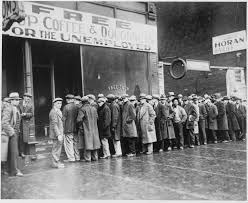

At sixteen or seventeen, the homeless were just another feature of New York’s streets. They were part of the landscape. I had a vague idea that they hadn’t started out that way, but it wasn’t important enough to think about.

Looking back on those trips into Manhattan, I might notice how I had utter indifference to the suffering of the homeless. I can notice that seeing a homeless man curled up on a bench in Penn Station with newspaper for a blanket was a distasteful mess that I averted my eyes from. In my mind, they weren’t quite human, and they certainly had nothing in common with me.

Having noticed my indifference, on the spot, I could have breathed, paused and really looked at a homeless person. I could have done what Pema Chodron calls Just Like Me. I could have realized that just like me, the homeless man sleeping on the bench wanted to be free of suffering; just like me, he wanted to be comfortable; just like me, he wanted to be loved. I could have realized that my indifference was blinding me to my own suffering by building a kind of armor around my heart. I could have noticed that even a moment of compassion for the man sleeping on the bench would have softened my armor of indifference. This softening would have been my first tentative steps on the way to being enlightened.

Apply to an (ongoing) present situation (how does it matter today?)

The ongoing situation in my life is looking for a job. The hardest part for me is the rejection. It feels so personal, so heartless, so much like a betrayal. I think without my practice, it would have made me very bitter by now.people in line

I haven’t looked for a job for years. Even though there have been layoffs all around me, whittling down the department I’m in from sixteen to two, I’ve had complete indifference to people who are unemployed. I never even noticed my indifference.

Now, with March and First Quarter looming, the threat of layoff is in the air again. Every previous quarter, I’ve focused on my own suffering, my own fear. While I want to be free of my job, I don’t want to be unemployed.

This time, as I work with these fears, I also spare a few thoughts for the millions (in this country alone) that are unemployed. I spare a thought for their fear, their desolation, their sense of betrayal. My indifference before this was a soothing balm…oh well, they’ll find a job. I chose to be indifferent because I didn’t (and don’t) want to suffer.

But now as I look around with what feels like newly opened eyes, I see that everyone at work is afraid and suffering terribly. In some way I don’t understand, this awakening to the suffering of others feels like re-claiming or maybe remembering my true nature.

Indifference, I think, locks us into the wrong view of separation: they’re suffering, but I’m okay. This is a miserable way to live because life becomes an epic struggle to hold onto “I’m okay”, and there’s a terrible sense of betrayal when some tragedy crashes through your delusion and exposes your fraud of being human.

I used to believe that renunciation was the first step on the spiritual journey. But now I’m starting to see that before you get to renunciation, you have to let go of indifference and wake up to the suffering of samsara. I wonder if that ‘awakening’ is what we experience as compassion?

Apply to a potential situation (bringing it home to play)

I have a long weekend coming up. No work on Monday. I’ll be baking. One of the most enjoyable parts of baking for me is giving away what I make. The harder the bread was to make, the more challenges I ran into with the recipe, the more enjoyable it is to give it away.

This weekend when I bake, I’ll be baking a bread to be donated as part of a meal for the homeless. Last weekend when I did it, I didn’t really give much thought to the people who would be eating the bread. The fun part for me was giving it away.

This weekend when I bake, I’ll make a conscious effort to work with my indifference to the plight of the homeless people who will eat the bread. I’ll work with the Just Like Me exercise. I’ll work with understanding how indifference is probably the absolute worst of the three poisons, and how it makes spiritual cultivation all but impossible.

I’m not sure how well I’ll be able to do this since growing up in the U. S. is like getting a Ph.D. in Indifference. But it is my intention that I will use baking that bread as an opportunity to soften my armor of indifference, to re-claim who I truly am, to be more in touch with my Buddha Nature of compassion.

On echoing words…

Currently I’m studying Heart Treasure of the Enlightened Ones with a Dharma friend, the Venerable Tashi Nyima.

This is my contemplation on the last two lines of verse 14 of the root text of Heart Treasure of the Enlightened Ones.

heart treasure

“All talk is like an echo,” said the Buddhas,

But these days it’s more like the re-echo of an echo.

What the echoes say and what they mean are not the same,

So don’t take any notice of these insidious echo-words.


       Explain to someone else (making it my own)

The heart sutra reminds us of the nature of samsaric existence, “All phenomena are merely empty…”. Sometimes I ask myself how that can possibly be true. Right now, I’m holding a pen. I’m sitting on a chair. My notebook’s on a table. I’m putting words on paper. None of it feels empty. And it certainly doesn’t feel like an echo of anything. It feels like the thing itself.molecules

But if you stop to think about it, a ‘pen’ is really just a conglomeration of atoms and molecules with mostly empty space between them. That’s true of my hand, the notebook, the table, my chair, even the floor that seems to be supporting me. Looked at this way, it means ‘pen’ is actually a thought about a chaotic arrangement of molecules and atoms barely held together by very strong bonds.

All right then. So, thoughts must be real, right? No. Meditation has taught me that thoughts are perhaps the most ephemeral, the most empty of our samsaric experience. If our thoughts are merely imputing meaning, and they reference unknown objects, then what is it in our samsaric experience that is not an echo? Nothing.

Samsara depends on talk—either our thoughts or our speech—to exist. And “all talk is like an echo”. It’s the nature of echoes to distort the source that gave rise to them. If we go about in the samsaric world never realizing that all we experience is a distorted echo of the reality of emptiness, we will impute reality to the echoes. We will believe, as we are constantly told, that if we just look hard enough, permanent happiness can be found in samsara. The corollary of course is that if you can’t find it, then there’s something wrong with you. You’re to blame. We live caught in this blame and shame, and Madison Avenue is the pied piper whose melody leads only to despair and disillusion.

Apply to a past situation (how would it have been different?)

A few years ago, before I had a Kindle, I went to the annual Friends of the Library sale. This is where libraries donate books they no longer want on their shelves. It’s a massive room with table after table of books. The books were priced anywhere from twenty-five cents to two or three dollars. When I went, I sought out every book Stephen King had ever written. Even though I’d already read every single one of his books, I wanted them so I could read them again. I also picked up maybe a dozen books by writers I’d always wanted to read, but never had. I had so many books I needed the suitcase I’d brought to get them to my car. I’d gone prepared.

memories4What I wasn’t prepared for was what happened once I got the books home. After spending hours combing through the tables for hardcover copies of Stephen King’s cannon, I stacked them against a wall of my living room in order by series, then time. Then I went about my life. I never read even a single one of the books I bought that day. In perhaps the ultimate irony, I ended up boxing them up and donating them to my local library.

Looking back on this, I can notice that when I went to the book sale, I was acting on an echo from my past. I was doing something “I’d always wanted to do” in the belief that it would bring me happiness. In retrospect, I can notice that Stephen King’s books had once been a source of temporary happiness in a very unhappy life. But once I was here in Texas, I was free to seek different ways to be happy, instead of relying on an echo of what had once brought very temporary release from suffering.

Having noticed that, I could have breathed, taken a step back, and taken a look at my motive for going to the book sale. I could have asked myself what I was setting out to accomplish by buying books I’d already read. The answer would have been that I had had so little freedom in my prior relationship that such a thing would have been unthinkable. Once I’d noticed this, I might have taken yet another step back and assessed my needs in my new life, and then turned my search for happiness in a direction that wasn’t a re-echo of my past.

Apply to an (ongoing) present situation (how does it matter today?)

The ongoing situation in my life right now continues to be Salem [a co-worker]. That’s becoming a really interesting place of learning the Dharma for me. These days, what once felt like a tornado of anger, resentment, and frustration has slowed down to a mild breeze with intermittent high gusts that can sometimes still knock me over.

I worked with that situation by purposely injecting the Dharma into my workday every day, on the hour. Every hour there’s a reminder that pops up on my computer that says ‘breathe’. Every time it comes up, I stop (even in if I’m typing and I’m in mid-word). I silently recite ‘om amideva rhi’ ten times, then shuffle through my Dharma Brigade stack of index cards and silently recite whatever lines of prayer come up. Then I go back to work. On my desk is a sign that says “Less Drama, More Dharma”, and a little yellow Post-It that says, “Give iless dramampermanence a chance to prove itself.” These signs are positioned in such a way that whenever I talk to Salem, they are within my peripheral vision.

I did all of this out of desperation. Honestly, I didn’t think it would work. What’s interesting is that the situation hasn’t changed at all. Salem is still Salem. She always will be.

What’s changed are the “insidious echo-words” of my thoughts. Doing this daily practice, on the spot, in the midst of the storm so to speak, has helped me to see that my thoughts were rampaging through my mind in a constant emotional hurricane. This was blinding me, deceiving me into believing I had to be a helpless victim to the constant repeating echoes. Now, the echoes still happen, but they’re quickly followed by a snippet of prayer. This has been tremendously powerful.

When the Dharma goes through my mind right on the heels of an echo-thought, it’s so easy to experience the distortion as exactly that—distortion, untruth. In contrast, the Dharma resonates in a way that is beyond language, beyond thought. It simply is. For that moment there is utter clarity and the echo simply dissolves. Of course, the echo-thoughts return, but they are easy to recognize for the distortions they are.

Apply to a potential situation (bringing it home to play)

I turn fifty next month. Yesterday in meditation the idea of a pilgrimage arose. It was very attractive. I feel somehow that this is the right time in my life to do that. Since both Mecca and Tibet (not to mention Jerusalem) are beyond my budget, I had to come up with something else. It had to be something I could do while living my ordinary life that would make me feel that I was taking a journey I’d never taken before.

pilgrimage4The idea that I’ve come up with is what I now call The Pilgrimage of 62. It would be a commitment to meditate/pray twice a day for the 31 days of March and journal for ten minutes afterward.

Oh! The echoes that came with that. The insidious echo-words were flying. “I can’t do that!” “I NEVER meditate twice Saturdays.” “What if I start, get almost all the way through, then miss one day at the very end?” “What if I get laid off?” And the ultimate trump card, “What if I get sick and die?”

In meditation, I listened quietly to monkey-mind pinging thoughts around. I really noticed how much they sounded like echoes in a giant cave. After a few seconds (and a few hundred thoughts whizzing by), I noticed something. No matter what the actual ‘words’ of the thoughts were, they were all echoes arising from one afflicted emotion: fear. The thought underlying all the echo-words was: I’m afraid I can’t do this. And it’s so important to me.

It was interesting to notice how compelling each thought was, how convincing, how utterly persuasive. From this I learned that one way to read Dilgo Khentse when he says, “What the echoes say and what they mean are not the same…” is to realize that our echo-thoughts all arise from some deeply rooted karmic formation.

I wonder if all our ‘echoes’ rise from one inescapable fear, a fear which has become so covered over and so twisted that it’s a monstrous karmic formation, eons old: One day, I’m going to die.

On thinking about these times…

Currently I’m studying Heart Treasure of the Enlightened Ones with a Dharma friend, the Venerable Tashi Nyima.

This is my contemplation on the last  line of verse 11 of the root text of Heart Treasure of the Enlightened Ones.

This was my first time working with renunciation. It was interesting.

heart treasure

“Being learned these days doesn’t help the teachings—

 it just leads to more debate;

Being realized these days doesn’t help others—

it just leads to more criticism;

Being in a responsible position these days doesn’t help

govern the country well—it only spreads revolt.

Think about these times with sorrow and disgust. 


 Explain to someone else (making it my own)

When I was younger my two favorite cartoons were The Flintstones and The Jetsons. My two favorite ‘people’ shows were Star Trek and Lost in Space. I liked them because, even though I couldn’t articulate it as a child, I thought their problems were so much different than mine, so very removed. They had no constantly fighting parents, no homework, no bullies at school, no stupid dishes to wash.jetsons

The Jetsons had robots to do all the cleaning. Captain Kirk was out meeting aliens and having adventures on the edge of the universe, and even though he made trouble in every episode, things always worked out okay for Dr. Smith and the Robinsons. The Flintstones were so far back in time, they had a dinosaur for a pet and a bird with teeth for a can opener.

As an adult looking back on those stories, I can see the human drama being played out from the Stone Age all the way up to an idealized future where drudgery was wholly removed. Yet, there was still drama. How can that be? How could George Jetson fly to work in a hover craft and still have problems with his boss? Why didn’t Captain Kirk bring a message of everlasting peace to the aliens he met? After all, they were smart enough to build a star ship and beam people down to planets. Why didn’t the Robinson family become ambassadors of peace after spending all that time lost in space? And finally, how could a Stone Age man like Fred Flintstone have the same drama with his boss that a future man like George Jetson had?

The Dharma teaches us that, “Worldly pleasures are deceptive,/and bring no lasting joy, only suffering.” Even though this is our experience day in and day out, we live in a constant painful denial of this very basic truth of our lives. We reach for happiness in the material world constantly—a good meal, a good partner, a new pair of shoes—and are constantly disappointed to find that our happiness is at best, fleeting.

If we look upon these times with disgust and sorrow, and develop a mind of renunciation, then we will be ready to put our feet on a path that leads to permanent happiness.

***

Apply to a past situation (how would it have been different?)

There was a time when I believed with all my heart that Texas was Heaven, Nirvana, a place where no problem could stand in the face of such paradise. I believed that merely by being here, the problems I had outrun would simply dissipate, and I’d go on with life, reborn into a land of milk, honey, and cowboy hats. I was in the Promised Land.

The day I got here was one of the worst ice storms Dallas had seen up until then. I stood outside the Dallas airport shivering miserably in my Florida-weight clothes (because it never gets cold in Paradise) and was turned down by taxi drivers who didn’t want to risk crossing the icy bridges between Dallas and Plano. A driver finally took pity on me. By the time I go to the rental office (which was closing due to the storm) to claim my new apartment, I was grateful to be alive after slipping and sliding over very icy roads with a driver who apparently had a pressing appointment with Death. I had no food. The restaurants in the Downtown Plano area were closed due to the storm. My first meal in Texas was a giant Hershey bar and a bottle of water purchased in a gourmet candy store that hadn’t closed yet.paradise3

So began my sojourn in Paradise.

This was emblematic of what was to come. There seemed to be so many obstacles to the bliss I so richly deserved: no car, nightmares and insomnia, flashbacks, anxiety. What? I asked myself. I’m in Paradise. How can there be problems here?  I became angry, confused, disillusioned. Without the help of a very skilled therapist who explained the truth of things to me and helped me learn the skills I needed, I would have been lost in paradise.

Looking back on that time, I can notice that I behaved as though changing geographically would mean leaving my samskars behind. I believed that happiness (in the extreme) was to be found if I could only figure out the right thing to do with my life. I believed that happiness was out there somewhere for the taking. Having noticed this desperate brand of constant searching, I might have taken a step back and asked myself if I’d ever found lasting happiness in the material world. Once I’d had the courage to be honest with myself and admit that I never had, I would have been ready to begin developing a mind of renunciation.

***

Apply to an (ongoing) present situation (how does it matter today?)

monkWhen I first started learning about renunciation in the Dharma, if I’m honest, all I could think of was tonsured medieval monks wearing threadbare robes with hair shirts underneath, living in a monastery on some very cold, very isolated hill top in England. They never talk to each other. They have cold gruel for their one meal a day. They pray six times a day—including in the middle of the night! They live in little tiny rooms called cells where the only things on the dank stone walls are a miserably crucified Christ and a whip. The whip of course is for self-flagellation while penitently murmuring, ‘mea culpa’.

In a word, for me, renunciation was a synonym for denial and purification by suffering. I owe this gross misunderstanding partly to growing up Seventh Day Adventist and partly to Hollywood.

As it turned out, I came to do serious renunciation in my own life nearly by accident. After pursuing the craft of writing fiction for decades, I became so disillusioned with it that I couldn’t bear it anymore.

What’s interesting about this is I didn’t want to renounce writing. I wanted to renounce the way I was doing it, the way I was seeing it in my life. In doing this, working with it daily, I find the act of renunciation to be joyful and incredibly liberating. Now that I don’t write fiction anymore, I don’t have to read it anymore. I hadn’t even realized how unbelievably bored I was with fiction. I’ve been devouring non-fiction as fast as I can download it to my Kindle. My latest kick seems to be Tudor history. Now that I don’t write fiction anymore, I’m free to write what calls to me, rather than being caught up in deadlines, plot devices, character arcs, blah, blah, blah.

What I’ve learned is that fiction writing had become a prison. liberated2Renunciation was just setting myself free. In the same way, samsara is a prison. It is in fact inimical to who we truly are. It is utterly unnatural that we would live in a world of duality. When we begin to “Think of these times with sorrow and disgust”, we’re not giving up anything. Far from it. We are setting ourselves free of the illusions and delusions and pains of the prison of samsara and aligning ourselves with our innate perfection.

***

Apply to a potential situation (bringing it home to play)

Right now as I look for a job, my life is in transition. In this Jetson-like age, job applications are done online. There’s always a moment of anxiety before I click SUBMIT, when I say to myself, “Do I really want to do this?” Then I click the icon.

As I work with finding a new job, I haven’t thought of renunciation. I am thoroughly nauseated with my workplace, but not enough to actually want to leave. It’s more of an intellectual realization that I have to leave or burn out. I have not yet reached the level of disgust and sorrow that for me, seems to be required for renunciation.

renunciation2From this I’m learning that renunciation isn’t an act of turning away, or denying. My experience is that it’s just the opposite. It seems that renunciation is a whole-hearted embrace, an understanding of what is. And then the next step seems to be an understanding that if you continue with things as they are, it will lead to more and more suffering. Then finally, the last step seems to be renouncing the suffering.

As I go to work today, I can notice how much I suffer there. Yes. There are many good things there. There is the comfort of having a job and a steady income. There is the convenience of a ten minute drive. But the suffering of being there day in and day out has gone on for years. I’m not sure what it would take for me to renounce the suffering of the situation of my workplace.

I can breathe and look back at other times in my life when I renounced the suffering of a situation. By the time I did, things had reached a point of crisis. And when I finally did experience renunciation, it led to very positive changes. Oddly, knowing this doesn’t help.

I guess what I can take a look at is…haven’t I experienced enough sorrow and disgust with that situation to have the wisdom that renunciation of that particular suffering is the right choice? The best choice? Maybe the only choice?