On countless beings…

Currently I’m studying Heart Treasure of the Enlightened Ones with a Dharma friend, the Venerable Tashi Nyima.

This is my contemplation on the first line of verse 25 of the root text of Heart Treasure of the Enlightened Ones.

heart treasure

The basis of the Mahayana path is the thought of enlightenment;

This sublime thought is the one path trodden by all the Buddhas.

Never leaving this noble path of the thought of enlightenment,

With compassion for all beings, recite the six-syllable mantra.”


Explain to someone else (making it my own)

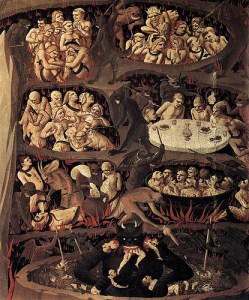
When you grow up Seventh Day Adventist, it’s a little like going to a Heaven Pep Rally every Saturday when you go to church. Believe me when I tell you, Hieronymus Bosch had nothing on those preachers when it came to picturing the torments of Hell. It was bad, they’d tell you. All your flesh would burn off, and you’d scream in agony; but it didn’t stop there. No, no. Hell was eternal, so your skin would magically grow back and the eternal flames of damnation would consume you again and again, for all eternity.

Hell mouthBut those of us at the weekly Heaven Pep Rally had nothing to worry about. Not for us were those infernal flames greedy for the flesh of sinners. No. We were the saved. We were the ones who had accepted Jesus Christ as our personal savior. Not only would we not spend eternity in lakes of brimstone and fire, we’d walk streets of gold, and maybe even lie down with a couple lions and lambs. And there’d be angels singing eternal Hosannas to God. This last bit worried me sometimes because…well…I didn’t like church music that much and it didn’t sound like Heaven was the kind of place that got FM reception. But, you know, it was better than Hell.

One night, after a particularly vivid fire and brimstone Pep Rally, I broke down in hysterics at home. You see, I went to church with my uncle. My parents never went. I suddenly realized my parents would be in those eternal flames because they weren’t saved like I was. They were sinners. I begged them to go to church so that they wouldn’t end up boiled in a lake of fire forever.

Boy, my dad got really mad at my uncle. They had a “grown up” talk. I wasn’t there. My uncle later told me that it was okay. My parents would get into Heaven because my ticket was good for three. I was about ten years old. I started wondering about my aunts and cousins, my friends at school, my teachers. None of them were Seventh Day Adventist. Was it the lakes of fire for them?

In reminding us to aspire for enlightenment with the sole purpose of freeing other beings, Dilgo Khyentse says, “Your living parents are only two of the vast infinity of living beings. . . . All sentient beings are the same in wishing to be happy and not to suffer. The great difference between oneself and others is in numbers—there is only one of me, but countless others.”

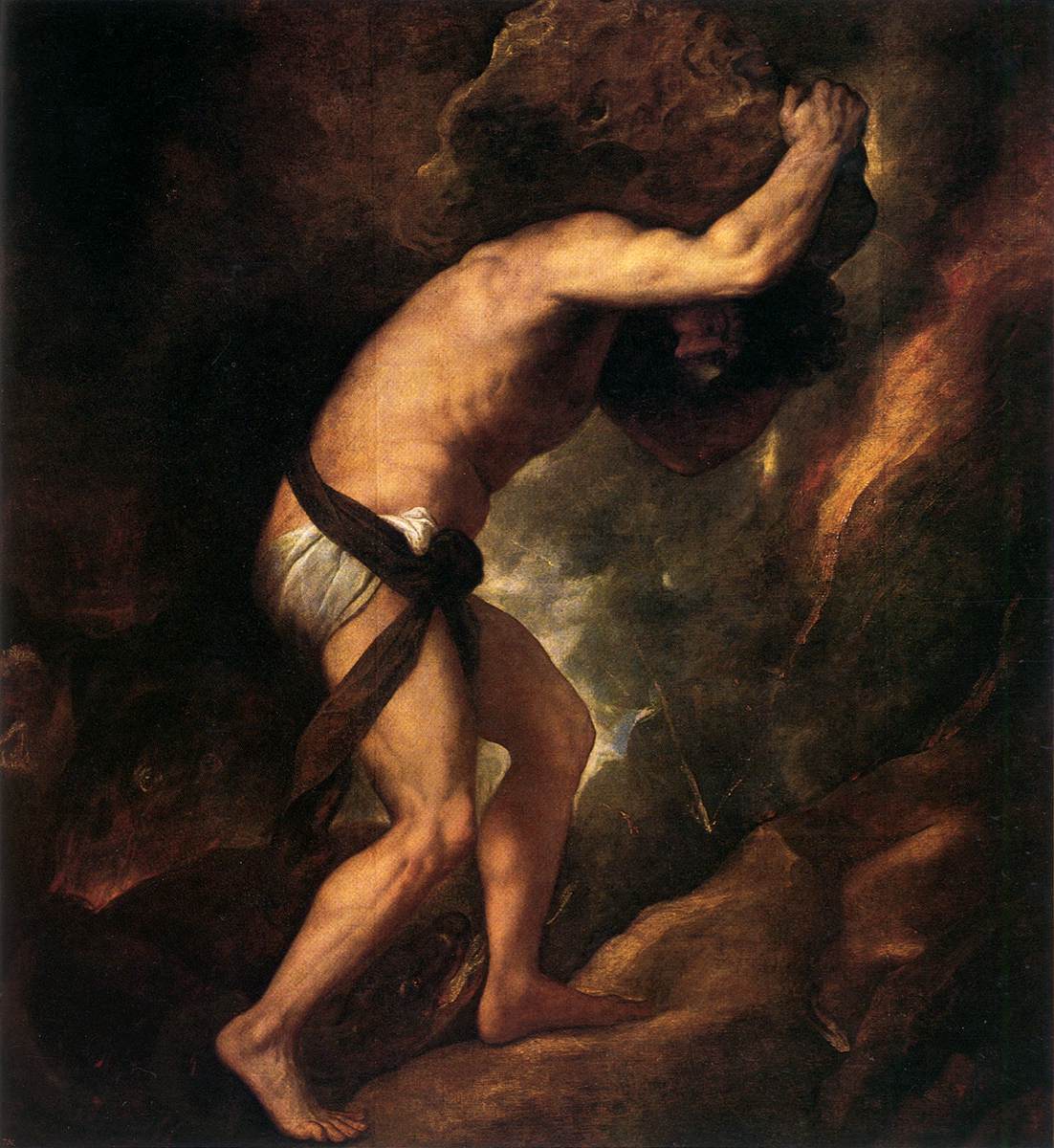
Ultimately, this is the thought of enlightenment: to live our lives as though our sole purpose were to free ourselves of suffering so that we may free all sentient beings from their suffering.

***

Apply to a past situation (how would it have been different?)

When I was in fourth grade, one of the things our teacher did as a reward for good behavior was to give out pretzel rods. She kept a box of them in her supply closet. I used to love to see that box come out. But I’d always have a selfish thought…I wish I didn’t have to share. I want all the pretzels.

About three decades later, I thought I had a chance to have all the pretzels. I thought I was so in love. I’d discovered a new fairytale castleparadise—no, a penthouse–in Paradise, the highest point. I was so high up and I had a love so much greater than any love anyone had ever known, my love was in the stratosphere of Paradise. And I wanted it all for myself. Every last bit, every moment, every syllable. I was committed to not letting a single crumb of love escape. This time, I had all the pretzels and was going to keep them. Forever.

Funny thing about that word—forever. The moment you utter it, or even give it a shape in your thoughts, it begins to crumble. I spent ten years of my life trying desperately to hoard love because, I believed, it was the only love, the deepest love I’d ever find.

Looking back on that time in my life, I can notice that all my misery in the years of the Relationship From Hell arose from clinging to the idea that the most important thing in the world was my happiness. Had I been able to breathe, take a step back from the maelstrom of my life, I may have noticed a few things.

I may have noticed that my desperate clinging to my happiness above all other things had led to a life dominated by hope and fear: hope that today I’d find the magic formula and I’d be happy, and fear that I’d never be happy. I may have noticed that I was clinging to a delusion that demanded almost all my energy just to sustain it. I may have noticed that I was living in a total darkness of indifference to the suffering of others.

Having noticed these things, I may have been able to loosen my grip on the crumbs of my long-since crumbled pretzel and maybe spared a thought for others who were suffering just like me. I may have realized that there are far better things than suffering to share. 

***

Apply to an (ongoing) present situation (how does it matter today?)

The biggest ongoing situation in my life is the sale of the company I work for to Interplanetary Title, Inc. In five days, the sale will be complete. On Thursday, I gave back the ID badge that gets me into the building and got a new one that still gets me into the building, but now I’m just a vendor instead of an employee of the bank. Now, I’m just sharing space until a new building is found for us to move to.

As of today, our workspace has been moved to another floor. Today, when I get to work, it’ll be a little chaotic with a strong undercurrent of fear.

As I’ve gone through this entire transition, I have really put compassion to the test. I’m like that. If you tell me something works, I want to try it for myself. I want to see it make a difference in my life. Otherwise, what’s the point?  Life’s short and the moment of my death will be a surprise. I really don’t have time for things that don’t work.

These last few weeks at work, there has been so much fear. The air almost crackles with the electric feel of it. Throughout my days, I’ve been reciting mantra and mind training prayers. My intent these last few weeks has been slightly different. I’ve been making it my intent that by doing mantra, compassionate action may arise from me specifically in response to all of the fear and angst I feel around me at work.

At first, I thought it wasn’t working. But then gradually, I started noticing that people walked away from interactions with me with a small smile, with slightly less tension in their body. I started noticing that I spontaneously knew what to say to evoke calm in whoever I was talking to. I knew how to inject humor appropriately to break up tension.

All of this sounds minor, but it feels like ripples in a pond. And oddly, I don’t feel as though I’m at the center of those ripples. It feels as though I am only another ripple calming the waters of fear and hope I feel all around me.
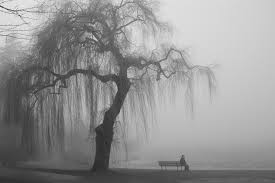
abandoned treeThis has been a tremendous experience in putting compassion to the test. Throughout this transition, I am more and more coming to see that no one can be excluded from our compassion. Because really, when we do that, aren’t we abandoning them to their personal Hell, where the flames of their own guilt, their own fear, their own hope, will consume them lifetime after lifetime? I can’t think of even one person who deserves that. Not one.

***

Apply to a potential situation (bringing it home to play)

So, my Bodhisattva vow goes something like…there are limitless sentient beings suffering. I vow to free them all. That used to sound so daunting to me. There’s something about pairing “limitless” and “all” together like that which makes the mind want to shy away and say…No way. That’s too many.

I just finished reading Skull Mantra, and the one thing I noticed about the monk characters was that their own enlightenment didn’t seem all that important to them. They were always concerned with walking the path. If that meant a prison guard shooting them, then so much the better if their death could lead to that soldier one day awakening, maybe lifetimes from now.

The monks realized that, despite appearances, they were not the prisoners. The guards were the ones imprisoned in their own prejudices, their hatred, their anger, their aggression, their indifference. And it seemed to me that, paradoxically, the monks were always working to free the prison guards.

I do not mean in any way to compare my air-conditioned office with my ergonomic chair, and a vending machine just steps away, to a Tibetan gulag. But there are parallels. People at work want so much to be happy. I hear it when they talk about their children, their houses, their spouses. And it’s absolutely heartbreaking for me when I hear something like, “when we get the new carpet…” or whatever, “then…it’ll all be good.” I want so badly to say, “No. It won’t.” But that wouldn’t be a skillful means.

Today when I go to work, it will be the first day in our new office space. People will be unsettled, feeling uprooted, and they will be anxious about June 1st, our true transition to Interplanetary Title, Inc. What can I do to make a difference today?

I can realize that in a very real way every person I see today is a prisoner, beginning with the person in the mirror. We are imprisoned by afflicted emotions and wrong views. We are bound by chains of ignorance and fear in dungeons of indifference. We are, as Dilgo Khyentse puts it, “beings…sinking hopelessly in suffering like blind people lost in a vast desert…”.

What can I do? I can keep my Bodhisattva vow. I can go to work with the intent, the aspiration to use this great ship, this ship on seaprecious human life to carry others across the ocean of samsara. I might get a little lost sometimes. Some really huge waves might come, but my Buddha Nature will be right there, keeping me on course for compassion one thought, one breath, one word, one act at a time.


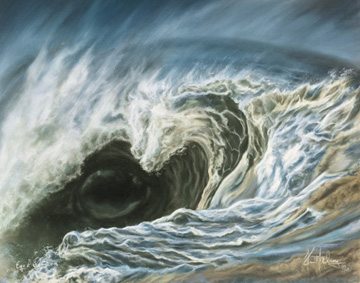
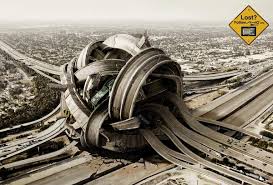
On the whirlpool of samsara…

Currently I’m studying Heart Treasure of the Enlightened Ones with a Dharma friend, the Venerable Tashi Nyima.

This is my contemplation on the final two lines of verse 24 of the root text of Heart Treasure of the Enlightened Ones.

heart treasure

“The only never-failing, constant refuge is the Three Jewels.

The Three Jewels’ single essence is Chenrezi.

With total, unshakeable trust in his wisdom,

Convinced and decisive, recite the six-syllable mantra.


Explain to someone else (making it my own)

The really cool thing about the beach in Fort Lauderdale at low tide is that you can walk out to sea. It’s a lot of fun. You can put your back to the shore, and walk in the soft sand, and the water never gets more than knee high. You feel like Christopher Columbus out there—nothing but blue ocean and sky as far as your eye can see.

I was doing my Christopher Columbus thing one day at low tide. I was with another person and I had my trusty King Size noodle with me. A noodle is a long, thick piece of flexible material, tube-like, that floats in water. I thought I was safe.

We were talking, our backs to the shore, and neither of us noticed the tide coming in. If you’ve never been in the ocean at high tide, know this: the tide comes in fast. They don’t call them ‘rushing tides’ for nothing. Before we knew it, the water was neck deep; a couple of minutes later, our feet didn’t touch the sand anymore. We hung onto the noodle, and screamed at the lifeguard for help. The noodle wasn’t buoyant enough to support us in the rough, rising water.

Neither of us knew how to swim. We were drowning. The lifeguard seemed to be onshore one moment, then swimming high tide3beside us the next. He had to literally pry my fingers from the noodle and force me to hold onto his lifeguard buoy-thing. It was much more buoyant. I didn’t drown that day thanks to a very skilled young man.

In samsara, we find ourselves neck-deep in constantly rushing tides. We desperately tread the rough waters of our lives, grasping at our own versions of noodles that ultimately, will sink under the weight of our hopes and fears. In this ocean of fear, disappointment, aging, death, and disease, there are no magic panaceas. There is no friend, no promotion, no car, no fame, no fortune great enough to rescue us from the ocean of samsara.

Dilgo Khyentse puts it like this, “To be able to free us from the whirlpool of samsara, the basis of the refuge we seek must be something itself already totally free.” If we want to be free of the storm-tossed waters of samsara, so that we may free others, we must look beyond samsara to the Buddhas who, like my lifeguard, stand on the shore waiting their chance to plunge in and offer us a sure way to lasting, permanent freedom from the cycle of birth and death.

***

Apply to a past situation (how would it have been different?)

whirlpoolThere was a time in my life when I was so caught up in the never-ending storm of my emotions that it was like living at the center of a whirlpool. My constant effort was to outrun the emotions that threatened to drown me. To that end, I filled my life with activity. I worked; I sewed; I dated; I baked in my Breadman bread machine; I read voraciously. When I finally collapsed from sheer exhaustion, I fell asleep to the drone of melodrama on TV. Then I’d get up the next day and start all over. It was grueling.

This period of my life lasted from about my late twenties to my mid-thirties. I can say, without exaggeration, that every decision I made in that time was aimed at one thing: grasping for something—anything—that would give me a few moments reprieve from the unceasing, raging storm of my life. In those days, I thought the storm was happening outside of me. I thought…if life would just settle down, I’d be fine. This epoch in my life culminated in what was perhaps this lifetime’s most unskillful decision: I began the Relationship From Hell. Sure. Yeah. It was a learning experience. But I’m here to tell you, sociopaths are not the most patient teachers in the world.

Looking back on that tumultuous time in my life, I can notice that the storm was inside me. I can notice that if I’d been able to take just a half-step back from my life, I might have seen that I was like a shipwreck survivor grasping debris that was only dragging me deeper into the whirlpool of the sinking ship.

Had I been able to take a breath, recite mantra, I might have noticed that nothing and no one in my life offered a permanent, lasting way to a shelter beyond the storm. Had I been able to notice just that much, I may have begun to see the futility of my own struggle. Had I seen this, I may have been able to see that my path to lasting freedom lay beyond the whirlpool, and maybe—just maybe—I  might have headed for shore sooner.

***

Apply to an (ongoing) present situation (how does it matter today?)

The biggest ongoing situation in my life right now is that the company I work for has been sold to Interplanetary Title, Inc. This has been a monumentally good time to practice. The atmosphere at work is truly a furiously spinning whirlpool of fear, hope, resentment, frustration, aggression, and just plain oh-my-freaking-god-the-company-is-shutting-down!

Despite all of Interplanetary Title’s efforts to calm fears, the people at work all have the slightly dazed look of survivors ofThe Shipwreck exhibited 1805 by Joseph Mallord William Turner 1775-1851 some horrible disaster—a Tsunami, an earthquake, a category ten hurricane that leaves corpses floating through the streets. Although we all know that there are true disasters happening across the globe, with typically American egocentricity, we insist to ourselves that this is different. This is our personal disaster, our shipwreck.

At this point in my life, I’ve been studying the Dharma for a little more than two years. In that time, I’ve learned a lot of concepts, memorized a few prayers and aspirations, and I’ve seen some seriously cool sparkly blue things in sitting meditation. But in the sucking whirlpool of the transition at work, none of that matters; not one syllable.

What I am finding is that with the help of the teachings transmitted by my Dharma friend Tashi, and my own devotion to practice, I have gradually built a “total, unshakeable trust” in the wisdom and compassion of my own Buddha Nature. When I am at work, I can feel the storm surging all around me. I can feel the strongly surging tides of afflicted emotions rising inside me. And…I let it rise. I have utter trust that no matter what storm rises, my Buddha Nature will be right there, untouched, steady, utterly clear, utterly residing in peace.

This experience of an abiding peace and clarity in the midst of the raging storm’s fury is what makes it possible for me to recite the six-syllable mantra at work, “convinced and decisive”, knowing with utter conviction that my Buddha Nature is perfectly established. This allows me to resonate with the Buddha Nature I know is in those beings all around me. I don’t know that I can offer comfort at work, but I do know that I don’t contribute to the storm.

***

Apply to a potential situation (bringing it home to play)

In a little more than an hour, I’ll head out for work. Before I go, I’ll check the mail to see if the Offer Letter (of employment) from Interplanetary Title is here yet. They said the letters would be sent out this week. Until I get that letter, everything so far that Interplanetary has said about me keeping my job during the ‘transition’ amounts to a whistle and a prayer.

I’m sure everyone at work feels this way. In some way, we’re all thinking…You’ve talked a good game so far, Interplanetary. But I’m eighteen days away from being unemployed. Show me words on paper. Make a commitment. Knowing this, I’m not really sure what I can do at work today that will make a difference for all of us. But writing this, I do realize something. Let’s say that I was the only one who received an Offer Letter from Interplanetary Title. This would mean that in eighteen days, everyone at work, except for me, would be unemployed.

Wow. That would be horrible. The letter would bring me no joy.

Experiencing this in my ordinary life is helping me to see why it’s so important to work for your own enlightenment with the sole goal being that you may bring enlightenment to others. I’m not sure why waiting for the Offer Letter has brought that home to me, but it has. I even want Salem to get an Offer Letter. I want absolutely everyone to get a letter.

envelopeSo I guess I know what I can do at work today. As I go through my day and encounter people, I can look at them and silently say to myself—may you get an Offer Letter. Even if I don’t like them. Even if they irritate me. Even if I feel that they’re puffed up with a sense of their own self-importance. I will do this because today, for the first time, I truly realize that if my enlightenment is done solely for my own good, it’s worthless. I might as well stay in samsara.

Today, with “total, unshakeable trust”, I will be “convinced and decisive”, beyond doubt, as I go through my workday with the prayer that we may all receive Offer Letters of Enlightenment from our Buddha Nature.

Well…except that one person who I really, really don’t get along with.

Kidding.

Him, too.

Will I forget during my workday? Yeah. Probably. But I have utter trust that my Buddha Nature will be on the job, reminding me of why I’m here, why we’re all here.

On the never-failing refuge…

Currently I’m studying Heart Treasure of the Enlightened Ones with a Dharma friend, the Venerable Tashi Nyima.

This is my contemplation on the first line of verse 24 of the root text of Heart Treasure of the Enlightened Ones. This contemplation focuses on the second jewel, the Dharma.

heart treasure

The only never-failing, constant refuge is the Three Jewels.

The Three Jewels’ single essence is Chenrezi.

With total, unshakeable trust in his wisdom,

Convinced and decisive, recite the six-syllable mantra.”


Explain to someone else (making it my own)

I’m the kind of person who should have GPS to cross the street. No, really, I have absolutely no sense of direction. People give me directions, and they say things like, “Head north about two miles, then you’ll see it right there on the southwest corner”.

What??gps2

I nod politely, all the time thinking, you know, cartography isn’t really my thing. Then I ask for a physical address, which goes in my GPS. Now, once the address is in my GPS, I am absolutely fearless. I follow the directions (which are sensible like, “turn left in .5 miles”) faithfully and without question because GPS always, always gets me where I want to go.

In samsara, our GPS, the path that will lead us to our own Buddha Nature is the Dharma, the second of the Three Jewels. And it’s better than GPS! The satellite connection never gets lost, you never run out of battery power, and you don’t need to be near a Buddha Broadcast tower. The Dharma is never-failing because it’s based on what is. It doesn’t need artificial support.

In samsara, when I want to go to that really great vegan bakery I keep hearing about, I completely take refuge in my GPS. I have utter faith and trust that if I put in the right address, GPS will get me there.

On the path, I take refuge in Dharma GPS. The Dharma lies well beyond the fictional truth of samsara. The Dharma is not subject to birth, aging, disease, or death. It is the one true path to our Buddha Nature. Why take refuge? Why not simply have faith, I used to ask myself.

Faith, coming from my Christian background, is tainted with fear and hope—the fear of a powerful God outside myself and the hope that I can appease Him and cajole Him into doing what I want. Refuge is a relationship based on trust that arises from experience. For instance, if we see a mountain cave withstand many hurricanes, we would take refuge from a storm there because our experience tells us the mountain can withstand the storm.

There are 84,000 ways for us to have our own experience with what is—the Dharma. The truly wonderful thing about the Dharma is that once we have our very first experience with it, we are drawn to take refuge, and trust spontaneously arises.

***

Apply to a past situation (how would it have been different?)

Last June, I had to train a new person in my department at work. Layoffs have reduced the size of the department to two people. This new person—Salem—is fifty percent of the department.

Salem has been with the company for fourteen years. The company I work for is a title company. After working with her for nearly a year, I can unequivocally say that she doesn’t have the first clue about even the most basic principles of real property title examination.

There is a guide at work that I designed that has hundreds of scripted responses to clients. In her training, Salem refused to use them as is. She constantly altered them in ways that resulted in ‘bounce-back’ emails from confused clients. When I pointed out what she’d done, she’d launch into a twenty-minute, extraordinarily convoluted explanation of why she was right. I spent about six months in a Hell of frustration and resentment. Salem, completely in her comfort zone, spent those same six months in our manager’s office constantly reshaping events so that she was right. It was exasperating and infuriating.

Finally, I decided to put mind-training in the place where the rubber hits the road. I stopped trying to make things work out my way. I began to recite mind training prayers and mantra hourly at work. I stopped engaging Salem altogether. I stopped trying to get her to do things the “right way” (ie: my way). This was an extremely difficult process for me. My old habits rose up with a vengeance. I had to literally bite my tongue sometimes to keep my mouth shut. I had to get up from my desk and take long walks and recite mantra. I had to write reams in my journal. I had to constantly bring mind back to the task of reciting mantra or prayer.

puppyAt first, it was like trying to drag an angry Rottweiler along behind me, all the time its heels dug in, teeth bared, snarling at me. But gradually, that Rottweiler got smaller, less angry, less stubborn. Today, as I write this, it’s more like herding along a wandering puppy…no, this way, over here, come here…good girl.

Salem continues to make gross errors, and our manager continues to cover them up. Gaining a sense of perspective has helped me to realize that it is beyond my current level of skillful means to do anything but observe the unhealthy relationship of guilt and blame developing between them.

When the rubber hit the road, mind training worked with an effectiveness beyond anything I could have dreamed when I first leashed that pissed off Rottweiler. It continues to work.

Had I taken refuge in the Dharma about five months sooner, I would have saved myself (and Salem) a lot of suffering that arose from the constant aggression I was experiencing. Had I taken a step back sooner, I would have clearly seen that Salem is in my life to give me an opportunity to purify my karma. Had I sought refuge in the Dharma sooner, I may have noticed that the agitation in my mind was making it impossible to resonate with my inherent Buddha Nature.

Had I been willing to let go of my self-grasping sooner, I might have noticed that getting Salem to do the right thing was an idea based on wrong view. I may have noticed that taking refuge in the Dharma was the right thing for me to do, the only thing to do.

***

Apply to an (ongoing) present situation (how does it matter today?)

The biggest ongoing situation in my life is the sale of the company I work for to Interplanetary Title, Inc. This has been a time of great anxiety for me and everyone else at work.

The anxiety we are all experiencing has one basic source: we don’t know what comes next. What will the new company be like? What if we hate it? What if we can’t do the job? What if we get laid off? What if the sun doesn’t rise and the power goes out and civilization falls and we have to use carrier pigeons because there’s no internet? Okay. That last one may be a bit of an exaggeration; but only a bit.

Here’s the thing about taking refuge in the Dharma: we know exactly how things will go. Taking refuge in the Dharma is a little like reading an historical account of Anne Boleyn and Henry VIII. No matter how good the writer is, no matter how skillfully they write the lead-up to the romance—you know the ending. The guy with the sword comes from France, and off goes her head. No surprises.

entertainment3Taking refuge in the Dharma—what is—works the same way. We get so caught up in chasing after refuge in samsara with the 210 channel satellite TV packages, the car with the You Never Die Anti-Death brakes, the house in the You’re A Success neighborhood, the vitamins from You’ll Live Forever, Inc., that we forget. We are so caught up in turning to samsara for refuge from our anxieties that we forget there’s no reason for anxiety over what the future holds. The Dharma tells us exactly how things are in samsara, how they have always been, and how they always will be. There is birth; there is aging; there is disease; there is death. Everything else, as my Dharma friend Tashi enjoys saying, is…entertainment. The burning house of samsara is blazing, the Dharma tells us again and again. Get out.

These days at work, I bring my mind to the Dharma over and over. I recite mantra. I recite mind training prayers. It has been very slow, but gradually I’m beginning to see quite clearly that this transition to a new company is no cause for anxiety. It changes nothing. It’s like changing the back drop on a stage on which the same drama of birth, aging, disease, and death will relentlessly continue to play out.

***

Apply to a potential situation (bringing it home to play)

Tomorrow when I go to work, the same anxieties will arise. I don’t even have to be in the building. The parking garage is close enough for it to begin.

If I wanted to completely put things in perspective, I could remind myself that even if there is a total apocalypse, even if all the volcanoes on the planet erupt at noon, and volcanic ash totally blocks out sunlight and sets off a nuclear winter, and civilization completely collapses, there will still be birth, aging, disease, and death. That wouldn’t work for me. The idea of apocalypse is far too intellectual a concept for it to have any real impact on my thinking.

Instead when those anxieties arise, I can simply let it happen. The mind loves to elaborate. It can come up with a thousand Dire Consequences scenarios in the moment between heartbeats. Once that’s happened, I can take refuge in the Dharma by realizing that in samsara, all things are impermanent—even anxiety. All I have to do is give impermanence a chance to prove itself.

This sounds easy, but I know from experience that my habitual response to anxiety is to get caught up in it and try to find solutions to the Dire Consequences mind conjures up. Tomorrow, when I feel this nearly irresistible tug to go with my anxiety, I will recite mantra. When I do this, I will pay attention to the resonance that arises, and I will know that I am resonating with my Buddha nature, my true self, who is not subject to birth, aging, disease, or death.

3 jewels2We can all do this. Taking refuge in the Dharma is as simple as turning our attention to what is. It’s no different than changing a channel on TV, or tuning in a different radio station. We can take refuge in the Dharma by texting to our true selves. Instead of ‘i♥u’, to our Buddha Nature we say the six-syllable mantra and then wait in the silence that arises. If we wait long enough, we will begin to experience the resonance with our true self that is always there, the text from our Buddha Nature which speaks without words.

On endlessly rolling waves…

Currently I’m studying Heart Treasure of the Enlightened Ones with a Dharma friend, the Venerable Tashi Nyima.

This is my contemplation on the final line of verse 23 of the root text of Heart Treasure of the Enlightened Ones.

heart treasure

“Whatever I know I’ve left it as theory;

it’s no use to me now.

Whatever I’ve done I’ve spent on this life;

it’s no use to me now.

Whatever I’ve thought was all just delusion;

it’s no use to me now.

Now the time has come to do what’s truly

Useful—recite the six-syllable mantra.”

Explain to someone else (making it my own)

When I was a little girl, my favorite game was ‘When I Grow Up’. As a child, I understood growing up to mean getting bigger—taller—and escaping the carping tyranny of my mother. I never told anyone this. It was an imaginary game I played in my mind. In those games, I had a house with a pretty garden of roses and ‘yellow flowers’ (maybe doll housethey were daisies), and everything in the house was exactly as I wanted it. Back then this meant my dolls were my blessedly silent and always smiling companions. We enjoyed tea from my tea set. Of course I didn’t go to work or pay bills. I had only the dimmest understanding of why my parents left me with a babysitter all day long except for two days a week. I had no concept of bills at all.
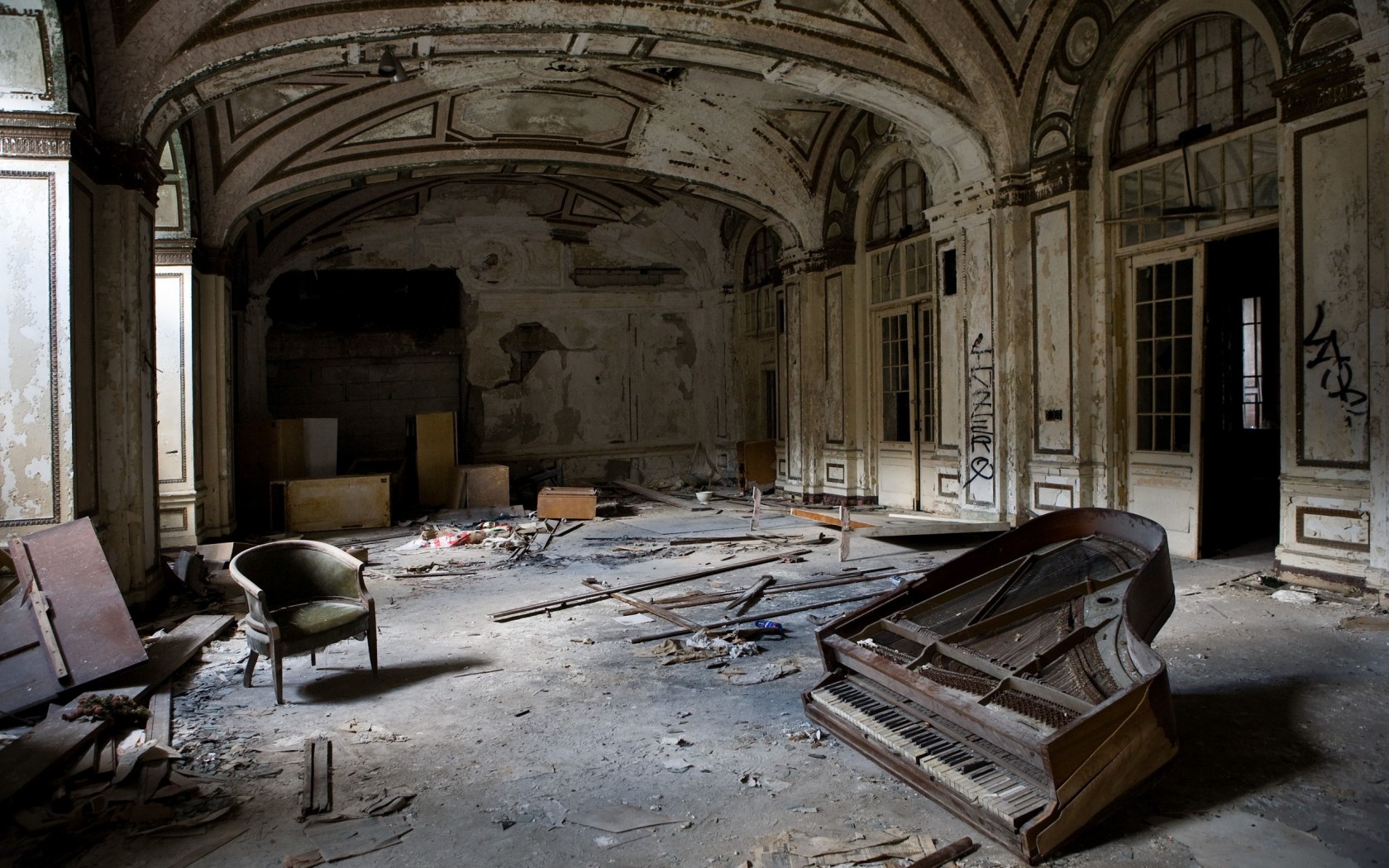


This comforting dream became my Secret Fairy Tale; a place to retreat when the outside world became intolerable. Then of course, I really did grow up, and eventually found the whole business of being an adult to be a complete let down. Houses came with thirty-year mortgages, lawns to be mowed, and a bizarrely endless list of repairs to be done.

For the most part when we grow up, we convince ourselves that we’ve let go of whatever our Secret Fairy Tale was. But if we take an honest look at our lives, we’ll notice that the underlying drive of our lives is a vain attempt to make some aspect of our Secret Fairy Tale come true.

All of our dreams of what we want, what we yearn for, amount to one thing: I want to be happy. And not just for a day. We want Happily Ever After. In writing we call this the HEA ending. If we’re honest with ourselves, isn’t that what we’re always going after?

We spend decades upon decades fruitlessly going after our idea of the perfect HEA, but like sand in a dream, it slips through our grasp, and heartbreakingly dissolves to nothing. Dilgo Khyentse puts it like this, “Like waves, all the activities of this life have rolled endlessly on, one after the other, yet have left us empty handed.” The answer to this dilemma of searching and never finding is “to do what’s truly useful—recite the six-syllable mantra.”

 ***

Apply to a past situation (how would it have been different?)

If I think back, my very first sojourn through Hell was sixth grade. My parents divorced the summer between fifth and sixth grade. I was shipped off ‘for my own good’ to live with an aunt in upstate New York. That year was my first time away abandonedfrom home. I felt abandoned, angry, resentful, and utterly disillusioned. I had neither the emotional vocabulary nor the verbal vocabulary to express any of these things, so for a while I withdrew, only talking when I had to.

It was a year of heartbreak and grief. Like most children of divorce, I thought I’d somehow caused this cataclysm.

Fast forward about twenty-five years to my second sojourn through Hell with my companion on the ride, My Favorite Sociopath. Looking back I can see how the ghost of the heartbroken sixth-grader haunted that relationship. She was always there, a writhing mass of confused, overwhelming emotions, determined to get it right this time.

When I look at the two ‘me’s’ who participated in that relationship, I can notice how neither could have what they wanted. The sixth-grader wanted unending happiness. The thirty-something wanted the Perfect Relationship. Had I been able to take a step back and pause in my chase after the end of the rainbow, I  may have noticed that I’d been searching for the same HEA since I was five years old—over thirty years—and still hadn’t found it. Had I noticed this, I could have breathed and done mantra and allowed a moment of peace and clarity to arise in the confusion of my mind. If I’d been able to do this, I may have noticed that my search for happiness had been fruitless because I was looking to other people to give me happiness. Having seen this, I may have turned my search inward, and begun to look at the causes of unhappiness that I was daily bringing into my life

***

Apply to an (ongoing) present situation (how does it matter today?)

The biggest ongoing situation in my life is the company I work for shutting down in twenty-seven days. It’s been bought by a company I’m going to call Interplanetary Title, Inc. No one’s calling it a shut down; everyone goes around talking about ‘transition’. As I live through these days, anxiety is very much with me. Insomnia has started, but nothing like it used to be. I can sleep through most of the night.

In the last few days something’s happened that’s made me put this whole transition thing in perspective. I won’t write here about what’s happened, but I will say that it’s given me a long range outlook. When I first heard the announcement of the company being sold to Interplanetary Title, Inc., I just about freaked out.

Since then, I’ve taken every chance I can to work with anxiety, even when it’s keeping me up at two in the morning. Just death cardslately though, I’ve been thinking about the final transition we’ll all make out of this life. I guess death is the ultimate lay-off. As I go through this transition at work, I’ve begun to think about my own death, and what that transition will be like.

It will be frightening, certainly. Beyond that, I don’t know. No one does. Even if I could raise a zombie from the dead, all they could tell me would be their experience of death. This has made me consider my daily life in terms of Patrul Rinpoche’s words, “Now the time has come to do what’s truly useful…”. So far I’ve spent five decades in this lifetime, and it’s only the last two or three years, since I’ve been studying the Dharma, that feel useful.

As I watch myself go through this transition, I constantly ask myself—how can I bring this to the path? I am not always successful in doing that, but I am mindful that I must find a way to do it. Our death is certain, but the hour is unknown. As I go through this transition, I remind myself that with every heartbeat, every breath, I am transitioning from life to death.

On June 1st, after the sale contract is executed, I’ll have a different employee name on my electronic pay stub; transition complete. All that I will truly take with me through the transition are the tendencies and habits I practice up through and during the transition. The same is true of death. At the moment of our death, all that we will have are the habits and tendencies of a lifetime. Knowing this, shouldn’t we live our lives as though each moment were the time to “do what’s truly useful—recite the six-syllable mantra”?

***

Apply to a potential situation (bringing it home to play)

At work, as the transition date draws closer, rumors fly, tempers flare, anxiety permeates the air like mild mustard gas. I make a conscious effort not to participate in the rumor-driven gossip. I know this would only lead to more agitation in my mind. When I see tempers flare, or when I’m targeted by a flaring temper, I take a step back until I can at least marginally include that being in my compassion. When anxiety hangs heavily in the air, I offer an upbeat word or two.

As I go to work tomorrow, I will continue my work with mantra. Doing mantra silently every hour at work helps to my keep my mind from becoming more and more agitated as the day goes on. Since I’m less agitated, I’m not adding to the atmosphere of anxiety. Since I’m not adding to the atmosphere of anxiety, I’m able to offer words of comfort to others.

victorian houseThe very act of pausing to do mantra in the constant whirl of the corporate workplace seems to give mind a resting place. It feels like the cool refreshing waters of a desert oasis. There will be times tomorrow when I feel like…No. Not now. I’m too busy. Tomorrow I’ll be especially sure to stop at those times and do mantra.

When I do silent mantra at work, there is a moment of perfect peace, perfect rest, perfect clarity. Of course, as soon as I stop, all the stress and anxiety rushes right back in. That’s all right, because they don’t seem so solid after that moment of rest. Tomorrow as I practice, I will remember that anything I build or accomplish in samsara is only part of the endlessly rolling wave of my life, and it will ultimately leave me empty handed. I will remind myself that the most important activity we can do in this precious birth is to study the Dharma.

At the moment of our death, I will remember, we take nothing with us but our karma. Understanding this, what could be more important than using mantra to purify our mind, purify our karma? At the end of this lifetime, don’t we want to know that we’ve done all we can to avoid harm, do good, and purify our mind?

On myriads of thoughts…

Currently I’m studying Heart Treasure of the Enlightened Ones with a Dharma friend, the Venerable Tashi Nyima.

This is my contemplation on the third line of verse 23 of the root text of Heart Treasure of the Enlightened Ones.

heart treasure

“Whatever I know I’ve left it as theory;

it’s no use to me now.

Whatever I’ve done I’ve spent on this life;

it’s no use to me now.

Whatever I’ve thought was all just delusion;

it’s no use to me now.

Now the time has come to do what’s truly

Useful—recite the six-syllable mantra.”

 Explain to someone else (making it my own)

When I was a little girl, I wanted to run away. It’s not that things were horrible at home, but it was just a house. Cinderella lived in a real castle, and she wore glass slippers. She was married to a prince, and she wore pretty clothes all the time. And if I couldn’t make it to the castle, maybe I could stop by Heaven and walk on those streets of gold. If I got there on a good day, I might see lions lying down with lambs. I wanted to pet a lion and see what all that hair around its head felt like.

fairy tale bookAs a little girl, I was exposed to fairy tales and biblical stories at the same time. My cousin would read to me from my fairy tale collection just about whenever I asked. My uncle, who’d just converted to being Seventh Day Adventist, would read to me fanatically from The Bible. He had one of those bibles that had gorgeous color plates of what I later learned were great works of art. To me, they were very pretty pictures. There was no difference in my five-year old mind between fairies and angels. I thought angels were grown up fairies. I thought God was a king who lived in Heaven, his kingdom, and if I knew how to get there, I could go visit. I didn’t understand the idea of ‘fiction’.

We tend to believe that we outgrow such naïve styles of thinking. Yet we find ourselves constantly caught up in the stories of our own lives. We constantly seek happiness based on what we think we see around us. We look for the next job, the next spouse, the next house, the next car—always chasing the elusive goal of ‘happiness’. We end most of our days exhausted and horribly dissatisfied, but with the hope that tomorrow we’ll find true happiness.

We live our lives in a state of utter delusion, imprisoned inside a mind that is incapable of perceiving reality. We believe our thoughts as surely as I believed I could hitchhike to Cinderella’s castle. Dilgo Khyentse puts it like this, “Myriads of thoughts have run through our minds, each one giving birth to many more, but all they have done is to increase our confusion and dissatisfaction.”

We are like children, constantly disappointed that no fairy godmother has come to rescue us from the mundane suffering of our lives.

***

Apply to a past situation (how would it have been different?)

“I’ll be dead tomorrow, so it doesn’t matter.” For years, I lived with that thought. I had elaborate plans of suicide. Back then I didn’t have access to pharmaceutical exit plans, but when you live a scant ten minute drive from the ocean, you don’t need pharmaceutical assistance. I wanted to die (anhelld honestly the method wasn’t important to me), because my mind had created a world that was so insufferable. I was convinced that death was the only alternative.


I was in a relationship that has the politically correct (and woefully understated) designation of “Domestic Abuse”; sounds so much nicer than it is to live it day in and day out. It was a sojourn through Hell. I’m here to tell you, Hell is state of mind, not a place with bubbling lakes of brimstone. In the final two years of that relationship, I craved death the way an addict craves their next fix. The one thing that stopped me was that I was afraid I’d get it wrong.

For a long time, I wholly believed my mind’s take on the situation. No religious zealot ever believed their creed more fervently than I believed the thoughts arising in my confused mind. Death, mind would whisper to me, a long peaceful sleep.

In the end of things, it was constant threats of death that finally drove me to leave. Toward the end, I was told constantly that if I left, I’d be killed. I thought—you’ll kill me? Really? Sweet. I’m outta here. It wasn’t quite so easy as I make it sound, but my preference for death over the life I was living was the final impetus that drove me to leave.

Looking back on that time in my life, I can notice how mind zoomed in on death until it seemed like the only way out. Had I been able to take even a baby-step back from the Greek tragedy of my life, I may have noticed that there is never only one anything. Had I done that, I may have noticed that death’s appeal came mainly from my fear that whatever lay ahead, beyond the gates of Hell, was just too terrifying to face. Had I been able to notice this, I might have seen that death’s looming stature in my thoughts was like a ten foot shadow of an ant, cast by the blaring spotlight of my confused mind. Having seen this, I may have ended the suffering of both my partner and myself a whole lot sooner.

***

Apply to an (ongoing) present situation (how does it matter today?)

The biggest ongoing situation in my life is that the company I work for is being sold to Interplanetary Title, Inc.  This has been a smorgasbord of fear and anxiety for mind. When this was first announced on April 11, there was this plummeting feeling in my stomach. Not only was I falling, my parachute wouldn’t open.

Mind went right to work, zooming in on all the things that could go wrong. Oddly enough, my sojourn in Hell has been pretty helpful. I’m on to mind; not all ten foot shadows are giants.

ecuSince April 11, I’ve had countless opportunities to work with anxiety. The one thing that all anxiety thoughts have in common is mind’s peculiar ability to zoom in, narrow a view until it simply blots out everything else.  I’m noticing that mind can only do this by ascribing a single cause and magnifying it beyond all meaningful proportion.

With the situation at work, there are days when mind insists that it’s all an elaborate ruse, and that on May 31st (the day the deal is signed), we’ll all be fired and ineligible for unemployment. This is just one scenario. Mind plays these fictions out hourly, with more variations than Bach could have ever dreamed up.

But thanks to my Dharma study, there are many times when I’m able to experience these thoughts as activities of mind, wholly unrelated to any reality, let alone ultimate reality. Thanks to this event arising at this time on my spiritual path, I am able to observe mind at work busily manufacturing what my Dharma friend Tashi calls ‘fictional truth’. Most of the time, I am able to see correct fictional truth—I know mind is deluded and confused and is offering up a skewed set of perceptions based on limited input.

I vigorously practice mantra now, but with a different emphasis. I no longer ask to be free of anxiety. When I recite mantra now, I understand that my true self is free of anxiety. I use mantra to establish a resonance with that true self. This dissolves the illusion of reality that can arise from the confused mind.

This does not take away the anxiety or fear, but it does give a comfortable distance from it. In practicing this way, I realize the power of mantra to free any of us at any time, no matter how entangled we are in the delusions of the confused mind.

***

Apply to a potential situation (bringing it home to play)

In about an hour, I’ll be on my way to work. Before I began studying the Dharma, getting ready for work in these days leading up to May 31 would have been drama worthy of Shakespeare. I would have desperately hoped that the anxiety wouldn’t be too unbearable and that I could grit my teeth and bear it.

Today, no need to wear my teeth to nubs. You know what? The truth is, anxiety is already arising at the thought of going to work. And that’s okay. It isn’t pleasant. It isn’t fun, and it certainly isn’t my first choice for how to start my day.

Although there is nothing magical about the Dharma, for me it has a certain miraculous quality. This quality is what my Dharma friend Tashi calls “Serene Trust” or “Serene Confidence”. With training my mind, and with reliance on the Dharma, I am able to simply rest in the arising deluded confusion that I label ‘anxiety’. This doesn’t sound like a big deal. But for someone who’s ended up in the emergency room because of an anxiety attack so bad I couldn’t breathe, it’s pretty awesome.swing woman

Before, I used to try and ‘fix’ anxiety, try to make it go away. Now, I work with letting it arise, then resting with whatever arises. Today, when anxiety arises, I will recite mantra, and understand that what I am experiencing is a phenomenon in the deluded mind. I will remember that all phenomena are impermanent, dependent, and insubstantial. I will give impermanence a chance to prove itself. In this way, I will resonate with my true self. I will resonate with my Buddha Nature of true bliss, true permanence, true self, true purity.

Each time I do this during the day, I will turn my attention outward and know that every being I lay eyes on has the same Buddha Nature, and they are suffering far more than I am. I will work throughout my day, with compassion, to ease their fears, which are no different than mine. If I can bring a genuine smile to just one person’s face today, it will have been a day well spent.


PS: Thanks to my Dharma friend Elizabet for the awesome woman on the swing image…

On all the forests made into paper…

Currently I’m studying Heart Treasure of the Enlightened Ones with a Dharma friend, the Venerable Tashi Nyima.

This is my contemplation on the final line of verse 22 of the root text of Heart Treasure of the Enlightened Ones.

heart treasure

“Ah! Fount of compassion, my root teacher, Lord Chenrezi,

You are my only protector!

The six-syllable mantra, essence of your speech, is the sublime Dharma;

From now on I have no hope but you!


Explain to someone else (making it my own)

I was shopping for laundry detergent the other day. One of the glossy orange packages said something like ‘guaranteed clean’. Guarantees like that always make me wonder. Who’s to say what’s ‘clean’?  Is it mass annihilation on the level of microbes in my clothes? Does it bleach my clothes so that the dirt’s still there, but invisible to my eye? What if it’s not clean enough for me? Will they refund the cost of my water and the wear and tear on my washing machine? Guarantees like that don’t make sense to me.guarantee

We live in a realm dominated by entropy. Nothing becomes more whole with movement through the aspect of space we call ‘time’. On the contrary, integrity is lost with every tick of the clock. With every heartbeat, we are one moment closer to crossing the threshold of death. Yet we seek guarantees. We seek assurances that things will not fall apart. We seek a faith that will speak of things staying as they are. In samsara, there is no such assurance, no such faith.

For such assurance we must look beyond the realm of samsara to the Buddhas. They offer a guarantee that is unfailing because it is not subject to the entropy of samsara. Dilgo Khyentse tells us that the merit generated by a single recitation of om mani peme hum is so immeasurable that “…even if all the forests on earth were made into paper, there would never be enough to write down more than the minutest part.” Now that’s what I call an assurance—it’s so good, we can’t even tell you how good it is.

Although Patrul Rinpoche specifically refers to Chenrezig—compassion—experience has taught me that sincere practice of any aspect of the Dharma brings immeasurable benefit into our lives. In this Dharma Ending Age, such a guarantee is priceless.

***

Apply to a past situation (how would it have been different?)

I used to be the kind of person who made hope a religion. No kidding. At Christmas time, I would hope for exactly the Barbie I wanted. I never got it. On my birthday, I would hope for my very own tape recorder. I got it and got bored with it. barbieWhen things got really bad at home, I’d fall asleep hoping my parents would stop hating each other. They got divorced.

Hope played a big part in my life right up until last year when I finished writing a book and hoped it would be a bestseller. Only then did I learn the true faces of hope: fear, disappointment, betrayal, despair, dejection. By then I was already studying the Dharma, but it was something separate from my writing; or at least I thought it was.

Looking back on that time, I can notice how I had allowed hope to calcify my writing into something very rigid and nearly completely leeched of creativity. Had I noticed this, I may have been able to take a step back and notice what my ‘hope’ amounted to. Having done this, I may have seen that I was desperately afraid that not only had I wasted the last year and a half of my life, maybe I’d wasted the last twenty years. I may have noticed that what I was ‘hoping’ for was redemption (from outside myself) from my own fears.

Had I been able to see this, I may have been able to breathe, and begin to learn mantra. I may have been able to glimpse the true permanence, true bliss, true self that is always within us, whole and untouched by the entropy of samsara. Had I been able to do that, I may have realized that in the constantly disintegrating realm of samsara, the Dharma is the only real hope any of us have.

***

Apply to an (ongoing) present situation (how does it matter today?)

The biggest ongoing situation in my life right now is the company I work for being bought by another company. I won’t work for a bank anymore. That’s a big plus for me. I’ll be glad to escape the stench of that particular manure field.

The hardest thing about this situation for me is the uncertainty that comes with anticipation. It’s a little like going to the dentist to get a tooth pulled. I’ve done this twice. They give you anesthesia. During the procedure, you feel nothing. But you feel all these metal things in your mouth; you hear that whining drill; you feel a really, really hard pull, and then the dentist mutters something like ‘missed a piece’, and the drill starts up again. The whole time I’m sitting there thinking…when all this pain stuff wears off, this is going to seriously hurt. I hope it doesn’t. But I know it will.

Work is like that. They keep saying it’s a transition. We’re ‘transitioning’ to Interplanetary Title, Inc. They’re the best in the business. This is going to be smooth. Sure, we’re a smaller company. Sure, Interplanetary Title, Inc. has bought lots of companies, but your company is important to us.

The lies are hip deep. It’s like bad anesthesia. It hurts just enough for you to know there is some heavy duty pain coming your way. These men, who have gotten to their six figure salaries by making a career of lying and deceiving others…are nervous. They try to hide it. But to me, it’s all over their syntax, their body language, their constant repetition of pet words like ‘transition’.

All of this has led to levels of anxiety for me that feel unbearable at times. It used to be that when  my internal storms reached hurricane strength (currently Cat 6), I’d hunker down and just hope it would pass before it wore me out.

But this time is different. I could even say that these anxiety levels have come at the perfect time on my spiritual path. In the midst of the storms, at the very height of the howling winds of anxiety rattling the windows of my sanity, I turn to the Dharma. Sometimes it feels like I can’t breathe. No problem. I don’t need my breath to do mantra.lighthouse

Doing mantra doesn’t calm the storm. Repeating those words (om mani peme hum or om amideva rhih) lets me resonate with a part of myself that is utterly whole, utterly untouched by the storm—my Buddha Nature. This is the hope the Dharma offers all of us at any time, regardless of the storms raging around us. For me, those moments are bliss.

***

Apply to a potential situation (bringing it home to play)

Later today, as my anxiety builds about going to work tomorrow, I will want to do everything. Let me be clear. This is a short sampling of what I will want to do:

Go through my recipe binder and try out a couple dozen recipes

Finish the novel I started a couple years ago

Finish the Dharma collaboration project that I’m working on with a friend (only about eight prayers and roughly 60,000 words to go)

Try out a new sourdough starter (this takes hours)

Re-decorate my apartment

Pack my books and donate them to the library (I have at least a hundred)

Make banana bread

Finish the book I’m reading (I’m on page 30-something of about 400)

Re-organize the kitchen cupboards

Do my nails

Finish my latest assassin novella

Submit my novellas to a publisher who’s inviting writers from my publisher that shut down

This is maddening. This is anxiety manifesting. It’s part of the storm. The later in the day it gets, the more of this list I will want to do. I’ve never really understood this, but I think the general idea is to work myself into a state of exhaustion and thereby avoid thinking about anxiety. It doesn’t work. I have to sleep sometime. And my anxiety loves, loves, loves to dream.

Knowing this is what’s coming today, I am going to try a new strategy. Whenever one of these ‘Conquer the World Today’ thoughts arises, I will breathe (if I can), and deliberately, slowly recite a mantra a minimum of ten times. This has a very calming effect. It’s like keeping my head above water.

The thoughts will come back with a ‘New and Improved Plan to Conquer the World Today’. They always do. I’ll do mantra again.

In doing this painstaking process of working with these waves of anxiety, I will deal with my confused mind in a compassionate way. When I recite mantra today I will be aware of joining an eons old river of recitation, as Tashi put it.

riverIt certainly feels that way. Mantra feels like something that has preceded the vagaries of samsara, and will continue long after samsara and our Ozymandias-like delusions of permanence fall away. In this we can all find the kind of hope Patrul Rinpoche speaks of. We can find peace, find clarity in the midst of our confusion.

On Chenrezi’s rain…

Currently I’m studying Heart Treasure of the Enlightened Ones with a Dharma friend, the Venerable Tashi Nyima.

This is my contemplation on the second line of verse 22 of the root text of Heart Treasure of the Enlightened Ones.

heart treasure

“Ah! Fount of compassion, my root teacher, Lord Chenrezi,

You are my only protector!

The six-syllable mantra, essence of your speech, is the sublime Dharma;

From now on I have no hope but you!”


Explain to someone else (making it my own)

In the west, particularly in the United States, we’re very fond of encouraging and supporting the so-called ‘pioneer spirit’. There are so many inspirational posters that talk about making your own path where there isn’t one or climbing to the top of huge mountains. I’ve always wondered about those in particular. What do you do once you get to the top of the mountain?ambition

If we stop a minute and look at historic pioneers, we can see that the underlying context of the pioneer spirit is conquest fueled by greed and self-interest. Compassion is nowhere in sight. Pioneers went out to the west armed to the teeth, settled land that didn’t belong to them, and slaughtered any Native Americans who had the temerity to want their land back. This does not seem to me a skillful paradigm for living a life rooted in compassion.

Dilgo Kyhentse tells us, “The rain of Chenrezi’s compassion falls everywhere on the fields of sentient beings impartially; but the crop of happiness cannot grow where the seeds of faith have shriveled.” Knowing that samsara is a realm defined by suffering; knowing that we will all fall before Death’s scythe, where can we turn for protection? Who in samsara can protect us from samsara? No one. The pioneer spirit only adds to the aggression, greed, and fear roaring through samsara like the hundred-years hurricane on Jupiter.

Where then, can we turn for protection? If we found ourselves locked in a prison cell, would we expect our cellmate to have the key to free us? No. We would know instinctively that we must look beyond the prison bars for the key to freedom. Who is outside the prison of samsara? The Buddhas. Their rain of compassion, their offer of a key to free ourselves from the prison of samsara falls on us in every moment. They are our only true protectors. It is their quality of being outside samsara that makes the Buddhas an unassailable refuge in the very midst of suffering.

***

Apply to a past situation (how would it have been different?)

stormy boatThere was a time when I felt buffeted by life. I felt I was on a sailboat constantly tossed on the stormy sea of life, constantly in danger of falling overboard and drowning. I yearned for protection from the perils of that storm. I yearned for someone to come and calm the storm for me, or to at least toss me a life jacket. I looked to samsara for my protection.

I found Prince Charming in all his splendor. My Prince seemed a very font of protection. At last, I felt safe. But as time went by, the Prince’s glamour rubbed off and I found that, far from feeling protected, I felt my life was constantly lived on a sea in the upheavals of a hurricane raging around me at every moment. And no life jacket in sight.

Looking back on that time, I can notice that my constant fear of my afflicted emotions was a major fuel that fed the storm. I could have taken a breath, breathed out and taken a half step back from my life. Had I done that, I might have noticed that the storm that felt so uncontrollable was inside me, not outside. Had I noticed this, I may have realized that no one outside myself could calm that storm. I may have noticed that any protection I sought from the storm in samsara would inevitably crumble and fall away like the illusion it was.

Having noticed that the storm was arising from within me, I may have noticed that what I caused, I could stop. Had I known mantra then, I might have been able to turn to Amideva, the Buddha I feel the most affinity with, and sought refuge in His boundless radiance. Had I been able to do this, I may have noticed that the storm was gradually calming and subsiding, as it was to do many years later.

***

Apply to an (ongoing) present situation (how does it matter today?)

The biggest ongoing situation in my life right now is the shutting down of the company I work for. It’s being bought by another company. At work, the ‘senior leadership’ is billing this as a ‘transition’. There is no talk of shutting down, but that’s what’s happening.

The announcement was made eleven days ago. Since then my afflicted emotions have spun out scenarios of Dire Consequences from failing the background check (presumably because my Lizzie Borden ways will become public knowledge), to being the only person at work that the new company decides not to hire (presumably because I’m so important, they’ll violate the terms of their million dollar sale contract).

There was a time when I would have sought protection from the threatening storm of my emotions by joining the never-ending conversations at work about the upcoming transition. But when I listen, what I hear is people feeding each other’s fear. This doesn’t seem like a skillful means to me.

The last eleven days have been turbulent for me. My unskillful habits from years ago have risen up, seducing me with empty promises of comfort and protection. I’ve even craved a cigarette. I haven’t smoked in over six years now.

I lived in Fort Lauderdale for more than a decade. I’ve seen many hurricanes. In the hours before a hurricane makes landfall, the skies are very threatening. If you watch the clouds, you see them manically racing in great circles, and it suddenly hits you that the storm is inevitable. It’s going to come. The howling winds and rattling windows, and pebbles smashing against the walls are going to scare the hell out of you. The storm is going to destroy things. The power is going to go out. Once you see those clouds, you don’t need a weather forecast. The circling clouds give you an up-close, personal feel of the inevitability of what is to come.florida hurricane

Right now, as I go through this transition, my mind feels like those racing storm clouds. There is a feeling of inevitability that a storm will come, and it will terrify me with its fury. Sometimes I am mesmerized by the clouds of thoughts. I can’t help watching them, fascinated by their awe-inspiring speed and belligerence.

When I look to the storm of my thoughts, I call on Amideva (om Amideva rhih) and I ask him to shine his boundless radiance into the darkness of my fear. Seeking his protection from this brewing storm has been the first time in my life that I can actually feel a level of confidence in the face of my afflicted emotions. Yes. The storm may come. It may even knock me over. But when I call on Amideva as my protector, I am sure of one thing: the storm will pass.

They always do.

***

Apply to a potential situation (bringing it home to play)

At work, people are scared. They have the look in their eyes of refugees who’ve washed up on an island that may be inhabited by man-eating beasts. Fear, and its companion, aggression, are everywhere. I am finding (to my great surprise) that this is a very fertile ground for practicing compassion.

In the last eleven days, I have made it my practice to consciously bring compassion to my interactions with my co-workers. The response—‘how can you be so calm?’—makes me laugh. I want to answer, “Got Buddha?”

Today as I go to work, I want to really work with om Amideva rhih. For me, when my confused mind begins its litany of fear, this mantra brings calm. It brings a kind of radiance that lets me see the utter transparency of my thoughts. This is a great protection. It’s like looking up at a hurricane sky and seeing a ray of brilliant sunshine. You realize—yes, the sky is very stormy right now, but behind those storm clouds is a brilliant sun.

When I go to work today, I want to share this comfort I feel in taking refuge in Amideva’s boundless radiance. I’m not sure how to do that. Bu I know from experience that if I look for ways, I’ll find them. It may be as simple as a genuine smile when I say good morning. It may be as simple as not participating in the conversations that feed everyone’s fears. It may be a genuinely uttered ‘thank you’.

I don’t know precisely how to alleviate the suffering I see at work. But I do know that being aware of the suffering of others and having a true desire to alleviate their suffering–somehow, this makes my suffering less. I also know that every single person I see at work is suffering far more than I am. They are turning to elements of samsara for protection, and that’s only miring them deeper in the quicksand of despair and fear and hope.

golden sunAs I go to the workplace today, I will be aware that Amideva’s compassion and protection—his boundless radiance—rains on everyone impartially. Knowing this, I can know that a small act of genuine kindness can resonate with the innate Buddha Nature of those beings around me, and perhaps offer them a moment’s respite from their suffering. I may not hold back the storm, but I won’t add to it either.

When I shared this contemplation with my Dharma friend, Tashi, he offered this thought:

Serene Trust: that is the gift of the Buddhas, their font of compassion.
When we invoke Amideva, it is not to ask, beg, cajole, or barter, but to express our gratitude for the blessings of peace and clarity.
With my Christian penchant for prayer to an outside deity, it’s pretty hard to conceive of being grateful for something that I don’t feel I have. But…I’m going to work with this…

On a heart always joyful and confident…

Currently I’m studying Heart Treasure of the Enlightened Ones with a Dharma friend, the Venerable Tashi Nyima.

This is my contemplation on the fourth line of verse 21 of the root text of Heart Treasure of the Enlightened Ones.

heart treasure

“Even if you die today, why be sad? It’s the way of samsara.

Even if you live to be a hundred, why be glad? Youth will have long since gone.

Whether you live or die right now, what does this life matter?

Just practice Dharma for the next life—that’s the point.


Explain to someone else (making it my own)

How many times have we said to someone, “that’s not the point”? This inevitably leads to the question, “then what is the point?” It seems this should be an easy question to answer especially if you’re in the process of doing something, and we’re always in the process of living our lives. We don’t do things unless there’s a point to doing it, a motivation. Would we take out all the ingredients for a cake then leave them on the counter, untouched? Of course not. The point of taking out the ingredients is to make a cake.

tragedyYet this is how we live our lives. The main ingredients in our lives are karma and skillful means. These ingredients are so powerful, we could mix and bake the equivalent of a thousand-layered wedding cake the size of the moon. But do we? No. We spend our lives pointlessly caught up in the mini-dramas that arise from our afflicted emotions. And since there’s no time in the mind (or anywhere else, really), these dramas can stretch over lifetimes, creating an epic soap opera that spans eons.

Is that the point? Is that why we’re here—to engage our afflicted emotions and generate negative karma, perpetuating our personal hell lifetime after lifetime? The fact that we indisputably have Buddha Nature, which therefore makes enlightenment inevitable at some point, offers a resounding no to this question.

If that’s not the point, that what is? Dilgo Khyense offers this point of view. If, he says, our mind is “…filled with faith in the Three Jewels…” then we “…will both live and die with…” our heart “…always joyful and confident.” This is the point. This is why we’re here. We were drawn back to birth in samsara because we were so firmly bound to and engaged by the drama of our afflicted emotions. Now that we’re here, the point is to avoid harm, do good, and purify our minds of wrong views.

***

Apply to a past situation (how would it have been different?)

When I was a little girl, I wanted to fix myself. I didn’t exactly know what was wrong with me, but my mother would always say to me, “What’s wrong with you, child?” In broken dollEnglish, this comes across as pretty benign. But in Patois (a blend of broken English and French, a language of native Jamaicans, and also the language of my mother’s anger), it has more the flavor of…have you lost your freakin’ mind, acting like that, kid? So obviously, if she thought something was wrong, there had to be something to fix. I’m not assigning blame here. My mother was in nursing school, and I was five, and let’s just say I went on the theory that her books could be colored in too. She had good reason. This continued through my teen years—me wanting to fix myself I mean, not coloring pictures in medical textbooks. I went through more than four and a half decades of my life firmly believing there was something broken about me, something to be fixed and made right.

This state of disrepair manifested as being too dumb, so I went to college. In college, I was too fat, so I lost weight. After school, I was too single, so I proceeded from one romantic debacle to another. Mercifully, I never married.

Looking back on those decades, I can notice mind at work, doing what mind does best—being a peerless servant. Because I believed there was something very broken about me, mind did me the service of constantly showing me what needed to be fixed. In this way, the point of my life, for many decades, was to endlessly improve myself, as if I’d moved into the Fixer Upper from Hell.

Having noticed that the source of my sense of being ‘broken’ in some way came from my thoughts, I might have taken a breath, and allowed a moment of peace and clarity to arise. In that moment I might have taken a step back and noticed that the thoughts were not me. They were just thoughts arising in mind. Had I seen this, I may have noticed that nothing needed to be fixed—not even the thoughts. All I had to do was let them go. If I’d been able to see that and notice the source of the thoughts, and notice that mind was simply showing me what my thoughts said I wanted to see, I might have been able to change my thoughts. I might have been able to send my good and faithful servant, mind, on a new quest to uncover my natural perfection.

***

Apply to an (ongoing) present situation (how does it matter today?)

The biggest ongoing situation in my life at this writing is the Pilgrimage of 62. The pilgrimage ends tomorrow. As the end approaches, looking back and asking myself—what was the point?—is unavoidable.

In a way, I think I began the pilgrimage to answer a question. If I framed the question in hindsight, it would be something like…I’m about to turn fifty. What is the point of having been in this world for five decades? It’s been a difficult question to answer. One of the gifts of the pilgrimage has been a marked increase in peace and clarity in both my mind and my ordinary life. A while back, I used to believe that having a peaceful existence was the point of life. But I’ve come to realize that in samsara, a realm whose very fabric is a complex weave of eons of afflicted emotions, true lasting peace is impossible.

As I’ve taken this pilgrimage, I’ve been able to experience this line from Patrul Rinpoche in the workings of my ordinary life. He advises us to practice the Dharma for the next life. On March 1st when I began the pilgrimage, I didn’t have nearly the focus on prayer and meditation that I have had these past thirty days. This has inevitably led to a deeper focus on the Dharma and bringing it into my ordinary life. As I did that day in and day out, I found that I was avoiding harm, doing good, and purifying my mind of wrong views.

Hmmmm….that sounds familiar, doesn’t it?

buddha goldenI took a vow on March 1st that I would finish the pilgrimage. Short of some cataclysmic nuclear event, I’ll finish the pilgrimage tomorrow. On April 1st, I will experience, I think, birth into my “next life” after the pilgrimage. Knowing that, I have proceeded with extreme caution in my ordinary life because I want that birth to have in place many causes for happiness. And how did I do that? Gee…what a surprise…I did it by avoiding harm, doing good, and purifying my mind of wrong views.

To paraphrase my Dharma friend Tashi, the “next life” is the boundless life, the life that’s meant to be lived, not this constrained facsimile. Yes, indeed. And that next life of true purity, true bliss, true self, and true permanence is the point of this life.

***

Apply to a potential situation (bringing it home to play)

On April 1st, in just one more day, the Pilgrimage of 62 will end. This has been a spectacular month of insight, struggle, and discovery. As the end approaches, there’s the feel of stepping into the unknown. There’s also a feeling that I don’t want the pilgrimage to end. Living life with the Dharma as the central focus has been an experience of swimming with the current of my life rather than against it.

So what about April? What about May? What about December? I think taking a vow to meditate and pray every single day for the rest of my life is just plain silly. Life happens. I learned that in just these short thirty days.

But now that I’ve done these thirty days, one of the wonderful gifts of the pilgrimage is that mind is onboard with meditating and praying. It doesn’t fight me anymore. It still comes up with some hilarious distractions in sitting meditation (think Shirley Temple singing and dancing to Michael Jackson’s ‘Thriller’), but that’s just mind being mind.

I have to admit that when I began the pilgrimage, I gave absolutely no thought to bringing it into the rest of my life beyond March. But with the rest of my life rapidly looming on the horizon, it’s time for a plan. So this is what I’ve decided. I’ve taken a vow to meditate and pray in April as I did this month. The only difference is that if I’m really tired or sick or whatever, I can take a step back and do a mala and a short version of my recitations.

I’ve taken this vow because I’ve really enjoyed feeling like my life has a point these last thirty days. I enjoyed feeling that I was living my life in a way that was of benefit not joyful5only to myself, but to others as well. I don’t know if I’ll feel this way forever, but I know the Dharma is that which holds, and I know it’s always there holding out the promise of a life lived with a heart always joyful and confident.

On an immeasurably precious chance…

Currently I’m studying Heart Treasure of the Enlightened Ones with a Dharma friend, the Venerable Tashi Nyima.

This is my contemplation on the second line of verse 21 of the root text of Heart Treasure of the Enlightened Ones.

heart treasure

“Even if you die today, why be sad? It’s the way of samsara.

Even if you live to be a hundred, why be glad? Youth will have long since gone.

Whether you live or die right now, what does this life matter?

Just practice Dharma for the next life—that’s the point.”


Explain to someone else (making it my own)

Vampnosferatuires have changed a lot over the decades. I believe the very first vampire movie was a silent black and white, Nosferatu.  That vampire was one scary looking dude. He was bald and wrinkled, and you got the impression (even in black and white) that he was the color of spoiled milk. In today’s beauty-obsessed world, vampires are Calvin Klein models with lustrous hair, six-pack abs, and deep brown eyes with just the barest hint of menace. Even their blood sucking fangs are sexy. What a difference a few decades make! Vampires have gone from terrifying blood-sucking creatures to Harlequin cover models. And what’s more, they won’t ever get old. They’re young and hot…ahhh…excuse me…young and beautiful forever! How cool is that?

The paradigm shift in how immortality is handled in our storytelling speaks, I think, to our own samsaric wish to not only live forever, but to be beautiful and young forever. Having just turned fifty, I can tell you—that ain’t how it is. Our bodies start to hurt in places we didn’t even know we had. Eyesight declines. Skin dries out. In the parlance of ordinary life—getting old sucks.

But it doesn’t have to. Dilgo Khyentse reminds us, “…once you start to practice the Dharma, then however long you live, every instant of every day will be an immeasurably precious chance to …practice…until the day of your death.” In the dependent, insubstantial, impermanent realm of samsara, this is very good news indeed. In fact, I’d go so far as to say it’s the best news we’ll ever hear in our embodied state. Yes, our bodies are subject to aging. No, youth and all of its pleasures doesn’t last forever. But the Dharma—that which holds—is not subject in any way to the nightmare vagaries of samsara. If we come to understand this, and come to make the Dharma our constant activity, then each moment of our lives becomes an immeasurably precious chance to manifest the inherent perfection of our Buddha Nature.

***

Apply to a past situation (how would it have been different?)

A little less than thirty years ago, when I was in my mid-twenties, I was obsessed with being thin and in shape. I ran. I did aerobics. I lifted weights. I drank disgusting yogurt / protein shakes. I taught aerobics (the better to stay fit). I thought of almost nothing else but being fit and most important, staying fit. I spent hours in the gym. I even had the proverbial (and disastrous) relationship with a personal trainer at the gym. I had a killer body, but I was miserable, insecure, and terrified that I wouldn’t be able to keep it.

Looking back on those years in my life, I can notice how my all-consuming desire to maintain my body was really ansnow white mirror expression of a wish not to age. I can notice that staying young and attractive was an attachment that bound me to incredible suffering. If I had been able to breathe and take a step back from the constant fury of my life, I might have noticed that my goal was meaningless.

If I had let a moment of peace and clarity arise, I might have noticed that staying young and attractive forever held out no hope for lasting happiness. I may have noticed that even though I was already where I wanted to be, it brought me only anxiety, angst, and the constant suffering of the fear of losing it. Had I been able to notice this, I may have been able to begin to free myself of a draining, pointless obsession in my life.

***

Apply to an (ongoing) present situation (how does it matter today?)

The biggest ongoing situation in my life at this writing is the Pilgrimage of 62. The main reason for beginning this pilgrimage was because of my pending fiftieth birthday. I felt I needed to take some sort of journey. At twenty-five days into the pilgrimage, and having turned fifty last week, this line takes on a special significance for me.

big five ohI only began studying the Dharma a couple of years ago. Until then, there was the nagging sensation that the ‘big five-oh’ was getting closer, and I’d done nothing with my life. I’d published three or four books and about a dozen short stories, and I was working on yet another book, but that underlying certainty that I’d done nothing with my life was only getting stronger. At first I attributed it to getting old. Maybe, I thought, it’s just part of the process. Maybe old age hormones are kicking in. What do I know?

Then I began to study the Dharma. And—horror of horrors—I saw that I’d been right. I’d totally wasted my life up until then, and the big five-oh was looming on my horizon like the iceberg that gave the Titanic a monstrously bad day. I began to panic. To be honest, when the realization that I’d been wasting my life began to dawn on me, I nearly walked away from studying the Dharma. I nearly said to myself—no, I did say to myself—I don’t need this bad news. I need to go find something meaningful to do with my life.

But I didn’t walk away. I came back week after week because a new realization began to dawn. Studying the Dharma was actually working on a very subtle level to decrease my suffering. I wasn’t Cinderella fitting into the glass slipper or anything, but things in my life that I’d thought I had no chance of ever changing were gradually improving.

After that I was hooked, and here I am on a pilgrimage at fifty, more than halfway into my life. As I take this pilgrimage, I can utterly understand how much richness the Dharma brings to our lives. I can see that if I live to be hundred, youth will have gone, but the Dharma will remain.

***

Apply to a potential situation (bringing it home to play)

I return to work today after three days off. It’s been a hectic but peaceful three days. I’ve officially shifted the paradigm of my life from fiction-writing and holding out hope of blinding success in samsara to Dharma writing and baking. I’ve done this by clearing books from shelves in a kitchen nook, taking out a second bread machine, and collecting my recipes into a binder. Containers for my collection of flours, grains, add-ins, etc. are on the way in the mail. Now there’s space for them.

Those empty shelves are something I never thought I’d see. I thought I’d write romance about twenty-somethings and thirty-somethings forever. I think this was my way of making youth last.

Now, as I prepare to move into a new phase of my life, I’m aware that it’s the autumn of my life. As I take on this new adventure, it’s my intent to make the Dharma the activity of my life. I’ve found that doing this lends a feel of authenticity to whatever is done.

Specifically, when I sit down to work on a collaboration writing project with a Dharma friend, I will bring to my awareness that I am doing that project for the benefit of others. As my Dharma friend likes to say, the Dharma is meant to be shared. As I work on new recipes to perfect them, I will work knowing that I use my baking to bring benefit to others.

What does any of this have to do with Patrul Rinpoche’s line? Maybe nothing at all. But I believe if we live to be a hundred bee in jarand the Dharma has not been the activity of our life, then not only will youth be gone, but we can be assured of one thing. As Dilgo Khyentse reminds us, “…if you have not practiced the Dharma, there is at least one thing you do not need to worry about—leaving samsara behind. There is no chance of that; you are in it now, and you will be in it for many lifetimes, like a bee trapped in a jar…”

I want out of the jar.

I think we all do.

And this very lifetime is an immeasurably precious chance to get out.

How are we going to use it?

On one Dharma…

Currently I’m studying Heart Treasure of the Enlightened Ones with a Dharma friend, the Venerable Tashi Nyima.

This is my contemplation on the second line of verse 21 of the root text of Heart Treasure of the Enlightened Ones.

heart treasure

“Even if you die today, why be sad? It’s the way of samsara.

Even if you live to be a hundred, why be glad? Youth will have long since gone.

Whether you live or die right now, what does this life matter?

Just practice Dharma for the next life—that’s the point.”


Explain to someone else (making it my own)

It’s always been fashionable in the west to find some way to discover the meaning of life. In the sixties, it was the hippies and acid trips and smoking pot. With the seventies came the New Age movement. Now over four decades later, the New Age movement has borne fruit like retreats to take a journey to find the meaning of life, to find your purpose in being here.

nascar 2Nowadays, this approach makes me scratch my head a little. It’s part of our make-up that we would search for the meaning of things. Our mind works like a mega-size engine that is in perpetual, eternal motion. I believe this ceaseless motion continues until enlightenment. Given a question that has no actual answer, the mind is off and running. It revs up like a Nascar engine and roars with questions. This seems to be the mind’s idea of fun. It’s just doing what it does.

As it searches for the answer to the meaning of life, I believe we perceive this perpetual motion of mind as a nagging “not quite there yet” restlessness. This manifests in our lives as a string of failed relationships in which no meaning was found; an endless go-round of jobs in which no true sense of ‘who we really are’ was found; a constant repetition of entertainment meant to escape the nagging dissatisfaction with our lives. Year after year, this leaves us feeling hollow and unsatisfied.

The problem isn’t so much that the question has no answer. The problem is our conviction that the answer lies outside us. This sends mind off on a wild goose chase to find meaning in a world that is dependent, insubstantial, and impermanent. It’s as though we were caught in a dream and we tried to figure out what the dream means, using only the distorted representations of the dream world.

The ‘meaning of life’ is enlightenment. That’s why we’re here. If we’re not going about the task of working on our own enlightenment in this lifetime, then we’re squandering our time in secondary practices. Dilgo Khyentse puts it like this, “…to practice with the idea of gaining enlightenment solely in order to benefit others is to aspire to the most worthwhile goal of all. This is…the essence of all the paths, the one Dharma that accomplishes them all.” Seen from this perspective, if you haven’t been practicing the Dharma, what does this life matter?

***

Apply to a past situation (how would it have been different?)

When I first moved to Texas, I was convinced that the meaning of life was to find happiness. I even thought I knew how. It was easy. I’d shut everything and everyone out of my life, then I would go about the business of finding happiness. After all, I’d just escaped Relationship From Hell, hadn’t I? There wasn’t anyone around telling me they’d kill me if I left, was there? No. Time to get down to the very serious business of being happy.gladiator

What a disaster that turned out to be. I was a Happiness Zealot, a gladiator in the Happiness Games. But no matter what I did, I was lonely. I was scared, lest something disturb whatever scrap of happiness I managed to wrestle into my life. A strange brand of despair began to seep into my life. It was like storm clouds covering the brilliant sun of my newly found freedom.

Looking back on those years, I might have paused in my desperate chase after happiness, and I might have breathed. Had I done that, I may have noticed how my determination to keep all the ‘bad things’ out of my life was causing a lot of fear and hope and angst and anxiety. Had I been able to take another breath and take a half-step back from my life, I might have noticed that even though I was living pretty much the way I’d decided I needed to in order to be happy, I was miserable and lonely and worn down by constant anxiety.

Having seen this, I might have noticed that I needed to look for a different way to live my life because if I died as I had lived up until then, I would have died full of anxiety and oppressed by regret.

***

Apply to an (ongoing) present situation (how does it matter today?)

The Pilgrimage of 62 is the biggest ongoing situation in my life as I write this. At twenty-three days into the pilgrimage, this line is particularly significant for me. One of the things that’s coming out of a commitment to meditate and pray twice a day is a shift in my perspective.

Before the pilgrimage, when I would sit to meditate, I experienced it as a sort of waking, lucid dream. It was a calming break from the ‘real’ world. I listened to mind’s dream-like babble for a while, let go of thoughts, then went back to my ‘real’ life.

dreamerNow I’m finding that the opposite is happening. When I mediate now, I have very clear awareness that I am watching the mechanism of mind at work. I am aware that I am ‘back stage’ at the production show of Reality. In post meditation, I am more and more aware of the dream-like texture of samsara.

Having a growing awareness of the dream-like quality of my post-meditation world has made me completely realize that finding any ‘happiness’ let alone ‘meaning’ in samsara is a fantasy of a deluded mind. I am gradually coming to see that when we begin to experience the dependent, insubstantial, impermanent nature of samsara, at the same time we begin to have a ghostly experience of our inherent Buddha Nature. These are bare glimpses, but each time it is powerful enough to convince me, without doubt, that the aspiration to gain enlightenment solely for the benefit of others is the only worthwhile endeavor in the nightmare of samsara. Everything else dissolves into the dream that it really is.

I’m also beginning to see this lifetime as a chapter in a book. I think when Dilgo Khyentse says, “…what does this life matter?”, he’s encouraging us to look at our lifetime from the point of view of simply a moment in a continuum. Understanding this, we can ask ourselves a simple question. Where do we want to direct the continuous stream of our lifetimes—toward enlightenment, or toward suffering?

***

Apply to a potential situation (bringing it home to play)

Bringing the one Dharma into my everyday life in the workplace is extremely difficult. Salem—my co-worker—triggers my habitual responses of aggression, resentment, and frustration. About eighty-five percent of the time now, I can defuse my afflicted emotions before they’re full blown and going off like a nuclear strike.

But then there’s that fifteen percent…oh boy. Sometimes I think to myself, this enlightenment thing about including everyone in your compassion can’t sisyphuspossibly apply to Salem. She’s the exception. She’s got to be. This really bothers me. Just as I think I’ve found a way to disentangle myself from her drama, she starts a new one, and I have to start all over again. It’s like that guy in Hell pushing the boulder uphill. When he finally gets it to the top, the boulder rolls right back down the hill.

Honestly, I don’t know what to do about that fifteen percent. But I do know this: if I were to die right this second, Salem would be my biggest regret. In the eight-five percent of the time when my afflicted emotions are not obscuring my view, I can so very clearly see Salem’s anxieties, her fears, her constant struggle to do a job for which she doesn’t have the skills. I can see how incredibly brave she is to even show up to work every day. I can see, in a word, her constant suffering.

But then there’s that nagging fifteen percent of the time when my afflicted emotions completely obscure that view. So maybe I’ll try this. The next time I recognize I’m caught in that fifteen percent, instead of getting mad at myself, and being pissed off at Salem for blowing my trip, I’ll recognize that I have the opportunity to make that fifteen percent into fourteen point five percent.

I don’t know if I can do this.

I don’t know if it will work.

But I do know that working toward enlightenment is the reason I’m here. It’s why we’re all here.

Even Salem.