
Currently I’m studying Heart Treasure of the Enlightened Ones with a Dharma friend, the Venerable Tashi Nyima.
This is my contemplation on the second line of verse 21 of the root text of Heart Treasure of the Enlightened Ones.

“Even if you die today, why be sad? It’s the way of samsara.
Even if you live to be a hundred, why be glad? Youth will have long since gone.
Whether you live or die right now, what does this life matter?
Just practice Dharma for the next life—that’s the point.”
Explain to someone else (making it my own)
It’s always been fashionable in the west to find some way to discover the meaning of life. In the sixties, it was the hippies and acid trips and smoking pot. With the seventies came the New Age movement. Now over four decades later, the New Age movement has borne fruit like retreats to take a journey to find the meaning of life, to find your purpose in being here.
 Nowadays, this approach makes me scratch my head a little. It’s part of our make-up that we would search for the meaning of things. Our mind works like a mega-size engine that is in perpetual, eternal motion. I believe this ceaseless motion continues until enlightenment. Given a question that has no actual answer, the mind is off and running. It revs up like a Nascar engine and roars with questions. This seems to be the mind’s idea of fun. It’s just doing what it does.
As it searches for the answer to the meaning of life, I believe we perceive this perpetual motion of mind as a nagging “not quite there yet” restlessness. This manifests in our lives as a string of failed relationships in which no meaning was found; an endless go-round of jobs in which no true sense of ‘who we really are’ was found; a constant repetition of entertainment meant to escape the nagging dissatisfaction with our lives. Year after year, this leaves us feeling hollow and unsatisfied.
The problem isn’t so much that the question has no answer. The problem is our conviction that the answer lies outside us. This sends mind off on a wild goose chase to find meaning in a world that is dependent, insubstantial, and impermanent. It’s as though we were caught in a dream and we tried to figure out what the dream means, using only the distorted representations of the dream world.
The ‘meaning of life’ is enlightenment. That’s why we’re here. If we’re not going about the task of working on our own enlightenment in this lifetime, then we’re squandering our time in secondary practices. Dilgo Khyentse puts it like this, “…to practice with the idea of gaining enlightenment solely in order to benefit others is to aspire to the most worthwhile goal of all. This is…the essence of all the paths, the one Dharma that accomplishes them all.” Seen from this perspective, if you haven’t been practicing the Dharma, what does this life matter?
***
Apply to a past situation (how would it have been different?)
When I first moved to Texas, I was convinced that the meaning of life was to find happiness. I even thought I knew how. It was easy. I’d shut everything and everyone out of my life, then I would go about the business of finding happiness. After all, I’d just escaped Relationship From Hell, hadn’t I? There wasn’t anyone around telling me they’d kill me if I left, was there? No. Time to get down to the very serious business of being happy.
What a disaster that turned out to be. I was a Happiness Zealot, a gladiator in the Happiness Games. But no matter what I did, I was lonely. I was scared, lest something disturb whatever scrap of happiness I managed to wrestle into my life. A strange brand of despair began to seep into my life. It was like storm clouds covering the brilliant sun of my newly found freedom.
Looking back on those years, I might have paused in my desperate chase after happiness, and I might have breathed. Had I done that, I may have noticed how my determination to keep all the ‘bad things’ out of my life was causing a lot of fear and hope and angst and anxiety. Had I been able to take another breath and take a half-step back from my life, I might have noticed that even though I was living pretty much the way I’d decided I needed to in order to be happy, I was miserable and lonely and worn down by constant anxiety.
Having seen this, I might have noticed that I needed to look for a different way to live my life because if I died as I had lived up until then, I would have died full of anxiety and oppressed by regret.
***
Apply to an (ongoing) present situation (how does it matter today?)
The Pilgrimage of 62 is the biggest ongoing situation in my life as I write this. At twenty-three days into the pilgrimage, this line is particularly significant for me. One of the things that’s coming out of a commitment to meditate and pray twice a day is a shift in my perspective.
Before the pilgrimage, when I would sit to meditate, I experienced it as a sort of waking, lucid dream. It was a calming break from the ‘real’ world. I listened to mind’s dream-like babble for a while, let go of thoughts, then went back to my ‘real’ life.
 Now I’m finding that the opposite is happening. When I mediate now, I have very clear awareness that I am watching the mechanism of mind at work. I am aware that I am ‘back stage’ at the production show of Reality. In post meditation, I am more and more aware of the dream-like texture of samsara.
Having a growing awareness of the dream-like quality of my post-meditation world has made me completely realize that finding any ‘happiness’ let alone ‘meaning’ in samsara is a fantasy of a deluded mind. I am gradually coming to see that when we begin to experience the dependent, insubstantial, impermanent nature of samsara, at the same time we begin to have a ghostly experience of our inherent Buddha Nature. These are bare glimpses, but each time it is powerful enough to convince me, without doubt, that the aspiration to gain enlightenment solely for the benefit of others is the only worthwhile endeavor in the nightmare of samsara. Everything else dissolves into the dream that it really is.
I’m also beginning to see this lifetime as a chapter in a book. I think when Dilgo Khyentse says, “…what does this life matter?”, he’s encouraging us to look at our lifetime from the point of view of simply a moment in a continuum. Understanding this, we can ask ourselves a simple question. Where do we want to direct the continuous stream of our lifetimes—toward enlightenment, or toward suffering?
***
Apply to a potential situation (bringing it home to play)
Bringing the one Dharma into my everyday life in the workplace is extremely difficult. Salem—my co-worker—triggers my habitual responses of aggression, resentment, and frustration. About eighty-five percent of the time now, I can defuse my afflicted emotions before they’re full blown and going off like a nuclear strike.
But then there’s that fifteen percent…oh boy. Sometimes I think to myself, this enlightenment thing about including everyone in your compassion can’t 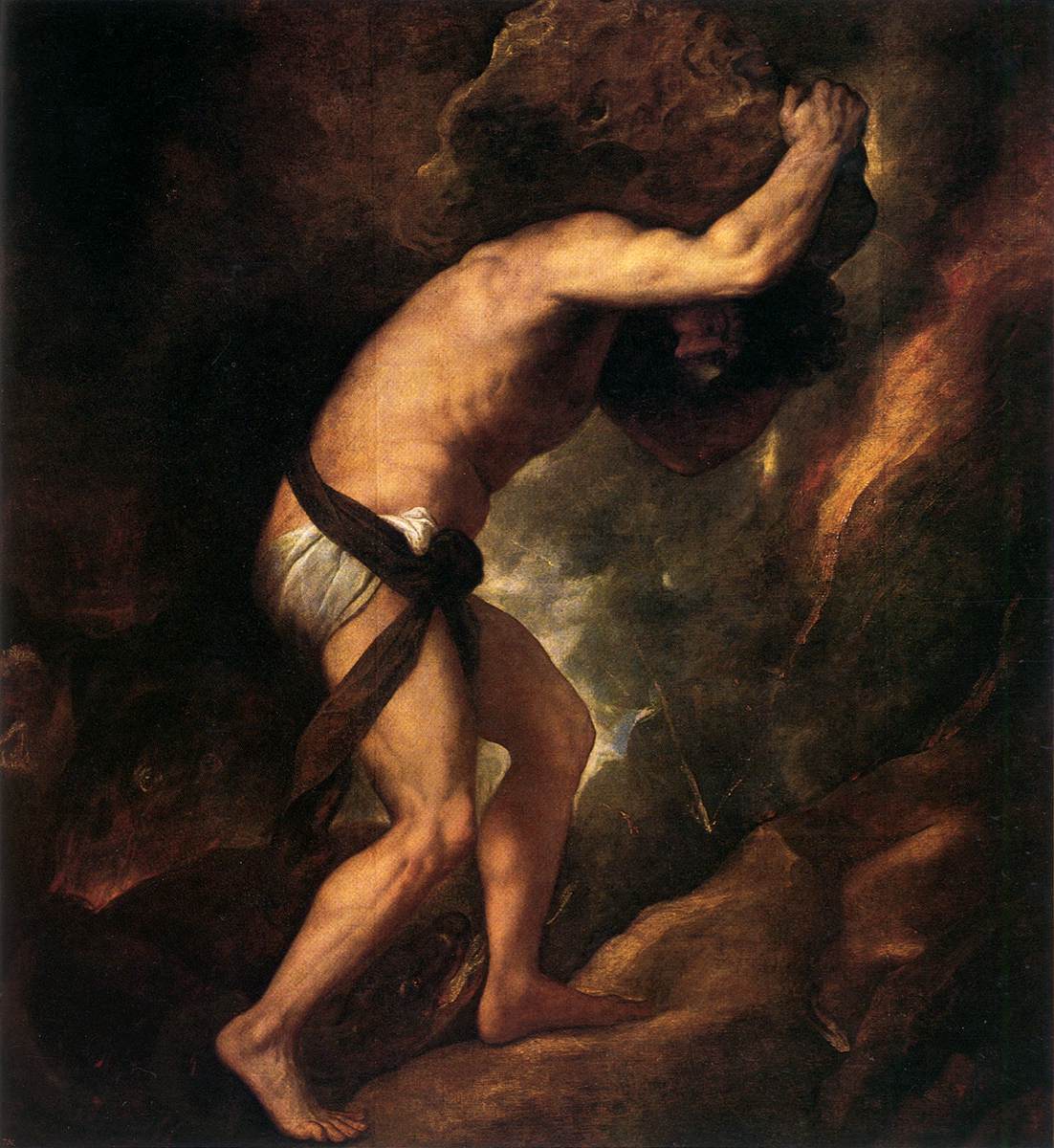 possibly apply to Salem. She’s the exception. She’s got to be. This really bothers me. Just as I think I’ve found a way to disentangle myself from her drama, she starts a new one, and I have to start all over again. It’s like that guy in Hell pushing the boulder uphill. When he finally gets it to the top, the boulder rolls right back down the hill.
Honestly, I don’t know what to do about that fifteen percent. But I do know this: if I were to die right this second, Salem would be my biggest regret. In the eight-five percent of the time when my afflicted emotions are not obscuring my view, I can so very clearly see Salem’s anxieties, her fears, her constant struggle to do a job for which she doesn’t have the skills. I can see how incredibly brave she is to even show up to work every day. I can see, in a word, her constant suffering.
But then there’s that nagging fifteen percent of the time when my afflicted emotions completely obscure that view. So maybe I’ll try this. The next time I recognize I’m caught in that fifteen percent, instead of getting mad at myself, and being pissed off at Salem for blowing my trip, I’ll recognize that I have the opportunity to make that fifteen percent into fourteen point five percent.
I don’t know if I can do this.
I don’t know if it will work.
But I do know that working toward enlightenment is the reason I’m here. It’s why we’re all here.
Even Salem.
 dharma pen