

Like the thundering roar of a dragon, the resonant voice of the Dharma
awakens us from afflictive emotions and frees us from the chains of karma.
Dispelling the darkness of ignorance, the sword of wisdom cuts through all our suffering.
What does this mean to me?
i.
As a westerner, it’s hard for me to appreciate what dragons mean in eastern lore. My local friendly AI tells us that in Japan, dragons are “. . . powerful and wise guardians that shield us from universal dangers and impart their wisdom.”
Samsara is loud. Even if you live in a country setting, there’s noise, particularly today with electronic devices all but dominating our lives. And that’s on a ‘quiet’ day. When the storms of afflictive emotions rage within us, the noise can be unbearably loud.
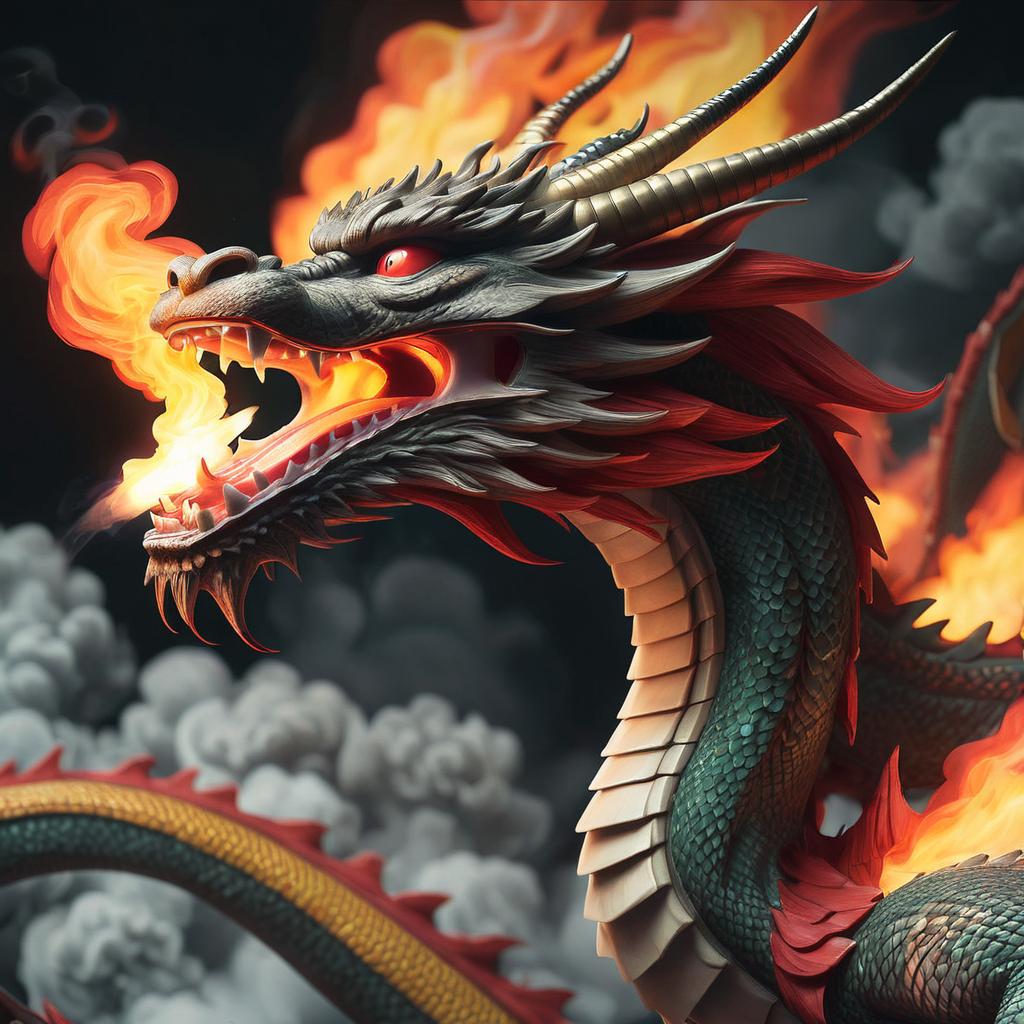
Our prayer starts out strong and says, “. ..the resonant voice of the Dharma…” is heard in samsara “Like the thundering roar of a dragon.” Notice that it’s not just the roar of a dragon, but a thundering roar. That’s pretty loud. It’s certainly loud enough to be heard over even the most roiling violent storms of afflictive emotions.
What’s most interesting to me here is that the voice of the Dharma is “resonant”. What does it mean to resonate with something? It means there has to be a matching tone or feeling so the two can resonate together. In this case, I believe the prayer is talking about our inherent wisdom, as in the ability to see clearly, to see things as they truly are.
ii.

Our prayer tells us that even though we may feel we are awake to our afflictive emotions, samsara is very much a deep sleep in a loud storm. We sleep and have the nightmare of afflictive emotions. This is why the voice of the wisdom of the Dharma must be like the “thundering roar of a dragon.”
But even with all of this, our prayer reinforces that our inherent ability to see clearly, our wisdom, is already there. This is why the voice of the Dharma is “resonant”.
With just this line of the prayer, we are told that the “resonant voice of the Dharma” thunders like the roar of a dragon. Why does this roar have to be so loud? One of my favorite things to do during those sub-tropical storms we had in Florida was to sleep through them at night. The only sounds were the thunder, and rain, and wind. It blocked out everything else.
iii.

When I first started studying the Dharma, I wanted all my ‘bad’ karma to go away and to only have ‘good’ karma left. We were born into samsara, drawn to this realm of struggle and desire by our karma. As my teacher, the Venerable Tashi Nyima says, “chains of gold are still chains.” With our ‘bad’ karma, we live through it with as good a grace as we can.
‘Good’ karma on the other hand is not something valuable that we want to hold onto. After all, karma is karma. That’s why in our other prayers we “dedicate all merit to Great Benefit.” But why does the prayer say the “resonant voice of the Dharma” will “…free us from the chains of karma”?
I think we first have to ask, what is karma? Very simply put, karma is what arises when we put in place causes for suffering or causes for happiness in our life. So how does the thunderous sound of wisdom free us from suffering? Remember that ‘wisdom’ has its root in ‘vision’, as in to see reality as it truly is. Wisdom is necessary for enlightenment, as another of our prayer reminds us, “May all attain the union of wisdom and compassion.”
When we see things with our inherent wisdom, which this prayer tells us is possible because the voice of the Dharma resonates with something already within us, why would we ever place causes for suffering onto our path? We wouldn’t. As for ‘good’ karma, we would have the wisdom to always dedicate the merit. Like this, wisdom cuts through the chains of karma that bind us to samsara.
iiii.
The last line of the prayer talks about dispelling ignorance and cutting through “all our suffering.” That’s quite a claim to make, to be able to cut through all suffering. But the first line of the prayer already told us that wisdom is like, “the thundering roar of a dragon.” When I picture a roaring dragon, I get a mental image of a dragon spewing powerful flames.

By the time we get to this last line of the prayer, the roaring dragon is “dispelling the darkness of ignorance.” What is darkness, in general? It’s simply an absence of light. As I read this line, the sword of wisdom seems to be a fiery sword born of the “thundering roar” of the voice of the Dharma. This line seems to sum up the lines that have come before. Without the roaring dragon, before the “resonant voice of the Dharma” there is only the suffering of samsara, afflictive emotions, and the darkness of ignorance.
However, in this last line, this isn’t a tiny light that’s going to shine. It’s a full on fiery sword wielded by the power of a thundering, roaring dragon speaking the resonant truth of the Dharma. This is the power of wisdom, to cut through all suffering in a moment, if we let ourselves resonate with that resonant voice of the Dharma.
 dharma pen