On the sun of compassion…

Currently I’m studying Heart Treasure of the Enlightened Ones with a Dharma friend, the Venerable Tashi Nyima.

This is my contemplation on the first two lines of verse 28 of the root text of Heart Treasure of the Enlightened Ones.

heart treasure

The noble teacher has the nature of all Buddhas,

And of all Buddhas, it is he who is the kindest.

Seeing the teacher as inseparable from Chenrezi,

With fervent devotion, recite the six-syllable mantra.”

 Explain to someone else (making it my own)

I work with a teacher who’s more than five thousand years old. Well, I haven’t actually met him, but I’m pretty sure about the five thousand years. We’ve been making bread, as a source of food, for at least that long. Although he’s new to me, Ken Forkish, the author of Flour, Water, Salt, Yeast: The Fundamentals of Artisan Bread and Pizza, is part of the lineage of baking that stretches way back to when bread was unleavened flour and water.water flour salt yeast
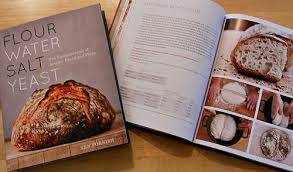
The wonderful thing about studying with someone who’s part of a disciplic succession is that, once you begin learning from them, you’re now practicing a technique that’s a few thousand years old. Now, you’re part of the lineage, and it will pass through you to others. For me right now, being part of the lineage means folks I know get homemade bread, and muffins, and the occasional scone.

When it comes to baking, it’s easy to realize that there’s no way you’re going to buy a book and invest in tools and equipment if the author’s introduction says something like, “I’ve never studied with anyone. I baked my first loaf yesterday. It came out good, and now I’m writing a book.” In our ordinary life we recognize the need for a lineage. Madison Avenue uses this in advertising with catch phrases like, “Trusted to Deliver Since 1919”. In the west, time equals lineage, which equals trust, which equals consuming whatever is being delivered.

Yet there is a part of our lives where we rarely think of lineage or its importance. When it comes to spirituality, we give our afflicted emotions credence and go with “what feels good”. Well gosh, isn’t that how we ended up in samsara, lifetime after lifetime—by going with what feels good? Wouldn’t it be better to rely on and become part of a lineage whose foundation is primordial?

Patrul Rinpoche tells us we can do this by devoting ourselves to the noble teacher. The noble teacher is one through whom the unbroken disciplic succession of the teachings of the Buddhas flows. When we devote ourselves to such a teacher, we are becoming part of that lineage, and it will eventually flow through us to others.

In my mind, the noble teacher is a necessary companion on the path to becoming a bodhisattva. If it’s my aspiration to bake the perfect artisan bread, then I rely on a teacher who’s part of a lineage that goes back five thousand years. If it’s my aspiration to become a bodhisattva, then doesn’t it make sense to rely on a teacher whose lineage goes back to the primordial Buddhas who exist before beginningless time?

Dilgo Khyentse says of the noble teacher, “Practice in accordance with his instructions, and, as all the clouds of doubt and hesitation are cleared away, the sun of his compassion will shine through, warming you with happiness.” When we rely on a noble teacher as a companion on our path, we are relying on a lineage, on all the Buddhas who came before him, and ultimately, we are relying on our own Buddha Nature, of which the noble teacher is a reflection.

***

 Apply to a past situation (how would it have been different?)

I began baking bread sometime in the nineties. I think the first Breadman bread machine had just come out. A bread machine can make either bread or dough. On the dough cycle, you take out the dough, and finish baking it in the oven. When I got my first bread machine all those years ago, I wouldn’t even look at the dough cycle recipes that came with the recipe booklet.
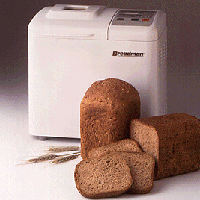
breadmanBut the funny thing was, I’d look at the pictures of breads made outside the machine all the time. I had lots of reasons for sticking with my bullet-shaped, soft-crust bread. It was easy: measure carefully, press a couple buttons, come back four hours later and voila! Bread. I didn’t need special equipment to bake in the machine. It even came with its own measuring cup. The biggest reason though, was fear. If I used the dough cycle, what the heck would I do with that glob of flour, water, salt, and yeast? It would NEVER come out looking like the pretty pictures. I baked for years in that machine, never venturing beyond the constricting boundaries of the machine’s pan, and always mildly dissatisfied with even the most perfect loaf.

Looking back on that time in my life, I can notice that the source of my fear was that I’d have to venture beyond the boundaries of the Breadman alone. That was terrifying. It was pretty much this thought that kept me locked in my Breadman prison.

Had I been able to take a step back from my fear, I may have noticed that the library had a plethora of books on baking. I could have noticed that rather than venturing out into the dark unknown alone and unprepared, I had the opportunity to get to know a lineage that went back thousands of years. Had I been able to notice this, it may have taken me less than two decades to begin the adventure of baking outside my machine.

***

 Apply to an (ongoing) present situation (how does it matter today?)

I took about fifteen years off from baking bread. Then, I bought a Cuisinart bread machine. Then, about six months ago, I took my first steps outside my Cuisinart. They were tottering, uncertain steps, but by then, I’d become part of a lineage. I had a wonderful bread machine cookbook that included recipes for dough to be baked outside the machine, and which I dutifully ignored.

In the beginning, the bread machine recipes in that book were enough. But then I got tired of all my breads having the same uninteresting shape, and pretty much the same uninteresting crust. I wanted more control over how my bread looked and tasted. Gradually—and it was a very gradual process—I stepped outside of the constricting boundaries of the machine. I was only able to do that because the baking world has a wealth of teachers whose lineage goes back thousands of years, and who selflessly share what they know.burned

I think we come to the Dharma for pretty much the same reasons I started my journey toward baking artisan bread. We begin to become sick of the sameness of our suffering. We begin to chafe against the perceived boundaries of our lives. We begin to think…there’s got to be a better way.

Happily the Dharma offers a much better way than the constrictions of samsara, the infinitely churning machine of birth, age, disease, and death. We find this in a noble teacher through whom will flow the unbroken disciplic succession of the teachings of the Buddhas. When we find such a companion on the path, their kindness, their compassion will begin to resonate with our own compassion. Before studying the Dharma, I believed a ‘good teacher’ was someone with volumes of knowledge on their given subject—Shakespeare, quantum physics, artificial intelligence—whatever.

But now, studying the Dharma, I’m coming to see that the only kind of teacher worth studying with is the noble teacher. Pema Chodron says that the idea of a teacher isn’t that they’re a burning log, and you get really close so that you can get a little warmth. The idea is that the teacher’s flame will inspire you to burn as well. In my own experience, I find this to be true. The noble teacher will inspire those devoted to them. Inspiration isn’t imitation. Inspiration is awakening to the inherent wisdom we all have, finding your own fire, to use Pema Chodron’s metaphor. The noble teacher is able to inspire others with their teachings, their lives, and their incredible act of compassion in pointing you to your path to awakening.

***

 Apply to a potential situation (bringing it home to play)
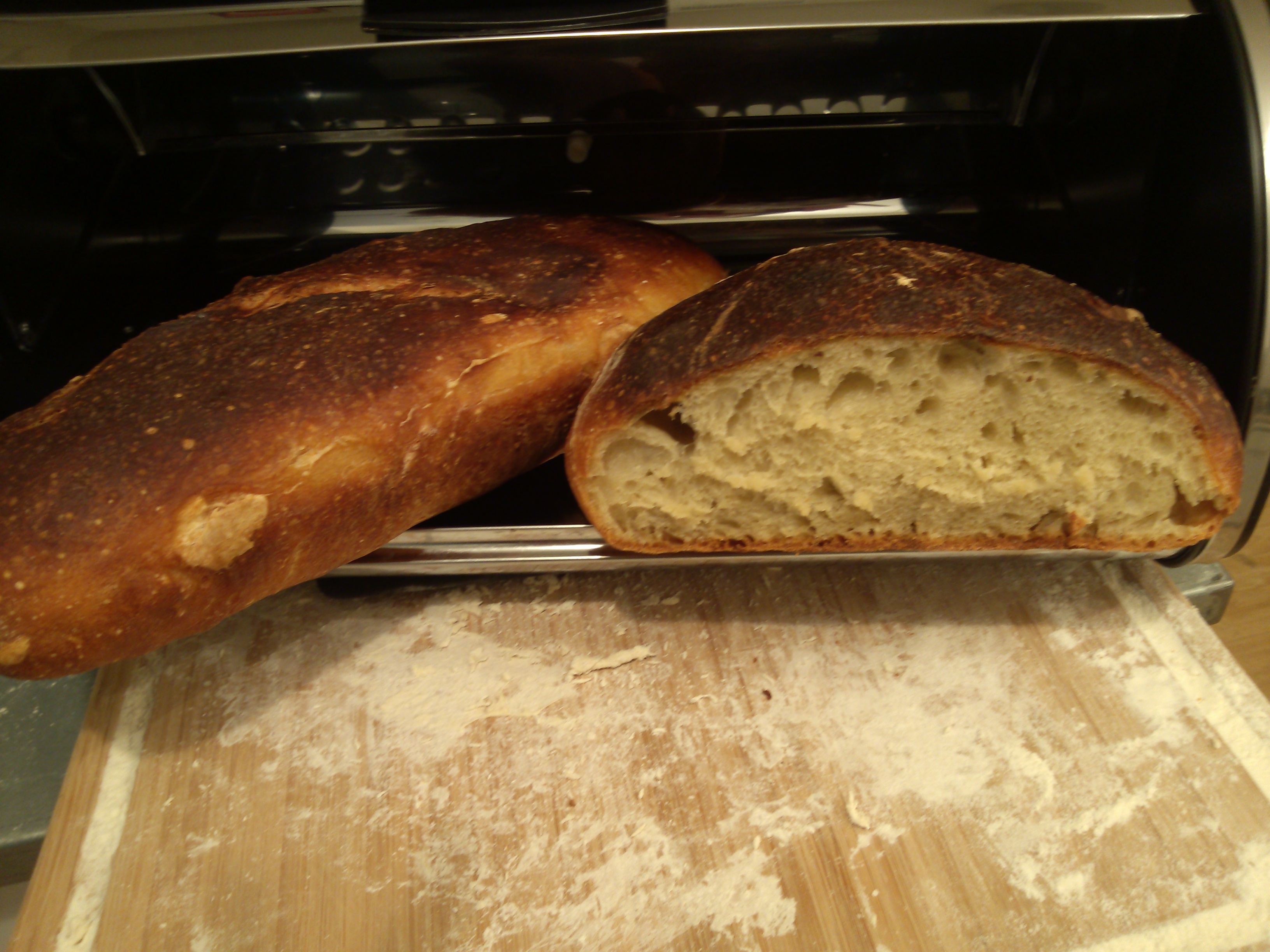
Bake #1 June 15Last weekend I made my first Ken Forkish loaves. With his recipes you make a BIG dough, then bake two loaves. The recipe I chose went so wrong that I ended up with a splat of very sticky dough on my kitchen floor. When I was baking the loaves in the oven, I was so anxious I wanted to cry. The loaf was getting too dark! I never go that dark! That’s two days of work in there!

This weekend, I’ll be making the same loaf. I know I’ll have the same fears but they’ll be far less gripping this weekend. Why? Because I’ve tasted my ‘disaster’ bread. It sure is good bread, and its got those pretty holes I’ve always wanted in my bread.

Until now, my bread machine has been a part of my baking process. I’ve always let the machine make the dough. But now, that’s not enough. I don’t like the dough being locked away in that machine for two hours until it beeps, then I get what I get. In choosing Ken Forkish, I purposely chose a technique that lets me make the dough myself.

Making dough is messy. You get flour everywhere. You have to get your hands into that sticky mass and stretch and fold, and all the time you’re thinking…no way will this sticky gloopy mess ever be a loaf of bread. But I’ve chosen the Ken Forkish technique because I believe that after diligent practice, I will be free to use Baker’s Percentages to create my own formulae (recipes), and introduce the world to my interpretation of artisan bread. I can only do this because I am relying on a lineage of bakers who have shared their knowledge, their passion, and their mistakes.

The Dharma is no different. We come into this and we’re thinking…there’s no way I’ll ever get enlightened…not with the mess I’ve made of my life. We’re so very wrong about that. There are eighty four thousand gates to the Dharma. The Dharma is reality as it truly is, without elaboration. Sooner or later, our own Buddha Nature will grow tired of the illusions of samsara and we will be drawn to one of those gates. I used to think of the gates of the Dharma as entrances. But now I’m starting to see them as exits. In the same way that I left behind the confines of my Breadman, we can leave behind the confines of birth, disease, age, and death by stepping through a gate of the Dharma. I believe that when we do this wholeheartedly, there will always be a noble teacher there welcoming us, ready to shine the sun of their compassion on our path.

teacher


On the never-failing refuge…

Currently I’m studying Heart Treasure of the Enlightened Ones with a Dharma friend, the Venerable Tashi Nyima.

This is my contemplation on the first line of verse 24 of the root text of Heart Treasure of the Enlightened Ones. This contemplation focuses on the second jewel, the Dharma.

heart treasure

The only never-failing, constant refuge is the Three Jewels.

The Three Jewels’ single essence is Chenrezi.

With total, unshakeable trust in his wisdom,

Convinced and decisive, recite the six-syllable mantra.”


Explain to someone else (making it my own)

I’m the kind of person who should have GPS to cross the street. No, really, I have absolutely no sense of direction. People give me directions, and they say things like, “Head north about two miles, then you’ll see it right there on the southwest corner”.

What??gps2

I nod politely, all the time thinking, you know, cartography isn’t really my thing. Then I ask for a physical address, which goes in my GPS. Now, once the address is in my GPS, I am absolutely fearless. I follow the directions (which are sensible like, “turn left in .5 miles”) faithfully and without question because GPS always, always gets me where I want to go.

In samsara, our GPS, the path that will lead us to our own Buddha Nature is the Dharma, the second of the Three Jewels. And it’s better than GPS! The satellite connection never gets lost, you never run out of battery power, and you don’t need to be near a Buddha Broadcast tower. The Dharma is never-failing because it’s based on what is. It doesn’t need artificial support.

In samsara, when I want to go to that really great vegan bakery I keep hearing about, I completely take refuge in my GPS. I have utter faith and trust that if I put in the right address, GPS will get me there.

On the path, I take refuge in Dharma GPS. The Dharma lies well beyond the fictional truth of samsara. The Dharma is not subject to birth, aging, disease, or death. It is the one true path to our Buddha Nature. Why take refuge? Why not simply have faith, I used to ask myself.

Faith, coming from my Christian background, is tainted with fear and hope—the fear of a powerful God outside myself and the hope that I can appease Him and cajole Him into doing what I want. Refuge is a relationship based on trust that arises from experience. For instance, if we see a mountain cave withstand many hurricanes, we would take refuge from a storm there because our experience tells us the mountain can withstand the storm.

There are 84,000 ways for us to have our own experience with what is—the Dharma. The truly wonderful thing about the Dharma is that once we have our very first experience with it, we are drawn to take refuge, and trust spontaneously arises.

***

Apply to a past situation (how would it have been different?)

Last June, I had to train a new person in my department at work. Layoffs have reduced the size of the department to two people. This new person—Salem—is fifty percent of the department.

Salem has been with the company for fourteen years. The company I work for is a title company. After working with her for nearly a year, I can unequivocally say that she doesn’t have the first clue about even the most basic principles of real property title examination.

There is a guide at work that I designed that has hundreds of scripted responses to clients. In her training, Salem refused to use them as is. She constantly altered them in ways that resulted in ‘bounce-back’ emails from confused clients. When I pointed out what she’d done, she’d launch into a twenty-minute, extraordinarily convoluted explanation of why she was right. I spent about six months in a Hell of frustration and resentment. Salem, completely in her comfort zone, spent those same six months in our manager’s office constantly reshaping events so that she was right. It was exasperating and infuriating.

Finally, I decided to put mind-training in the place where the rubber hits the road. I stopped trying to make things work out my way. I began to recite mind training prayers and mantra hourly at work. I stopped engaging Salem altogether. I stopped trying to get her to do things the “right way” (ie: my way). This was an extremely difficult process for me. My old habits rose up with a vengeance. I had to literally bite my tongue sometimes to keep my mouth shut. I had to get up from my desk and take long walks and recite mantra. I had to write reams in my journal. I had to constantly bring mind back to the task of reciting mantra or prayer.

puppyAt first, it was like trying to drag an angry Rottweiler along behind me, all the time its heels dug in, teeth bared, snarling at me. But gradually, that Rottweiler got smaller, less angry, less stubborn. Today, as I write this, it’s more like herding along a wandering puppy…no, this way, over here, come here…good girl.

Salem continues to make gross errors, and our manager continues to cover them up. Gaining a sense of perspective has helped me to realize that it is beyond my current level of skillful means to do anything but observe the unhealthy relationship of guilt and blame developing between them.

When the rubber hit the road, mind training worked with an effectiveness beyond anything I could have dreamed when I first leashed that pissed off Rottweiler. It continues to work.

Had I taken refuge in the Dharma about five months sooner, I would have saved myself (and Salem) a lot of suffering that arose from the constant aggression I was experiencing. Had I taken a step back sooner, I would have clearly seen that Salem is in my life to give me an opportunity to purify my karma. Had I sought refuge in the Dharma sooner, I may have noticed that the agitation in my mind was making it impossible to resonate with my inherent Buddha Nature.

Had I been willing to let go of my self-grasping sooner, I might have noticed that getting Salem to do the right thing was an idea based on wrong view. I may have noticed that taking refuge in the Dharma was the right thing for me to do, the only thing to do.

***

Apply to an (ongoing) present situation (how does it matter today?)

The biggest ongoing situation in my life is the sale of the company I work for to Interplanetary Title, Inc. This has been a time of great anxiety for me and everyone else at work.

The anxiety we are all experiencing has one basic source: we don’t know what comes next. What will the new company be like? What if we hate it? What if we can’t do the job? What if we get laid off? What if the sun doesn’t rise and the power goes out and civilization falls and we have to use carrier pigeons because there’s no internet? Okay. That last one may be a bit of an exaggeration; but only a bit.

Here’s the thing about taking refuge in the Dharma: we know exactly how things will go. Taking refuge in the Dharma is a little like reading an historical account of Anne Boleyn and Henry VIII. No matter how good the writer is, no matter how skillfully they write the lead-up to the romance—you know the ending. The guy with the sword comes from France, and off goes her head. No surprises.

entertainment3Taking refuge in the Dharma—what is—works the same way. We get so caught up in chasing after refuge in samsara with the 210 channel satellite TV packages, the car with the You Never Die Anti-Death brakes, the house in the You’re A Success neighborhood, the vitamins from You’ll Live Forever, Inc., that we forget. We are so caught up in turning to samsara for refuge from our anxieties that we forget there’s no reason for anxiety over what the future holds. The Dharma tells us exactly how things are in samsara, how they have always been, and how they always will be. There is birth; there is aging; there is disease; there is death. Everything else, as my Dharma friend Tashi enjoys saying, is…entertainment. The burning house of samsara is blazing, the Dharma tells us again and again. Get out.

These days at work, I bring my mind to the Dharma over and over. I recite mantra. I recite mind training prayers. It has been very slow, but gradually I’m beginning to see quite clearly that this transition to a new company is no cause for anxiety. It changes nothing. It’s like changing the back drop on a stage on which the same drama of birth, aging, disease, and death will relentlessly continue to play out.

***

Apply to a potential situation (bringing it home to play)

Tomorrow when I go to work, the same anxieties will arise. I don’t even have to be in the building. The parking garage is close enough for it to begin.

If I wanted to completely put things in perspective, I could remind myself that even if there is a total apocalypse, even if all the volcanoes on the planet erupt at noon, and volcanic ash totally blocks out sunlight and sets off a nuclear winter, and civilization completely collapses, there will still be birth, aging, disease, and death. That wouldn’t work for me. The idea of apocalypse is far too intellectual a concept for it to have any real impact on my thinking.

Instead when those anxieties arise, I can simply let it happen. The mind loves to elaborate. It can come up with a thousand Dire Consequences scenarios in the moment between heartbeats. Once that’s happened, I can take refuge in the Dharma by realizing that in samsara, all things are impermanent—even anxiety. All I have to do is give impermanence a chance to prove itself.

This sounds easy, but I know from experience that my habitual response to anxiety is to get caught up in it and try to find solutions to the Dire Consequences mind conjures up. Tomorrow, when I feel this nearly irresistible tug to go with my anxiety, I will recite mantra. When I do this, I will pay attention to the resonance that arises, and I will know that I am resonating with my Buddha nature, my true self, who is not subject to birth, aging, disease, or death.

3 jewels2We can all do this. Taking refuge in the Dharma is as simple as turning our attention to what is. It’s no different than changing a channel on TV, or tuning in a different radio station. We can take refuge in the Dharma by texting to our true selves. Instead of ‘i♥u’, to our Buddha Nature we say the six-syllable mantra and then wait in the silence that arises. If we wait long enough, we will begin to experience the resonance with our true self that is always there, the text from our Buddha Nature which speaks without words.

On a heart always joyful and confident…

Currently I’m studying Heart Treasure of the Enlightened Ones with a Dharma friend, the Venerable Tashi Nyima.

This is my contemplation on the fourth line of verse 21 of the root text of Heart Treasure of the Enlightened Ones.

heart treasure

“Even if you die today, why be sad? It’s the way of samsara.

Even if you live to be a hundred, why be glad? Youth will have long since gone.

Whether you live or die right now, what does this life matter?

Just practice Dharma for the next life—that’s the point.


Explain to someone else (making it my own)

How many times have we said to someone, “that’s not the point”? This inevitably leads to the question, “then what is the point?” It seems this should be an easy question to answer especially if you’re in the process of doing something, and we’re always in the process of living our lives. We don’t do things unless there’s a point to doing it, a motivation. Would we take out all the ingredients for a cake then leave them on the counter, untouched? Of course not. The point of taking out the ingredients is to make a cake.

tragedyYet this is how we live our lives. The main ingredients in our lives are karma and skillful means. These ingredients are so powerful, we could mix and bake the equivalent of a thousand-layered wedding cake the size of the moon. But do we? No. We spend our lives pointlessly caught up in the mini-dramas that arise from our afflicted emotions. And since there’s no time in the mind (or anywhere else, really), these dramas can stretch over lifetimes, creating an epic soap opera that spans eons.

Is that the point? Is that why we’re here—to engage our afflicted emotions and generate negative karma, perpetuating our personal hell lifetime after lifetime? The fact that we indisputably have Buddha Nature, which therefore makes enlightenment inevitable at some point, offers a resounding no to this question.

If that’s not the point, that what is? Dilgo Khyense offers this point of view. If, he says, our mind is “…filled with faith in the Three Jewels…” then we “…will both live and die with…” our heart “…always joyful and confident.” This is the point. This is why we’re here. We were drawn back to birth in samsara because we were so firmly bound to and engaged by the drama of our afflicted emotions. Now that we’re here, the point is to avoid harm, do good, and purify our minds of wrong views.

***

Apply to a past situation (how would it have been different?)

When I was a little girl, I wanted to fix myself. I didn’t exactly know what was wrong with me, but my mother would always say to me, “What’s wrong with you, child?” In broken dollEnglish, this comes across as pretty benign. But in Patois (a blend of broken English and French, a language of native Jamaicans, and also the language of my mother’s anger), it has more the flavor of…have you lost your freakin’ mind, acting like that, kid? So obviously, if she thought something was wrong, there had to be something to fix. I’m not assigning blame here. My mother was in nursing school, and I was five, and let’s just say I went on the theory that her books could be colored in too. She had good reason. This continued through my teen years—me wanting to fix myself I mean, not coloring pictures in medical textbooks. I went through more than four and a half decades of my life firmly believing there was something broken about me, something to be fixed and made right.

This state of disrepair manifested as being too dumb, so I went to college. In college, I was too fat, so I lost weight. After school, I was too single, so I proceeded from one romantic debacle to another. Mercifully, I never married.

Looking back on those decades, I can notice mind at work, doing what mind does best—being a peerless servant. Because I believed there was something very broken about me, mind did me the service of constantly showing me what needed to be fixed. In this way, the point of my life, for many decades, was to endlessly improve myself, as if I’d moved into the Fixer Upper from Hell.

Having noticed that the source of my sense of being ‘broken’ in some way came from my thoughts, I might have taken a breath, and allowed a moment of peace and clarity to arise. In that moment I might have taken a step back and noticed that the thoughts were not me. They were just thoughts arising in mind. Had I seen this, I may have noticed that nothing needed to be fixed—not even the thoughts. All I had to do was let them go. If I’d been able to see that and notice the source of the thoughts, and notice that mind was simply showing me what my thoughts said I wanted to see, I might have been able to change my thoughts. I might have been able to send my good and faithful servant, mind, on a new quest to uncover my natural perfection.

***

Apply to an (ongoing) present situation (how does it matter today?)

The biggest ongoing situation in my life at this writing is the Pilgrimage of 62. The pilgrimage ends tomorrow. As the end approaches, looking back and asking myself—what was the point?—is unavoidable.

In a way, I think I began the pilgrimage to answer a question. If I framed the question in hindsight, it would be something like…I’m about to turn fifty. What is the point of having been in this world for five decades? It’s been a difficult question to answer. One of the gifts of the pilgrimage has been a marked increase in peace and clarity in both my mind and my ordinary life. A while back, I used to believe that having a peaceful existence was the point of life. But I’ve come to realize that in samsara, a realm whose very fabric is a complex weave of eons of afflicted emotions, true lasting peace is impossible.

As I’ve taken this pilgrimage, I’ve been able to experience this line from Patrul Rinpoche in the workings of my ordinary life. He advises us to practice the Dharma for the next life. On March 1st when I began the pilgrimage, I didn’t have nearly the focus on prayer and meditation that I have had these past thirty days. This has inevitably led to a deeper focus on the Dharma and bringing it into my ordinary life. As I did that day in and day out, I found that I was avoiding harm, doing good, and purifying my mind of wrong views.

Hmmmm….that sounds familiar, doesn’t it?

buddha goldenI took a vow on March 1st that I would finish the pilgrimage. Short of some cataclysmic nuclear event, I’ll finish the pilgrimage tomorrow. On April 1st, I will experience, I think, birth into my “next life” after the pilgrimage. Knowing that, I have proceeded with extreme caution in my ordinary life because I want that birth to have in place many causes for happiness. And how did I do that? Gee…what a surprise…I did it by avoiding harm, doing good, and purifying my mind of wrong views.

To paraphrase my Dharma friend Tashi, the “next life” is the boundless life, the life that’s meant to be lived, not this constrained facsimile. Yes, indeed. And that next life of true purity, true bliss, true self, and true permanence is the point of this life.

***

Apply to a potential situation (bringing it home to play)

On April 1st, in just one more day, the Pilgrimage of 62 will end. This has been a spectacular month of insight, struggle, and discovery. As the end approaches, there’s the feel of stepping into the unknown. There’s also a feeling that I don’t want the pilgrimage to end. Living life with the Dharma as the central focus has been an experience of swimming with the current of my life rather than against it.

So what about April? What about May? What about December? I think taking a vow to meditate and pray every single day for the rest of my life is just plain silly. Life happens. I learned that in just these short thirty days.

But now that I’ve done these thirty days, one of the wonderful gifts of the pilgrimage is that mind is onboard with meditating and praying. It doesn’t fight me anymore. It still comes up with some hilarious distractions in sitting meditation (think Shirley Temple singing and dancing to Michael Jackson’s ‘Thriller’), but that’s just mind being mind.

I have to admit that when I began the pilgrimage, I gave absolutely no thought to bringing it into the rest of my life beyond March. But with the rest of my life rapidly looming on the horizon, it’s time for a plan. So this is what I’ve decided. I’ve taken a vow to meditate and pray in April as I did this month. The only difference is that if I’m really tired or sick or whatever, I can take a step back and do a mala and a short version of my recitations.

I’ve taken this vow because I’ve really enjoyed feeling like my life has a point these last thirty days. I enjoyed feeling that I was living my life in a way that was of benefit not joyful5only to myself, but to others as well. I don’t know if I’ll feel this way forever, but I know the Dharma is that which holds, and I know it’s always there holding out the promise of a life lived with a heart always joyful and confident.