On cultivation…

On cultivation…

I must cultivate the thought that death is certain;

I will die soon;

I don’t know when I am to die,

And nothing whatsoever will be of benefit then

From the moment of death onwards,

For interminable lifetimes,

Only the Dharma will benefit me

Right now, I must turn all my efforts to my practice.

i. What does this mean to me?

When I was a little girl, I used to absolutely adore amusement parks. The roller coaster was my ride of choice. Although I didn’t think about it that way back then, I loved flirting with death. That long climb to the top followed by the heart-stopping, scream-inducing plunge nearly straight down, thrilled me.

Now, as a woman of my age, getting on a rollercoaster is more like a fantasy than a thought that would rouse me to action. Why is that? These many decades later, I have the real thing. These days each day feels like a delicate dance with death. I no longer need maniacally speeding rollercoasters to flirt with death. My first step out of bed on a morning is sufficient.

With each step out of bed, I’m grateful to have woken up. This may seem like a morbid way to live. But on the contrary, it’s invigorating. I have no guarantee that my death will not come today. The only guarantee I have is this very moment. At this present moment, death has not come for me. Not yet.

When I read these verses, I am inspired to “…turn all my efforts to practice.” The writer reminds us that at the moment of death and “for interminable lifetimes”, the only thing that will be of benefit is the Dharma. Knowing this, and understanding that death is but a part of the flow of life, we must turn with all urgency to our practice.

ii. How would I explain to someone else?

A long time ago, my teacher, the Venerable Tashi Nyima asked us to do an exercise. The idea was to make lists that began with ‘If I had ten years to live, I would…’, ‘if I had five years to live, I would…’ and so on all the way to ‘If I had one day to live, I would…’. The next time we met, our teacher listened patiently to our plans. When we’d finished there was a moment of silence. Then he said, ‘all the lists should be exactly the same’.

Wow. I needed a moment to process that. I think we all did, because that silence was back. So let me get this straight, I thought to myself, ten years to live and one day to live should be the same? Yes, of course, I thought. What guarantee do we have that we will so much as take the next breath, let alone live the next years.

This teaching was decades ago, but it has stuck with me. Remembering it really helped me to understand when the writer says, “I must cultivate the thought that death is certain; I will die soon.” Notice the writer says “cultivate”, not ‘make friends with’ or ‘get to know’. I believe this word is being used deliberately. Our local friendly AI tells us that ‘cultivation’ means, “try to acquire or develop a . . . skill”.

What is the skill being developed here? As creatures of samsara, we are always getting caught up in the next shiny, brand-new thing. This constant chase leaves nearly no time to examine our thoughts or the state of our lives. How many times have we heard about a person who’s passed, “It was so sudden”. People driving to work, sipping a coffee, do not expect their return trip to be in a body bag.

The skill we want to acquire or ‘cultivate’ with thoughts of death is to realize beyond the intellectual that the condition we call ‘life’ is ephemeral and could at any moment end. The writer is very specific about the thought to be cultivated, it is, “death is certain; I will die soon.” If we cultivate this thought, it becomes a skillful means to focus our lives on what’s most important in this lifetime – the Dharma and practice. Once we embrace this, life can become a very liberating experience. No need to wonder what happens in the end. You die – that’s the ending of the story called life. And from that ending arises a new beginning.

iii. How do I bring this into my life?

I have Major Depressive Disorder. Among other things it means I take lots and lots of meds. In the past I’ve faced the specter of suicide many, many times. I say that to say this. I have an awareness that we live cheek and jowl with death day in and day out. At times that’s quite terrifying, but mostly it’s liberating. Living with death as a constant companion can make us grateful for every new morning, every new day, even every new breath.

At my job I deal with a lot of people who are caring for family members whose diagnoses include words like, “at home hospice”, “end of life”, or stage four anything. Although my actual job is to do business with these people who are caring for their loved ones, I take the time with every person to be as compassionate as I can be. Even with all I know, and all my training, I’m still fearful of death. I consider that the people I’m talking to have no training. Their only experience with death is fear and probably anger. At work, I make it my real business to move with compassion and empathy on each call. This is what the Dharma calls us to do.

Knowing and understanding this, and having cultivated a relationship with death, shouldn’t we help those drowning in the fears of samsara as much as we can?
On freedom…

On freedom…

If, having obtained freedoms such as these,
I do not practice virtuous actions
There could be no greater self-deception.
There could be no greater foolishness.

This human life with its freedoms and endowments
Is very difficult to obtain
If I have a meaningful life,
But do not put it to good use,
How will I ever receive this perfect gift again?

The Lam Rim

i. What does this mean to me?

I went to college at a huge public university. When I got there, and unpacked and all that good stuff, my mind kind of went blank. I was eighteen and I literally had nothing to do and nowhere to be. I’d never felt such freedom. We enjoy many freedoms in our our daily lives.

It’s so easy to simply go about our lives from day to day, going to work, eating, watching entertainment, going to sleep then getting up and doing it all again the next day. But is that all there really is? We have many advantages living the kind of lives we lead. We have the freedom to choose what we do with our time.

Although it may not feel that way, we have tremendous freedoms in our lives. We have the freedom of being born into a society where education is free for the first twelve years. This gives us an excellent advantage to study the Dharma. If we have the great good fortune to encounter the Dharma, and a teacher who is willing to share the Dharma with us, that is indeed a fortunate birth.

But having obtained this fortunate birth, what are we do to? Death is the ultimate equalizer that will one day lay us low. Between the time we are born and the time we leave these bodies, we must take advantage of every fortunate event we encounter.

Having once encountered the Dharma, we now have the duty to study and practice. The writer says if we don’t take advantage of this great fortune, “…there could be no greater self-deception. There could be no greater foolishness.”

Why self-deception? We are not going to live forever. This should give us a sense of urgency to practice, study and share the Dharma. There is no “greater foolishness” because not only do we have the good fortune to be born into human bodies, we have the great fortune of encountering the Dharma in this precious life. The great foolishness would be not taking advantage of these two extraordinary fortunes.

ii. How would I explain this to someone else?

If you were born into great wealth, wouldn’t it be your responsibility to help others with whatever resources you have? The great fortune of being born into a human body and encountering the Dharma is no different than being born into great wealth.

With all the suffering around us in samsara, isn’t it our duty to use the wealth and resources that is the Dharma to alleviate the suffering of others? Samsara is afire with the flames of cyclic rebirth.  Aging, disease, death and rebirth is not our birthright. Rather, it is the unfortunate situation in which we find ourselves.

Imagine being in a burning house and the flames are only inches away. If someone came to not only give you the relief of guiding you out, but also to show you a path where you’d never have to burn again, wouldn’t you accept their guidance? Just so in samsara. The Dharma is the way out of the burning house. The path is the way to the cessation of suffering.

If we encounter the Dharma and the path, we must not only study, but use what we learn to decrease the suffering of others.

iii. How do I bring this into my life?

As I study and practice the Dharma, I am grateful for the great good fortune I have had in this lifetime. Not only did I encounter the Dharma, I found a teacher who is always more than willing to share the Dharma.

What the writer says here is true at a very basic level. If we have the great fortune of encountering the Dharma after a precious human birth, it can only be called great foolishness to remain in the burning house. Not only that, once we have made our way out of the burning house, it is our duty to help others who wish to be free find their way out.

I bring this into my life by practicing generosity on a very practical level. At work, I practice being generous with my time when I help our customers. This may seem like a small thing, but the way work is run, you always feel like you don’t have enough time. I work with this by practicing generosity by helping others as much as I can.

Encountering the Dharma and having a precious human birth is more good fortune than anyone could ask. Having attained both things, our duty lies in relieving the suffering of all sentient beings and leading them to great benefit.

On the snow globe…

On the snow globe…

The perfect teaching of the Buddha is not accomplished through mere study.

Dharma without meditation is like dying of thirst while being helplessly carried away by a great river.

Flower Arrayed Tree Sutra

i. What does this mean to me?

I have a confession to make. When I first started studying the Dharma, the teachings were a joy to listen to. In my mid-forties, it felt like I’d waited all my life to hear the Dharma. Then came the teachings on meditation, then the practice of meditation. I didn’t like meditation even one little bit.

The very idea of sitting on a chair or cushion, closing my eyes and then essentially doing nothing for around twenty five minutes didn’t sit well with me. But nevertheless, I dutifully practiced at home. That lasted for about two or three weeks, and then suddenly, one day I was sitting there thinking I’d rather be literally anywhere else, when something shifted.

I wish I could explain it better than that. There was no fanfare, no glare of white light, just a very subtle settling as though I were a square peg that had finally found a resting place in a square space. I saw how meditation wasn’t just part of the Dharma, it was inextricably bound to the Dharma. After all, there are eighty-four thousand gates to the Dharma. Meditation is just one of them.

These days, nigh on fifteen years later, I see that Dharma teachings are inextricably bound to one’s practice. You can’t study the Dharma and not meditate, because that would be like, “…dying of thirst while being helplessly carried away by a great river”. Why? Because meditation is nothing more than stopping and taking time to settle the agitation of the mind.

The more often we do that, on or off the cushion, the better we’ll come to know the mind, and the less the mind will be able to run us down any path of thought it chases. Once we step through this gate to the Dharma, we are well on the way to drinking from the constant river that carries us and give it a direction of our choice.

ii. How would I explain this to someone else?

My teacher had a snow globe with maybe a Buddha inside. At the beginning of each meditation, he would give it a good shake then put it down and say, ‘this is what we’re doing, settling the mind.’ Now that I’ve studied the Dharma, taken a few years hiatus, and come back, I understand why “The perfect teaching of the Buddha is not accomplished through mere study.”

Reading the Dharma and hearing it is very good. But the meditation component is so important that it’s not just a component, it is interwoven into the Dharma. I would venture to say that meditation settles the mind so that we can better absorb the Dharma and make it our own. Meditation is a balm to the agitated mind. The more we do it, the clearer we see our way to helping those caught up in the illusions of samsara.

iii. How do I bring this into my life?
Meditation is easier than going to sleep. When we want to go to sleep, we are trying desperately to unplug from the world. We all know how hard that can be. Meditation is just the opposite – we work on connecting to who we truly are – our Buddha Nature. Doing this means cultivating concentration, or to say it another way, we work to minimize distractions.

When you meditate, even after just a few weeks, there’s this calm space that arises in the mind. Actually, it’s always there, we’re usually too distracted to notice it. Remember that in Buddhism, we’re not meditating to become great meditators, or get an Olympic medal. We meditate to make our minds more fit for us to be of benefit to others. I bring this into my life by having a formal ‘sit on the cushion’ meditation four or five times a week. I cultivate that calm space in the mind.

In particular, when I’m at work, which can be off the scale stressful, I make myself stop whatever I’m doing. Even though my mind is shouting, ‘YOU DON’T HAVE TIME FOR THIS!’, I still stop and close my eyes and breathe a few slow breaths. In those few moments I remember there is a calm space in the mind. I focus on knowing and understanding that I can operate from a place of peace, not agitation.

When I open my eyes I feel ready to be calm. I do this about five or six times a day. The agitation in my mind is like a fever. I work to eliminate or at least ameliorate the causes and conditions for even more agitation to arise. Every time I do this, I feel like I’m putting that snow globe to rest, instead of shaking it up even more.

Reading the Dharma and studying is of great benefit. Of even greater benefit is living the Dharma through meditation. More meditation means a less agitated mind. A less agitated mind means we can be of more and more benefit to others.

Don’t we all want to put the snow globe down and let the particles settle out of that beautiful clear water? The clear water of our mind?

On renunciation…

On renunciation…

The weakness of samsara is impermanence. That is the key observation that allows us to cultivate renunciation. Everything flows; everything changes; nothing remains the same. Why be attached or averse?

Venerable Tashi Nyima

i. What does this mean to me?

I grew up in the Bronx in New York state. By the time I was in high school, I was going into ‘the city’ (Manhattan) on the subway by myself. When I was in the city, I was a total tourist. My favorite place to go was the touristy part of Times Square, especially at night.

At night Times Square came alive with marquees full of flashing lights. All the stores lit up. It was a little magical. There was always something bright and shiny and new going on. Not to mention the smell of street foods and the strains of music. There were people walking down the street offering cards or flyers for the latest Broadway show, or the newest place to buy some touristy “I Love New York” t-shirt.

Times Square is a microcosm of samsara. There’s always the next new thing. There are always shiny new houses, shiny new cars, shiny new jobs. All this glitter hides the truth of samsara. It’s like going to Times Square in the daytime. The streets are dirty and littered, and in the bright light of day, the shiny objects of the night are merely dull and uninteresting.

As the writer says, “The weakness of samsara is impermanence”. Nothing stays the same in samsara. The shiny new house comes with a thirty-year mortgage that will turn you gray eventually. The shiny new car comes with eye-watering payments, not to mention insurance.

The writer talks about cultivating renunciation. Renunciation of what? It’s not so much the bright shiny things, it’s how they enthrall us almost to the point of legitimate concerns fading away. The writer isn’t suggesting that we go around in hair shirts and ashes. That would serve no purpose. It would be just another form of attachment. Rather the writer is pointing out that all bright shiny things will one day turn to rust. And knowing this, “Why be attached or averse?” Instead, shouldn’t we renounce the enthrallments of samsara and turn our minds to the true bliss, true permanence, true being, true purity that is the Dharma?

ii. How would I explain this to someone else?

Renunciation comes with a negative connotation in our society. We think of hermits on mountaintops or out in the desert wearing rags, having ‘renounced’ the world. Our local friendly AI tells us that renunciation means, “the formal rejection of something, typically a belief, claim, or course of action.”

Renunciation is simply a rejection or a knowing choice to stop doing something or to stop believing something. In this case we’re talking about formally and consciously rejecting the idea that samsara has anything to offer. So many times, we make the mistake of believing what we experience in samsara and taking that for the truth of things.

This inevitably leads to unhappiness because, as the writer reminds us, “Everything flows; everything changes; nothing remains the same”. Whenever we accept anything in samsara at face value, we are placing causes for suffering into our lives. How many outfits do we have in our closets that are pushed all the way to the back, just a car ride away from Goodwill? Not only is everything we experience an internal mental representation, but “Everything changes; nothing remains the same”. What is it that remains the same with no retrogression? The Dharma. While in these limited bodies with our limited senses, the Dharma is the only reliable, unchanging thing we have.

Samsara, like Times Square at night, is very seductive. It appeals to the senses, attracts the mind, dominates our thoughts. It’s hard to remember that samsara is merely superimposed upon ultimate reality – the truth of how things are.

iii. How do I bring this into my life?

For me, the lure of samsara used to be nearly irresistible, like some powerful addiction. Like any addict, I was lost in the delusions of samsara, drowning in an ocean of misery. Now, after having had the good fortune to encounter and study the Dharma, I understand samsara for the illusion it is.

I won’t be running out and buying a hair shirt anytime soon though, but I will use the teachings of the Dharma, through wisdom and compassion, to help others. Helping others is the only true cause for happiness in samsara.

In my day-to-day life, what hooks me the most into being lured by samsara are my comforts. I like air conditioning. I like shopping for yarn, and knitting. I like, overall, being comfortable. I think we all do. But at what cost does our comfort come? Does it make us so indolent that we don’t ‘feel’ like studying the Dharma? Or acting compassionately? Or we feel like ignoring our own Buddha Nature when it becomes uncomfortable to help others?

As I study, meditate and practice, samsara becomes more and more transparent. The tricks of seduction become clear. Knowing these things, and having seen samsara for what it is, what is the best way to behave to bring me closer to expressing my Buddha Nature and recognizing it in others?

The writer reminds us that “The weakness of samsara is impermanence”. So, we know samsara is an illusion that will fade away like mist in the trained mind. Knowing this, we must turn to our conduct. We must move through samsara with wisdom and compassion for those caught up in the illusion. We must be patient and compassionate with our own progress on the path. We must cultivate renunciation and peace and renounce attachment and aversion. We must do these things because, as Shantideva reminds us, the Lord of Death is always at hand. We don’t know when his scythe will fall, only that it will inevitably fall. Knowing this, shouldn’t we do what we can for as long as we can?

On focus…

On focus…

I will abandon laziness for which life has no time,

enter, undistracted, the path of listening and hearing,

reflection and contemplation, and meditation,

making perceptions and mind the path,

and realize the “three kayas”: the enlightened mind.

Now that l have once attained a human body,

there is no time on the path for the mind to wander.

Guru Rinpoche Padmasambhava

i. What does this mean to me?

I’m on a mission this year. My goal is to knit 75 hats and scarves by winter time to be donated. Before this my knitting was different. I’d have two or three projects going at the same time. I guess you could say I wasn’t focused. I would just knit whatever I felt like working on whenever I sat down to knit. But it’s different now. Somewhere out there are seventy-five people that I could make the winter more comfortable for. With this in mind, I only have one project going at a time – the hats and scarves. Even though it’s only July, I feel a sense of urgency about this project. You could say I’m more focused.

In these last two lines the writer lets us know that “. . . there is no time on the path for the mind to wander”. Why is that? Because the writer has “…attained a human body.” What does this mean? Is the writer a werewolf who turns into a wolf at full moons? I think it’s far simpler than that. We have this expression in our daily speech, “In my former life, I was . . .”. For me it would be “In my former life I lived in South Florida, land of hurricanes and tropical depressions.”

For better or worse, we are always changing. Was I more human when I lived in Florida? I would say I was a different human because that was a kind of Hell realm for me. The suffering was so intense that all I could think about was self-preservation.

Whether or not you believe that your karmic stream continues after the death of the physical body, we can understand what the writer is saying here. He is at a point in his life where simply surviving is not his whole concern. Now he can turn to the concerns of being human. What is our responsibility as human beings in samsara? It is nothing less than the liberation and enlightenment of every sentient being in samsara. Is this possible in the span of one’s lifetime? Probably not. But it is a sufficient goal to bring our minds into focus. As the writer tells us, “There is no time on the path for the mind to wander.” Not when liberation and enlightenment of every being is the whole of the path.

ii. How would I explain this to someone else?

I’d start by saying that the mind is very easy to distract when there is nothing to focus on. What if you wanted to become a race car driver? You’d be all over the internet researching. Google would be your best friend. You’d visit racetracks just to see what goes on there. You would have no end of questions.

In these lines the writer reminds us that the mind works best when focused. For most of us, we go through life focused on things that are mere distractions to the mind. Having encountered the Dharma in this life, and having had the chance to study the Dharma, there is no time to waste.

Once we realize this, our best option is to walk the path without distraction. Wherever we encounter a being suffering in samsara, this is our chance to put the Dharma to work. When we have this kind of focus in our lives, the path becomes our life, and our life becomes the path. The path is a process that proceeds gradually, with our every act a step on the way to liberation and enlightenment.

iii. How do I bring this into my life?

No matter what we believe about our lifetime, we are always beginning anew in every brand new moment. These moments taken together make what we call a ‘life’. In my former life, I had absolutely no time to study anything or even think of anything except my own survival from moment to moment. The uncertainty and fear in my life crowded out all other concerns.

But now, I have had the amazing good fortune of studying the Dharma. I’d like to say that in this new life I take every possible moment to learn and study the Dharma. This isn’t the case. Like most, my mind is distracted by samsara. But as I move through this life and live the path, I make a deliberate effort to remember that we are all suffering in samsara.

I bring this into my life by deliberately bringing to mind that there is no time to waste now that I have the Dharma in my life. I follow this strong intention by making the most of each encounter with a sentient being. I treat them with empathy and respect and most importantly I remind myself over and over that there is no time to waste. Even in the smallest quickest encounter with a sentient being we have a chance to make a difference.

On vanity . . .

On vanity . . .

All notions of subject and object, self and selves, phenomena and characteristics are mere transformations of consciousness.

By this truth may I know that all appearances are vanity.

i. What does this mean to me?

I’m not sure what I expect from our prayers when I sit down to write a contemplation. At first I thought the simplicity of the words hid some grand esoteric, deeply philosophical truth. But no. I find that the prayers form mostly a “How To” guide for living in samsara without becoming lost in the illusion.

The line of the prayer before this one tells us that all we see and experience is “mere transformation of consciousness only.” Last time we talked about how there are two kinds of truth when watching a magic show. There’s the ‘truth’ that your eyes see. And there’s the underlying process of what the magician is actually doing.

Well, that’s nice to know, we might think, but – so what? Of course there’s no such thing as magic. We all know that. And with something as obvious as a magic show, it’s easy to understand that no one is really being sawed in half. Not so in samsara.

This line of our prayer reminds us of the nature of samsara. Our local friendly AI tells us that one of the meanings of vanity is “the quality of being worthless or futile.” Samsara is a realm of struggle and desire. We desire something, we get it, we move on to wanting something else, and then we go struggle until we get it. That cycle is exhausting and it’s only halted by death.

So what is our prayer telling us about living in samsara? It’s telling us that the appearances we experience do not have the qualities we assign to them. Another way to say appearance is to talk about the “outward form” of something.

This takes us back to the magic show. The appearance is magic. But magic in and of itself  is a worthless understanding of how things are. We know the magician is doing something, but we don’t know what he’s actually doing.

In the same way, samsara is all appearance. This is not to say that we dream reality into existence. Rather it’s to point out that what we experience in samsara is merely the outer form. Like the magic show, there is an underlying truth, but in our limited minds and bodies, we don’t have access to that Absolute Truth.

ii. How would I explain this to someone else?

I’d start by saying ‘the devil is in the details’. The line of the prayer before this one tells us that all we experience is mere transformation of consciousness. That is to say there is an underlying truth in samsara, but our experiences in samsara arise in the mind.

Once we accept this as true, then it becomes fairly obvious that all the appearances we experience couldn’t possibly live up to the qualities we assign to them. If I have two clear glasses, and I fill one with green liquid and the other with blue liquid, are the glasses themselves now green and blue? No. But the appearance is that we now have two different color glasses. Is it wrong to assign the glasses the colors of blue and green? Not exactly. But it’s futile to proceed as if the glasses are now green and blue. That would be a fundamental misunderstanding of what is.

In samsara, we do this all the time with just about everything. We absolutely and unquestionably believe that there are two glasses of different color. To the degree that we live our lives believing in fundamental untruths, we suffer. The source of our suffering comes from trying to work with or shift a ‘reality’ that we believe. In this realm of struggle and desire, there is no satisfaction, no peace, no end to suffering. The Dharma teaches us that the glasses are clear and furthermore, the glasses themselves are merely the outward form that arises in the mind of some Absolute Truth.

iii. How do I bring this into my life?

Before I began studying the Dharma, no matter what I did, there was this horrible feeling of emptiness and dissatisfaction in my life. Materially, I was fine, but I couldn’t escape those feelings. Only when I began studying the Dharma did those feelings subside. Once I began to understand about the illusory qualities of samsara, I no longer desperately searched for ‘happiness’ in samsara.

I try to remind myself of this prayer when samsara starts getting to me. ‘No,’ I say to myself, ‘what I’m experiencing right now is not what it appears to be.’ My job can be very frustrating at times because I feel like I’m not getting enough stuff done that has to be done. Then I take a step back, breathe and remind myself that there is no point in fighting against how things are. My experience of reality, I remind myself is exactly that, an experience. This helps me to refocus my attention on what is, rather than what I want it to be.

This can be very liberating. There is simply no amount of emails that I can answer that will be satisfying. Not in samsara. This is where the Dharma and our prayers become important guides to living in samsara. The more we realize that nothing in samsara is substantial, or permanent or independent, the more we free ourselves of the pangs of living in samsara.

With this prayer reminding us that “all appearances are vanity”, we have the freedom to rely on our own Buddha Nature. It is complete and whole, nothing missing, nothing to add. In this way, we can live in samsara with compassion, wisdom and open hearts.

On the roaring dragon (Part 3). . .

On the roaring dragon (Part 3). . .

Like the thundering roar of a dragon, the resonant voice of the Dharma  

awakens us from afflictive emotions and frees us from the chains of karma.

Dispelling the darkness of ignorance, the sword of wisdom cuts through all our suffering.

How do I bring this into my life?

i.

When I think of bringing this prayer in my life, the words that jump out at me are “sword of wisdom” and “all our suffering.” Samsara is a realm of struggle and desire. Most chase after struggle and desire unceasingly. If samsara has existed for innumerable eons, what sword could be so powerful as to through “all our suffering?”

Our prayer tells us that only after “dispelling the darkness of ignorance” can this “sword of wisdom” cut through “all our suffering”. Remember that ‘wisdom’ has its roots in ‘vision’, as in to see things as they truly are.

If we go back further in the prayer there are four distinct parts to being freed of all our suffering. First we must be awakened “from the sleep of afflictive emotions. . .”. Second we must be freed from “the chains of karma.” Thirdly the “darkness of ignorance” must be dispelled. And fourthly we get to the sword of wisdom which “cuts through all our suffering.”

ii.

It’s kind of like a recipe, isn’t it? Or a set of instructions to build something. But do we want to build anything here in samsara where all is impermanent, insubstantial and dependent? That would be an exercise in futility and would only lead to more suffering.

What we want is a recipe. What does a recipe do? It shows you how to use what you already have to transform your ingredients into something different. This prayer introduces nothing new. We already have the Dharma all around us. The sleep of afflictive emotions lulls most of us into sleep. The chains of karma have entangled us all our lives in samsara. Ignorance can seem to be an impenetrable darkness. And of course suffering is the default setting in samsara. These are our ingredients.

When I think of bringing this into my life, there’s nothing to bring. All the ingredients of the recipe are already here. The tools of transformation are the “resonant voice of the Dharma” and the “sword of wisdom”. It’s interesting that the sword of wisdom dispels completely the darkness we call ignorance. Suffering, however is merely cut through by the sword of wisdom. Seeing clearly and seeing things as they truly are is enough to dispel ignorance and free us in an instant from suffering.

iii.

In bringing this little prayer into my life, I become aware, awake. The ingredients of afflictive emotions, the chains of karma, the darkness of ignorance, the suffering of being in samsara become starkly present for me. This prayer helps me the most I think in hearing the “resonant” voice of the Dharma. This prayer teaches me to attune to the resonant voice of the Dharma and let it resonate with my own Buddha Nature.

Perhaps the most important gift of bringing this prayer into my life is that quality of feeling starkly awake to samsara. Then there is the sleep of afflictive emotions. Again the prayer offers us the resonant voice of the Dharma to resonate with our own Buddha Nature and wake up and see what is. There are the chains of karma binding us to samsara. And once again the prayer offers us the “thundering roar” of the resonant voice of the Dharma. And lastly there is the darkness of ignorance and the suffering of suffering. And here the prayer offers the sword of wisdom that banishes ignorance. When it comes to suffering, no need to settle it bit by bit, but rather the sword of wisdom will cut a clear swath through suffering in an instant.

The beauty of this prayer is we don’t have to import anything from anywhere. Everything we need is already here in our enlightened Buddha Nature. We know how to wield the sword of wisdom: let the voice of the Dharma resonate with who we truly are.

On the roaring dragon… (Part 2)

On the roaring dragon… (Part 2)

Like the thundering roar of a dragon, the resonant voice of the Dharma  

awakens us from afflictive emotions and frees us from the chains of karma.

Dispelling the darkness of ignorance, the sword of wisdom cuts through all our suffering.

How would I explain this to someone else?

i.

After the alarm goes off in the morning, do you ever fall asleep again and dream that you woke up, got ready for work and even went to work? That dream seems so real, doesn’t it? In fact, when the alarm goes off again (because you snoozed it), it can be downright annoying to have to actually get out of bed and get ready ‘again’.

Samsara is much the same way. We go about our daily lives believing we’re wide awake. But really we’re in a kind of deep sleep of afflictive emotions and wrong views. I don’t mean we’re some kind of zombies sleepwalking through life. But rather that afflictive emotions and wrong views distort our experiences into an almost dreamlike state.

ii.

Our prayer begins by telling us that the voice of the Dharma is “Like the thundering roar of a dragon.” Remember that in eastern lore, Japanese dragons for instance, aren’t big scary fire-breathing monsters, but rather, “…powerful and wise guardians that shield us from universal dangers and impart their wisdom.” Keeping this in mind, why does the voice of the Dharma have to be “Like the thundering roar of a dragon”? It’s mostly because, like we’ve talked about, we are almost wholly asleep in samsara. It’s difficult to awaken us from our dreamlike experiences of samsara.

Our prayer tells us that like a roaring thundering dragon, “the resonant voice of the Dharma awakens us. . .”.  Why resonant? Because the Dharma is the truth of how things are. A part of us is always awake, always knowing the truth of things as they truly are. We call this our Buddha Nature. More accurately, our Buddha Nature isn’t a “part of us”. It’s who we truly are. How do we know that? Because our prayer tells us of the “resonant voice” of the Dharma. What is it resonating with?

iii.

Where does the sky go on a cloudy, stormy day? Does it disappear? Well, yes and no. From our perspective, the sky disappears, but we know that once all the clouds blow away, what remains is a clear blue sky. Our Buddha Nature is like that. Just because we see rain clouds, we don’t believe the clouds are part of the sky. We know that in fact, nothing has changed about the blue sky. It’s still there. It’s just covered up by what one of our other prayers calls “incidental stains”.

Why is it so important to understand that the clouds are merely laid over the blue sky? Because our Buddha Nature is much the same way. The incidental stains of afflictive emotions and wrong views merely cover our unchanging, ever-present Buddha Nature. This is why the voice of the Dharma is “resonant”. It resonates with our Buddha Nature.

What’s this talk about how the voice of the Dharma “frees us from the chains of karma?” Don’t we want good karma? Don’t we want just our bad karma to go away? Remember, we were born into samsara, a realm of struggle and desire, because our karma drew us here to be born into bodies that are subject to birth, aging, disease, and death.  Even good karma is still karma, and it still binds us to samsara. What we want is to have no karma (or as little as possible) in the end.

iv.

If you lit a taper candle in a large blindingly dark room, would there be a little light? Or would that candle light up the whole room? We know from experience that we’d have a very small circle of light in a dark room. But the very last line of our prayer introduces us to the notion of a “sword of wisdom” that dispels “the darkness of ignorance.” Samsara is a dark place, full of the darkness of ignorance and the suffering of suffering. So what exactly does this sword of wisdom do? It dispels the darkness of ignorance. Our local friendly AI tells us that ‘dispel’ means to “make a (doubt, feeling or belief) disappear.”

Wow. That’s impressive. Our prayer is telling us that the “resonant voice of the Dharma awakens” us and the sword of wisdom banishes ignorance. To go back to our earlier example, a simple taper candle would create a small circle of light in a dark room. How much brighter must be the sword of wisdom to banish ignorance altogether?

In this new light we would see that our suffering mostly comes from our reluctance to see things as they are. This again is the power of wisdom – to turn the darkness of samsara into a brilliant light so that we can disentangle ourselves from the chains of suffering that bind us.

This isn’t to say that wisdom will banish our suffering in a moment. But it does mean that we can use skillful means to uncover our own Buddha Nature a bit at a time. Each and every one of us has the capacity to awaken from the stupor of samsara, and use the wisdom of our Buddha Nature to free ourselves of the darkness of ignorance and the suffering of suffering.

What are your thoughts?

On the relentless wind. . .

On the relentless wind. . .

The basis of purification is the universal-ground primordial awareness, like the sky;

the incidental stains are the object of purification, like clouds;

the purifying agent is the truth of the path, like a relentless wind;

and the fruit of purification is Perfect Enlightenment, like the sky free of clouds.

What does this mean to me?

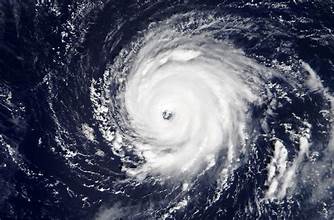
I lived in South Florida for around ten years. Hurricane season was the absolute worst. The scariest part was hunkering down inside behind your boarded up windows and listening to that raging wind for hours at a time. It was relentless.

Our prayer starts by saying, “the basis of purification” is “primordial awareness, like the sky”. Primordial enlightenment is like a cloud-free sky. The prayer goes on to say that “incidental stains” are what need to be purified.

The third line talks about a “purifying agent” that will clear away the incidental stains such as wrong views and afflicted emotions. So the prayer begins by telling us that our true nature is enlightenment, like a clear blue sky. But there are clouds or “incidental stains” tainting that blue sky.

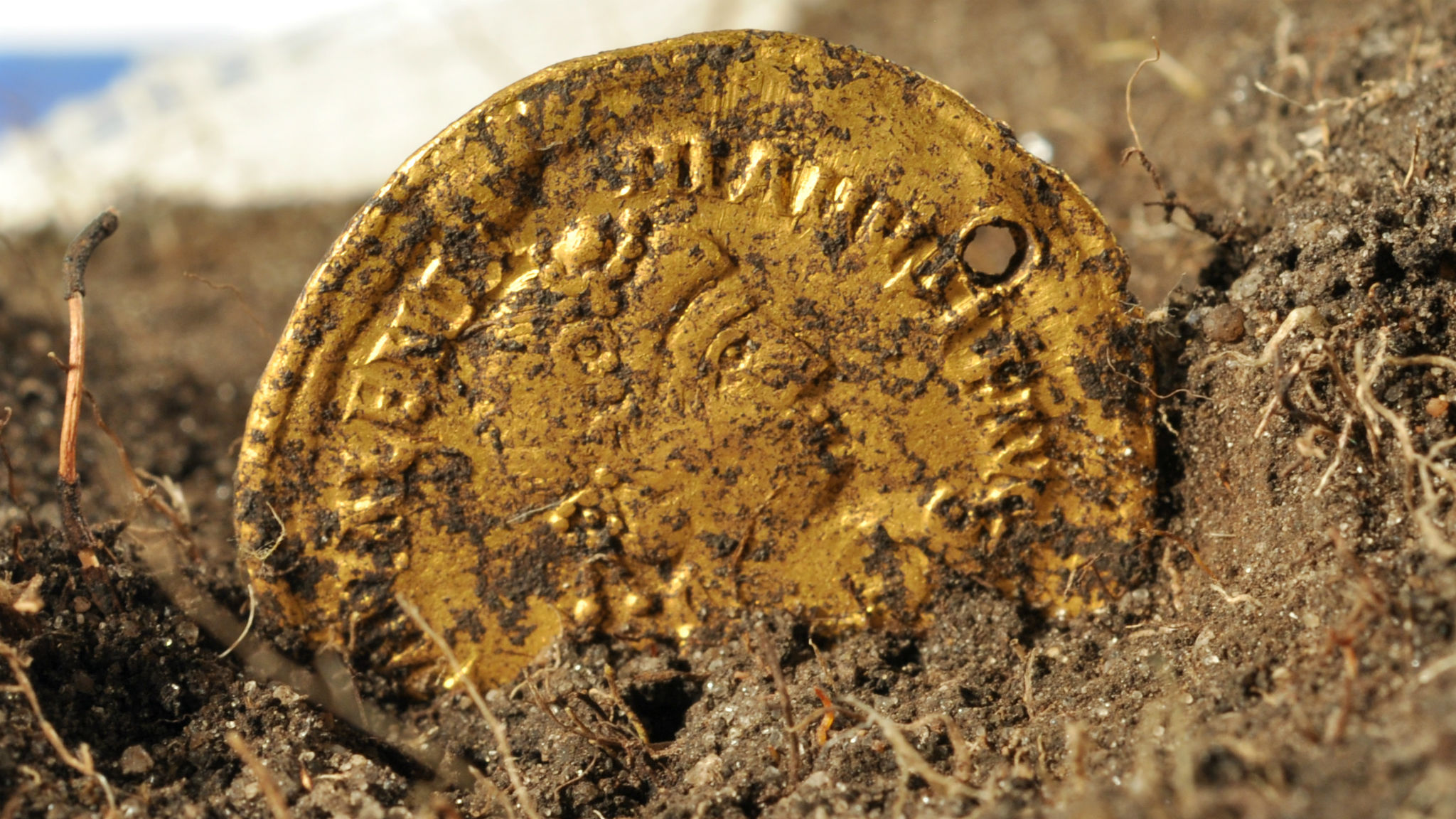
This very much reminds me of digging up an ancient golden coin. When you first look at it, it’s all stained up with grime and dirt. You know you’ll need all kinds of cleansers to remove decades or maybe even centuries of clinging dirt.

Our true nature of enlightenment is like that dirt encrusted coin. We have spent lifetime after lifetime acquiring the encrusted dirt of wrong views and afflicted emotions. Again the prayer is telling us that enlightenment isn’t something to be sought out, but rather something inherent in us that needs to be uncovered.

That sounds pretty daunting, doesn’t it? How do we remove lifetimes of dirt and grime to uncover our true nature? Our prayer outright tells us that “that the purifying agent is the truth of the path” and it’s like a “relentless wind”, just like a hurricane.

How would I explain this to someone else?

Christianity has the idea that ‘sins’ can be washed away by ‘the blood of the lamb [Jesus]’. Thankfully no one has to be crucified for us to uncover our true nature.

Samsara is a realm of struggle and desire. We are forever struggling to fulfill some desire or other. And sadly, even when we get what we thought we wanted, it’s never what we thought it would be. When I was a little girl I watched a lot of Star Trek. I thought it was so cool how they had a talking computer. All they had to do to make things work was press buttons on a console.

Watching that show, I promised myself that when I grew up, I’d have a job where I pressed lots and lots of buttons. Well, here I am some decades later and practically all I do at work is press buttons. Is it everything I thought it would be? I can assure you I’m not visiting different planets every week. Heck, I don’t leave home to go to work.

This on a small somewhat childish scale is what those lost in samsara do for lifetime after lifetime. Sadly, chasing after struggle and desire only leads to suffering. Fortunately , we have the “truth of the path” to cleanse away the incidental stains we have from living in samsara.

What is “the truth of the path”? We call this the Dharma. This is the only cleansing agent we need to uncover our true nature. But how does it work? Is it abrasive like a brillo pad, scrubbing away at us constantly? Well, yes and no. We’re all caught up in the illusions of samsara. There are lifetimes of ground in dirt covering up our true nature.

The Dharma, our prayer tells us, is like a “relentless wind”. I’ve never been in a storm in the desert, but I imagine that anything left out in that sand laden wind would be scrubbed pretty clean. The Dharma is not meant to lull us into a comfortable sleep. We are already asleep. No. The Dharma works to wake us up from the nightmare that is samsara.

How do I bring this into my life?

I have a confession to make. I just adore that snooze feature on my phone. I actually set my alarm for earlier than I need to get up. Why? Because snooze button. The Dharma is like an alarm clock, a warning to wake up! So many people press the snooze button. They say, “I don’t have time to meditate” or “I’m too busy to study the Dharma” or “I’ve got kids. I don’t have a spare moment in my day.” But the Dharma is undeterred. Like a relentless wind, it will blow until you awaken.

Before I began studying the Dharma, I always had this deep seated feeling of being dissatisfied. Not just with my life. It extended to everything. It never gave me a moment’s peace. I felt as though I was wandering a desert, sand as far as the eye could see, a blazing sun overhead. And no matter how much water I drank, I’d be just as thirsty. It would give no relief.

I’d like to say that when I began studying the Dharma, that feeling immediately went away. It didn’t. But gradually over the course of about a year of study, I was less and less dissatisfied. And I can pinpoint the reason. I came to rely less and less on samsara for my sense of satisfaction. I began to experience tiny glimpses of my Buddha Nature.

Don’t get me wrong. I still get caught up in the illusions of samsara, but there’s always a part of my mind that in some way, doesn’t get wholly caught up anymore.

Today when I see people completely caught up in the quagmire of samsara, I do the only thing I know how to do. I recite my go to prayer, “May all be free from suffering and the causes of suffering. May all embrace happiness and the causes of happiness.” Doing this brings me a measure of peace, and I pray it brings peace to others.

There’s a story told of children playing inside a burning house. Their father is outside urgently exhorting them to come out. But the children are very distracted. Today it would be Netflix, iPhones, x-boxes, Instagram, or X fka Twitter.

This again is the relentless wind of the Dharma trying to wake people from the stupor of samsara. And the funny thing is if we simply go in the direction of that relentless wind, things get easier, less exhausting. We’re no longer devoting so much energy to upholding the illusions of samsara.

If we allow ourselves to be caught up in the relentless wind of the Dharma, we will find more and more of the illusions of samsara falling away. We will experience the great wind setting us free of the incidental stains left by samsara. We will find the true nature of our primordial enlightenment uncovered bit by bit. And bit by bit, we will be free of the illusions of samsara.


On a shimmer of water…

Currently I’m studying Heart Treasure of the Enlightened Ones with a Dharma friend, the Venerable Tashi Nyima.

This is my contemplation on verse 29 of the root text of Heart Treasure of the Enlightened Ones.

heart treasure

“Purifying the obscurations, initiating the practice

of the path and actualizing the four kayas,

The essence of the four empowerments is the

teacher Chenrezi;

If you recognize your own mind as the teacher,

all four empowerments are complete;

Receiving innate empowerment by yourself,

recite the six-syllable mantra.”


Full disclosure:

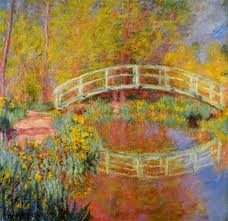
I found the whole idea of empowerment nearly impossible to work with. So today’s writing is about impressions I got from working with the verse as a whole, combined with Patrul Rinpoche’s commentary and Tashi’s Dharma talk. I invite you to think of this as a Monet Dharma painting.

Explain to someone else (making it my own)

monetMy mind gets in the way a lot. It really does. This morning for instance, my mind’s take on this stanza is…who needs all this empowerment stuff? That’s a Tibetan thing, isn’t it? How about that new chocolate chip cookie recipe? It’s just begging for some coconut and walnuts.

Mind is like that, isn’t it? You schedule time, you get all ready, get all the tools, and your mind decides it’s a good time to catalog all the stuff you put off doing over the weekend. Ninety-nine percent of the time, this frustrates us. The other one percent, we just give in and do what mind wants.

If we could take a step back from the afflicted emotions which cause us to so strongly identify with our mind, we would see the deluded nature of our lives. We are not our mind or our thoughts. If we are able to take that step back, we can begin to recognize the inherent quality of our mind as empty and luminous. How does this help us in samsara?

Patrul Rinpoche says, “Primordial purity really is the true state of all phenomena, and our usual impure perceptions are totally false, delusions without the slightest grain of truth—like mistaking a piece of rope for a snake or thinking a mirage is really a shimmer of water in the distance.”

Think about this: according to the latest studies, the average person has fifty thousand thoughts a day. Imagine having a teacher who was inseparable from you, and who had fifty thousand nuggets of wisdom to share with you each and every day of your life. Welcome to your mind without the obscurations of wrong view and afflicted emotions.

I think my mind has way too much of a western bent to completely understand the idea of receiving empowerments, but I understand this much. Our Buddha Nature is inherent in us. It is primordial, perfect, unchanging. Once we come to fully understand this, we will begin to see that our mind could not possibly be any other than the mind of the teacher Chenrezi. When we come to recognize this, can we merge our mind with that of the teacher? I don’t think so. Not right away. But we can begin to see with clarity that it can be done—one thought, one moment at a time.

***

 Apply to a past situation (how would it have been different?)

I like to read. A lot. A whole lot. I had an account on Goodreads and every year I’d take the Reading Challenge and my goal would be sixty books. That’s five books a month for a year. I’d hit my goal every year, but…I would read some real honest to god who-did-you-pay-to-publish-this trash. It was bad, but hey, it was number forty-seven in the challenge and I had to move on.library

This year, I’ve decided to do things differently. I have a brand new account. My challenge this year? One book. That’s right—one. I’m currently at 800%. I’ve read eight out of one books according to Goodreads. Whew! No more challenge. Now I’m exploring genres, meeting new authors, and reading for the sheer pleasure of it, not to ‘make the list’. I took this radical step because the whole sixty books a year thing made me take a look at my life.

I was kind of approaching spiritual cultivation the same way. Well, I’d think, I’ve done the Mind Training prayers—check it off the list. What’s next? If I’d been able to take a step back from my life sooner, I would have seen that I was like a farmer tossing seeds into dirt, then never coming back to the field. [I know it’s not really called ‘dirt’. Sorry. City girl thing.]

I may have noticed that rather than initiating any kind of practice or cultivation that might have made those seeds take root, I was simply leaving them on the surface of my mind, where they quickly blew away. Having noticed this, I may have thought about what it means to have a spiritual practice. I may have let go of the list of things to be learned and turned to my own mind. In doing this, I may have recognized my ordinary mind—everyone’s mind—for what it is: a set of patterns of habitual delusion. Having recognized this, I may have begun to seek a spiritual practice that would gradually dissolve the obscurations veiling the mind’s true luminous nature.

***

 Apply to an (ongoing) present situation (how does it matter today?)

The biggest thing going on in my life right now is learning a new method to bake bread. I noticed over the weekend that one of my bread machines is making a funny noise. A couple of weeks ago, I would have been cringing at the thought of investing in another machine. But when I heard that strange little noise, I thought…better learn this Ken Forkish thing faster.

With the Ken  Forkish method, I don’t need the bread machine. In fact, with that method, the baker is so in touch with the dough that the only machine that needs to be really fine-tuned is the mind. After baking just twice with this method, I’m coming to completely understand how important it is to get to know your dough.Saturday White Bread 06 21 14

In working with the spiritual path, I find that the ‘dough’ of spirituality is the mind. If we are to cultivate spirituality, we have to come to know the nature of our mind intimately. We have to recognize that our mind constantly creates a world of delusion which we accept without question. But, if you “recognize your own mind as the teacher”, then you realize that enlightenment isn’t some hidden treasure to be unearthed in some distant foreign place. No. It’s right here, right now. It’s what you truly are. Your mind is no different than that of Chenrezi or any of the Buddhas. You are working with the same primordial ‘dough’ so to speak.

A couple of times when I’ve been baking a Ken Forkish loaf, and working with the dough, I’ve thought to myself…he must be working with something different in those pictures. This dough is impossible to work with! Then I remind myself that I’m working with flour, water, salt, and yeast—just like Ken Forkish does. The only difference is he’s got decades of practice, and I’ve only put in two weeks’ worth so far.

Just so on the spiritual path. We all have Buddha Nature. We all have moments when our compassion shines through. In working with recognizing our mind as no different than that of the teacher, we are practicing to resonate with our inherent qualities of true purity, true bliss, true permanence, true self.

***

 Apply to a potential situation (bringing it home to play)

Sitting here, in the early dawn solitude of my air-conditioned apartment, birdsong and the mellow sounds of slow traffic just past my window, the possibilities for bringing this into my life seem endless. But soon, I’ll get up from here, I’ll take a shower, I’ll step out into the heat of late June in Dallas, and I’ll drive to work in my un-air conditioned car. Then I’ll get to work and…well…the possibilities won’t seem so endless.

One of the wonderful things about spiritual cultivation on the Buddhist path is that you can travel light. It’s even better than baking! The only tools you need are your mind and the Dharma. You know what’s really awesome about that? Wherever you are, they’re always with you. We can’t go anywhere without our mind tagging along. And since the Dharma is reality as it truly is without elaboration, we can never step beyond it or outside of it.

Lately at work, I’ve been extraordinarily…what? Restless, I think. The problem is it’s been very slow, so there’s been plenty of time for me to reflect on how many other things I want to do with my life, but how unwilling I am to risk being homeless and hungry.

Today will be no different. I can depend on mind to be restless and vaguely dissatisfied. Except…it will be different. Today, even though I’ll be starting out with the same ingredients of mind and Dharma, I’m going to try a new recipe. Today at work I will try seeing how all that arises in mind is inseparable from the empty luminosity of mind. I will try seeing that my suffering is my path to the union of wisdom and compassion, through compassion. I will try seeing that when we recognize our mind as the teacher, all the conflict and suffering and drama of mind becomes a beautiful frictionthat is constantly scrubbing away our obscurations.

monk and catI don’t know if I can do this, but just the thought that I could makes me feel one step closer to recovering the naturally splendid all-ground of who I truly am, who we all truly are.


* Thank you to my Dharma friend Rinchen for the idea of a beautiful friction.