On Compassion . . .

On Compassion . . .

May all disease, famine, belligerence, wrong views,

impairments, transgressions, downfalls, harmful actions,

self-cherishing, obstacles, harmful influences and impediments,

all ripen on me and me alone!

Dilgo Khyentse Rinpoche, The Blissful Path to the Ocean of Bodhicitta

i. What does this mean to me?

I grew up in a religion where everything was my fault. Everything that I did wrong was due to my sinful nature, and I could only ever be saved by Grace. When I first read this verse of the prayer I thought, ‘Geez, I have enough of my own suffering, I’m not taking on anymore’.

In Buddhism there is no one to save you. ‘Buddha’ simply means ‘awakened one’. We all have the capacity to be awake because we all share the perfection of Buddha Nature. When we are fully awakened, it’s said that all afflictive emotions and wrong views fall away. Perhaps the most harmful wrong view that causes us suffering is the idea of separation or ‘me’ and ‘you’.

But as we move along the path of awakening we slowly come to realize that there is no true separation, no duality, as it appears in samsara. Once we come to this realization, the meaning of these lines becomes clear. We’re here in samsara because of our karma, our previous actions.

In these lines the writer is urging us to let go of the ideas of ‘you’ and ‘me’. If I were to shorten the verse to one sentence, it would be, ‘May I come to realize there is no ‘my suffering’ and ‘their suffering’, there is only suffering’. Putting it this way reveals an essential truth. It’s not so much that we pray in these lines to take on the suffering of others, but that we realize we are all in the swamp of suffering that is samsara.

II. How would I explain this to someone else?

I’d start by asking, ‘Can you fit an elephant inside your head?’ Besides the look of are you crazy, the answer would be ‘Of course not’.

The answer is patently obvious to anyone who gives the question even a passing thought. How then, do we know what an elephant is? Well, at some point we eight saw an actual elephant or an image of one on TV, YouTube, or any of the plethora of media we have available to us. When that happened, if we were paying attention, we created an internal mental representation and labeled it ‘elephant’.

How many minds are involved in this internal mental representation thing? Only one. Yours. This is true of all that we perceive. This being the case, does it make sense to separate our perceptions into yours and mine?

The writer goes all out in this verse. He names just about all there is on the spectrum of suffering from physical to psychological to shortcomings of the mind. Why do that? I think it’s to remind us again that everyone’s suffering is of the same nature. Since this is true, if we make just a drop of difference by decreasing suffering of any kind, we have dropped a drop of pure water into the swamps of samsara. This makes it better for all.

iii. How do I bring this into my life?

The Buddha taught that there is suffering, the cessation of suffering and a path to the cessation of suffering. When I think of bringing this this into my life, a recent teaching with my teacher the Venerable Tashi Nyima comes to mind. We were talking about including all in our compassion.

My question was, even Ted Bundy? Him too? Because I kind of feel like he was a bad person and did bad things. To sum up my teacher’s response, he said (a) why are you passing judgment on Ted Bundy; (b) who else isn’t good enough to be included in your compassion; and (c) Isn’t he among those deserving the most compassion because his actions, his karma, will bring him untold suffering.

Now, serial killers used to be a sort of hobby of mine. So immediately I started thinking. Wow, I thought to myself, that includes John Wayne Gacy, Jeffrey Dahmer, the Riverside Strangler, and yes, even Jim Jones. They are all most deserving of our compassion. But a tiny part of me still said, ‘but I would never do anything like that.’

Not two days later I was sitting at my desk working when I tiny fly went by. I swatted at it. Given our difference in size, I probably caused a hurricane for the insect. And it hit me, I am the Ted Bundy of the insect world. I try not to, but despite myself, I still swat at them, completely disturbing their world. Now I had to ask myself, am I less worthy of compassion for having done that countless times? Should I take my place next to the Ted Bundy of my mind who is worthy only of unending suffering?

That gave me pause. This writer is imploring us to let all suffering ripen, or mature, on us. If we did that, are we changing anything other than our perception and awareness? Aren’t we already in the swamp of suffering that is samsara? Can we avoid experiencing the miasma of the suffering that is samsara? No. We can’t. This prayer is simply reminding us to decrease suffering, whenever, wherever we can. There are no corners in a swamp. You can’t just decrease suffering in your corner of samsara. We have to realize the truth of interdependence. If one suffers, all suffer.

Having lived with this prayer for a week now. I bring it into my life by reminding myself of a quotation of the Dalai Lama, “Be kind whenever possible . . . it is always possible.” All week at work I really paused to ask myself, how can I be kinder in this interaction? I paused to remind myself to mind the suffering of the person at the other end of the email. This was quite the feat, since I work from home. It really struck me that these people were internal mental representations, actually faceless, since we’ve never met.

This week it occurred to me that true compassion is exactly that – faceless. We may not know every being in samsara, but we know the feel and flavor of suffering. I have to admit that just one week of living with this prayer isn’t enough. It feels like there is so much to do in samsara, and so little time. We can live with this illusion of futility by relying on our Buddha Nature. It is whole and perfect and lacks compassion for no one.


On enlightenment. . .

On enlightenment. . .

May all be free from suffering and the causes of suffering.
May all embrace happiness and the causes of happiness.
May all abide in peace, free from self grasping.
May all attain the union of wisdom and compassion.

What does this mean to me?

Although we’ve mostly forgotten, “wisdom” has its roots in vision. Not just any vision, but the ability to see things as they truly are. Compassion lets us act on wisdom in a way that reduces suffering.

Wisdom without compassion is like a doctor whose bedside manner could use a little improvement. Imagine your doctor, truthfully, said to you, “You’ve got three months to live. That’s the end of our appointment. Schedule a follow up at the front desk on your way out.” Does the doctor know lots and lots of stuff? He sure does. But his bedside manner – yikes! I don’t think this even rises to the level of wisdom. This is simply knowledge. When we have true wisdom we understand that wisdom without compassion is cruel.

When we have compassion, we feel for the sufferings of our fellow travelers in samsara. But what does that really mean? For me, the biggest part of compassion is generosity. Whether it’s sharing your skills, giving what’s needed, or seeing to it that a turkey survives Thanksgiving.

How would I explain this to someone else?

When we study the Dharma, we’re perpetual students of what is. We don’t have a word for it, but what we’re actually studying is reality ‘is-ing’ in every moment. Reality is dynamic, never static. From this point of view it’s impossible not to see that all in samsara arises and dies. It happens in every moment. It’s happening to us right now.

Recognizing this truth with a compassionate heart moves us to ease the suffering in samara with whatever skillful means we have. Do we walk by a homeless person and say to ourselves, “Well, they’re dying anyway, so why bother doing anything?” Compassion allows us to see this differently as in, “We’re all on the same journey. I’ll do what I can to ease the suffering of our fellow travelers”.

This is the power of the union of wisdom and compassion. We see things as they truly are and at the same time we recognize our joyful obligation to help.

How do I bring this into my everyday life?

My teacher, the Venerable Tashi Nyima teaches that the union of wisdom and compassion is true enlightenment.

Wow, this little prayer isn’t playing around, right?  When I look at this prayer I ask myself why is the order of things the way they are? First we free ourselves from suffering. Then we are instructed to embrace happiness. Then the instruction is to abide in peace. Only after all of this does the prayer talk about the union of wisdom and compassion.

Why was this order of things chosen? Well, it’s very hard to ease the suffering of others if you yourself are suffering terribly. Suffering can disturb the mind. Without a clear mind, how do we see the way to ease the suffering of others?

As to happiness, if you’re desperately unhappy, how can you help others to be happy? If you’re constantly grasping onto “my story”, or the idea of “this is my experience”, then how can you have peace much less offer peace to others?

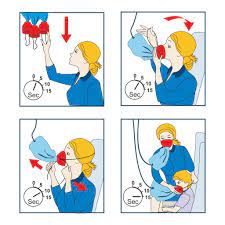
This, I think is what they tell us on airplanes. If those oxygen masks fall, put your own mask on first, then attempt to help others. The Dharma is much the same way. We must remedy ourselves before seeking to remedy others. Or, as Christianity puts it, ‘remove the beam from your own eye so that you can see clearly to remove the mote from your brother’s eye.’

In whole, this prayer gives us instruction to attain enlightenment in three easy steps. And for just the price of studying and practicing the Dharma, you too be enlightened. Okay, they’re not particularly easy steps. And this isn’t a late-night TV commercial, although I’d argue it ought to be.

In my day to day life, as part of my job, I talk to many people who are suffering terribly . When I take those calls, I focus on answering in a way that gives information and at the same time acknowledges their suffering, their basic humanity, their buddha nature.

Do I get enlightened when I manage to accomplish this? No. But it does shift my world view from ‘me’ and ‘mine’ to ‘all’.  As in may all be free from suffering . We all have these small experiences in samsara where practicing shifts our world perspective and we have a moment of enlightenment. Our buddha nature peeks out and connects to the buddha nature in others, reassuring us that enlightenment is only ever a moment away.

On tomorrow’s laughter…

Currently I’m studying Heart Treasure of the Enlightened Ones with a Dharma friend, the Venerable Tashi Nyima.

This is my contemplation on the first line of verse 38 of the root text of Heart Treasure of the Enlightened Ones.

heart treasure

“Whatever appears is delusion and has no true existence;

Samsara and nirvana are just thoughts and nothing more.

If you can liberate thoughts as they arise, that includes all stages of the path;

Applying the essential instruction for liberating thoughts, recite the six-syllable mantra.”

 Full Disclosure:

It’s so easy to get taken in by ‘reality’ that it’s hard to write about the magic act without getting caught in it.

Written Tuesday, September 16th, 5 AM

Explain to someone else (making it my own)

When I was very young, I saw a movie called ‘Finian’s Rainbow’. It was about a leprechaun who’d come to this side of the rainbow chasing after the pot of gold someone had stolen from him on his side of the rainbow. That movie used to come on a lot. I’d watch it over and over. I think I was intrigued by the idea that a rainbow was something you could travel like a road and then end up on the other side in a whole new world.

As we go about our ordinary lives in samsara, we carry this same sense of child-like wonder. Is there, we ask ourselves again and rainbow potagain, that one act, or maybe that one job, or that one person that will give me a life on the other side of the rainbow? But time passes, we age, and we’re still on the wrong side of the rainbow, and the pot of gold doesn’t materialize. This makes us bitterly angry, frustrated. We become more desparately driven with each passing year to find that perfect life that always seems to lie just on the other side of whatever rainbow we’re chasing after.

This doesn’t work because there is no thing in samsara that is not a delusion generated by a deluded mind. The nature of samsara is that appearances arise when conditions are favorable, they last a few fleeting moments, then they pass away; just like rainbows. Yet we spend our entire lives chasing after delusional rainbows. Dilgo Khyentse says, “However much we might prefer to believe that things are permanent, they are not. Yesterday’s happiness turns into today’s sadness, today’s tears into tomorrow’s laughter.”

We live our lives in a kind of deluded madness. In our delusion, we are like dreamers in a dream looking for one thing—just one thing—that is real. In the dreamlike existence of samsara, it is only the deluded mind that makes it possible to create the illusion that any appearance is substantial, permanent, and independent of the deluded mind from which it arises.

We live like magicians who’ve forgotten that  magic is only a trick, slight of hand. We’ve become deluded to a point where we believe a woman can be sawed in half, then put back together. This is no less absurd than believing that money will bring us happiness, or that our One True Love will come and it will last forever, till every star falls from the sky.

***

 Apply to a past situation (how would it have been different?)

There are so many times in my past where I’ve been sucked in by the magic show of samsara. It’s hard to pick just one.

ladderThere was a time, about two and half decades ago, when I wanted to ‘make it’ in corporate America. I interviewed for an internal posting that I thought would be my dream job, and I got the position. It was everything I’d wanted. I was high profile in the marketing department of a managed dental care company. I managed my own projects. I had my own budget. I organized and put on meet and greets for clients from all over the country. I set my own hours.

I was miserable. I couldn’t bear all the pressure. I once missed a typo on a bulk mailing. It had already gone to the printer to be done on good paper in four color process—very expensive. It cost thousands to run new, corrected copies. I began to miss days at work. I couldn’t stand the thought of being there. My boss, who was totally caught up in the ‘climb the ladder and be a success’ delusion treated me with a mix of condescension and mild disgust. I was holding her back.

One day, something (I don’t remember exactly what) went horribly wrong. It was open enrollment and the pamphlets describing the different plans available had not been delivered to the client. This was in the days before the internet. No pamphlets meant that the entire open enrollment process came to a halt. I had the client calling and yelling at me. I had the client reps calling and yelling at me.

I had…the sudden urge to go shopping. I got my purse, went to Barnes & Noble, and went shopping for a couple of hours. This was in the days before cell phones. I was unreachable. After shopping, I went home. I went back to that job after this fiasco, but it was causing me terrible suffering. I felt like a sublime failure. I felt that I didn’t have it takes to be a ‘success’. I suffered for years after leaving that job, laboring under the delusion that I was just too stupid to ‘make it’.

Looking back on that time in my life, I can notice that all of my suffering came from attachment to a delusion. At that time in my life I imputed reality to the idea that becoming a corporate Vice President (the next step in that position) would make me happy. I also believed that not being alble to do that meant I was dumb or lazy or both.

If I’d been able to take a step back and breathe, and let some peace and clarity arise, I may have noticed that I couldn’t be a ‘success’ because a part of me simply didn’t believe the corporate myth of ‘making it’. That part was desperately trying to wake me up. If I’d been able to bring my attention to nurturing that part of myself, I may have ended my suffering that much sooner.

***

 Apply to an (ongoing) present situation (how does it matter today?)

Yesterday morning I sent the last bit of information needed to complete my background check. Yesterday afternoon the recruiter called to let me know that I’d be getting a ‘Final Offer’ via email in the next couple of days.

That’s it. One phone call that lasted maybe two minutes, and I was free of Interplanetary Title, Inc. I had the urge to go back to my desk and create an email with the subject line “Out of the Office…Forever!”, then send it to ‘All’. Thankfully, I resisted that urge. But it was tough.

An interesting thing has happened since the phone call. Nothing—and I do mean nothing at all—at Interplanetary Title has even a miniscule weight of reality in my mind. Being at work yesterday felt like being in a lucid dream. I took a look at my mind. I was really curious about how  my experience could suddenly be so different. After a bit, I realized that the three poisons (attachment, aversion, indifference) were nearly wholly absent from my experience of the workplace.

But this wonderful dreamlike experience would flip back and forth like an optical illusion…is it a wine glass or two faces? As soonwineglass as an afflicted emotion would arise, I’d be instantly sucked back into the ‘reality’ of Interplanetary Title. When I worked with letting the emotions pass, the dreamlike quality would return.

Wow. It amazed me that so-called ‘reality’ could flip from ‘real’ to ‘dream’ and back literally faster than you can snap your fingers. It was like a coin tossed high in the air and turning over and over—first heads, then tails, then heads. The day went on and I noticed that I was clinging to the dreamlike experience and not wanting it to change. I knew eventually this clinging would lead to attachment, so I worked with letting the dreamlike perception of reality rise and fall like waves on an ocean.

The sudden capacity to experience the dreamlike nature of work has made it so much easier to leave. I don’t feel like I’ll be giving up anything. That would be a little like being caught in a nightmare and saying…No, don’t wake me up. I’m enjoying my suffering.

Being able to experience the dreamlike quality of the workplace has been extraordinary. I always thought that experiencing waking reality as a dream would lead to a total lack of compassion, even though I’ve been told otherwise. Just the opposite is happening. Because I’m relatively free of my suffering under the terrible weight of that reality, I have more compassion for those still laboring under the full weight of the delusion. It’s not just an arising appearance to them, it’s ‘reality’. It’s ‘how things are’. And my real job there in these last few weeks will be to be an Agent of Compassion, to be the wakened dreamer helping those still caught in the nightmare.

***

 Apply to a potential situation (bringing it home to play)

Unless something goes horribly wrong with the new job offer, I have about twenty-five business days left at Interplanetary Title. I can use one of two exit strategies. I can show up each day with an ‘I don’t care because I’m leaving’ attitude, or I can go to work each day and look for ways to use to this new capacity to experience the workplace as dreamlike to help others.

This should be a no-brainer. It is, kind of, except for Salem, who is still unbelievably, and utterly incompetent. A part of me wants to have the ‘I don’t care’ attitude, just so her job gets harder. It’s scary that I still feel that way after all the work I’ve done with that situation…but…there it is.

But…and it’s a BIG but…every act becomes a seed, then a heavy seed, then an impression, then a karmic formation. To be honest, telling myself that including Salem in my compassion is the right thing to do doesn’t help. I know yaks don’t fly and ravens don’t till the earth…but good god almighty already.

All right. So the ‘I need to do the right thing’ approach won’t work to include Salem in my compassion. It’s time for a little enlightened self-interest to kick in. I’ve studied the Dharma long enough to know that the experience of work as illusory and dreamlike is like a pebble tossed into the waters of mind. Soon I’ll start experiencing the ripples. I’ll begin to notice the underlying dreamlike state of other aspects of my life.

Since the workplace is my first genunine experience of this, I have the chance to consciously shape the seed of behavior that will eventually become my karmic formation (my ‘default’) for directing my behavior when this experience arises again. Bearing in mind that I want to plant ‘good’ seeds of behavior in my mind stream, I will go to work today with the intent of bringing a measure of compassion to all of my interactions. After all, in most other areas of my life, I’m still nearly completely caught in the delusion of ‘reality’, just as the people at work are caught in the delusion of that reality.

When my Dharma friend Tashi talked about this verse, he said that it describes the origin of renunciation. At first, I didn’t really understand that. But after yesterday, I totally understand. All that arises in mind is a delusion, a distorted dream. Once we fully realize this, the natural response is to want to wake up from the nightmare world ruled by attachment, aversion, and indifference.

Renunciation is that all-important first step to coming awake to the deluded nature of samsara. Once we begin to awaken, we begin to see clearly that the true nature of samsara is ephemeral—a city of clouds in the mind of a dreamer who’s forgotten he’s asleep. This coming awake I regard as the root of renunciation, and I’m coming to believe that it’s the only way to free ourselves and others of the nightmare pangs of samsara’s thousand fold sufferings.

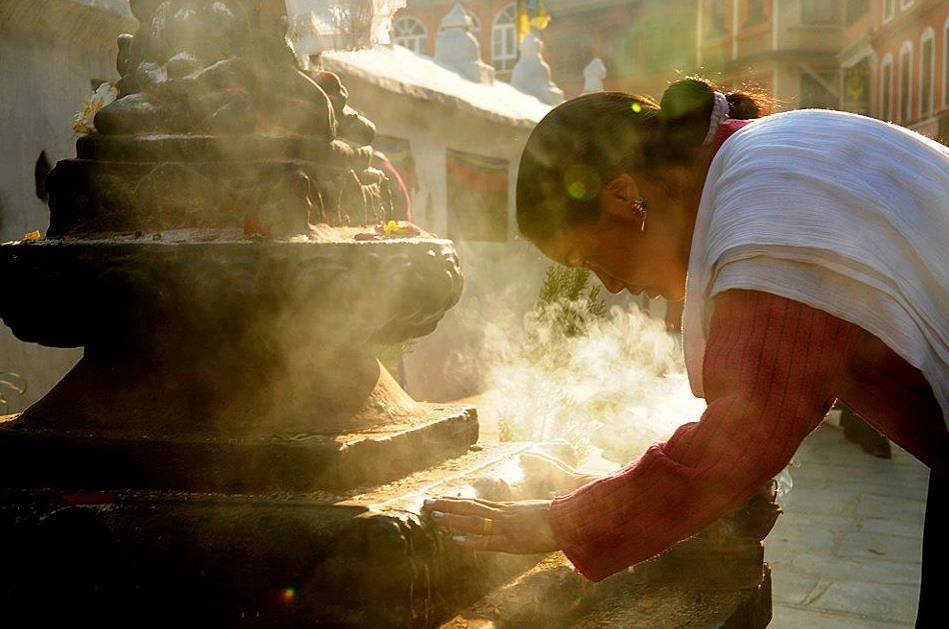
woman at shrine


Compassion Games – Day 4

Secret AgentS.A.C. (Secret Agent of Compassion) Rookie Reporting on Day 4 of the Compassion Games.

Today’s mission was learning how to take compassion a step further:

To build the global network needed to further disseminate the compassion antidote, we must practice working together. So today’s mission, should you choose to accept it, is to enlist a partner in your compassion efforts.

Are you familiar with the concept 1 + 1 = 3? That’s the idea here, thattogether we are greater than the sum of our parts. There is you. There is your partner. AND there is your partnership.

Let your action of compassion emerge from your partnership.
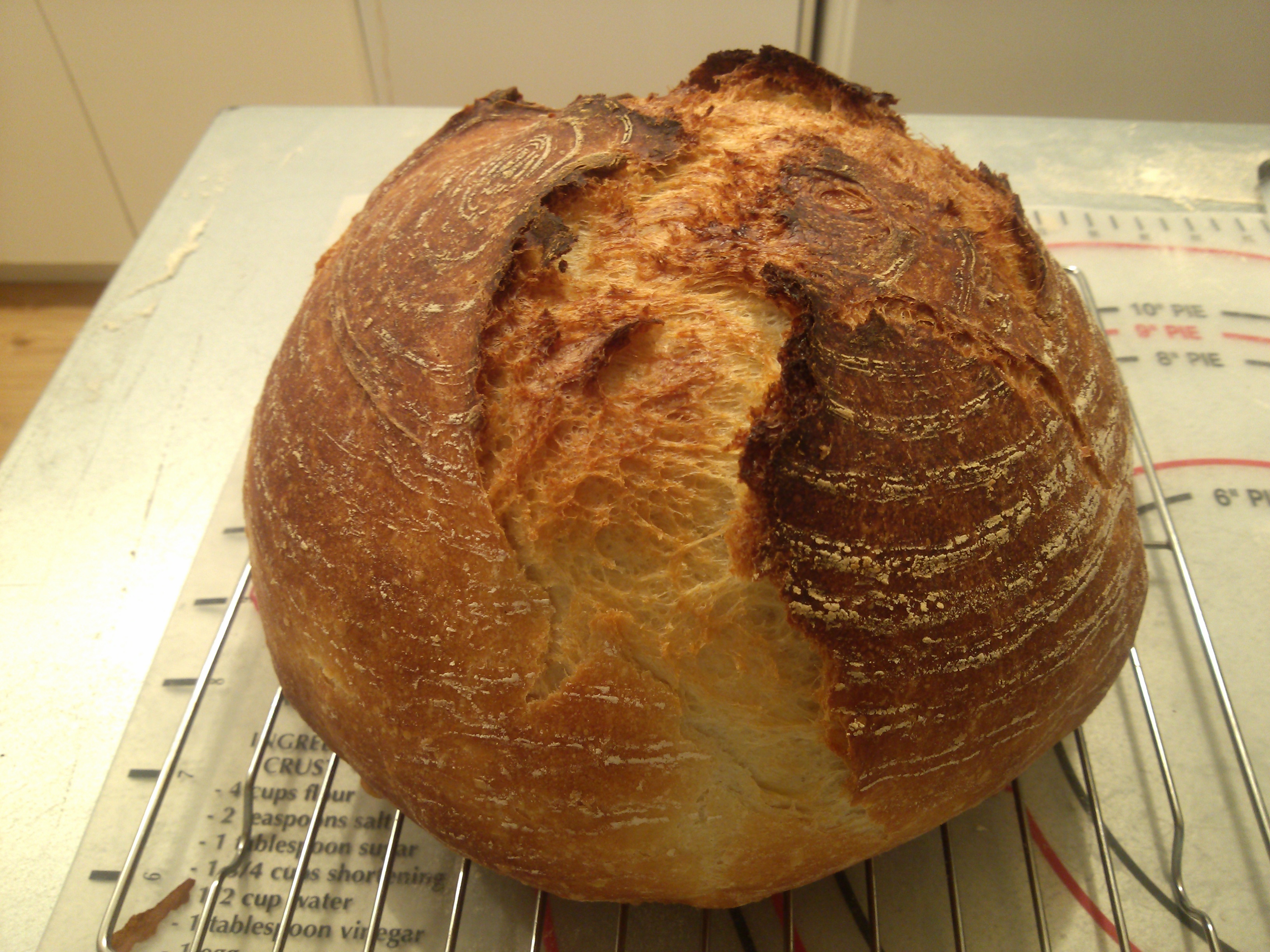
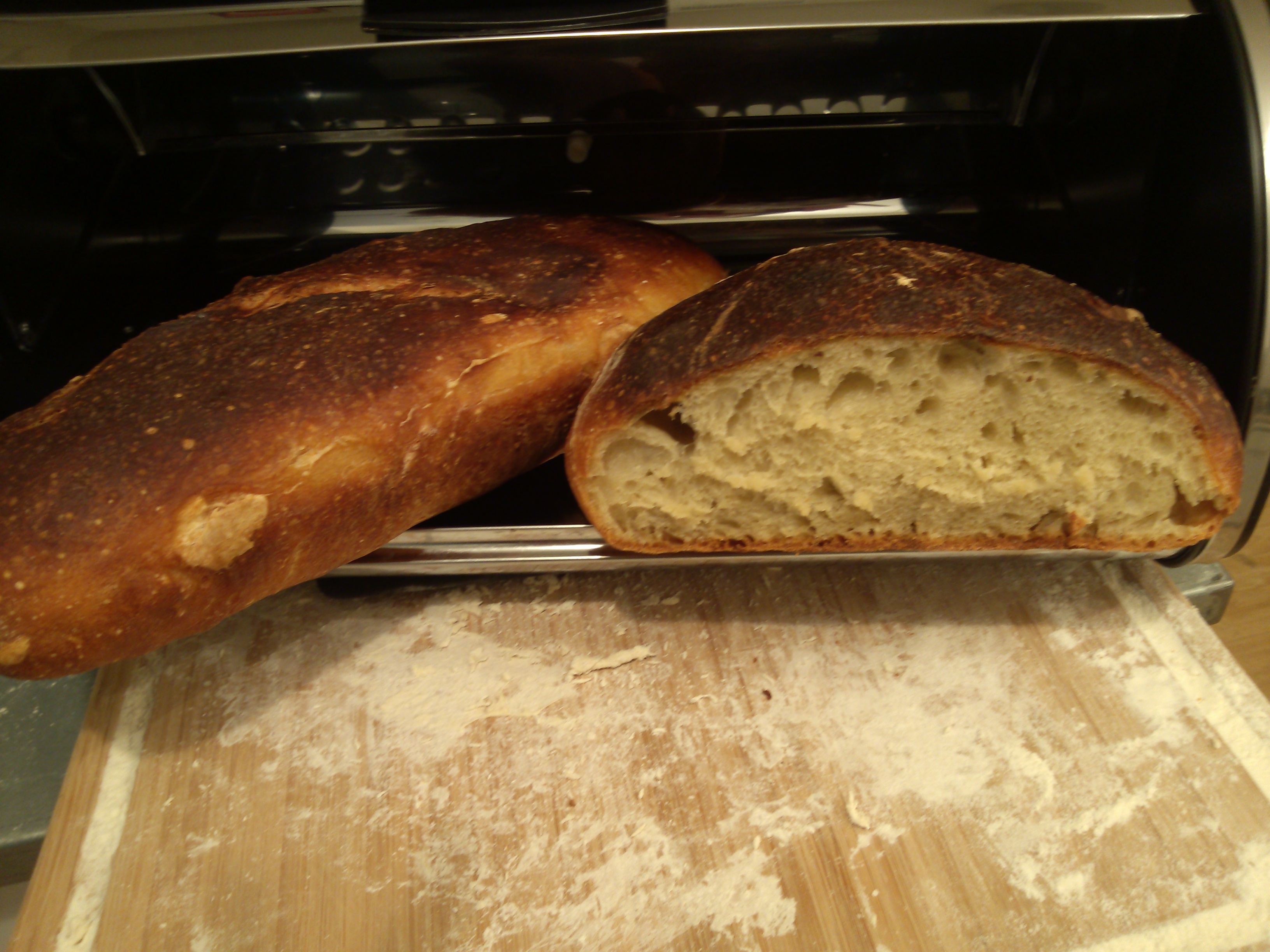
Saturday White Bread 71 Percent Cast Iron 08 10 14I like to bake. No. Really. I spend a lot of time either baking or thinking …hmmm…wonder what would happen if I… I’ve seen home bakers described as mad scientists, and as an avid home baker, I’d have to agree.

For about a year now, I’ve been baking vegan and sharing what I bake with the homeless. Well, that’s not exactly true. What I actually do is bake bread and muffins on Saturdays, make up ‘take-away’ bags that each have a muffin, a piece of fresh fruit and a snack like potato chips or crackers or something small like that. Then I drop all this stuff off.

This is where the partnership in compassion begins. To be honest, I’ve never seen the place where the bread and muffins get taken to be shared. I have many partners in compassion who help each week. There’s Wendy, who drops off all the stuff; there’s Rinchen who made it possible for this to get started, and there are the people who actually host the lunch for the homeless and give away the bags I make up.

Banana Muffins 08 23 14Today, as part of my mission, I brought Wendy a muffin and thanked her for being a partner in compassion.

Today’s mission made me see how much difference a partnership can make when we do acts of compassion. Me plus Wendy (1 + 1) = 12 homeless people having a little bit more to eat. Today I really understood that if we work with partners in compassion, we can ease the sufferings of many.


Compassion Games, Day 3

Secret AgentSecret Agent of Compassion here, day three of these awesome games!

Today’s mission (which I decided to accept):

Practice being fully present in an interaction with a friend. To do this, try to:

  •   stay centered on your friend
  •   listen without interrupting
  •   focus on what your friend is saying, not on what you might say next
  •   let go of judgments about you, your friend, or others mentioned in the interaction
  •   ask questions to clarify your understanding

I have to admit this was a little bit of a tough mission for me because I’m mostly at home on Saturdays baking or writing or crafting…or all three.

But this morning I had to go grocery shopping. I’ve been going to the same supermarket for about four or five years now. I practically know the cashiers by name.

This morning, instead of doing the banter (How’s your day so far, ma’am?) on auto-pilot, as I usually do, I brought my focus to the young man who was talking to me.

Here’s a funny thing about practicing the Dharma. Even though you read about things and you have an intellectual understanding of things, it’s like lightning striking when you actually experience a teaching in your life.

As I stayed centered, listened without interrupting, focused on what was being said, let go of my seeing clearlyjudgments, and asked questions, he suddenly came into focus for me. It was as though my eyes had suddenly gone from blurry so-so vision, to twenty-twenty crystal clarity. All at once, he wasn’t just a teenage cashier. He was just like me.

Just like me, he was a being with hopes and dreams, who suffers the torments of samsara. Just like me, he was a being who experiences that constant vague dissatisfaction that can drive us through our whole lives, chasing after chimeras like success, or wealth, or power.

The odd thing that’s stayed with me from this experience was the topic of our conversation: how much we both dislike eating breakfast. It was a trivial, meaningless conversation, but at the same time, I saw him, really saw him. And then I saw myself, and all beings in samsara, and how we suffer needlessly.

For a moment as he walked away, I thought…may we all be free from suffering and the causes of suffering…may we all embrace happiness and the causes of happiness…may we all abide in peace, free of self-grasping.

This ends the Mission Report for Day 3 of the Compassion Games!

Compassion Games – Day 2

Secret AgentToday’s mission in the Games is:

Choose one of your acquaintances and perform an act of kindness for her/him. Acquaintances are people who exist in our lives somewhere between friend and stranger. We know of these people. We just don’t KNOW them. Maybe this person is your letter carrier, a grocery clerk, or a neighbor you don’t know well. Consider doing something for this person that you would like being done for you should the roles be reversed.


When I read this, I tried to think about the acquaintances in my life. At first there was nothing. Then gradually, I started to think of the people who cut the grass at the building where I work, the people who keep the bathrooms clean, the staff in the mail room. Once I saw those people, I was able to see others: the cashier where I buy my groceries, the staff in the office of my building, the tellers in my local bank, the police officers and firefighters whose sirens I hear constantly, the maintenance folks in my building. Before I even thought of what to do, I could suddenly see how, even though I think of myself as living a ‘solitary’ life, I’m actually part of a massive web of beings who support me and make my ‘solitude’ possible.

That was a great start! Then I started to think of what to do. At first I was going to bring bagels and cream cheese to some (as yet) undecided acquaintance. But I thought about that. I bake enough to know that in a professional environment, the fastest, cheapest way to get golden brown bagels is to use an egg wash. And of course the cream cheese is a dairy product. I rejected that idea. I didn’t want my compassionate act to be supported by the suffering of the sentient beings in the egg or dairy industry.

Lo! My veil of indifference was beginning to part.

I tried to think of a compassionate (but fun) food to bring to an acquaintance, but I couldn’t. Ahh! Now the game was really afoot. If I wanted to bring a compassionate treat to an acquaintance, I’d have to make it myself. I bake with compassion, and without dairy products.

The next hurdle was that Fridays are typically a workout day on my Monday, Wednesday, Friday routine. Now I had to decide if I wanted to skip a workout so that I could create a compassionate treat. That was a tough one. Skipping a workout day typically makes me feel…bad. But I really wanted to do this. I decided to skip.

Luckily I had a ‘pre-mix’ standing by. On weekends when I bake, I sometimes measure out dry ingredients, bag them, and label them. That way, if I want to bake during the week, I’m ready to go. All I have to do is add the liquids and mix. It’s kind of like having your own homemade boxed mix, except it comes in a Ziploc baggie.

Compassion games Day 2 the boxGreat. Figured out the treat. Now I had to decide which acquaintance. My apartment is in a mock ‘downtown’ area, on the corner of a fairly busy intersection. The building is almost exactly between a fire station and a police station. I could walk to either one in a little more than five minutes. That means that all day long I hear sirens: either fire trucks or police cars.

For a long time when I heard those sirens (especially the fire trucks, which seem REALLY loud), I used to say unkind (and un-publishable in polite company) …ahhh…words. But one morning a couple of years ago, I ended up in the ER at about two A.M. with an anxiety attack that was making breathing a little impossible. After they fixed me up and I was on my way out, I happened to walk by a room where the door was open. Inside were two firefighters. One was on the bed, in obvious pain, and his friend (another firefighter, complete with soot) was standing over him looking sad, vulnerable, helpless.

That really cut into my indifference. I thought to myself…Wow, every time I hear those fire trucks go screaming by, this is how their day could end. And that’s if they’re lucky. The unlucky ones end up in wherever the morgue is hidden in this building. After that, I didn’t feel or say unkind things anymore when I heard the sirens. Now when I hear them, I pray that they’ll be well, and the people they’re on the way to help will get the help they need. Anyway, after eight years of hearing those sirens, I sure feel like the local firefighters are acquaintances.Compassion Games Day 2

I decided to bake chocolate chip oatmeal cookies for the fire station, and add in a bag of coffee that was on sale and that I keep on hand for ‘giving’ when the occasion comes up. ‘Fancy’ boxes were on sale at Michael’s the other day, so I had a couple lying around.

After I dropped off the cookies and coffee, a pretty amazing thing happened. I was actually able to see my indifference. That’s rare. Usually we can’t see our indifference because…well…we’re indifferent to it. Going through my day, I was able to see all the beings that had been completely invisible, relegated to the far side of my shield of indifference.

This was a really wonderful feeling. It seemed to make my world bigger.

Today’s mission taught me a couple of things.

** Compassionate acts cannot rely on the suffering of sentient beings. I totally realized that when I turned down the choice of bagels and cream cheese.

**Indifference makes compassion impossible. My Dharma friend Tashi talks about compassion as ‘the desire to eliminate or reduce the suffering of others’. How can we do that if the acquaintances in our lives are on the other side of our shield of indifference? How can we nurture our capacity to reduce the suffering of other sentient beings if we don’t have the capacity to see past our indifference?

This has been a spectacular mission for this Secret Agent rookie!


Compassion Games – Day 1

Secret AgentOkay. So today’s mission in the Compassion Games was:

Your first mission, should you choose to accept it, is to spread this antidote today by demonstrating compassion for strangers. These are people you typically pass by, maybe even ignore, as you go on with your day. Instead, your job is to think of everyone as your friend. Smile at people, hold doors open, let folks go in front of you. If you can, use your sense of self to decide how to complete at least one act of compassion that requires a tiny bit of additional work on your part.

As I went through my day with this is in the back of my mind, I began to ask myself, why doesn’t this come naturally to us? Why is this something we have to actually pause and think about?

When I walked into work this morning, I said good morning to someone I see all the time, but hardly ever talk to. Nothing personal. It’s just that I know her face, but we don’t really interact.

Starting my day this way made me take a look at the delusions of samsara and how those delusions can twist our actions. One of the biggest delusions I experience in samsara is that I have to be somewhere (pick a place, any place) and I have to hurry. Today, when I paused to say hello to my coworker (whose name I don’t know), I stopped and thought about where I had to go.

It went something like this:

I have to get to my desk. Why?

Because I have to clock in on my computer. Why?

Because I want to get paid. Why?

Because I don’t want to be hungry and homeless. Why?

Because I don’t want to be uncomfortable.

Hmmm…this little exercise made me see how it’s impossible to participate in the delusions of samsara without believing you’re separate from everyone else and that your needs are more important than everyone else’s. In Buddhism we understand that these twin thoughts are a wrong view. There is no separation. If you need compassion, then so does everyone else.

This takes a while to write out, but these thoughts actually went through my head pretty quickly as I was on my way to my desk.

Then I got my first phone call of the day. At first I was hurrying the caller off the phone. Then, just like that, I realized I was putting my need to get back to emails before the caller’s need for information. I slowed down, listened, and with a little digging, I was able to give her the right information, even though she was asking for the wrong information.

Throughout my day, I found that if I took just a tiny half step back, I was able to see that in every instance where I thought I didn’t have time to be compassionate, it was because I was under the delusion that I was separate and that my needs came first.

This was a great first mission for this Secret Agent rookie!


On the sun of compassion…

Currently I’m studying Heart Treasure of the Enlightened Ones with a Dharma friend, the Venerable Tashi Nyima.

This is my contemplation on the first two lines of verse 28 of the root text of Heart Treasure of the Enlightened Ones.

heart treasure

The noble teacher has the nature of all Buddhas,

And of all Buddhas, it is he who is the kindest.

Seeing the teacher as inseparable from Chenrezi,

With fervent devotion, recite the six-syllable mantra.”

 Explain to someone else (making it my own)

I work with a teacher who’s more than five thousand years old. Well, I haven’t actually met him, but I’m pretty sure about the five thousand years. We’ve been making bread, as a source of food, for at least that long. Although he’s new to me, Ken Forkish, the author of Flour, Water, Salt, Yeast: The Fundamentals of Artisan Bread and Pizza, is part of the lineage of baking that stretches way back to when bread was unleavened flour and water.water flour salt yeast

The wonderful thing about studying with someone who’s part of a disciplic succession is that, once you begin learning from them, you’re now practicing a technique that’s a few thousand years old. Now, you’re part of the lineage, and it will pass through you to others. For me right now, being part of the lineage means folks I know get homemade bread, and muffins, and the occasional scone.

When it comes to baking, it’s easy to realize that there’s no way you’re going to buy a book and invest in tools and equipment if the author’s introduction says something like, “I’ve never studied with anyone. I baked my first loaf yesterday. It came out good, and now I’m writing a book.” In our ordinary life we recognize the need for a lineage. Madison Avenue uses this in advertising with catch phrases like, “Trusted to Deliver Since 1919”. In the west, time equals lineage, which equals trust, which equals consuming whatever is being delivered.

Yet there is a part of our lives where we rarely think of lineage or its importance. When it comes to spirituality, we give our afflicted emotions credence and go with “what feels good”. Well gosh, isn’t that how we ended up in samsara, lifetime after lifetime—by going with what feels good? Wouldn’t it be better to rely on and become part of a lineage whose foundation is primordial?

Patrul Rinpoche tells us we can do this by devoting ourselves to the noble teacher. The noble teacher is one through whom the unbroken disciplic succession of the teachings of the Buddhas flows. When we devote ourselves to such a teacher, we are becoming part of that lineage, and it will eventually flow through us to others.

In my mind, the noble teacher is a necessary companion on the path to becoming a bodhisattva. If it’s my aspiration to bake the perfect artisan bread, then I rely on a teacher who’s part of a lineage that goes back five thousand years. If it’s my aspiration to become a bodhisattva, then doesn’t it make sense to rely on a teacher whose lineage goes back to the primordial Buddhas who exist before beginningless time?

Dilgo Khyentse says of the noble teacher, “Practice in accordance with his instructions, and, as all the clouds of doubt and hesitation are cleared away, the sun of his compassion will shine through, warming you with happiness.” When we rely on a noble teacher as a companion on our path, we are relying on a lineage, on all the Buddhas who came before him, and ultimately, we are relying on our own Buddha Nature, of which the noble teacher is a reflection.

***

 Apply to a past situation (how would it have been different?)

I began baking bread sometime in the nineties. I think the first Breadman bread machine had just come out. A bread machine can make either bread or dough. On the dough cycle, you take out the dough, and finish baking it in the oven. When I got my first bread machine all those years ago, I wouldn’t even look at the dough cycle recipes that came with the recipe booklet.

breadmanBut the funny thing was, I’d look at the pictures of breads made outside the machine all the time. I had lots of reasons for sticking with my bullet-shaped, soft-crust bread. It was easy: measure carefully, press a couple buttons, come back four hours later and voila! Bread. I didn’t need special equipment to bake in the machine. It even came with its own measuring cup. The biggest reason though, was fear. If I used the dough cycle, what the heck would I do with that glob of flour, water, salt, and yeast? It would NEVER come out looking like the pretty pictures. I baked for years in that machine, never venturing beyond the constricting boundaries of the machine’s pan, and always mildly dissatisfied with even the most perfect loaf.

Looking back on that time in my life, I can notice that the source of my fear was that I’d have to venture beyond the boundaries of the Breadman alone. That was terrifying. It was pretty much this thought that kept me locked in my Breadman prison.

Had I been able to take a step back from my fear, I may have noticed that the library had a plethora of books on baking. I could have noticed that rather than venturing out into the dark unknown alone and unprepared, I had the opportunity to get to know a lineage that went back thousands of years. Had I been able to notice this, it may have taken me less than two decades to begin the adventure of baking outside my machine.

***

 Apply to an (ongoing) present situation (how does it matter today?)

I took about fifteen years off from baking bread. Then, I bought a Cuisinart bread machine. Then, about six months ago, I took my first steps outside my Cuisinart. They were tottering, uncertain steps, but by then, I’d become part of a lineage. I had a wonderful bread machine cookbook that included recipes for dough to be baked outside the machine, and which I dutifully ignored.

In the beginning, the bread machine recipes in that book were enough. But then I got tired of all my breads having the same uninteresting shape, and pretty much the same uninteresting crust. I wanted more control over how my bread looked and tasted. Gradually—and it was a very gradual process—I stepped outside of the constricting boundaries of the machine. I was only able to do that because the baking world has a wealth of teachers whose lineage goes back thousands of years, and who selflessly share what they know.burned

I think we come to the Dharma for pretty much the same reasons I started my journey toward baking artisan bread. We begin to become sick of the sameness of our suffering. We begin to chafe against the perceived boundaries of our lives. We begin to think…there’s got to be a better way.

Happily the Dharma offers a much better way than the constrictions of samsara, the infinitely churning machine of birth, age, disease, and death. We find this in a noble teacher through whom will flow the unbroken disciplic succession of the teachings of the Buddhas. When we find such a companion on the path, their kindness, their compassion will begin to resonate with our own compassion. Before studying the Dharma, I believed a ‘good teacher’ was someone with volumes of knowledge on their given subject—Shakespeare, quantum physics, artificial intelligence—whatever.

But now, studying the Dharma, I’m coming to see that the only kind of teacher worth studying with is the noble teacher. Pema Chodron says that the idea of a teacher isn’t that they’re a burning log, and you get really close so that you can get a little warmth. The idea is that the teacher’s flame will inspire you to burn as well. In my own experience, I find this to be true. The noble teacher will inspire those devoted to them. Inspiration isn’t imitation. Inspiration is awakening to the inherent wisdom we all have, finding your own fire, to use Pema Chodron’s metaphor. The noble teacher is able to inspire others with their teachings, their lives, and their incredible act of compassion in pointing you to your path to awakening.

***

 Apply to a potential situation (bringing it home to play)

Bake #1 June 15Last weekend I made my first Ken Forkish loaves. With his recipes you make a BIG dough, then bake two loaves. The recipe I chose went so wrong that I ended up with a splat of very sticky dough on my kitchen floor. When I was baking the loaves in the oven, I was so anxious I wanted to cry. The loaf was getting too dark! I never go that dark! That’s two days of work in there!

This weekend, I’ll be making the same loaf. I know I’ll have the same fears but they’ll be far less gripping this weekend. Why? Because I’ve tasted my ‘disaster’ bread. It sure is good bread, and its got those pretty holes I’ve always wanted in my bread.

Until now, my bread machine has been a part of my baking process. I’ve always let the machine make the dough. But now, that’s not enough. I don’t like the dough being locked away in that machine for two hours until it beeps, then I get what I get. In choosing Ken Forkish, I purposely chose a technique that lets me make the dough myself.

Making dough is messy. You get flour everywhere. You have to get your hands into that sticky mass and stretch and fold, and all the time you’re thinking…no way will this sticky gloopy mess ever be a loaf of bread. But I’ve chosen the Ken Forkish technique because I believe that after diligent practice, I will be free to use Baker’s Percentages to create my own formulae (recipes), and introduce the world to my interpretation of artisan bread. I can only do this because I am relying on a lineage of bakers who have shared their knowledge, their passion, and their mistakes.

The Dharma is no different. We come into this and we’re thinking…there’s no way I’ll ever get enlightened…not with the mess I’ve made of my life. We’re so very wrong about that. There are eighty four thousand gates to the Dharma. The Dharma is reality as it truly is, without elaboration. Sooner or later, our own Buddha Nature will grow tired of the illusions of samsara and we will be drawn to one of those gates. I used to think of the gates of the Dharma as entrances. But now I’m starting to see them as exits. In the same way that I left behind the confines of my Breadman, we can leave behind the confines of birth, disease, age, and death by stepping through a gate of the Dharma. I believe that when we do this wholeheartedly, there will always be a noble teacher there welcoming us, ready to shine the sun of their compassion on our path.

teacher


On the body, speech, and mind of compassion…

Currently I’m studying Heart Treasure of the Enlightened Ones with a Dharma friend, the Venerable Tashi Nyima.

This is my contemplation on the final two lines of verse 25 of the root text of Heart Treasure of the Enlightened Ones.

heart treasure

“The basis of the Mahayana path is the thought of enlightenment;

This sublime thought is the one path trodden by all the Buddhas.

Never leaving this noble path of the thought of enlightenment,

With compassion for all beings, recite the six-syllable mantra.”


Explain to someone else (making it my own)

Before I began to practice and learn about compassion, I’d look at some people and I’d think, Hell was built for a reason. I hope they’re stoking those fires and keeping them good and hot for you. It’s taken me quite a while, but gradually, I’m coming to see the futility of such thoughts.

poison bottleAfter I began to practice and I became more sensitized to my afflicted emotions, a funny thing happened. I began to notice how my afflicted emotions made me suffer. I saw how anger actually hurt in the body; how frustration made me tense up and get a headache; how resentment gave me indigestion. But the absolute worst was when I vented one of those poisons on another person. For a few short seconds, it felt so good, but then regret, guilt and resentment for feeling regret and guilt would set in, eating into me like a psychic cancer. It was a horrible, seemingly inescapable cycle.

Now that I’ve practiced for a couple of years, and taken Bodhisattva vows, I’m beginning to see that I was utterly blinded by my afflicted emotions. All I could see in my world was my own anger, frustration, and resentment reflected back at me. Today, things are different. I would like to be able to say that I go through my days in an ecstasy of compassion for all beings that I encounter. But that’s not even a shadow of the truth.

The truth is that these days, I feel far more compassion than I’ve ever felt in my entire life. I’m not sure if it’s because I experience compassion more often or if I just recognize the incredible suffering of afflicted emotions. But whatever the cause, I’m now able to recognize the poisonous nature of afflicted emotions when they arise, as they still do. I no longer feel righteously angry or frustrated, or justly resentful. It’s more like…oh no…not with this again. And the moment I feel poisoned, I recognize my own power to let go of the emotion. Even when I can’t let go of the afflicted emotion, I recognize that letting go would be the most compassionate thing I could do for myself and all sentient beings.

Dilgo Khyentse says, “When your body, speech, and mind are completely saturated with the wish to help all sentient beings…even the smallest action…will swiftly and surely bring the fulfillment of your goal.” Although I have not yet found myself saturated with compassion, I have found that when my intent is to benefit other sentient beings, things just have a way of working out. I have found, to my utter delight, that compassion in action is pretty unstoppable. It may be the closest thing we have to perpetual motion in the manifest world.

***

Apply to a past situation (how would it have been different?)

In my past, I used to consign so many people to Hell, I probably kept Infernal Imp construction crews busy for decades. All the woes in my life were someone else’s fault, and if they’d just stop messing with my life—then it would all be good, and the perfection of which I was so richly deserving would descend upon me like manna from Heaven. And it better not fall on any of those Hell-bound ones either because it was my perfection.

When I first came to Texas, I was fleeing a situation of domestic violence. Imagine that. Here I was, hundreds of miles away from my former Special One, totally free, and what was I doing? Oh. My. Gosh. I was pouring almost every waking instant of my energy into wishing my former beloved to the very lowest depths of Hell where they keep the flames extra hot and a brisk day of torture begins with impalement on a red hot skewer. Such were my thoughts. And as surely as I created a vivid Hell of suffering for the other, I was right there with them, enduring every imagined torment.

Looking back on that time in my life, I can notice how even after I broke free of the prison of Domestic Abuse, I was stillprison guard brutally imprisoned by own my thoughts of vengeance. I can notice that I’d lugged my prison with me, embellished it lovingly, expanded upon it, and then taken up residence in it.

Perhaps if I could have taken a step back from my rage, and breathed just a half breath, I may have noticed that I was utterly free. I’d always been free. The prison had always been in my mind. I may have noticed that the person I was most angry with was me. Having noticed this, I may have begun my circle of compassion with myself.

Had I been able to do this in my early days here in Texas, I may have freed myself of my self-made prison much sooner. I may have realized that while it’s true that a sociopath I once shared my life with may one day show up and blow off my head, it’s also true that right up until the moment of my death, I can live a life of compassion with the intent to benefit all sentient beings. 

***

Apply to an (ongoing) present situation (how does it matter today?)

Friday May 30th was my last day of employment with the bank that employed me for nearly eleven years. Technically speaking, this weekend I’m unemployed, in freefall, in limbo. My first actual day of employment with Interplanetary Title, Inc. (the company that bought the division of the bank I formerly worked for) is tomorrow, June 2nd.

On Friday, it was as though agitation stalked among people, and believe me, its name was Legion. I had so many uncharitable thoughts. I wanted so badly to tell them to SHUT UP already. There was a desperate, brittle quality to the ongoing chatter. They were as noisy as a second grade class with a substitute teacher. Or maybe as noisy as a man’s thoughts the moment he’s laid down on a table to die, and he feels cool metal slide into his vein.

esmereldaOne person in particular, let’s call her Esmerelda, was the most agitated of all. She has the peculiar gift of spreading her agitation and stirring others into a fear-driven, agitated frenzy. What was interesting about Friday is that I was very in touch with the level of agitation in my own mind. I experienced it as a sea caught in the grip of a hurricane. Ten foot waves crashed constantly against the shores of mind. In a strange way, it felt good, almost exhilarating. I really experienced, up close and personal, that so-called ‘agitation’ is totally neutral. It’s just energy arising. It’s no more charged than the water that makes ten foot waves boom against a sandy shore. It’s our thoughts that give the energy a positive or negative charge. I really learned that on Friday.

The instant I realized this, I was able to feel compassion for my co-workers. They were feeling the same thing, probably worse, but they were totally identifying with it. For them, as it used to be with me, they were the agitation, and it was driving them to nervous chatter punctuated with hysterical laughter.

I was really busy at work on Friday. I didn’t know what I could do for my co-workers. Except, I did know. I could give them the gift of not being caught up in extreme agitation. I could do hourly silent mantra and prayer with the intent that we would all benefit. This changed what could have been a pretty hellish day into the perfect practice ground for compassion. Every time I silently chanted mantra, I wanted us all to be free of suffering and the causes of suffering.

In between mantras, frustration would arise in mind—shut up, shut up, shut up…for the love of GodSHUT UP!  That was what my Dharma friend Tashi would probably call the Off Ramp.  But then my hourly reminder would pop up on my computer, and I’d do my hourly silent mantra and prayer, and there I’d be, walking the On Ramp to compassion, one breath, one mantra, one prayer, one step at a time.

***

Apply to a potential situation (bringing it home to play)

Tomorrow Interplanetary Title has a welcome party planned for us to—ready for this?—welcome us to the Interplanetary family. I swear to you. That’s their phrase, not mine. All I did was change the name to protect the nefarious.

family manI have to give full disclosure here. I’ve seen way too many mafia movies and read way too many books about The Family to approach tomorrow with anything but trepidation and a healthy dose of cynicism. I might be a Bodhisattva in training and all, but if they ask me to prick my finger and burn a saint, I’m outta there!

Actually, Interplanetary has games planned. Breakfast is on offer, and they’ll be giving away branded office finery like mugs and mouse pads. The makeshift conference room that will be the swirling center stage of this high drama is literally in front of my desk. I’ll have the best seat in the house to watch the drama play out.

Tomorrow, while I’m becoming part of the Interplanetary family, I will make it my constant occupation to keep my feet firmly planted on the noble path of the thought of enlightenment. This sounds a little impossible, but I’ve done it before on a much smaller scale. Before coming across this text, if I had a meeting where I knew there was a potential for strong afflicted emotions to arise, I would write in the notebook that I use to take notes, What is the state of my mind?  Every time I felt like opening my mouth and firmly lodging my foot in it, I’d make myself look at that question. If the answer was not so good, then I’d keep my mouth shut.

Tomorrow I won’t have a notebook with me. But the truly wonderful thing about the Dharma is that you can carry around reams of prayers with just one tiny little six-syllable mantra. It’s like Dharma Kindle, only better! Tomorrow, in all of the Corleone-like festivities of welcoming me to the Family, I will recite the six-syllable mantra (om mani peme hum or om amideva rhih) and remind myself.

I will remind myself that compassion is the only way to live a worthwhile life. I will remind myself that the people who worked to make the transition happen are wonderfully positioned for when they awaken to the Dharma. They are hard workers, excellent problem solvers, and tenacious obstacle-movers. When the time comes, someone will be very glad to have them in their sangha. I will remind myself that I am surrounded by brilliantly budding Buddhas, each of whom is more than worthy of my compassion and my hard work toward enlightenment for us all.

In doing this, it is my prayer that I will begin to see my cynicism for what it is: the fear of letting go a phase of my life where was I the Freed Prisoner. It is my prayer that in setting my feet on the noble path of enlightenment tomorrow, I may be the lamp that reminds those around me, if only for a moment, of their own brilliantly radiant light of true self, true purity, true bliss, true permanence.

Will mind turn to uncharitable thoughts of waking up beside decapitated horse heads? I’m sure it will. But that’s okay, because as my Dharma friend Tashi said, if there’s an Off Ramp, there’s got to be an On laughing boysRamp. When those thoughts arise, I will set my feet on the Compassion On Ramp with the six-syllable mantra—om mani peme hum.

On countless beings…

Currently I’m studying Heart Treasure of the Enlightened Ones with a Dharma friend, the Venerable Tashi Nyima.

This is my contemplation on the first line of verse 25 of the root text of Heart Treasure of the Enlightened Ones.

heart treasure

The basis of the Mahayana path is the thought of enlightenment;

This sublime thought is the one path trodden by all the Buddhas.

Never leaving this noble path of the thought of enlightenment,

With compassion for all beings, recite the six-syllable mantra.”


Explain to someone else (making it my own)

When you grow up Seventh Day Adventist, it’s a little like going to a Heaven Pep Rally every Saturday when you go to church. Believe me when I tell you, Hieronymus Bosch had nothing on those preachers when it came to picturing the torments of Hell. It was bad, they’d tell you. All your flesh would burn off, and you’d scream in agony; but it didn’t stop there. No, no. Hell was eternal, so your skin would magically grow back and the eternal flames of damnation would consume you again and again, for all eternity.

Hell mouthBut those of us at the weekly Heaven Pep Rally had nothing to worry about. Not for us were those infernal flames greedy for the flesh of sinners. No. We were the saved. We were the ones who had accepted Jesus Christ as our personal savior. Not only would we not spend eternity in lakes of brimstone and fire, we’d walk streets of gold, and maybe even lie down with a couple lions and lambs. And there’d be angels singing eternal Hosannas to God. This last bit worried me sometimes because…well…I didn’t like church music that much and it didn’t sound like Heaven was the kind of place that got FM reception. But, you know, it was better than Hell.

One night, after a particularly vivid fire and brimstone Pep Rally, I broke down in hysterics at home. You see, I went to church with my uncle. My parents never went. I suddenly realized my parents would be in those eternal flames because they weren’t saved like I was. They were sinners. I begged them to go to church so that they wouldn’t end up boiled in a lake of fire forever.

Boy, my dad got really mad at my uncle. They had a “grown up” talk. I wasn’t there. My uncle later told me that it was okay. My parents would get into Heaven because my ticket was good for three. I was about ten years old. I started wondering about my aunts and cousins, my friends at school, my teachers. None of them were Seventh Day Adventist. Was it the lakes of fire for them?

In reminding us to aspire for enlightenment with the sole purpose of freeing other beings, Dilgo Khyentse says, “Your living parents are only two of the vast infinity of living beings. . . . All sentient beings are the same in wishing to be happy and not to suffer. The great difference between oneself and others is in numbers—there is only one of me, but countless others.”

Ultimately, this is the thought of enlightenment: to live our lives as though our sole purpose were to free ourselves of suffering so that we may free all sentient beings from their suffering.

***

Apply to a past situation (how would it have been different?)

When I was in fourth grade, one of the things our teacher did as a reward for good behavior was to give out pretzel rods. She kept a box of them in her supply closet. I used to love to see that box come out. But I’d always have a selfish thought…I wish I didn’t have to share. I want all the pretzels.

About three decades later, I thought I had a chance to have all the pretzels. I thought I was so in love. I’d discovered a new fairytale castleparadise—no, a penthouse–in Paradise, the highest point. I was so high up and I had a love so much greater than any love anyone had ever known, my love was in the stratosphere of Paradise. And I wanted it all for myself. Every last bit, every moment, every syllable. I was committed to not letting a single crumb of love escape. This time, I had all the pretzels and was going to keep them. Forever.

Funny thing about that word—forever. The moment you utter it, or even give it a shape in your thoughts, it begins to crumble. I spent ten years of my life trying desperately to hoard love because, I believed, it was the only love, the deepest love I’d ever find.

Looking back on that time in my life, I can notice that all my misery in the years of the Relationship From Hell arose from clinging to the idea that the most important thing in the world was my happiness. Had I been able to breathe, take a step back from the maelstrom of my life, I may have noticed a few things.

I may have noticed that my desperate clinging to my happiness above all other things had led to a life dominated by hope and fear: hope that today I’d find the magic formula and I’d be happy, and fear that I’d never be happy. I may have noticed that I was clinging to a delusion that demanded almost all my energy just to sustain it. I may have noticed that I was living in a total darkness of indifference to the suffering of others.

Having noticed these things, I may have been able to loosen my grip on the crumbs of my long-since crumbled pretzel and maybe spared a thought for others who were suffering just like me. I may have realized that there are far better things than suffering to share. 

***

Apply to an (ongoing) present situation (how does it matter today?)

The biggest ongoing situation in my life is the sale of the company I work for to Interplanetary Title, Inc. In five days, the sale will be complete. On Thursday, I gave back the ID badge that gets me into the building and got a new one that still gets me into the building, but now I’m just a vendor instead of an employee of the bank. Now, I’m just sharing space until a new building is found for us to move to.

As of today, our workspace has been moved to another floor. Today, when I get to work, it’ll be a little chaotic with a strong undercurrent of fear.

As I’ve gone through this entire transition, I have really put compassion to the test. I’m like that. If you tell me something works, I want to try it for myself. I want to see it make a difference in my life. Otherwise, what’s the point?  Life’s short and the moment of my death will be a surprise. I really don’t have time for things that don’t work.

These last few weeks at work, there has been so much fear. The air almost crackles with the electric feel of it. Throughout my days, I’ve been reciting mantra and mind training prayers. My intent these last few weeks has been slightly different. I’ve been making it my intent that by doing mantra, compassionate action may arise from me specifically in response to all of the fear and angst I feel around me at work.

At first, I thought it wasn’t working. But then gradually, I started noticing that people walked away from interactions with me with a small smile, with slightly less tension in their body. I started noticing that I spontaneously knew what to say to evoke calm in whoever I was talking to. I knew how to inject humor appropriately to break up tension.

All of this sounds minor, but it feels like ripples in a pond. And oddly, I don’t feel as though I’m at the center of those ripples. It feels as though I am only another ripple calming the waters of fear and hope I feel all around me.

abandoned treeThis has been a tremendous experience in putting compassion to the test. Throughout this transition, I am more and more coming to see that no one can be excluded from our compassion. Because really, when we do that, aren’t we abandoning them to their personal Hell, where the flames of their own guilt, their own fear, their own hope, will consume them lifetime after lifetime? I can’t think of even one person who deserves that. Not one.

***

Apply to a potential situation (bringing it home to play)

So, my Bodhisattva vow goes something like…there are limitless sentient beings suffering. I vow to free them all. That used to sound so daunting to me. There’s something about pairing “limitless” and “all” together like that which makes the mind want to shy away and say…No way. That’s too many.

I just finished reading Skull Mantra, and the one thing I noticed about the monk characters was that their own enlightenment didn’t seem all that important to them. They were always concerned with walking the path. If that meant a prison guard shooting them, then so much the better if their death could lead to that soldier one day awakening, maybe lifetimes from now.

The monks realized that, despite appearances, they were not the prisoners. The guards were the ones imprisoned in their own prejudices, their hatred, their anger, their aggression, their indifference. And it seemed to me that, paradoxically, the monks were always working to free the prison guards.

I do not mean in any way to compare my air-conditioned office with my ergonomic chair, and a vending machine just steps away, to a Tibetan gulag. But there are parallels. People at work want so much to be happy. I hear it when they talk about their children, their houses, their spouses. And it’s absolutely heartbreaking for me when I hear something like, “when we get the new carpet…” or whatever, “then…it’ll all be good.” I want so badly to say, “No. It won’t.” But that wouldn’t be a skillful means.

Today when I go to work, it will be the first day in our new office space. People will be unsettled, feeling uprooted, and they will be anxious about June 1st, our true transition to Interplanetary Title, Inc. What can I do to make a difference today?

I can realize that in a very real way every person I see today is a prisoner, beginning with the person in the mirror. We are imprisoned by afflicted emotions and wrong views. We are bound by chains of ignorance and fear in dungeons of indifference. We are, as Dilgo Khyentse puts it, “beings…sinking hopelessly in suffering like blind people lost in a vast desert…”.

What can I do? I can keep my Bodhisattva vow. I can go to work with the intent, the aspiration to use this great ship, this ship on seaprecious human life to carry others across the ocean of samsara. I might get a little lost sometimes. Some really huge waves might come, but my Buddha Nature will be right there, keeping me on course for compassion one thought, one breath, one word, one act at a time.