On Compassion . . .

On Compassion . . .

May all disease, famine, belligerence, wrong views,

impairments, transgressions, downfalls, harmful actions,

self-cherishing, obstacles, harmful influences and impediments,

all ripen on me and me alone!

Dilgo Khyentse Rinpoche, The Blissful Path to the Ocean of Bodhicitta

i. What does this mean to me?

I grew up in a religion where everything was my fault. Everything that I did wrong was due to my sinful nature, and I could only ever be saved by Grace. When I first read this verse of the prayer I thought, ‘Geez, I have enough of my own suffering, I’m not taking on anymore’.

In Buddhism there is no one to save you. ‘Buddha’ simply means ‘awakened one’. We all have the capacity to be awake because we all share the perfection of Buddha Nature. When we are fully awakened, it’s said that all afflictive emotions and wrong views fall away. Perhaps the most harmful wrong view that causes us suffering is the idea of separation or ‘me’ and ‘you’.

But as we move along the path of awakening we slowly come to realize that there is no true separation, no duality, as it appears in samsara. Once we come to this realization, the meaning of these lines becomes clear. We’re here in samsara because of our karma, our previous actions.

In these lines the writer is urging us to let go of the ideas of ‘you’ and ‘me’. If I were to shorten the verse to one sentence, it would be, ‘May I come to realize there is no ‘my suffering’ and ‘their suffering’, there is only suffering’. Putting it this way reveals an essential truth. It’s not so much that we pray in these lines to take on the suffering of others, but that we realize we are all in the swamp of suffering that is samsara.

II. How would I explain this to someone else?

I’d start by asking, ‘Can you fit an elephant inside your head?’ Besides the look of are you crazy, the answer would be ‘Of course not’.

The answer is patently obvious to anyone who gives the question even a passing thought. How then, do we know what an elephant is? Well, at some point we eight saw an actual elephant or an image of one on TV, YouTube, or any of the plethora of media we have available to us. When that happened, if we were paying attention, we created an internal mental representation and labeled it ‘elephant’.

How many minds are involved in this internal mental representation thing? Only one. Yours. This is true of all that we perceive. This being the case, does it make sense to separate our perceptions into yours and mine?

The writer goes all out in this verse. He names just about all there is on the spectrum of suffering from physical to psychological to shortcomings of the mind. Why do that? I think it’s to remind us again that everyone’s suffering is of the same nature. Since this is true, if we make just a drop of difference by decreasing suffering of any kind, we have dropped a drop of pure water into the swamps of samsara. This makes it better for all.

iii. How do I bring this into my life?

The Buddha taught that there is suffering, the cessation of suffering and a path to the cessation of suffering. When I think of bringing this this into my life, a recent teaching with my teacher the Venerable Tashi Nyima comes to mind. We were talking about including all in our compassion.

My question was, even Ted Bundy? Him too? Because I kind of feel like he was a bad person and did bad things. To sum up my teacher’s response, he said (a) why are you passing judgment on Ted Bundy; (b) who else isn’t good enough to be included in your compassion; and (c) Isn’t he among those deserving the most compassion because his actions, his karma, will bring him untold suffering.

Now, serial killers used to be a sort of hobby of mine. So immediately I started thinking. Wow, I thought to myself, that includes John Wayne Gacy, Jeffrey Dahmer, the Riverside Strangler, and yes, even Jim Jones. They are all most deserving of our compassion. But a tiny part of me still said, ‘but I would never do anything like that.’

Not two days later I was sitting at my desk working when I tiny fly went by. I swatted at it. Given our difference in size, I probably caused a hurricane for the insect. And it hit me, I am the Ted Bundy of the insect world. I try not to, but despite myself, I still swat at them, completely disturbing their world. Now I had to ask myself, am I less worthy of compassion for having done that countless times? Should I take my place next to the Ted Bundy of my mind who is worthy only of unending suffering?

That gave me pause. This writer is imploring us to let all suffering ripen, or mature, on us. If we did that, are we changing anything other than our perception and awareness? Aren’t we already in the swamp of suffering that is samsara? Can we avoid experiencing the miasma of the suffering that is samsara? No. We can’t. This prayer is simply reminding us to decrease suffering, whenever, wherever we can. There are no corners in a swamp. You can’t just decrease suffering in your corner of samsara. We have to realize the truth of interdependence. If one suffers, all suffer.

Having lived with this prayer for a week now. I bring it into my life by reminding myself of a quotation of the Dalai Lama, “Be kind whenever possible . . . it is always possible.” All week at work I really paused to ask myself, how can I be kinder in this interaction? I paused to remind myself to mind the suffering of the person at the other end of the email. This was quite the feat, since I work from home. It really struck me that these people were internal mental representations, actually faceless, since we’ve never met.

This week it occurred to me that true compassion is exactly that – faceless. We may not know every being in samsara, but we know the feel and flavor of suffering. I have to admit that just one week of living with this prayer isn’t enough. It feels like there is so much to do in samsara, and so little time. We can live with this illusion of futility by relying on our Buddha Nature. It is whole and perfect and lacks compassion for no one.

On dying . . .

On dying . . .

All notions of subject and object, self and selves, phenomena and characteristics are mere transformations of consciousness.

By this truth may I know that all appearances are vanity;

may I know that I dream while dreaming; may I know that I die while dying.

i. What does this mean to me?

The first time I heard this prayer, this line hit me pretty hard. ‘No,’ I wanted to argue, ‘I’m not dying. I’m fine.’ Then I thought, ‘Oh, wait.’ And the truth of it hit me. With every breath, every heartbeat, every tick of the clock, I am dying. I’d like to say that I straightened up, meditated and prayed everyday, and went out of my way to perform acts of kindness and generosity. But that didn’t happen.

The mind is funny that way. I fell back into my usual day-to-day complacence. It’s only as I got older – into my fifties – that I began to appreciate this line. Samsara is full of distractions that hide many truths. One of the things samsara hides best is the undeniable fact of our mortality. There are no TV shows called, Dying Well or How to Have a Good Death. Just the opposite in fact. If we go by samsara’s fictions, everyone will remain at best middle-aged and healthy forever, and they will somehow find that elusive dream. And live happily ever after.

Fortunately, we have the Dharma  to keep us informed of the truth even in the midst of samsara’s distractions. In samsara, there are lots of pretty, shiny things to chase after. Samsara is seductive and very addicting. But in this realm of struggle and desire, we will never have enough bright, shiny things. We will always be chasing after something empty and meaningless if we get sucked into samsara.

ii. How would I explain this to someone else?

I’d start with an exercise my teacher, the Venerable Tashi Nyima did with us years ago. It went something like this. Make a list of the top five things you want or want to get done. Now, what if you only had a year to live, how would the list be different? What if you had one week?

We came back with our carefully thought out lists. Our teacher’s comment, after listening to us for a while, was that all the lists should be the same. That’s how much samsara sucks us in. We assume that, at any given time, we know how far we have to go before death catches up to us. But the truth is that a one year old and an eighty year old have the same mortality. Either one could die at any moment.

Samsara seduces us into believing otherwise with thirty year mortgages, five year plans and retirement. At my age of sixty, retirement planning should be practically a hobby, with all the media, virtual and printed that I get inundated with. Many strangers invite me to sumptuous lunches at very nice places to talk about how to plan for retirement.

This is what samsara does. We are lulled into a false sense of complacency about death. Instead of being urged to live with a sense of urgency, we’re encouraged to make plans – mortgages, investments, five year plans – it goes on and on.

This is not the truth. Death stalks us in every heartbeat, every breath. Our prayer says, “…may I know that I die while dying…”. Why is this important? It’s not just doom and gloom and woe is me. In fact, the Dharma teaches us, it’s just the opposite.

With this clear view of reality, we are encouraged to live our lives with a sense of urgency. The shiny baubles in samsara are ultimately empty. They are “…mere transformations of consciousness…”. Knowing and understanding this, how do we proceed? With great clarity. When we realize at a deep level that every moment draws us closer to death, our ‘I Have To’ or ‘I Want’ list becomes much shorter. Some items fall off altogether. This line of the prayer is not to sadden us, but rather to wake us up from the stupor of samsara and point out the Path as the only thing worthy of being on any list.

iii. How do I bring this into my life?

I’ve only recently turned sixty. It gives me a new perspective on life. Things that seemed important just five or six years ago no longer matter. I left off studying the Dharma for some years. I say that, but I never really did. I left off formally studying the Dharma and attending sangha. But I saw the Dharma everywhere. Samsara felt so empty and uninspiring. There was nothing that gave me any sense of meaning. In a sense, samsara drove me back to studying the Dharma. It’s the only thing in samsara that holds any meaning for me.

With the knowledge at a very fundamental level, that I’m closer to death with every breath, I have a certain urgency in my life. I heed the warnings of the Dharma. The Dharma is repeatedly warning us of the illusory, dreamlike quality of samsara. We are urged in every prayer, every teaching to look to the Dharma as a guide to how we live our lives. Be kind. Be generous. Avoid attachment, aversion and indifference. Get out of the burning house of samsara where we will only find suffering.

The Buddha told us that there is cessation of suffering and a path to the cessation of suffering. The Dharma doesn’t direct us to be perfect. It urges us to move through samsara with compassion and kindness. The Dharma assures us that there is true purity, true bliss, true permanence and true being.

When I pray “…may I know I die while dying…”, I am praying that my own Buddha Nature helps me see through the illusions of samsara. I am praying that in my journey on the path, I may come to truly see that there is freedom from the cycle of birth, disease, aging, and death. In doing this I bring a sense of urgency to my steps on the path. The blessing of this prayer is to remind us that all in samsara is insubstantial, impermanent and dependent on causes and conditions.

Once we realize the truth of this line of prayer, samsara’s illusions fall away. We can come to understand that there is only one way out of samsara: the Path. For me, this is comforting and reassuring. Am I still afraid of death? For sure. But with the Dharma awakening me to my own Buddha Nature, I know that I can be free of the cycle of death and rebirth. I can one day return to samsara of my own will with the intent to liberate all those who suffer.

On dreaming. . .

On dreaming. . .

All notions of subject and object, self and selves, phenomena and characteristics are mere transformations of consciousness.

By this truth may I know that all appearances are vanity;

may I know that I dream while dreaming; may I know that I die while dying.

i. What does this mean to me?

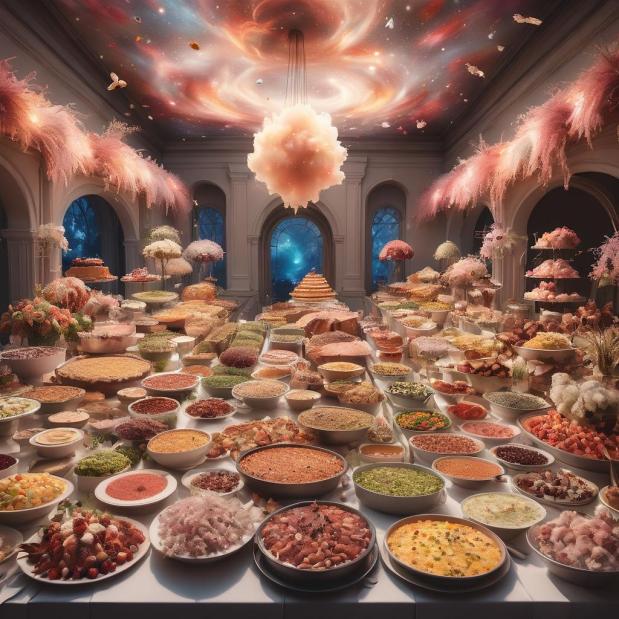
Dreams can be so weird. I’m a Type 2 Diabetic, so there are lots and lots of foods I can’t eat. I have this constantly recurring dream of a buffet so big, it’s the size of a mall. You have to ride a bicycle from one end to the other. And it smells amazing. And it’s all vegan. But in my dream, I never get to eat. I’ve had this dream so often, that many times I know it’s a dream.

Our local friendly AI tells us that a dream is, “a series of thoughts, feelings, or images that the mind creates. . .”. Despite that, they seem so real, don’t they? Samsara is no different. Everything we experience – thoughts, feelings, encounters with objects or other people – are all mental representations. They are transformations of our own consciousness.

It’s very hard to realize the dreamlike quality of samsara. Most of us go through our entire lives never once questioning the so-called ‘reality’ we experience. What does our prayer mean when it says “may I know that I dream while dreaming”? To me it means to remember that in samsara the struggle may seem real, but it’s not. Nothing is ‘real’ as we experience it. That is not to say that we’re all dreaming samsara into being. There is an Absolute Truth, but with our limited senses, we’re not able to perceive it.

Why pray to know we’re dreaming while dreaming? Although I have nightmares at times, most of my dreams are like the buffet. They’re tantalizing to my senses. They seem to satisfy some longed for wish. Dreams are seductive and to a degree hypnotic. And they’re all-encompassing. That seductive quality draws us in deeper and deeper. We never question the dream. I never question who would build a buffet the size of a mall. I simply accept it as what is.

In samsara, we behave the same way. If we buy into the dream of constant unending struggle and desire, we suffer. We lose track of who we truly are. The Dharma is always there to remind us of the dreamlike quality of samsara. It keeps us from investing ourselves entirely in a dream that will never satisfy. Samsara covers up who we truly are. The Dharma uncovers who we truly are and helps us discover our own Buddha Nature in the midst of the nightmare that is samsara.

ii. How would I explain this to someone else?

I’d start by asking them to name one thing that has remained the same throughout the years of their life. I don’t know of anyone who can give an honest answer to that question.

After all, what has stayed the same for any of us? Certainly not our bodies, not our dreams and aspirations, not even our perception of reality remains the same. The cool thing about the Dharma is that it is unchanging. The Dharma is that which holds. It underlies and supports all that we experience. When we have those vague feelings of dissatisfaction with a life that feels empty, this is the Dharma peeking through the dream of samsara. All in samsara is impermanent, insubstantial and dependent on causes and conditions.

We bear witness to this everyday in even the simplest of things. The sun shines in the day, but at night it’s gone from our skies. We’re born tiny babies, but we grow up, grow old and eventually die. Nothing in samsara is unchanging.

In samsara, we are drunk on distraction. Our cravings know no bounds, and this drives us to struggle ever harder, and we suffer. Then we seek distraction from our suffering and a new craving arises and on and on. This is the vicious cycle of samsara. We can free ourselves by studying the Dharma. Nothing else can free us from the nightmare of samsara. The blessing of the Dharma is that in the midst of the nightmare of samsara, it shows us what truly is and frees us of the cycle of struggle and desire.

iii. How do I bring this into my life?

When food is used on TV such as a Thanksgiving ad, the turkey is not cooked. A blow torch is used to ‘brown’ the outside, toilet paper is stuffed in the cavity to give it a nice plump appearance, shoe polish is used to get that perfect brown look. Back when I ate meat, I would have totally tried to eat that raw shoe polish covered turkey. And it would have poisoned me.

Just so in samsara. Nothing is what it seems to be, yet most of us gorge on seductive dreams that poison us with greed, envy, or craving for things we can’t have. When I began to study the Dharma, I gradually lost ‘faith’ in the illusions of samsara.

I bring this into my life by reciting prayers, by practicing, by reminding myself throughout the day that nothing is as it seems. This may seem pretty basic, but here’s the thing. When I’m on the cushion meditating, I totally understand and even experience the dreamlike quality of samsara. But my mind still gets caught up in samsara. I still forget sometimes that nothing is as it seems. When afflictive emotions arise, it’s tempting sometimes to let myself get sucked in by them.

When these things happen, I take a step back, breathe and recite mantra. Or I pick up my prayer beads and do mantra for a couple of minutes. For me, it still takes effort to live in samsara and not be sucked in by it. Despite that, my Buddha Nature is always trying to break through.

I’d like to say that once I feel my Buddha Nature peeking through, samsara falls away and dissolves like the dream that it is. That’s not what happens. But samsara does lose a lot of its grip on me. It becomes more transparent and less substantial. This is something we can all do. Buddha Nature is always there, shining through samsara, trying to give us liberation, if only for a few moments at a time.

On transformations of consciousness . . .

On transformations of consciousness . . .

All notions of subject and object, self and selves, phenomena and characteristics are mere transformations of consciousness.

i.   What does this mean to me?

When I was in high school we went on a field trip to Manhattan, to Broadway in particular. We went to see a matinee magic show. I was thrilled with the performance. At some points I found myself asking, “How’d he do that?”

Now that I look back on it, it was a strange experience to participate in the show. I say ‘participate’ on purpose because magic shows really need audience participation. Even if only for a few seconds at a time, the audience has to believe what they’re seeing is ‘true’. So, while watching the show I experienced two realities almost simultaneously. “Oh no! There’s a lady on stage being sawed in half.” And at nearly the same second I’d be thinking, “That’s impossible. He’d be in big trouble for murder.” And other thoughts like, “where’s the blood”? Why isn’t she screaming?” And so on. The point is I believed what my eyes told me was happening but at the same time I knew it couldn’t be true.

This line of today’s prayer is very much telling us that samsara is like a magic show. The big difference is that it’s as though most of us live our lives on the magician’s stage, and never question the ‘magic’.

This line of the prayer begins with “All notions of subject and object . . . are mere transformations of consciousness.” What could this mean? Is it saying that there’s no reality out there? Is it saying that we live on the magician’s stage and there is no theater beyond, just an empty void? Far from it. After all, how do we perceive the world? Our eyes see light bouncing off an object of a certain size and configuration, and instantly the image of a table arises in the mind. Could you fit a whole table inside your head? Of course not. But an image fits in the mind just fine.

Let’s take a look at consciousness. Our local friendly AI tells us that, among other things, consciousness is, “…the state of being aware of yourself and the world around you…”. Notice that nothing is said about perception. The definition says “…being aware of. . . “. This means that consciousness demands at least two things: a seer and that which is being seen. But oddly our prayer says this isn’t so. According to our prayer, any idea that the seer and that which is seen are two separate things is an incorrect understanding. Rather, both are “mere transformations of consciousness only.” And if we look more closely at transformation, it means, “a thorough or dramatic change in form or appearance.”

When I first learned this prayer, I was like – what do you mean ‘mere transformation of consciousness’? Are we dreaming the world into life? No. Nothing like that. Let’s go back to the magic show. When we watch, we are witnessing two kinds of ‘truth’. The first and easiest truth is that the magician is doing magic. The underlying truth is years and years of practice that allow the magician to trick the eye and the mind.

Even still, we could question if the magic show is even there. The answer is yes. There is some underlying truth there but with our limited senses, we can’t know what it is.

ii. How would I explain this to someone else?

As long as we are conscious, we are aware of what’s around us. The mind builds meticulous images for us even if it’s based on just a sound. When we hear a police siren, we immediately have an image of a car speeding along with flashing lights. But where did that car come from? It comes from our own experiences. In other words, it comes from our own consciousness arising in the mind as a transformation of our already existing consciousness that is there every second of everyday. So we can see that there are not two “things”. There is a sound (also inside the mind), and there’s your image of the police car. Both exist within your consciousness. There is only one consciousness at work here: yours. The ‘experiences’ we believe we have are all transformations of that consciousness.

You know how when you wake up from a bad dream, you’re really relieved to find yourself safe in bed? When we talk about the dream, we don’t say things like, “Last night I went to visit this strange place where everyone has three eyes and a mouthful of razor sharp teeth, and one of them kept saying my name and I was running.” No. We say something like, “I had a really weird dream last night.” What does this actually mean? It means that our whole experience of the dream was merely a transformation of our own consciousness. The underlying truth in this case is the so-called ‘reality’ that we wake up to. But even this reality is a transformation of consciousness at every turn.

This does not mean that everything is a dream. What it does mean is that our way of experiencing the world works much the same way as a dream. Which is to say, we experience transformations of our own consciousness in our day to day lives.

iii. How do I bring this into my life?

When I first learned this, it was a difficult teaching for me. I couldn’t escape the nihilistic idea that the teaching was saying there is no reality. This is all a dream.

It was only gradually that I began to see the usefulness and liberating quality of this teaching. For me it began with negative emotions. I found that if I could just take a step back, I could recognize that the anger or frustration or whatever, was nothing new. That same energy is always there. It’s my own thoughts that are causing me to experience that particular transformation of consciousness as negative or hurtful. And guess what? Our thoughts are also transformations of consciousness.

As I live with this teaching, I find myself coming back to how to know when something is ‘real’ in samsara. Is it substantial? Is it permanent? Is it dependent on various causes and conditions? When I combine this with the teaching that all we experience is mere transformation of consciousness, it feels very liberating.

It makes me realize that all in samsara (including me) is subject to aging, disease and death. With this in mind, I can navigate my life and walk the path with deliberation. It doesn’t mean that I can call up utility providers and let them know I won’t be paying anymore because all of this is just a transformation of consciousness. If I did that, I would experience a transformation to homelessness. No. I can’t do that. But this prayer offers liberation from samsara. I trust that the Dharma is that which holds. I trust that Buddha Nature is whole, complete and not subject to birth, aging, disease and death.

Knowing and understanding this, I am free to operate as though I’m watching that magic show. “Yes,” I say to myself, “this is what I see – a magic trick. And in conventional reality I will participate in the show.” The blessing of this teaching is that it allows the freedom of choosing which parts of the magic show I’m going to participate in. I don’t have to rush through life addicted to rocket fuel strength coffee just to reach some goal that I absolutely believe will satisfy me. In samsara, nothing satisfies.

Am I going to be compassionate and have a loving heart for all sentient beings? Yes. Despite the dream-like quality of samsara, I have a duty to ease the suffering of sentient beings caught up in the nightmare of samsara. This teaching allows me to participate in conventional reality while at the same time acknowledging that all that I experience is a transformation of my own consciousness. There is no one being cut in half. I can choose to understand that and live my life in accordance with the Dharma and my own Buddha Nature.

On the roaring dragon (Part 3). . .

On the roaring dragon (Part 3). . .

Like the thundering roar of a dragon, the resonant voice of the Dharma  

awakens us from afflictive emotions and frees us from the chains of karma.

Dispelling the darkness of ignorance, the sword of wisdom cuts through all our suffering.

How do I bring this into my life?

i.

When I think of bringing this prayer in my life, the words that jump out at me are “sword of wisdom” and “all our suffering.” Samsara is a realm of struggle and desire. Most chase after struggle and desire unceasingly. If samsara has existed for innumerable eons, what sword could be so powerful as to through “all our suffering?”

Our prayer tells us that only after “dispelling the darkness of ignorance” can this “sword of wisdom” cut through “all our suffering”. Remember that ‘wisdom’ has its roots in ‘vision’, as in to see things as they truly are.

If we go back further in the prayer there are four distinct parts to being freed of all our suffering. First we must be awakened “from the sleep of afflictive emotions. . .”. Second we must be freed from “the chains of karma.” Thirdly the “darkness of ignorance” must be dispelled. And fourthly we get to the sword of wisdom which “cuts through all our suffering.”

ii.

It’s kind of like a recipe, isn’t it? Or a set of instructions to build something. But do we want to build anything here in samsara where all is impermanent, insubstantial and dependent? That would be an exercise in futility and would only lead to more suffering.

What we want is a recipe. What does a recipe do? It shows you how to use what you already have to transform your ingredients into something different. This prayer introduces nothing new. We already have the Dharma all around us. The sleep of afflictive emotions lulls most of us into sleep. The chains of karma have entangled us all our lives in samsara. Ignorance can seem to be an impenetrable darkness. And of course suffering is the default setting in samsara. These are our ingredients.

When I think of bringing this into my life, there’s nothing to bring. All the ingredients of the recipe are already here. The tools of transformation are the “resonant voice of the Dharma” and the “sword of wisdom”. It’s interesting that the sword of wisdom dispels completely the darkness we call ignorance. Suffering, however is merely cut through by the sword of wisdom. Seeing clearly and seeing things as they truly are is enough to dispel ignorance and free us in an instant from suffering.

iii.

In bringing this little prayer into my life, I become aware, awake. The ingredients of afflictive emotions, the chains of karma, the darkness of ignorance, the suffering of being in samsara become starkly present for me. This prayer helps me the most I think in hearing the “resonant” voice of the Dharma. This prayer teaches me to attune to the resonant voice of the Dharma and let it resonate with my own Buddha Nature.

Perhaps the most important gift of bringing this prayer into my life is that quality of feeling starkly awake to samsara. Then there is the sleep of afflictive emotions. Again the prayer offers us the resonant voice of the Dharma to resonate with our own Buddha Nature and wake up and see what is. There are the chains of karma binding us to samsara. And once again the prayer offers us the “thundering roar” of the resonant voice of the Dharma. And lastly there is the darkness of ignorance and the suffering of suffering. And here the prayer offers the sword of wisdom that banishes ignorance. When it comes to suffering, no need to settle it bit by bit, but rather the sword of wisdom will cut a clear swath through suffering in an instant.

The beauty of this prayer is we don’t have to import anything from anywhere. Everything we need is already here in our enlightened Buddha Nature. We know how to wield the sword of wisdom: let the voice of the Dharma resonate with who we truly are.

On the roaring dragon… (Part 2)

On the roaring dragon… (Part 2)

Like the thundering roar of a dragon, the resonant voice of the Dharma  

awakens us from afflictive emotions and frees us from the chains of karma.

Dispelling the darkness of ignorance, the sword of wisdom cuts through all our suffering.

How would I explain this to someone else?

i.

After the alarm goes off in the morning, do you ever fall asleep again and dream that you woke up, got ready for work and even went to work? That dream seems so real, doesn’t it? In fact, when the alarm goes off again (because you snoozed it), it can be downright annoying to have to actually get out of bed and get ready ‘again’.

Samsara is much the same way. We go about our daily lives believing we’re wide awake. But really we’re in a kind of deep sleep of afflictive emotions and wrong views. I don’t mean we’re some kind of zombies sleepwalking through life. But rather that afflictive emotions and wrong views distort our experiences into an almost dreamlike state.

ii.

Our prayer begins by telling us that the voice of the Dharma is “Like the thundering roar of a dragon.” Remember that in eastern lore, Japanese dragons for instance, aren’t big scary fire-breathing monsters, but rather, “…powerful and wise guardians that shield us from universal dangers and impart their wisdom.” Keeping this in mind, why does the voice of the Dharma have to be “Like the thundering roar of a dragon”? It’s mostly because, like we’ve talked about, we are almost wholly asleep in samsara. It’s difficult to awaken us from our dreamlike experiences of samsara.

Our prayer tells us that like a roaring thundering dragon, “the resonant voice of the Dharma awakens us. . .”.  Why resonant? Because the Dharma is the truth of how things are. A part of us is always awake, always knowing the truth of things as they truly are. We call this our Buddha Nature. More accurately, our Buddha Nature isn’t a “part of us”. It’s who we truly are. How do we know that? Because our prayer tells us of the “resonant voice” of the Dharma. What is it resonating with?

iii.

Where does the sky go on a cloudy, stormy day? Does it disappear? Well, yes and no. From our perspective, the sky disappears, but we know that once all the clouds blow away, what remains is a clear blue sky. Our Buddha Nature is like that. Just because we see rain clouds, we don’t believe the clouds are part of the sky. We know that in fact, nothing has changed about the blue sky. It’s still there. It’s just covered up by what one of our other prayers calls “incidental stains”.

Why is it so important to understand that the clouds are merely laid over the blue sky? Because our Buddha Nature is much the same way. The incidental stains of afflictive emotions and wrong views merely cover our unchanging, ever-present Buddha Nature. This is why the voice of the Dharma is “resonant”. It resonates with our Buddha Nature.

What’s this talk about how the voice of the Dharma “frees us from the chains of karma?” Don’t we want good karma? Don’t we want just our bad karma to go away? Remember, we were born into samsara, a realm of struggle and desire, because our karma drew us here to be born into bodies that are subject to birth, aging, disease, and death.  Even good karma is still karma, and it still binds us to samsara. What we want is to have no karma (or as little as possible) in the end.

iv.

If you lit a taper candle in a large blindingly dark room, would there be a little light? Or would that candle light up the whole room? We know from experience that we’d have a very small circle of light in a dark room. But the very last line of our prayer introduces us to the notion of a “sword of wisdom” that dispels “the darkness of ignorance.” Samsara is a dark place, full of the darkness of ignorance and the suffering of suffering. So what exactly does this sword of wisdom do? It dispels the darkness of ignorance. Our local friendly AI tells us that ‘dispel’ means to “make a (doubt, feeling or belief) disappear.”

Wow. That’s impressive. Our prayer is telling us that the “resonant voice of the Dharma awakens” us and the sword of wisdom banishes ignorance. To go back to our earlier example, a simple taper candle would create a small circle of light in a dark room. How much brighter must be the sword of wisdom to banish ignorance altogether?

In this new light we would see that our suffering mostly comes from our reluctance to see things as they are. This again is the power of wisdom – to turn the darkness of samsara into a brilliant light so that we can disentangle ourselves from the chains of suffering that bind us.

This isn’t to say that wisdom will banish our suffering in a moment. But it does mean that we can use skillful means to uncover our own Buddha Nature a bit at a time. Each and every one of us has the capacity to awaken from the stupor of samsara, and use the wisdom of our Buddha Nature to free ourselves of the darkness of ignorance and the suffering of suffering.

What are your thoughts?

On incidental stains. . .

On incidental stains. . .

The basis of purification is the universal-ground primordial awareness, like the sky;

the incidental stains are the object of purification, like clouds;

the purifying agent is the truth of the path, like a relentless wind;

and the fruit of purification is Perfect Enlightenment, like the sky free of clouds.

What does this mean to me?

White is not my color. No matter what I do or how careful I am, I always manage to stunningly stain whatever piece of white clothing I wear. This line of the prayer talks about stains. Interestingly, if we go back, the prayer tells us in the first line that the basis of purification is primordial enlightenment, which is stain-free. There’s nothing to add. Nothing to subtract. It is whole and complete.

The second line of the prayer tells us that any stain on this “primordial awareness” is simply incidental. What are these “stains”? The two biggest stains, or distortions that keep our ever-present enlightened nature hidden are wrong views and afflicted emotions. Why does the prayer call these things “incidental” stains?

One of the definitions of ‘incidental’, according to our local friendly AI is, “accompanying but not a major part of something.” When we look at a red stain on a white surface, we experience the illusion that a portion of the surface is actually red, not white.

However, the quality of whiteness remains. If it didn’t, we could never wash the cloth clean. Our prayer says that the stains to be purified are merely “incidental”. They are not part of the “primordial awareness” that is enlightenment, but rather wholly unrelated. When we look at a stained surface, do we believe the stain is part of the surface, or merely incidental, like red wine on a white tablecloth? We understand the stain overlays the white color of the cloth.

Enlightenment is no different. Wrong views and afflicted emotions may seem to exist on their own. But truthfully, those incidental stains merely overlay our inherent nature.

How would I explain this to someone else?

Our prayer is very specific about a “primordial” awareness, leaving no doubt that enlightenment pre-existed what we think of as ‘me’. Caught up in the illusions of samsara, we believe the distortions of our wrong views and afflicted emotions accurately represent reality. Our inherent true being is Buddha Nature. The more we cover that up with wrong views of ‘me’ and ‘mine’, or act on our afflicted emotions, the more we cover up our true nature with stains, the more we suffer.

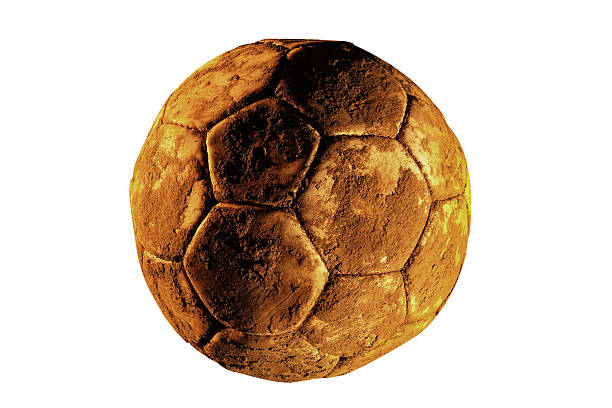
Imagine you had a sparkling clean white ball. Then you roll it in mud. Does that actually change the color of the ball? No. But because of how our afflicted emotions and wrong views work, we now see a brown ball, rather than a white ball covered in mud. And for lifetime after lifetime we have practiced this view to the point where we forget the ball is actually white. Truthfully, the mud is an incidental stain. It is not part of the ball. It is merely covering up the ball’s true color of white.

When it comes to enlightenment, it works the same way. Our prayer comes right out and tells us, “. . .the incidental stains are the object of purification.” We don’t need to be purified in some mysterious way to realize our enlightened nature any more than the ball needs to be dyed white. It is white. All we have to do is remove the mud of wrong views and afflicted emotions, both by-products of being born in samsara.

How do I bring this into my life?

I grew up Christian. In that religion you’re taught there is something inherently bad about you because you were ‘born in sin’. In my adult life, I refute that. I have experienced Buddha Nature in myself and others. In those moments of overwhelming compassion, I understand that enlightenment is primordial, already there.

When we see someone laboring under the delusions of samsara and suffering greatly, our Buddha Nature realizes something is wrong. Suffering is not inherent to what we are. It is an incidental stain upon our primordial enlightenment.

In samsara we have the Dharma as our guide to who we truly are. Does that mean we’ll wake up one day and float instead of walk? No. But it does mean that with the Dharma we can come to understand that what we experience in samsara is illusion. We can learn to see things as they truly are.

This happens to me in the ordinary course of my life. I could be in the supermarket, in traffic, or getting gas. Suddenly my experience of samsara will shift. And I notice that we are all, in some essential way, asleep. And we’re so caught up in the nightmare that we forget reality as it truly is even exists.

When I have these fleeting moments of insight, I pray that all may be free of suffering and the causes of suffering and that all may embrace happiness and the causes of happiness. In those few seconds I’m aware there is no ‘me’, no ‘them’, no separation.

Everyone has these moments of insight. The reason we’re all able to have these moments is that our true nature is always trying to shine through the mud of samsara. As my teacher the Venerable Tashi Nyima says, “It’s not going to be okay, it’s okay right now”. And that’s because enlightenment is never more than a breath away.

On the basis . . .

On the basis . . .

The basis of purification is the universal-ground primordial awareness, like the sky;

the incidental stains are the object of purification, like clouds;

the purifying agent is the truth of the path, like a relentless wind;

and the fruit of purification is Perfect Enlightenment, like the sky free of clouds.

What does this mean to me?

It’s said that enlightenment is inevitable. How can it be that something we don’t understand will inevitably happen to us? The closest understanding we have of this is what we call ‘death’.

We all understand the inevitability of death, although we don’t understand death itself. Why is death inevitable? It’s our karma that caused us to be born into a human body. And that body is subject to birth, aging, disease, and death.  

Enlightenment is not subject to cessation. It doesn’t arise, doesn’t go, it simply is. Our prayer says the basis of purification (or enlightenment) is the “…primordial awareness…” that inherently dwells within us just as the sky is always there whether we see it or not. It’s been a while, so I had to look up primordial. My friendly AI tells me that primordial means “first created or developed, or existing from the beginning.”

Our prayer says that “The basis of purification” is the “…universal-ground primordial awareness…”. The prayer tells us in the very first line, ‘No need to go searching for enlightenment. It’s already there.’ All we have to do is become aware of it.

How would I explain this to someone else?

How often do we notice the sky? I don’t mean because of bad weather. I mean how often do we come to a literal halt and turn our full attention to the sky? For me, it’s almost exclusively when a hurricane is coming. Once you see those circling clouds, it’s something you never forget.

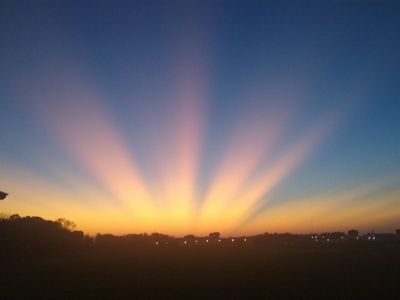
On a regular day in our lives, do we forget the sky is there? Of course not. The sky is in our peripheral vision anytime we go outside. Go to any window and there it is – the sky just doing its thing. It’s there when we wake up, and we take for granted that it will be there tomorrow and the next day, and so on.

Enlightenment is very much the same way. It is always there because it’s primordial, it came first. So how come it feels like enlightenment is a bridge too far? Not me, I say to myself.  For those people in the scriptures from forever ago, sure, enlightenment was happening all the time. But me? Enlightened? No. Not happening. Sometimes it feels like I’m so entangled in the swamps of samsara, so lost in the distractions of my mind that enlightenment seems distant, even fantastical.

But our prayer tells us this is not so. Enlightenment has no beginning, no end. It simply is. Everyone’s mind in each lifetime comes into existence with primordial enlightenment already there. It’s the clouds of our own wrong views and afflicted emotions that stop us from seeing the clear blue sky of enlightenment that is always there.

How do I bring this into my life?

You know when you get really mad at someone for wronging you somehow?  When that happens to me, in the first few seconds, I forget everything. I forget enlightenment is inevitable for all beings. I forget everyone has Buddha Nature. I forget there is no true separation between ‘me’ and the ‘other’ person. In those crucial seconds, I want nothing more than to open my mouth and let my anger have at them.

Over the years, with practice, I’ve learned that absolutely never should I open my mouth when I feel like that. Ever. As soon as the first few seconds pass, it all comes back to me. We all stand under the same sky. We all will be inevitably enlightened. We all have the same Buddha Nature.

The place where I get the most practice is at work. Sometimes when people call, I can barely get my name out before they start yelling at me. And believe me when I tell you, they have a lot to say.

Even after years of practice, the first thing I want to do is light the powder keg of my temper and yell right back. But I wait out those few seconds by repeating mantra. Anyone will do. As soon as that urgency to react passes, I can see clearly. I remember everything. I remember that we all suffer in samsara. Every one of us wants to be happy.

With that realization comes the remembrance that we all have Buddha Nature. Inevitably we will all realize our true nature, and in that moment we’ll know that enlightenment has never been more than a heartbeat away.

In real time, this happens in moments. As soon as I remember, my compassionate heart takes over.  I remind myself that I have the capacity to be peaceful, to act with equanimity, to be compassionate.  This brings a measure of peace to the interaction.

We all have this capacity to remember. We all have the capacity to realize that enlightenment isn’t something to be achieved, it is something to be uncovered. Because, like the sky, it’s always there.