
Currently I’m studying Heart Treasure of the Enlightened Ones with a Dharma friend, the Venerable Tashi Nyima.
This is my contemplation on the first two lines of verse 45 of the root text of Heart Treasure of the Enlightened Ones.

“To recognize sounds as mantra is the crucial point of recitation practice;
Clinging to sound as pleasant or unpleasant is liberated into its own nature.
Free of grasping, the spontaneous sound of samsara and nirvana is the voice of the six syllables.
In the self-liberation of hearing, recite the six-syllable mantra.”
Full Disclosure:
Sounds have been seductive for me all my life, especially the sound of a good story.
Written Sunday, November 9, 5:00AM
Explain to someone else (making it my own)
I grew up a city girl—Bronx, New York. For as long as I can remember, I’ve lived in a place where there was constant, loud noise. I rode home from school on noisy buses with squeaky brakes and noisy kids. I bought pizza from a shop window while the subway rumbled past behind me on its elevated track, brakes screeching, iron against iron. I fell asleep to the distant sound of ambulances and police cars screaming through the night. Then later, toward the very early end of my childhood, and the beginning of my parents’ long drawn out divorce, there was the screaming sound of human suffering as they yelled at each other and shouted unbearable truths into the night, every syllable a testament to their own suffering in samsara.
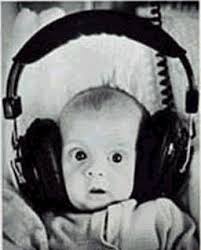 If we are born with the blessing of hearing, we all have our own very personal history with sound. When it comes to sound, there doesn’t seem to be a ‘neutral’. We either want to hear it, or we don’t. We even at some point designated our hands as stand-in listeners. Was it the nineties that brought in the famous “talk to the hand” gesture?
Whatever our relationship with sound, we accept it, as we do with all things in samsara, as though it had some external reality, independent of ourselves. This is so patently false, that we can literally become ‘deaf’ to sounds that we hear all the time. How many of us actually hear the ‘sound’ of our car when we’re driving? Unless there’s something wrong, the sounds of the engine just blend into our environment.
As we move through our very noisy, very distracting twenty-first century lives, we inundate ourselves with sound. Driving home from work with my windows down, I hear the radios in people’s cars. Wow. If it’s not a commercial yelling out the glamours and favors of the newest beer, it’s the DJ opining about a movie star’s latest faux paus, or it’s a song with a raging beat that can do nothing but inspire agitation in the listener. As I drive home, and I’m sitting at a traffic light listening, I often think to myself…what? You didn’t get enough agitation at work today? Come visit my job. I’ll fix you right up.
In our busily mad rush through samsara, we can forget completely the actual nature of sound. Like all things in samsara, sound is impermanent, insubstantial, and dependent. Once we realize this, it becomes clear that the perception of ‘good’ or ‘bad’ sounds arises from an agitated, clinging mind. Mantra, on the other hand is that sound which protects the mind from clinging, from agitation, from afflicted emotions. A mind thus protected will be disturbed by no sound that can possibly arise in samsara. Dilgo Khyentse puts it like this, “If you perceive all sounds as mantra, good or bad news will no more disturb you than the wind can disturb a mountain.”
That’s a pretty bold claim, isn’t? No news, no matter how disturbing, can agitate the mind protected by mantra? I haven’t experienced this, but I can imagine that any sound perceived by a mind free of clinging, would simply sound like mantra—the undisturbed resonance of empty luminosity.
***
Apply to a past situation (how would it have been different?)
I wrote my very first short story in second grade. It was three paragraphs long, written in pencil on a piece of loose leaf paper. It’s been a love affair with sound ever since. People ask me sometimes how I write stories. I usually say something glib like, “I get inspired, then I write it down.” This is very far from the truth, but it’s nearly impossible to explain what actually happens.
What really happened when I used to write stories is that I would hear a melody in my mind. The melody was made up words. In a sense the words were the music. The melody would go round and round in my mind and echo so beautifully, that I had to write it down so that others could hear the same beauty I was experiencing. What I wrote down ended up being a story.
Words and the sounds they make have always been a focus of my life. My mother, while not an extraordinarily cruel woman, could say extraordinarily cruel things. In a sense, it was from her that I learned the power of words. When I was in my twenties, my mother and I had an argument, and she started to cry. I remember saying, “I don’t care if I make you cry. You’ve made me cry enough times.”
 Wow. I suffered for years for saying that. Every time I thought of those words, I felt like the slimiest bit of slime on a pond laden with scum. The guilt over saying that has only recently dissolved as I’ve studied the Dharma. What I’ve been able to see is that it’s downright astonishing how a few syllables can cause such prolonged suffering.
Looking back on that Fateful Day in my life, I might notice that I spoke entirely out of afflicted emotions. I might notice that if I had had the capacity to take a step back and establish a moment of peace and clarity, I might have thought those syllables, but I wouldn’t have said them. I can notice that there were many thoughts going through my mind at that moment, and what I actually allowed to pass my lips was the least cruel of my thoughts.
If I had been able to take a step back, breathe, and listen to my rushing thoughts, I would have noticed that the wise thing to do was to end the encounter long before it reached the point of uttering those words. Had I been able to take a breath, I may have chosen to be silent rather than put causes for suffering into my future by using my power with words to inflict anguish on another being.
***
Apply to an (ongoing) present situation (how does it matter today?)
The biggest ongoing situation in my life right now is the 125 Vow. Okay. A little bit of full disclosure here. Before I began studying the Dharma, you couldn’t have paid me to take a vow. Are you kidding? Have you read the Old Testament? I’ll be honest. I used to think nuns and priests were really, really brave people to be making promises to a god who made Don Corleone look like a nice, mellow old guy. I mean, who wants to make promises to a god who smites his enemies with plagues of locusts? What if He decides you’re His enemy? Then what? What if you made a promise (a vow, no less) to Jehovah, and then you broke it? He’d probably smite you so bad, your grandkids’ grandkids would be sorry. So my thinking went at the time.
But after studying the Dharma and making some experimental vows here and there (little one day vows, nothing too grand to start with), I began to understand how vows work in Buddhism. What, after all, is a vow? I think it can be simplified by saying it’s a string of meaningful syllables spoken with intent. One of the wonderful things I’ve found about taking a vow is that something happens in the mind. I’ve forgotten what the word is, but it means that the mind becomes focused on a purpose. In application, what happens is the mind begins to look for ways to fulfill the vow. I don’t mean that you sit puzzling over it, and stay up nights trying to figure things out. No. It’s not like that at all. In fact, it’s just the opposite. The mind begins to see the world in terms of the vow you’ve taken.
I’ve taken a vow to provide 125 hats and scarves to the Little Lamas by November 1, 2015. The day I made the vow, nothing really happened. But I know how this works now, so I didn’t really expect anything so soon.
Ideally, I would like to knit (with friends) to provide the hats and scarves. Sometimes it’s a bit hard finding the Jonang colors of gold and maroon. I buy yarn from a mill ends supplier on E-bay. The most economical way I’ve found to do that is to by mill ends yarn by the pound. The only catch is, you can’t choose the colors. You get five pounds of high end yarn in beautiful colors. In my last order, there wasn’t one maroon or gold skein of yarn to be found.
The day after I took the vow, I went to check out my E-Bay supplier’s online store, not really looking for anything in particular, and guess what? There were a couple of pounds of gold and maroon yarn for sale! Of course, I grabbed them. That’s how vows work. The vow becomes the activity of your life.
What I’ve found with taking vows in the past, is that a sort of side-effect is that they protect my mind. There are only so many hours in a day, so necessarily, if I take a vow to do something, there are going to be other things that I can’t do. When I’ve taken a vow to do something, I find that my mind eliminates those ‘other’ things which usually turn out to be pretty unnecessary anyway. Along with those activities being eliminated, the thoughts about the activities are also (effortlessly) let go. In other words, the mind’s activity of clinging decreases as a natural result of taking a vow. Interestingly, the mind won’t cling to the vow itself. I’m not sure I understand that, but that’s what I experience.
 In applying Patrul Rinpoche’s lines to this experience, what I find is that the vow is a kind of ongoing mantra in my mind. In a very real sense, I’m beginning to see the world in terms of my vow to support the efforts of the Little Lamas so that they may go forth and uphold the Jonang Lineage. The ‘sound’ of the vow in my mind is a kind of mantra of constant peace. When afflicted emotions arise, it’s as though their power is robbed by the presence and constancy of that peace. I experience this peace as a state of non-clinging, and I find that afflicted emotions can’t co-exist with it. I think this is a mild experience of what Patrul Rinpoche means when he says, “Clinging to sound as pleasant or unpleasant is liberated into its own nature.” The nature of sound is impermanent, insubstantial, and dependent. The experiment of living with this vow is showing me the emptiness nature of sound, and although I’m not (by any means) a mountain that can’t be disturbed by wind, I can glimpse at times that it’s possible to live that way.
***
Apply to a potential situation (bringing it home to play)
On Friday, an epoch in my life ended. When I first came to Texas all I had was a job with Big Brother, Inc. and an apartment. I have clung to that job with the tenacity of a zealot clinging to the One True Way. However, as a result of the company I work for being sold, I will no longer occupy a building owned by Big Brother, Inc.. On Friday, as I walked out of those doors for the last time, and got in my car and drove out of the parking lot for the last time, I breathed through my heart and put a smile on my face. There were many afflicted emotions of fear and anxiety arising. But no matter what came up, I calmly recited mantra…om mani peme hum.
I did it this way because I wanted to experience doing mantra in the face of something that could have been very frightening and very fraught with anxiety. What I found (which should perhaps have been self-evident) is that afflicted emotions can’t truly take hold of us without a crucial sound: thought. Thoughts after all, are simply syllables which haven’t been given shape by our vocal cords yet. But vocalized or not, they’re sounds. I also found on Friday, that two sounds cannot co-exist simultaneously in the mind. I’ve been working with this verse all week, and honestly, I didn’t really see the significance or importance of it. But it really hit me on Friday:it’s impossible for two sounds to coexist simultaneously in the mind.
Wow. That’s huge! This means that if you’re reciting mantra, the thoughts that  give shape to fear, anxiety, dread, worry cannot arise. That’s a pretty big deal. In an old time sci fi movie, mantra would have been the Ultimate Peace Ray. And just to be sure this was true, I tried it. Driving home, I actually tried to think a fearful thought and recite mantra simultaneously. Impossible. Cannot be done. Mind was able to switch back and forth very, very quickly and create the illusion of simultaneous thoughts, but it was an illusion.
Knowing that I have the Ultimate Peace Ray in my very own mind, what shall I do on Monday on the new job site. Well, let’s see. Sadly, most people in samsara don’t have their own personal UPR (Ultimate Peace Ray) in their minds. I certainly can’t give them mine. Or can I? Sort of. What I can do that will make a difference is to be the peace that I want to have. At work on Monday, there will be a lot of fear, a lot of anxiety, a lot of frustration, a lot of confusion.
Fear, anxiety, frustration, confusion—those are all sounds. I have a better sound…om mani peme hum. On Monday, in the whirling storm of boxes put on the wrong desks, computer systems that will freeze, telephones that will go to the wrong extensions, and too few surge protectors for too many desks, I will recite the six syllable mantra. I will recall that all these sounds arise from the empty luminosity. I will recall that these sounds arise as mere echoes of the union of wisdom and compassion–the All Ground upon which the mirage of samsara rests. In recalling these things, I will recite the six syllable mantra…om mani padme hum.
 dharma pen