On the fruit of purification. . .

On the fruit of purification. . .

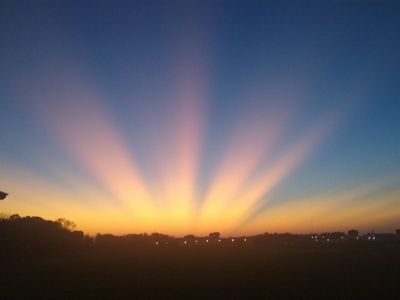
The basis of purification is the universal-ground primordial awareness, like the sky;

the incidental stains are the object of purification, like clouds;

the purifying agent is the truth of the path, like a relentless wind;

and the fruit of purification is Perfect Enlightenment, like the sky free of clouds.

What does this mean to me?

When I lived in Florida, there was a mango tree in the backyard. And every summer it bore mangos. Never once did I go back there and expect to see an orange hanging from a branch. No. Of course not. The true nature of the tree is its mango-ness. If the tree is properly maintained it will bear mangos.

So too with enlightenment. Our prayer in the second line says that the objects of purification are “incidental stains”. If the tree becomes marked up in some way, we recognize those markings are not part of the tree. They’re just incidental stains. All we have to do is carefully clean it and it will still bear mangos. The third line speaks of a purifying agent that is like a “relentless wind”. By the time we get to the fourth line, we are ready to bear the “fruit of purification” which is “Perfect Enlightenment.”

I don’t remember ever seeing a perfect mango. But I do remember that every single fruit was purely a mango. It wasn’t mixed with anything else. From the seed at the core to the soft flesh to the protecting skin, it was perfectly mango through and through.

This short portion of the prayer talks about purifying or purification in four out of four lines. For such a short portion of the prayer, it really hones in on the idea of purification, what needs to be purified, and then finally the fruit of purification. Although it seems to beleaguer a point, a mango tree is exactly that – a tree that if properly cultivated (or purified) will inevitably bear mangos.

When we talk about enlightenment, it’s no different. The prayer starts out by telling us that the “basis of purification” is primordial enlightenment. The quality of enlightenment is already there. Or else what would be the point of purification? We take for granted that a lemon tree will bear lemons, a pear tree will bear pears, and so on. We never step back and say “hmmm. . . it’s a lemon tree, why isn’t it bearing cherries?”

The last line of this portion of the prayer comes right out and says that “the fruit of purification is Perfect Enlightenment”. Why is this possible? Because we are already enlightened. The clear blue sky of our enlightenment is obscured by clouds. But that doesn’t mean that on a cloudy day, the sky is somehow gone, does it? It’s merely obscured by clouds like wrong views and afflicted emotions. But with the right cultivation or “purification”, that clear blue sky of enlightenment is right there, as it always has been and always will be.

How would I explain this to someone else?

 Imagine that you wanted to plant a field of sunflowers. There’s a whole process, right? First you prepare the ground, then you plant the seeds, you water it, cultivate it and voila! Sunflowers.

Enlightenment is nothing like this. As our prayer tells us, “the fruit of purification is Perfect Enlightenment.” It’s already whole, already complete, already there. It’s more like wearing a very dirty pair of eyeglasses in a field of sunflowers. Once you remove the glasses (the obscurations) you immediately see the sunflowers. They are already there, already whole and perfect, and needing nothing to be added.

If this is true, you might wonder, why are we not fully and completely enlightened right now? Well, that’s kind of a trick question. We are at this very moment fully and completely enlightened. It’s like the dirty glasses I described. We’ve worn those glasses for innumerable lifetimes. And for many of us, we have no awareness that they’re even there. We take for granted that the distorted view through the glasses is reality as it truly is.

As I’ve already pointed out, this short section of the prayer talks about purifying and purification no less than four times in four lines. What’s so important about that? The Dharma or the “truth of the path” is all important in even coming to the realization that our view of reality is distorted. So much so that we don’t even know what true reality looks like.

Yet here we are in samsara day in and day out convinced that all we perceive has some inherent truth to it. This why is the Dharma has to be a “relentless wind” in samsara. We must let go of this belief. And once we do, our prayer tells us that enlightenment is inevitable. It tells us unequivocally that “the fruit of purification is Perfect Enlightenment”. When we follow the Dharma it is inevitable that we will experience the clear blue sky of our Perfect Enlightenment.

How do I bring this into my life?

There are some rough days when I’d like to get on a plane, not to go anywhere in particular. No. What I’d like to do is fly above the clouds and just see that clear, unobstructed blue sky.

When samsara wears me down, as it sometimes does, it feels like I’ll never get those glasses clean, never mind be able to take them off.  When this happens I’d like to say there’s a prayer I say, or I get out my prayer beads, or squeeze in a quick meditation. I don’t do any of those things. Even with all I’ve studied, even with all the insights I’ve had, I turn to samsara for relief. It could be anything – eating, watching YouTube, or even scrolling Facebook.

It usually takes about five to ten minutes of this before I feel myself sinking into the torpor of samsara. This instantly wakes me up. I instantly remember the suffering of living in samsara and unquestioningly believing my experience of reality. At that moment, I shift my focus to compassion both for myself and for those wandering lost in samsara with no idea of the Dharma. And I say a prayer that is very grounding for me, “May all be free of suffering and the causes of suffering. May all embrace happiness and the causes of happiness. . .” Doing this act of compassion for myself and others immediately draws my attention back to the Dharma and I bring that compassion to the path.

I feel sometimes that enlightenment is like a subtle, never-ending heartbeat. A heartbeat that has gone on through all our lifetimes and will continue through all our lifetimes to come. Like a cloud free sky, Perfect Enlightenment is always there ready to be realized, ready to give us glimpses when we’re receptive.

When I began working with this prayer I believed that we were like Perfect Enlightenment. Now I understand that we are Perfect Enlightenment simply being uncovered one tiny glimpse at a time.

On the relentless wind. . .

On the relentless wind. . .

The basis of purification is the universal-ground primordial awareness, like the sky;

the incidental stains are the object of purification, like clouds;

the purifying agent is the truth of the path, like a relentless wind;

and the fruit of purification is Perfect Enlightenment, like the sky free of clouds.

What does this mean to me?

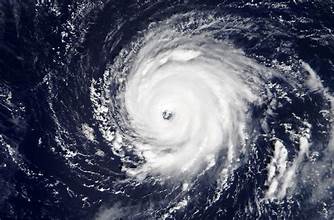
I lived in South Florida for around ten years. Hurricane season was the absolute worst. The scariest part was hunkering down inside behind your boarded up windows and listening to that raging wind for hours at a time. It was relentless.

Our prayer starts by saying, “the basis of purification” is “primordial awareness, like the sky”. Primordial enlightenment is like a cloud-free sky. The prayer goes on to say that “incidental stains” are what need to be purified.

The third line talks about a “purifying agent” that will clear away the incidental stains such as wrong views and afflicted emotions. So the prayer begins by telling us that our true nature is enlightenment, like a clear blue sky. But there are clouds or “incidental stains” tainting that blue sky.

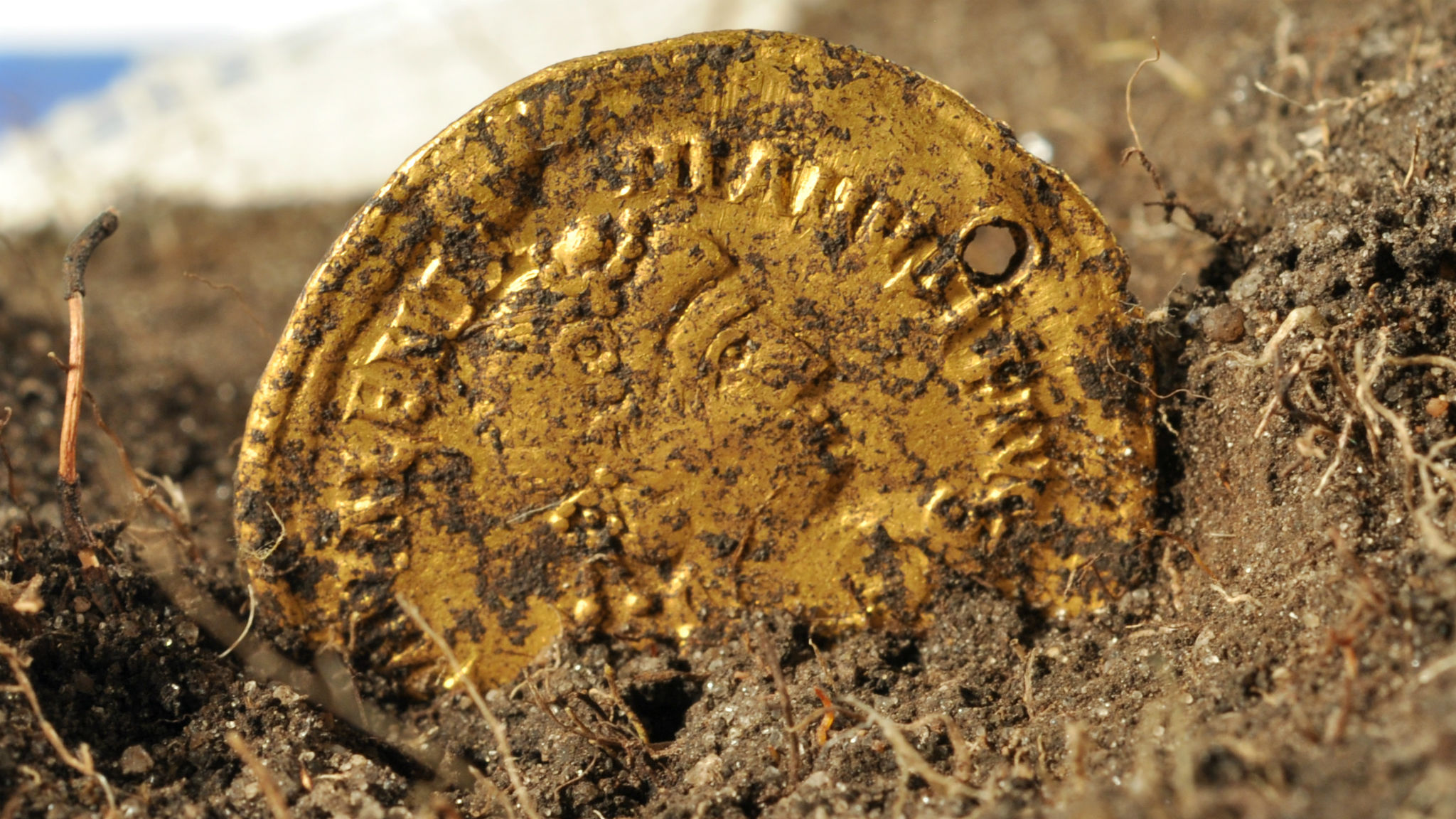
This very much reminds me of digging up an ancient golden coin. When you first look at it, it’s all stained up with grime and dirt. You know you’ll need all kinds of cleansers to remove decades or maybe even centuries of clinging dirt.

Our true nature of enlightenment is like that dirt encrusted coin. We have spent lifetime after lifetime acquiring the encrusted dirt of wrong views and afflicted emotions. Again the prayer is telling us that enlightenment isn’t something to be sought out, but rather something inherent in us that needs to be uncovered.

That sounds pretty daunting, doesn’t it? How do we remove lifetimes of dirt and grime to uncover our true nature? Our prayer outright tells us that “that the purifying agent is the truth of the path” and it’s like a “relentless wind”, just like a hurricane.

How would I explain this to someone else?

Christianity has the idea that ‘sins’ can be washed away by ‘the blood of the lamb [Jesus]’. Thankfully no one has to be crucified for us to uncover our true nature.

Samsara is a realm of struggle and desire. We are forever struggling to fulfill some desire or other. And sadly, even when we get what we thought we wanted, it’s never what we thought it would be. When I was a little girl I watched a lot of Star Trek. I thought it was so cool how they had a talking computer. All they had to do to make things work was press buttons on a console.

Watching that show, I promised myself that when I grew up, I’d have a job where I pressed lots and lots of buttons. Well, here I am some decades later and practically all I do at work is press buttons. Is it everything I thought it would be? I can assure you I’m not visiting different planets every week. Heck, I don’t leave home to go to work.

This on a small somewhat childish scale is what those lost in samsara do for lifetime after lifetime. Sadly, chasing after struggle and desire only leads to suffering. Fortunately , we have the “truth of the path” to cleanse away the incidental stains we have from living in samsara.

What is “the truth of the path”? We call this the Dharma. This is the only cleansing agent we need to uncover our true nature. But how does it work? Is it abrasive like a brillo pad, scrubbing away at us constantly? Well, yes and no. We’re all caught up in the illusions of samsara. There are lifetimes of ground in dirt covering up our true nature.

The Dharma, our prayer tells us, is like a “relentless wind”. I’ve never been in a storm in the desert, but I imagine that anything left out in that sand laden wind would be scrubbed pretty clean. The Dharma is not meant to lull us into a comfortable sleep. We are already asleep. No. The Dharma works to wake us up from the nightmare that is samsara.

How do I bring this into my life?

I have a confession to make. I just adore that snooze feature on my phone. I actually set my alarm for earlier than I need to get up. Why? Because snooze button. The Dharma is like an alarm clock, a warning to wake up! So many people press the snooze button. They say, “I don’t have time to meditate” or “I’m too busy to study the Dharma” or “I’ve got kids. I don’t have a spare moment in my day.” But the Dharma is undeterred. Like a relentless wind, it will blow until you awaken.

Before I began studying the Dharma, I always had this deep seated feeling of being dissatisfied. Not just with my life. It extended to everything. It never gave me a moment’s peace. I felt as though I was wandering a desert, sand as far as the eye could see, a blazing sun overhead. And no matter how much water I drank, I’d be just as thirsty. It would give no relief.

I’d like to say that when I began studying the Dharma, that feeling immediately went away. It didn’t. But gradually over the course of about a year of study, I was less and less dissatisfied. And I can pinpoint the reason. I came to rely less and less on samsara for my sense of satisfaction. I began to experience tiny glimpses of my Buddha Nature.

Don’t get me wrong. I still get caught up in the illusions of samsara, but there’s always a part of my mind that in some way, doesn’t get wholly caught up anymore.

Today when I see people completely caught up in the quagmire of samsara, I do the only thing I know how to do. I recite my go to prayer, “May all be free from suffering and the causes of suffering. May all embrace happiness and the causes of happiness.” Doing this brings me a measure of peace, and I pray it brings peace to others.

There’s a story told of children playing inside a burning house. Their father is outside urgently exhorting them to come out. But the children are very distracted. Today it would be Netflix, iPhones, x-boxes, Instagram, or X fka Twitter.

This again is the relentless wind of the Dharma trying to wake people from the stupor of samsara. And the funny thing is if we simply go in the direction of that relentless wind, things get easier, less exhausting. We’re no longer devoting so much energy to upholding the illusions of samsara.

If we allow ourselves to be caught up in the relentless wind of the Dharma, we will find more and more of the illusions of samsara falling away. We will experience the great wind setting us free of the incidental stains left by samsara. We will find the true nature of our primordial enlightenment uncovered bit by bit. And bit by bit, we will be free of the illusions of samsara.


On incidental stains. . .

On incidental stains. . .

The basis of purification is the universal-ground primordial awareness, like the sky;

the incidental stains are the object of purification, like clouds;

the purifying agent is the truth of the path, like a relentless wind;

and the fruit of purification is Perfect Enlightenment, like the sky free of clouds.

What does this mean to me?

White is not my color. No matter what I do or how careful I am, I always manage to stunningly stain whatever piece of white clothing I wear. This line of the prayer talks about stains. Interestingly, if we go back, the prayer tells us in the first line that the basis of purification is primordial enlightenment, which is stain-free. There’s nothing to add. Nothing to subtract. It is whole and complete.

The second line of the prayer tells us that any stain on this “primordial awareness” is simply incidental. What are these “stains”? The two biggest stains, or distortions that keep our ever-present enlightened nature hidden are wrong views and afflicted emotions. Why does the prayer call these things “incidental” stains?

One of the definitions of ‘incidental’, according to our local friendly AI is, “accompanying but not a major part of something.” When we look at a red stain on a white surface, we experience the illusion that a portion of the surface is actually red, not white.

However, the quality of whiteness remains. If it didn’t, we could never wash the cloth clean. Our prayer says that the stains to be purified are merely “incidental”. They are not part of the “primordial awareness” that is enlightenment, but rather wholly unrelated. When we look at a stained surface, do we believe the stain is part of the surface, or merely incidental, like red wine on a white tablecloth? We understand the stain overlays the white color of the cloth.

Enlightenment is no different. Wrong views and afflicted emotions may seem to exist on their own. But truthfully, those incidental stains merely overlay our inherent nature.

How would I explain this to someone else?

Our prayer is very specific about a “primordial” awareness, leaving no doubt that enlightenment pre-existed what we think of as ‘me’. Caught up in the illusions of samsara, we believe the distortions of our wrong views and afflicted emotions accurately represent reality. Our inherent true being is Buddha Nature. The more we cover that up with wrong views of ‘me’ and ‘mine’, or act on our afflicted emotions, the more we cover up our true nature with stains, the more we suffer.

Imagine you had a sparkling clean white ball. Then you roll it in mud. Does that actually change the color of the ball? No. But because of how our afflicted emotions and wrong views work, we now see a brown ball, rather than a white ball covered in mud. And for lifetime after lifetime we have practiced this view to the point where we forget the ball is actually white. Truthfully, the mud is an incidental stain. It is not part of the ball. It is merely covering up the ball’s true color of white.

When it comes to enlightenment, it works the same way. Our prayer comes right out and tells us, “. . .the incidental stains are the object of purification.” We don’t need to be purified in some mysterious way to realize our enlightened nature any more than the ball needs to be dyed white. It is white. All we have to do is remove the mud of wrong views and afflicted emotions, both by-products of being born in samsara.

How do I bring this into my life?

I grew up Christian. In that religion you’re taught there is something inherently bad about you because you were ‘born in sin’. In my adult life, I refute that. I have experienced Buddha Nature in myself and others. In those moments of overwhelming compassion, I understand that enlightenment is primordial, already there.

When we see someone laboring under the delusions of samsara and suffering greatly, our Buddha Nature realizes something is wrong. Suffering is not inherent to what we are. It is an incidental stain upon our primordial enlightenment.

In samsara we have the Dharma as our guide to who we truly are. Does that mean we’ll wake up one day and float instead of walk? No. But it does mean that with the Dharma we can come to understand that what we experience in samsara is illusion. We can learn to see things as they truly are.

This happens to me in the ordinary course of my life. I could be in the supermarket, in traffic, or getting gas. Suddenly my experience of samsara will shift. And I notice that we are all, in some essential way, asleep. And we’re so caught up in the nightmare that we forget reality as it truly is even exists.

When I have these fleeting moments of insight, I pray that all may be free of suffering and the causes of suffering and that all may embrace happiness and the causes of happiness. In those few seconds I’m aware there is no ‘me’, no ‘them’, no separation.

Everyone has these moments of insight. The reason we’re all able to have these moments is that our true nature is always trying to shine through the mud of samsara. As my teacher the Venerable Tashi Nyima says, “It’s not going to be okay, it’s okay right now”. And that’s because enlightenment is never more than a breath away.

On the basis . . .

On the basis . . .

The basis of purification is the universal-ground primordial awareness, like the sky;

the incidental stains are the object of purification, like clouds;

the purifying agent is the truth of the path, like a relentless wind;

and the fruit of purification is Perfect Enlightenment, like the sky free of clouds.

What does this mean to me?

It’s said that enlightenment is inevitable. How can it be that something we don’t understand will inevitably happen to us? The closest understanding we have of this is what we call ‘death’.

We all understand the inevitability of death, although we don’t understand death itself. Why is death inevitable? It’s our karma that caused us to be born into a human body. And that body is subject to birth, aging, disease, and death.  

Enlightenment is not subject to cessation. It doesn’t arise, doesn’t go, it simply is. Our prayer says the basis of purification (or enlightenment) is the “…primordial awareness…” that inherently dwells within us just as the sky is always there whether we see it or not. It’s been a while, so I had to look up primordial. My friendly AI tells me that primordial means “first created or developed, or existing from the beginning.”

Our prayer says that “The basis of purification” is the “…universal-ground primordial awareness…”. The prayer tells us in the very first line, ‘No need to go searching for enlightenment. It’s already there.’ All we have to do is become aware of it.

How would I explain this to someone else?

How often do we notice the sky? I don’t mean because of bad weather. I mean how often do we come to a literal halt and turn our full attention to the sky? For me, it’s almost exclusively when a hurricane is coming. Once you see those circling clouds, it’s something you never forget.

On a regular day in our lives, do we forget the sky is there? Of course not. The sky is in our peripheral vision anytime we go outside. Go to any window and there it is – the sky just doing its thing. It’s there when we wake up, and we take for granted that it will be there tomorrow and the next day, and so on.

Enlightenment is very much the same way. It is always there because it’s primordial, it came first. So how come it feels like enlightenment is a bridge too far? Not me, I say to myself.  For those people in the scriptures from forever ago, sure, enlightenment was happening all the time. But me? Enlightened? No. Not happening. Sometimes it feels like I’m so entangled in the swamps of samsara, so lost in the distractions of my mind that enlightenment seems distant, even fantastical.

But our prayer tells us this is not so. Enlightenment has no beginning, no end. It simply is. Everyone’s mind in each lifetime comes into existence with primordial enlightenment already there. It’s the clouds of our own wrong views and afflicted emotions that stop us from seeing the clear blue sky of enlightenment that is always there.

How do I bring this into my life?

You know when you get really mad at someone for wronging you somehow?  When that happens to me, in the first few seconds, I forget everything. I forget enlightenment is inevitable for all beings. I forget everyone has Buddha Nature. I forget there is no true separation between ‘me’ and the ‘other’ person. In those crucial seconds, I want nothing more than to open my mouth and let my anger have at them.

Over the years, with practice, I’ve learned that absolutely never should I open my mouth when I feel like that. Ever. As soon as the first few seconds pass, it all comes back to me. We all stand under the same sky. We all will be inevitably enlightened. We all have the same Buddha Nature.

The place where I get the most practice is at work. Sometimes when people call, I can barely get my name out before they start yelling at me. And believe me when I tell you, they have a lot to say.

Even after years of practice, the first thing I want to do is light the powder keg of my temper and yell right back. But I wait out those few seconds by repeating mantra. Anyone will do. As soon as that urgency to react passes, I can see clearly. I remember everything. I remember that we all suffer in samsara. Every one of us wants to be happy.

With that realization comes the remembrance that we all have Buddha Nature. Inevitably we will all realize our true nature, and in that moment we’ll know that enlightenment has never been more than a heartbeat away.

In real time, this happens in moments. As soon as I remember, my compassionate heart takes over.  I remind myself that I have the capacity to be peaceful, to act with equanimity, to be compassionate.  This brings a measure of peace to the interaction.

We all have this capacity to remember. We all have the capacity to realize that enlightenment isn’t something to be achieved, it is something to be uncovered. Because, like the sky, it’s always there.

On enlightenment. . .

On enlightenment. . .

May all be free from suffering and the causes of suffering.
May all embrace happiness and the causes of happiness.
May all abide in peace, free from self grasping.
May all attain the union of wisdom and compassion.

What does this mean to me?

Although we’ve mostly forgotten, “wisdom” has its roots in vision. Not just any vision, but the ability to see things as they truly are. Compassion lets us act on wisdom in a way that reduces suffering.

Wisdom without compassion is like a doctor whose bedside manner could use a little improvement. Imagine your doctor, truthfully, said to you, “You’ve got three months to live. That’s the end of our appointment. Schedule a follow up at the front desk on your way out.” Does the doctor know lots and lots of stuff? He sure does. But his bedside manner – yikes! I don’t think this even rises to the level of wisdom. This is simply knowledge. When we have true wisdom we understand that wisdom without compassion is cruel.

When we have compassion, we feel for the sufferings of our fellow travelers in samsara. But what does that really mean? For me, the biggest part of compassion is generosity. Whether it’s sharing your skills, giving what’s needed, or seeing to it that a turkey survives Thanksgiving.

How would I explain this to someone else?

When we study the Dharma, we’re perpetual students of what is. We don’t have a word for it, but what we’re actually studying is reality ‘is-ing’ in every moment. Reality is dynamic, never static. From this point of view it’s impossible not to see that all in samsara arises and dies. It happens in every moment. It’s happening to us right now.

Recognizing this truth with a compassionate heart moves us to ease the suffering in samara with whatever skillful means we have. Do we walk by a homeless person and say to ourselves, “Well, they’re dying anyway, so why bother doing anything?” Compassion allows us to see this differently as in, “We’re all on the same journey. I’ll do what I can to ease the suffering of our fellow travelers”.

This is the power of the union of wisdom and compassion. We see things as they truly are and at the same time we recognize our joyful obligation to help.

How do I bring this into my everyday life?

My teacher, the Venerable Tashi Nyima teaches that the union of wisdom and compassion is true enlightenment.

Wow, this little prayer isn’t playing around, right?  When I look at this prayer I ask myself why is the order of things the way they are? First we free ourselves from suffering. Then we are instructed to embrace happiness. Then the instruction is to abide in peace. Only after all of this does the prayer talk about the union of wisdom and compassion.

Why was this order of things chosen? Well, it’s very hard to ease the suffering of others if you yourself are suffering terribly. Suffering can disturb the mind. Without a clear mind, how do we see the way to ease the suffering of others?

As to happiness, if you’re desperately unhappy, how can you help others to be happy? If you’re constantly grasping onto “my story”, or the idea of “this is my experience”, then how can you have peace much less offer peace to others?

This, I think is what they tell us on airplanes. If those oxygen masks fall, put your own mask on first, then attempt to help others. The Dharma is much the same way. We must remedy ourselves before seeking to remedy others. Or, as Christianity puts it, ‘remove the beam from your own eye so that you can see clearly to remove the mote from your brother’s eye.’

In whole, this prayer gives us instruction to attain enlightenment in three easy steps. And for just the price of studying and practicing the Dharma, you too be enlightened. Okay, they’re not particularly easy steps. And this isn’t a late-night TV commercial, although I’d argue it ought to be.

In my day to day life, as part of my job, I talk to many people who are suffering terribly . When I take those calls, I focus on answering in a way that gives information and at the same time acknowledges their suffering, their basic humanity, their buddha nature.

Do I get enlightened when I manage to accomplish this? No. But it does shift my world view from ‘me’ and ‘mine’ to ‘all’.  As in may all be free from suffering . We all have these small experiences in samsara where practicing shifts our world perspective and we have a moment of enlightenment. Our buddha nature peeks out and connects to the buddha nature in others, reassuring us that enlightenment is only ever a moment away.

On peace. . .

On peace. . .

May all be free from suffering and the causes of suffering.
May all embrace happiness and the causes of happiness.
May all abide in peace, free from self grasping
May all attain the union of wisdom and compassion.

What does this mean to me?

Who doesn’t want a little more peace in their life? Imagine someone came up to you and said, “here’s a recipe for peace”. What would be in that recipe? Would it be “listen to more opera” or “get more sleep” or maybe even “watch the news more”? That last one’s a joke, of course.

My local friendly AI tells me that peace is, among other things, “a state of tranquility and quiet.” That’s a good hint. Peace is a state of mind. So how does this peace arise in the mind? What are the causes and conditions?

The truth is, the mind is always at peace, like a clear storm-free sky. Hard to believe, right? Emotions, thoughts, desires are all like clouds in that clear blue sky. Peace isn’t imported from outside, it’s inherent. It’s always there. We don’t have to go anywhere special to abide in peace. We can abide in peace by freeing our minds of two pretty big, dark clouds: wrong views and afflicted emotions.

How would I explain this to someone else?

If you had to clean a mahogany floor that had decades of grit and dirt and stains ground into it, what’s the first thing you’d do? We may think the first step should be to get cleaning supplies. But there’s a step before that. The very first thing we have to do is realize that under all that dirt and grime, there is a clean wooden floor. If not, why bother cleaning? We have this realization without thinking about it. We know very well there’s a clean wooden floor there. All we’re doing is uncovering it.

In the same way, the mind is peaceful. The mind is not our turbulent thoughts or our afflicted emotions. When we work with the mind, we call our cleaning stuff prayers, meditation, aspirations, perseverance, and many other names. This prayer tells us that when we are “free from self-grasping”, we abide in peace.

What’s this self-grasping stuff? Can you really grasp yourself so tightly that you have no peace? We sure can. It’s things both big and small.

There are countless ways to grasp onto the self. Perhaps the self-grasping that causes the most suffering, is the distorted concept of “me” and “mine”. This is the biggest departure from peace. It gives us the strong desire to change reality.

This happens all the time at work. I get a lot of emails throughout the day. Sooner or later the thought comes, “I wish they’d stop emailing me!” The truth is that clients are emailing the company I work for. They could care less who responds, as long as it’s from the company I work for. At work, the email deluge isn’t happening to me, it’s just happening.

Clinging to the mistaken concepts of “me” and “mine”, we want to change reality. A more helpful thought would be, “How can I best respond so that clients don’t have to email again?” or “How can I document my files so that people have less causes to email the company?”

Self-grasping is the idea that when reality is not to our liking, we must take drastic, definitive action to change reality. This leads to a great deal of suffering. And of course, peace and suffering cannot coexist. It is the stormy conditions of the mind that need to be changed, not reality.

How would I use this in my daily life?

In my day to day life, I try to abide in peace. But honestly, it’s hard work. As soon as reality becomes inconvenient, I have the nearly irresistible urge to change it. I work with this by breathing and mentally taking a few steps back. I ask myself the question, “How much do I want to suffer?”

As we walk the path, how do we abide in more peace, with less self-grasping? A good start is working with the mind. If I want to suffer lots, I can continue on my futile path to trying to change reality. If I want to suffer less, I can work with changing conditions in my mind. As Pema Chodron puts it, “sounds easy, is not”.

The mind in its natural state is free from self-grasping. The more we learn to recognize the mind free of the stains of wrong views and afflicted emotions, the more we can resonate with our true state through prayers, meditation, or perhaps even smelling a flower. The more often we resonate with the mind’s natural state, the closer we come to abiding in peace, free from self-grasping.

What are your thoughts?

On Happiness. . .

On Happiness. . .

May all be free from suffering and the causes of suffering.
May all embrace happiness and the causes of happiness.
May all abide in peace, free from self grasping
May all attain the union of wisdom and compassion.

What does this mean to me?

Everyone, without exception, wants to be happy. Nobody wakes up in the morning and says over their coffee, “Gee. I hope I have a bad day. I hope nothing goes right.” That would be pretty bizarre.

If that’s so, why aren’t people happy? It’s certainly not for lack of trying. It’s definitely not because we don’t want to be. We all know that having even excessive wealth doesn’t make you blissfully happy. Imagine for a moment having all the material things you want: a high paying stress-free job; the million dollar home; the chauffer; the cook; the on call masseuse. Okay. Maybe the masseuse is just me.

But think about that. If you literally had every single thing you’d ever wanted, would you be deliriously happy? I know I wouldn’t be. The human mind is perverse. There would always be that one thing I want but can’t have. That’s the nature of the game of chasing happiness in samsara. We want happiness, but as Shantideva puts it, “With the very desire for happiness, out of delusion they destroy their own happiness as if it were an enemy.”

How would I explain this to someone else?

If you had your dream job interview tomorrow, would you spend tonight drinking to excess? Of course not. You don’t want to show up for your dream job interview with a hangover. Instead you’d probably make sure you get a good night’s sleep and eat a good breakfast. This is a gross example of putting in place and embracing causes of happiness. To get to the happy outcome of a smooth interview, you have to follow a path. The actions themselves are individual to everyone, but to get anywhere, you need a path to follow.

The Buddha taught that there is a path to the cessation of suffering. I think there are only two things that keep us from following the path the Buddha speaks of: wrong views and afflicted emotions. Isn’t that wonderful? No long lists to memorize, no complicated instructions, no fear you’ll fall into a lake of fire if you do it wrong somehow.

The Dharma keeps things simple. There are three afflicted emotions: attachment, aversion and indifference. Our afflicted emotions color everything we experience. We can’t just see a chair. The elaborations come: I don’t like that shade of blue; it should have arms, I like chairs with arms; it looks uncomfortable.

Our wrong views cause us to see separation and Other where there is none. Unfortunately lifetimes have worn grooves of afflicted emotions and wrong views into our consciousness. It’s to the point where we barely notice their distortion of our experience. But once we notice the distortions of afflicted emotions and wrong views, we’re more than halfway to embracing happiness and the causes of happiness.

How would I bring this into my everyday life?

The cause of afflicted emotions is wrong view. When we think about embracing happiness and the causes of happiness, it seems we should work with wrong views first. How do we do that?

When we practice the Dharma, we learn to see clearly. But I’ll be honest, a chair doesn’t look like a transformation of consciousness to me. It looks like. . . well. . . a chair. However I realize that “seeing” is really recognizing patterns of light. I know the chair is really a bunch of chair shaped atoms and molecules. Or something like that.

I use this understanding to guide me toward embracing happiness and the causes of happiness.

I think the biggest cause for happiness may simply be to see things as they are. Once we see the distortions of our wrong views and afflicted emotions, the illusions of samsara gradually fall away. We loosen our grip on samsara.

Does this mean that I wake up everyday and embrace happiness and the causes of happiness? No. But it does mean that we can view more plainly the causes for happiness when we recognize the distortions of our wrong views and afflicted emotions.

The beauty of the Dharma is that happiness and the causes of happiness look different for everyone. I believe that as we learn to see reality with less and less wrong views, the causes of happiness become clear. As we practice the Dhama, as we learn to clearly see our wrong views and afflicted emotions, we can bring happiness into our experience of samsara a bit at a time.

What are your thoughts?

On suffering…

On suffering…

May all be free from suffering and the causes of suffering.
May all embrace happiness and the causes of happiness.
May all abide in peace, free from self grasping
May all attain the union of wisdom and compassion.

What does this mean to me?

I guess the first question to ask is, what is suffering? Hunger, anger, jealousy, greed, envy, fear – these are all forms of suffering. But perhaps the greatest suffering is wandering lost in samsara. Just the feeling of being lost is suffering. It’s that sinking feeling you get when you’re following GPS and suddenly there’s a ROAD CLOSED sign ahead.

Now what? Which way do you go? In samsara, we have GPS. It’s called the Dharma.

We spend much of our lives suffering needlessly. The Dharma isn’t a guarantee against suffering. The promise the Dharma offers is to show us things as they truly are. It’s kind of like knowing how a magic trick works. When you see the flowers come out of an empty hat, you know there’s a hidden compartment. You know it’s an illusion. This is what the Dharma offers, a chance to see clearly. When we see clearly, we can see the path to the cessation of suffering.

How would I explain this to someone else?

What’s the point of praying for all to be free of suffering when we are surrounded by suffering in samsara? We pray that all will be free not only from suffering, but the causes of suffering.

Samsara is a place of actions (or causes) and consequences. I’ve battled my weight all my life. And at this point, Type II Diabetes is writ large in my life. Every time I test my sugar, I know the result has a cause. Ninety eight percent of the time the cause is what I choose to eat or drink.

For years and years, I made terribly unhealthy choices about my diet. What was I actually doing? I was putting in place causes for suffering. I was making a choice between instant gratification and my long term health. Unfortunately, I made the wrong choices most of my life.

And that’s okay. The Dharma is nothing if not free of irrevocable choices. Will you have karma from a poor choice? Absolutely. Do you have a chance to make different choices? Always. Every time we make a choice we are either putting in place causes for suffering or causes for happiness. Mostly, we choose suffering and we wander lost in samsara.

And that’s okay too. The Dharma teaches us how to recognize choices for what they really are. The act of choosing will certainly create a cause of suffering or a cause of happiness. When we practice the Dharma, we learn discernment. We learn to see the causes of suffering for what they are. Today’s choice is tomorrow’s consequence.

How would I use this teaching in my life?

Today, when I think about suffering, it comes down to small choices.

Does it feel good to lie in bed under the covers at five AM? It sure does.

Each day I know that because of my job, I’ll most likely talk to someone who is suffering terribly. It’s the nature of my job. In those moments I have a chance to make things better, or at least a chance to not make it worse. I can do this by seeing clearly.

I know I have a long day ahead of me. If I get out of bed and say my prayers and meditate, I know I will see more clearly. Does it guarantee I’ll say the right thing? No. But I have less of a chance of saying something that makes things worse.

I’m learning each day how to avoid placing causes of suffering in my life. I don’t always do it. I don’t get out of bed every morning, but mostly I do. And that’s okay. We call it ‘practice’ for a reason, right?

I bring this teaching into my daily life by asking myself a simple question throughout the day: How much do I want to suffer? We can either wander blown about by the winds of samsara or we can use the GPS of the Dharma to put our feet on the path to the cessation of suffering.

What are your thoughts?

On the presence of dew. . .

Written Saturday, October 31, 2015, 11:00 AM

Currently I’m studying The Supplication with a Dharma friend, the Venerable Tashi Nyima.

This is my contemplation on the third verse.

I bow at the feet of the masters who carefully teach that

All conditioned entities are impermanent, unstable, changeable

Phenomena—like a mountain waterfall, like a cloud, like

Lightning, and like dew on a blade of grass.”

Full Disclosure: This is my first contemplation on a whole verse!

Explain to someone else (making it my own)

When I knew I was going to write about this, the first thing I set out to do was to prove it wrong. But to do that, I had to understand it better. What’s this ‘conditioned entities’ thing all about? Well, it’s anything that arises from cause and effect. What? No. That definitely can’t be true because absolutely everything arises from cause and effect. If this is true, that would have to mean that every thing is impermanent, and unstable, and changeable.

I tried really hard (I had two weeks) to think of some ‘unconditioned entity’. But no go. I couldn’t think of one single thing. The moment when my mind was finally forced to that conclusion was pretty heavy duty. I think I was driving home from somewhere and I thought to myself…Yes, it’s true. And…wonderful!

 The tail end of that thought caught me by surprise. Wonderful? Yes! Imagine if the pyramids in Egypt were still sparkling brand new, fresh as the day the Pharaohs got buried there, wouldn’t that be weird? Worse yet, imagine if that really truly horrible meal you ate last year to be polite and not hurt any feelings were still there in your stomach undigested!

dandelion girlYes, I thought to myself, yes. This conditioned thing is good. Imagine a world where cause and effect had no…well…no effect. Ice would never melt, even in hot sun. Our bodies would never age. No. That’s not a good thing—you like having teeth don’t you? And worst of all, I think, karma would be carved in some kind of unforgiving, immutable stone.

This would mean that whatever direction we chose for our lives, we’d be stuck with it. Think about that. Do you really still want the things you wanted when you were sixteen?

In our existence here in samsara, our biggest tug of war with impermanence is that we want selective impermanence. You know, like—I want to age to 25, stop there, never grow older, but keep learning and becoming wiser. But that’s not how it is. We age, we grow, we learn, and if we’re very fortunate, we gain some wisdom along the way. It’s a package deal.

Conditioned existence itself, “like dew on a blade of grass” passes moment to moment without our ever seeing it. The great benefit, the great joy of this is that every moment that arises can become a cause of suffering or a cause of happiness. It’s our choice.

Every moment, it’s our choice.

***

 Apply to a past situation (how would it have been different?)
There’s a scene in an old movie called “The Time Machine”. In it the time traveler moves through hundreds of years in a matter of seconds. You see buildings melt into rubble, then brand new sparkling time machinebuildings rise, then crumble into rubble as he jets forward in time. I was fascinated by that. I wondered when my house would crumble like that, and what would rise in its place.

Decades later I got involved in a relationship. We both vowed that not only would we love each other forever, but we would love each other in EXACTLY the same way we loved each other that day at that moment.

Talk about naïve, right?

I spent a horribly tortuous decade of my life struggling to keep that vow. It was terrifying. As soon as something changed, I felt like—no. No! Things have to stay just like they are—forever. If I could have found Old Man Time, I would have done him in.pushback time

And change did of course come, but not in the way I feared it would. I changed. I wanted different things. I wasn’t in love. I grew tired of the struggle.

All of this struggle had a predictably disastrous outcome—what else could the ending have been but disastrous and painful, and heartbreaking?

If I could go back and whisper in the ear of my younger idealistic self, I would tell her that change is part of life. I would tell her that when we try to hold back the rhythms of cause and effect, we will bring upon ourselves a Tsunami of pain and suffering. I would tell her that in the end change will come, better to welcome it, no matter how frightening. I would whisper that anything permanent is a delusion, fueled by hope and fear. And I would certainly tell her that change, as fraught with danger as it may seem, is better than entombing yourself in a delusion of unchanging permanence.

***

 Apply to an (ongoing) present situation (how does it matter today?)

Since 2012 (maybe 2011), I have been through layoffs that included hundreds of people, other layoffs that came once a quarter, and finally the sale of the company I worked for. The very first layoff was terrifying. Even though I knew I’d get a good severance package—still—it was heart stopping and heartrending to see people be escorted out.

By the third or fourth layoff, I just kind of waited to see if my name was on The List. When the company got sold, I was furious! What? Getting sold to some rinky dink, nouveau riche, mom & pop family-owned operation whose true name should be Greedsters, Inc.? And who, I might add, was (and continues to be) very evasive about the whole idea of a severance package.

It took me a long time, a few months to realize the truth of the situation I’m in. I find myself at a point in my life where anything is possible. Of course, it’s always been that way. But now, I’m aware of it.

Aside from the overt acts of not showing up and/or not doing my work, whether or not I have a job is utterly beyond my control. Of course, it always has been. But awareness has a certain magic about it, or maybe I should say a certain grace. But more on that later.

The truth about my job is that the position I fill is on someone’s spreadsheet beside my Greedster, Inc. Employee ID Number. When the formulae in that spreadsheet indicate that my position can be filled for much cheaper in say. . . Mumbai or Puerto Rico. . .the Greedster, Inc. Employee ID Number will be changed and my steady paycheck will evaporate—kinda like dew on a blade of grass.

So each day, I work with what I have. This situation forces me to bow to impermanence and cause and effect.

balloongirlIn doing this, I am finding that when we bow to impermanence, our life takes on a certain grace, a certain lightness of being. Not to wax too poetic here, but we come to realize that we came to samsara with nothing, and we will leave with nothing. Rather than being depressing, as I thought that realization would be, it is in fact buoyant. I mean that literally. When we become aware of the true state of conditioned existence, then we can let of the terrible weight of hope and fear. Why? Because there’s no question: Yes. You are to lose absolutely everything you have acquired in samsara. No one gets out alive.

There. Now you know how the movie ends. The only question remaining is: do you want to struggle against impermanence until your last breath, or, do you want to live with the grace of impermanence and use your every moment to move toward true bliss, true permanence, true purity, true self.

***

 Apply to a potential situation (bringing it home to play)

Last year I took a vow to give 125 hats / scarves to the Jonang Monastery in Tibet. I took that vow in December, 2014. At the outset, I couldn’t turn the little wheel on my Addi knitting machine fast enough. Wow! I thought, at this rate, I’ll have 250 hats and scarves to give. In other words, I believed with a brand of blind faith, that things would remain exactly as they were.

As you may imagine, things changed. Depression snuck up on me. The slough of despondencymenopause baseball bat smacked me around. In short, I spent four months of my life in a quicksand morass of depression and despair.

With the help of a very good friend, I was able to make my way out of the deepest bits of the quicksand. As I lay panting on the shore, recovering, rediscovering my life—I panicked. Four months! And not one hat or scarf had rolled off my Addi. I was a long, long, way from 125. I wasn’t even in shouting distance.

I almost wanted to just let myself slide back into the quicksand. But before I did, I asked in desperation—how do I give back a vow? I tell you, that vow was wrecking my nerves.

The answer was so simple, I missed it. When my friend repeated it, I was just about bowled over. Change the vow. That was the answer. That’s it. Just change it. [Disclaimer: This is not true for all vows.]

Well, I tell you, that’s given me a world of relief. I feel the shore expanding, the quicksand drying on my legs and falling away as I pull myself free of the slough of despondency.

This seems like a small thing, but it made me think of all the other absolutes we have in our lives. We come up with all these “Have To” things in our lives, and somehow we come to have a faith in the imputed immutability we grant them. We will even change our lives to match the “Have To”. Wow. That’s a little bit crazy.

No. I say no to that. All that we see around us is, by its very nature, subject to cause and effect. All that we witness in samsara not only will pass away, but is passing away before our very eyes, with every breath.

Would we try to hold onto a wave in an ocean? Or a breeze rattling the leaves of a tree? These things and all that we see in samsara are ephemera. Their permanence arises from our deluded mind.

Once we understand this, we can appreciate the fleeting beauty of a waterfall, or a cloud, or a drop of dew on a blade of grass. We can appreciate each moment as it arises and falls away, and know that within each and every moment there exists a cause for our suffering or a cause for our enlightenment.

Which will we choose?

paths