
Now when the bardo of this life is dawning upon me,
I will abandon laziness for which life has no time,
enter, undistracted, the path of listening and hearing,
reflection and contemplation, and meditation,
making perceptions and mind the path,
and realize the “three kayas”: the enlightened mind.
Now that l have once attained a human body,
there is no time on the path for the mind to wander.
Guru Rinpoche Padmasambhava
i. What does this mean to me?

We spend our whole day doing stuff. We urgently rush from one task to the next. When we get done with all that stuff, we turn to distraction to end our days. Whether it’s Netflix or video games or games on our phone, we are always distracting ourselves with so-called entertainment. Then we go to bed, wake up and start over doing stuff, rushing around and indulging in distraction.
What are we distracting ourselves from? The suffering of living in samsara with the sure knowledge of disease, aging and death. In America, we’ve made an industry out of entertainment. We think nothing of it. For most of us, distraction is how we live our lives.
There’s nothing wrong with entertainment in and of itself. But here’s the thing. We have very little time here. What we call ‘life’ is merely the gap or the bardo between birth and death. In our day-to-day lives, many of us bury this knowledge. The writer specifically tells us that having realized life is merely a bardo between birth and death, he will “…enter, undistracted the path of listening and hearing, reflection and contemplation and meditation…”. That’s a pretty long list but notice the writer says first, “undistracted”. Is it true that we have no time to waste on distractions? Well, nobody I know is getting younger with each passing day.

To me, these lines are both an instruction and a warning. I don’t think we should all drop our lives and go live on top of a mountain and meditate and contemplate. Distraction is inevitable in samsara. But we have the capacity to limit distraction and turn our minds “undistracted” to meditating, and contemplating, and hearing, and listening to the Dharma. What we choose to do with our time and our mind is vitally important.
ii. How would I explain this to someone else?
I attended a two day retreat this past weekend. It was on Zoom. It was an inspiring experience. There were one to two hour gaps between each segment of the retreat and then of course overnight. At the beginning of the retreat we took a vow of Noble Silence. Among other things, that meant we would limit the distractions that entered our minds.
Honestly, I had planned for some quality knitting and Netflix time in between segments. But no. Now there was Noble Silence. As it turned out, I got just as much from the in-between segments as I did from the retreat itself. The first in-between segment was two hours. No problem, I thought. And it wasn’t. Until it was time to do it. I had to actually sit a few moments and consider carefully what I was going to do to observe Noble Silence. I couldn’t watch YouTube – my go to distraction. No peeking in on Facebook at my knitting group. No catching a documentary on Netflix or Breaking Bad or Bridgerton. And definitely no listening to my favorite Murderbot series on Audible. It was daunting.
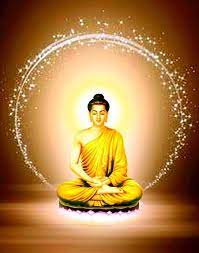
It took me a good five minutes to decide to knit quietly and reflect “undistracted” on what we were learning in the retreat. It was eye opening. I had no idea there was so much distraction in my life.
To explain this to someone else, I would ask them to observe a day of Noble Silence. I would ask that they go without their usual distractions for just one day. When we decrease our distractions, at first the mind is very noisy. Once you settle into an activity, the mind settles down. Thoughts come and go.
After doing this exercise, it’s impossible not to notice your level of distraction. Although this was written long before Netflix or YouTube, or Audible, or video games, I’m sure there was still plenty to distract the mind. Even when we identify the distractions that cloud our mind, it’s not easy to enter “…undistracted, the path of listening and hearing, reflection and contemplation and meditation…”. The desire to distract the mind is very nearly addicting. But with practice and perseverance, we can learn to have, as my teacher the Venerable Tashi Nyima likes to say, more Dharma and less drama.
iii. How do I bring this into my life?
Just two days after the retreat ended, there were bad storms. I had no power or cable for just about two days. I felt as though the retreat had been in preparation for those two days. On Tuesday in particular, it was pretty much enforced Noble Silence. The only distraction I had was a Kindle, but I could only do that for a couple of hours at a time. There was no way to recharge it.
While it’s true that I could have read some Pema Chodron, I chose instead to read Stephen King. Because of course I did. I want, I told myself, to be entertained and distracted from the awful discomfort of the heat. The Shining worked perfectly.
I was a bit disappointed with myself because of course I felt that after the retreat, plus one whole day of practice, I should have been ready to engage in a day long meditation in unaccustomed heat and discomfort. The big difference between before and after the retreat is that now when I engage in distraction, I do it with awareness.
It’s unrealistic that I would spend all my time studying the Dharma. For one thing, I have to go to work. I bring this into my life with new practices like stopping to take ten deep breaths ten times a day. And I use existing practices like meditation and contemplation. When I take the time in my day, whether it’s first thing in the morning or at random moments of the day, to study or practice the Dharma , my mind feels very aligned. It feels like I’m in harmony with something that I’ve forgotten but now I’m remembering.
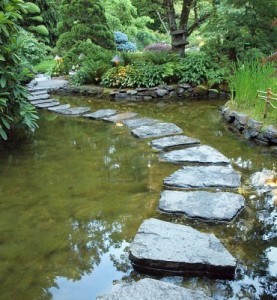
As my teacher, the Venerable Tashi Nyima reminds us all the time, every moment is new. I think the writer here reminds us of this by calling it a path. He says I will “…enter, undistracted the path of listening and hearing…”. A path is a progression. No two steps are exactly the same. We are always arriving in the next brand new moment, much like stepping stones in a river.
Considering this, do we want to spend all our spare moments in distraction? Or do we want to spend our moments entering into a path of listening, hearing, meditating and contemplating the Dharma? Honestly it’s a question of balance for me. I would much rather spend more moments with the Dharma than not, as the Dharma is forever enduring.
 dharma pen