
Currently I’m studying Heart Treasure of the Enlightened Ones with a Dharma friend, the Venerable Tashi Nyima.
This is my contemplation on the first two lines of verse 47 of the root text of Heart Treasure of the Enlightened Ones.

“To recognize flavors as a sacramental feast is the crucial point of offering.
Attachment to taste as delicious or disgusting is liberated into its own nature.
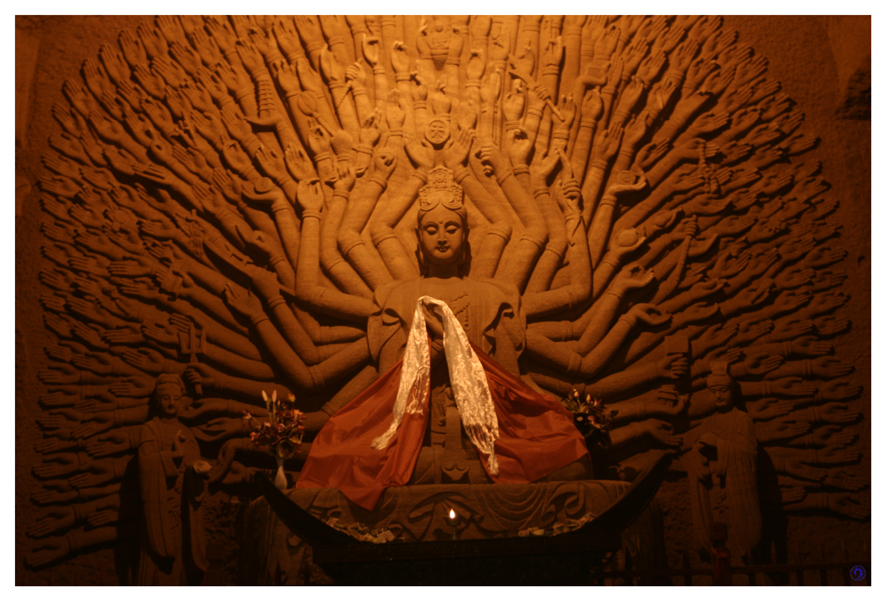
Free of grasping, food and drink are substances to delight Supreme Chenrezi;
In the self-liberation of taste, recite the six-syllable mantra.”
Full Disclosure:
I found this verse extremely hard to put into practice because it’s so hard to divorce food from the sense of taste.
Written Sunday, November 23, 5:30AM
Explain to someone else (making it my own)
Growing up, we used to say grace over dinner, but only on Sundays. As a kid, I totally unde rstood why. Sunday dinners were awesome! They had all the good stuff. During the week you could end up with dry overcooked food that got eaten because it was better to eat than to get yelled at for not eating. But on Sundays, there was salad and everything. Sometimes there was even desert. So sure, I was happy to mumble on Sundays, “God is good, God is great, Thank you for this food. Amen.” With all those delicious smells rising from the table, when I said grace, I had only one goal: getting through the words as fast I could.
I didn’t understand why we had to thank God for anything. I saw my parents get up and go to work every day. My mother went food shopping and cooked. All God did was show up in His house when you went to church on Saturdays. What did He have to do with anything about food?
At that age, when my mother said it was a shame I was throwing away food when there were starving kids in Africa, I thought it was another Motherism, kind of like, ‘Don’t open your umbrella in the house, it’s bad luck.’ And what was so bad about starving? I’d be starving after school sometimes, but then I’d open the refrigerator and eat something. Didn’t kids in Africa have refrigerators?
In the west, for the most part, we have an absolute indifference to where our food comes from. Even if you’re vegan, there’s still this sort of indifferent unconsciousness toward food. We go to the supermarket (or Whole Foods or Sprouts), buy what we like, take it home, cook it how we like, and for the most part, we eat and put the leftovers way. More thought goes into doing the dishes (should I run the dishwasher tonight, or wait another night?) than goes into eating a meal.
We take for granted that some foods are good, delicious, while other foods, not so much. When I first came to Texas, I couldn’t believe there was deep fried okra on a restaurant menu. My memories of okra are of slimey green things that stayed as far away from my side of the table as possible. But there it was. Apparently people pay good money to eat deep fried slimey green things in Texas.
How often do we stop to ask ourselves about this? How often do we stop and say…how can that be? Is deep fried okra good or not? Is slimy good or not? How can some people like it, but others can’t stand it near their plates? If we thought about this, we might come to realize what Dilgo Khyentse says about taste, “…it is only the mind that clings to tastes as being delicious or disgusting. Once the mind realizes that such attributes are unborn and devoid of any existence, the pure nature of every flavor can be recognized.”
What? Does that mean deep fried okra is a good thing? I do a lot for my practice, but I draw the line at deep fried slimy vegetables. And don’t bother telling me it’s not slimy when it’s deep fried. Memory is a powerful thing.
I think what Dilgo Khyentse is telling us here is that the okra is simply there, with certain attributes. It is our mind, based on our previous experiences that imputes ‘slimy’, ‘disgusting’, ‘tasteless.’ Once we realize that these imputations arise from the mind, we are freed of attachment to ‘good food’ or ‘bad food’. Once that happens, we can begin to see that food or nourishment of any kind is always a gift. After all, why are we here in samsara? To get rich? To be beautiful? To be successful? To live the American dream? No.
We are here in samsara for one reason and one reason only: to remember our non-difference with our true Buddha Nature. Seen in this way, every nourishment and sustenance, whether it takes the form of food or friendship, or just a kind word is a gift. It is a gift meant to sustain us on our journey of remembering who we truly are so that we may help others remember who they truly are. If we approach food this way, we can begin to work with our attachment to ‘good food’ and ‘bad food’, and begin to take food onto our path to compassion through wisdom.
***
Apply to a past situation (how would it have been different?)
When I was younger I had a very adverse relationship with food. I used food to comfort myself. Many days on the way to school I would buy candy at the local candy shop with my lunch money. When lunch money ran out, I’d use my pocket money. I used to go for potato chips, almond joys, bubble gum…kid food.
 In third, fourth, and fifth grade, I enjoyed school. I had truly gifted teachers. But I didn’t fit in with the kids around me. There was extreme emotional discomfort in going to school every day. The candy offered me comfort. By the time I got to high school, there was an experimental program that put all the nerds together in our classes all day long. We were isolated from the general population of the school, except at lunch time. And of course, we ate with each other.
That was heaven. We all didn’t fit…but we did it together!
Looking back on that time in my life, I can notice that the role of food in my life was very distorted. I imputed to food the ability to comfort me, and to dull emotional pain. In fact, the pain didn’t go away, it increased. I always ate those foods in private, because I was ashamed of how much candy I ate. If I could have taken a step back, I may have noticed that the candy was a stand-in for things in my life I thought I needed so badly: my mother’s care, friends who didn’t make fun of me, a school that didn’t seem like an all day prison.
If I had been able to let peace and clarity arise, I may have noticed that the candy was actually impermanent, insubstantial, and dependent. I may have seen that the comfort I imputed to the candy was arising from the nourishing gift of my own Buddha Nature.
Had I been able to see these things at such an early age, I may have turned toward the path sooner, and sought a different kind of nourishment and comfort.
***
Apply to an (ongoing) present situation (how does it matter today?)
The biggest thing going on in my life right now is the 125 Vow. Each day, I work on something toward the vow, whether it’s buying yarn on sale, or learning a new pattern from YouTube, or actually working on a pattern.
This week I’ve finished my first scoodie, a hat and scarf combination, and I’ve discovered new yarn territory. I’ve lived in this location for well-nigh nine years and never, ever visited the Hobby Lobby that  is no more than a five minute drive away. I always went to Michael’s, which is just across the street from Hobby Lobby. This week I discovered new yarn in Hobby Lobby! I felt like an Arctic Explorer forging unknown territory through virgin ice. Yes! And it’s in the Jonang colors.
In working with this verse this week, I really had a hard time understanding what food would be like if it were liberated into its own nature. A lot of times this week, when I ate, I tried to imagine…this food is neither good nor bad. It’s just nourishment. Did that work? Not so much, because I’m here to tell you, I wasn’t feeling up to experimenting with the true nature of okra.
But I ‘accidentally’ found something that did work. (It’s in quotes because my Dharma friend Tashi says there are no accidents or coincidences–there’s karma.) Anyway, I came home after a long day at work, and I was very tired. All I wanted to do was curl up under a warm blanket and lose myself in a nice soothing Alison Weir history book on my Kindle.
As I was winding down my evening, I glanced at my Addi (my knitting machine), which had a scarf on the needles. Let me tell you about the Addi. All you have to do is turn a crank. You can knit a row in maybe two minutes, if you’re going very slowly. I cranked out a row. Ahh…that felt good. So I tried another one. Before I knew it, I’d cranked out about twenty rows. Twenty minutes had slipped by in nearly perfect peace.
 I stopped and went back over my evening, and what I had been planning to do, and thought about how I’d been drawn to stay at my work table with the Addi. I realized it was like being thirsty, and scooping up just a taste of sweet, fresh water from a mountain stream. But that water feels so good winding through you, you have to have more, so you settle down for a good long drink.
Working on the Addi, which is working on the 125 Vow felt like that. It was nourishing to me. It nourished my sense of peace and well-being. In short, it nourished my awareness of my non-difference with my Buddha Nature. In those few minutes, I experienced the gift of what it can be like to be nourished by activities that are in accordance with the Dharma. As I was working on the Addi, I didn’t experience attachment, because I wasn’t in a hurry. After all, I have a whole year. I wasn’t clinging to the activity. I was keeping my vow.
Once that experience opened for me, I was able to experience nourishment in that sense in a whole bunch of things. Saying a sincere good morning to someone at work became an act of nourishing both them and me, because for a very fleeting moment, I realized our non-duality in relation to each other. In baking cookies and scones for the office, I felt again that sense of being nourished by the act.
Although Dilgo Khyentse talks specifically about food in this verse, in practice, I experienced that any activity that is in accord with our true Buddha Nature is a gift that will nourish and sustain our experience of our non-difference with our Buddha Nature.
***
Apply to a potential situation (bringing it home to play)
Hmmm….this is a tough one. I’m not really sure how to put this into practice. I’d like to try out the sacramental feast that Patrul Rinpoche talks about, but I’m not sure how to bring that into my life.
On Thursday, November 20, my Dharma friend Tashi gave a talk about getting in the way of suffering. I feel somehow that this verse is related to that, but again, I’m not sure how to bring it into my life in practice. Here goes…
Today, many families will gather around tables laden with food whose centerpiece will be a dead bird who began life as a sentient being, was then enslaved, brutally murdered, and then sold for a higher price per pound than he or she was worth when they was alive.
Perhaps, in this season which celebrates giving thanks with a holocaust against thousands of sentient  beings, I can, with each prayer I say this week, have the intent that the families gathered will awaken enough by next Thanksgiving to realize that this holocaust is a collectively unskillful act. I can pray with the intent that their Buddha Nature may be nourished to the point where they awaken sufficiently to the suffering of other sentient beings to develop a mild nausea with samsara. I can pray with the intent that their Buddha Nature will be awakened enough that by next Thanksgiving, their nourishment will come from being impelled by compassion to get in the way of suffering.
If everyone reading this would say just one prayer with this intent, we will all nourish our non-difference with our Buddha Nature, and at the same time weaken the clinging and attachment that makes the manifold sufferings in the bright aisles of samsara possible.
om mani padme hum…
 dharma pen