
Currently I’m studying Heart Treasure of the Enlightened Ones with a Dharma friend, the Venerable Tashi Nyima.
This is my contemplation on the third line of verse 35 of the root text of Heart Treasure of the Enlightened Ones.

“Overcome your enemy, hatred, with the weapon of love;
Protect your family, the beings of the six realms, with
the skillful means of compassion;
Harvest from the field of devotion the crop of experience
and realization.
Consummating your life’s work, recite the six-syllable mantra.”
Full Disclosure:
Mind has been extremely agitated these last few days. Doing this contemplation felt like trying to see through mud smeared two-inch thick glasses.
Written Thursday, August 21st, 5 AM
Explain to someone else (making it my own)
I grew up a city girl. When I was very young, I didn’t know grass had to be planted. I thought it was just the green stuff that grew where there was no sidewalk or road. Then my aunt moved to upstate New York, and I went to spend summers with her.
She had a little garden in back of her house. There were tomatoes, peas, and other stuff I can’t remember anymore. Each morning I’d see my aunt out there watering, picking off leaves, and doing weird stuff like making the little sticks stand up straight for the tomatoes. After work she’d be out there again doing the same routine. I didn’t get it. Did the vegetables need help to grow?
One day I asked her what she was doing out there and why didn’t she pick them if they were ready. She told me if she didn’t do that each day, they’d never be ready. She said if they were ever going to be ready, she had to take care of them. After that, I’d sort of sit and look at the growing tomatoes (the easiest to see) and watch…to see if I could spot them growing. Of course, I couldn’t.
Then came the day they were ready to harvest. My aunt let me help pick them, and then I got to shell the peas. Was I surprised or what to find out that peas grew inside something, not just in the ground by themselves in the dirt. That night when we had dinner, those were the sweetest peas I’d ever had.
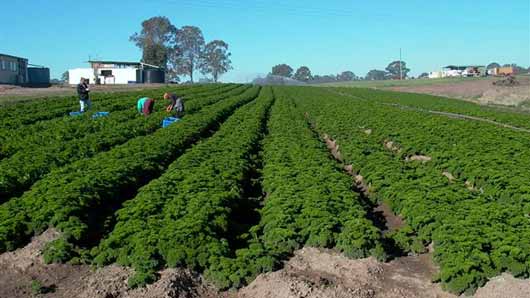 As we go through our lives and practice the Dharma, we are constantly tending the fields of our devotion. There is not a word, or an act, or a thought that is not planted in the vastly infinite fields of our experience. At every moment, we have a choice of what seeds of word, thought, or deed to drop into the fallow soil of our lives. It’s easy to forget that whatever seed we drop, that is what we shall harvest. Dilgo Khyentse puts it this way, “There is no better or more bountiful harvest than the one you sow in the soil of your faith and endeavor so that it ripens into the richness of merit and wisdom.”
Knowing that we will reap what we sow, knowing that Dharma is a practice not a theoretical debate, knowing that we must free ourselves of the cycle of birth and death or be doomed to repeat it, what must we do? We must live our lives in the knowledge that with each precious human birth, we are given all that we need for a bountiful harvest. When our harvest is complete, and we break open the pods of our experience, if we are able to see past the obscurations of wrong view and afflicted emotion, we will see that we have harvested our own enlightenment.
***
Apply to a past situation (how would it have been different?)
Sometimes we can have the biggest realizations about the Dharma while we’re doing the most mundane things. I do a lot of baking. I have a lot of tools for baking: cast iron pots, an enamel pot, a clay baker, a Kitchen Aid, a baking stone, a scale, measuring spoons, knives, thermometers—a whole gaggle of stuff. So when I started learning a new technique for baking bread, I thought I was totally ready.
I’m learning how to make bread in a new way, using a stretch and fold technique that lets you work with a wetter dough, so you can get nice big holes in your finished loaf. When I began this technique, I made a sort of mini-vow that I would do fifty-two bakes before I decided if I liked the technique or not.
So off I went. Ken Forkish, the author of the book I’m learning from, suggests starting with a low hydration (73%) bread recipe. But no. I skipped ahead to a 78% hydration recipe. When I mixed my dough, it was a watery soup of flour and water that I couldn’t handle or manage. I certainly couldn’t shape loaves out of it. I had to add more flour, which defeated the whole purpose of learning to make ‘artisan’ bread. I almost put the book away and went back to my old ways. But…there was the 52 bakes mini-vow, so I kept at it.
When I was reading Ken Forkish’s book and I wasn’t actually in the kitchen, I thought all my tools and all my experience  were enough. Seventy-eight percent? Sure. Why not?
In practicing the Ken Forkish method of baking bread, I learned almost overnight that a recipe is just a theory until you’re in the kitchen and wrist-deep in a mixture of flour and water that sticks to you like Crazy Glue. At that point, you have to let go theory, and start practicing. In other words, you have to do it.
The practice of the Dharma is so much like this. We read a prayer or we read about harvesting from “the field of devotion the crop of experience and realization” and we think…yeah, okay. I’ve got that.
No. We don’t have it. Until we bring the Dharma into our everyday mundane experience (like baking bread), we think we have all the tools and we think we’re understanding, but all we’re really doing is reading theory.
If I could have done this Ken Forkish experience differently, I would have started with the ‘beginner’ bread. I would have reminded myself that reading a recipe is worlds apart from doing a recipe. Had I done this sooner, I may have noticed that reading a recipe, even in a well-equipped kitchen, only gives you a starting point. I may have noticed that the baking didn’t actually begin until I felt the warm mix of flour, water, salt, and yeast squeezing between my fingers.
***
Apply to an (ongoing) present situation (how does it matter today?)
If I had to pick one thing in my life going on right now, it would be working with giving up a harmful habit. I’ve had this particular habit for about twenty years. As I study the Dharma, the habit becomes more and more distasteful, but I still want to do it. It’s a form of intoxication that poisons the mind but not the body. In the last ten days, I’ve really taken the approach that I want to be free of this habit in this very lifetime. Believe me, this habit is far too ingrained to be only from this lifetime. The biggest help has been to cultivate a higher taste, something I learned about in one of Tashi’s Dharma talks.
 In working with this habit (which feels so much like an addiction), I am very much working with paying attention to what I devote my time to. I’ve also begun to pay very close attention to what devotion means. I’m finding that we can be devoted to absolutely anything. Although this sounds self-evident, I am coming to see very clearly that devotion is simply a matter of attention. Where your attention is–that’s what you’re devoted to. From this follows that whatever you are devoted to, you will harvest experience and have realizations in line with your devotion.
Here’s the trick. If you devote yourself to something that habitually agitates the mind, then your realizations will be distorted by afflicted emotion and wrong view. After just ten days of working with this habit, I already feel more peace and clarity arising in the mind. But the habitual tug to return to the habit is quite strong.
Working with this line has helped tremendously because I am able to see clearly the crop I harvest when I cultivate a higher taste.
From this I’ve observed the following sequence. When we are devoted to something, we give it our attention. The more of our attention we give, the more our experience will show us the world in terms of our object of devotion. When we shift our devotion to the Dharma, our experience shifts, and our realizations become clearer and clearer as peace and clarity arise in the mind.
***
Apply to a potential situation (bringing it home to play)
Tonight when I get home, I will want to indulge in my habit. That’s a given. I keep waiting for that desire to pass. It has subsided, but it doesn’t feel like it will ever pass. I have quit this habit in the past, when I first started studying the Dharma. But back then I was holding my breath, struggling with it…and it lasted only eight months.
Vows don’t work. Struggle doesn’t work. Holding my breath doesn’t work.
Tonight after work, when the habitual desire arises, I will look at Mara, as I have been doing. I will recognize that I have a choice about where I put my attention, my devotion.
Tonight I can do a devotion to Mara. She’s very welcoming, but it’s the strangling, poisonous embrace of a viper. I will recognize that if I choose to devote my evening to Mara, the experience I harvest will be one of fleeting happiness, followed by a happiness hangover of feeling defeated and impotent.
If I choose to devote my evening to the Dharma, the Buddhas will welcome me, as they always do. The experience I will harvest from my devotion to the Buddhas will be permanent happiness, a glimpse of my Buddha Nature. I will also experience far more peace and clarity in an evening spent in the presence of the Buddhas and Bodhisattvas.
Sitting here writing this in the pre-dawn stillness of my little neighborhood, the choice seems self-evident. Of course the choice to make is not to embrace the viper, right? But…didn’t Alice drink from the bottle marked ‘Poison’?
After work tonight, when I’m exhausted from anxiety running through me all day like high voltage current, the choice won’t be so clear. Mara will look awfully good, scales, fangs and all.
Knowing that is a great advantage. Knowing that my mind will be presenting a very distorted view to me as to what will lead to happiness will help me not to get caught up in the delusion.
I 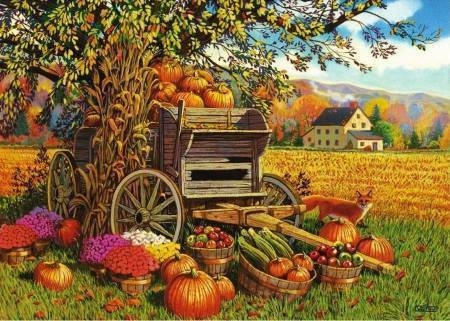 will remember, even in that state of mind, that wherever I put my devotion, that is the crop I will harvest.
As we go about our lives, let us remember this; let us remember that our bountiful harvest is always our choice in every moment, with every heartbeat, with every breath.
 dharma pen