
Currently I’m studying Heart Treasure of the Enlightened Ones with a Dharma friend, the Venerable Tashi Nyima.
In the last teaching that Tashi gave, he talked about indifference being the worst of the three poisons, and how it was the biggest obstacle to spiritual cultivation. This took me by surprise, and haunted me. I began to ask myself how indifferent I was, and what that meant to my journey on the road of Dharma. This is my contemplation on the first line of verse 15 of the root text of Heart Treasure of the Enlightened Ones.

“Whoever you see isn’t human, but a fraud;
Whatever people say isn’t right, but just lies.
So since these days there’s no one you can trust,
You’d better live alone and stay free.”
Explain to someone else (making it my own)
Having grown up Christian, I’ve always had the belief that being human is kind of like a default. Before studying the Dharma, even though I didn’t practice Christianity, there was the underlying belief that I (and the other people I meet) are human beings because we were made that way. Somewhere in the distant past a girl and a boy (also human, of course) shared chromosomes and genes, I gestated inside a womb, then voila! I was born human, part of a species.
But reading this line forces me to reconsider what it means to be human. What do we all have in common? It’s not our bodies. We all look totally different, not to mention the whole gender thing. It’s not where we live. It’s not even our genes and chromosomes. So where do we look for ‘human’?
The Dharma teaches that we are all naturally perfect, that we all have Buddha Nature. Our natural perfection is obscured by our karmic formations, like a diamond encrusted with mud. If we take that to be true, then the measure of our humanity seems to be our capacity to uncover who we truly are.
Our Buddha Nature is like a prisoner inside our karmic formations, but once in a while, the prisoner breaks free. In those moments we experience tremendous spontaneous compassion, love, and at the same time a kind of yearning to be closer to the source of compassion.
It seems then that being human is our capacity and willingness to live our everyday lives with a measure of compassion.
Well, compassion is a nice word, but when you get out of bed in the morning, what the heck does it mean?
It means not having bacon and eggs for breakfast because you recognize that sentient beings were slaughtered brutally for your pleasure. It means not pretending you don’t see that homeless man pushing a shopping cart with all he owns through thirty degree weather as you drive by in your comfortably warm car. It means in a word, giving up indifference.
Apply to a past situation (how would it have been different?)
 I grew up in the Bronx, just about forty minutes from Manhattan by subway. My favorite places to go in Manhattan were Barnes & Noble on Fifth Avenue, the New York Public Library, and Steuben Glass. In Manhattan, the homeless are everywhere. They are unavoidable. In winter they shuffle along in too-thin coats, walking up to you and asking for money. In summer, they sit on the boiling hot sidewalks with signs: BLIND. PLEASE HELP. And nearly without exception, they are ignored, given a wide berth, as though being homeless were a deadly plague that could be caught. Even when people give money, it’s done with averted eyes, and from a prudent distance.
At sixteen or seventeen, the homeless were just another feature of New York’s streets. They were part of the landscape. I had a vague idea that they hadn’t started out that way, but it wasn’t important enough to think about.
Looking back on those trips into Manhattan, I might notice how I had utter indifference to the suffering of the homeless. I can notice that seeing a homeless man curled up on a bench in Penn Station with newspaper for a blanket was a distasteful mess that I averted my eyes from. In my mind, they weren’t quite human, and they certainly had nothing in common with me.
Having noticed my indifference, on the spot, I could have breathed, paused and really looked at a homeless person. I could have done what Pema Chodron calls Just Like Me. I could have realized that just like me, the homeless man sleeping on the bench wanted to be free of suffering; just like me, he wanted to be comfortable; just like me, he wanted to be loved. I could have realized that my indifference was blinding me to my own suffering by building a kind of armor around my heart. I could have noticed that even a moment of compassion for the man sleeping on the bench would have softened my armor of indifference. This softening would have been my first tentative steps on the way to being enlightened.
Apply to an (ongoing) present situation (how does it matter today?)
The ongoing situation in my life is looking for a job. The hardest part for me is the rejection. It feels so personal, so heartless, so much like a betrayal. I think without my practice, it would have made me very bitter by now.
I haven’t looked for a job for years. Even though there have been layoffs all around me, whittling down the department I’m in from sixteen to two, I’ve had complete indifference to people who are unemployed. I never even noticed my indifference.
Now, with March and First Quarter looming, the threat of layoff is in the air again. Every previous quarter, I’ve focused on my own suffering, my own fear. While I want to be free of my job, I don’t want to be unemployed.
This time, as I work with these fears, I also spare a few thoughts for the millions (in this country alone) that are unemployed. I spare a thought for their fear, their desolation, their sense of betrayal. My indifference before this was a soothing balm…oh well, they’ll find a job. I chose to be indifferent because I didn’t (and don’t) want to suffer.
But now as I look around with what feels like newly opened eyes, I see that everyone at work is afraid and suffering terribly. In some way I don’t understand, this awakening to the suffering of others feels like re-claiming or maybe remembering my true nature.
Indifference, I think, locks us into the wrong view of separation: they’re suffering, but I’m okay. This is a miserable way to live because life becomes an epic struggle to hold onto “I’m okay”, and there’s a terrible sense of betrayal when some tragedy crashes through your delusion and exposes your fraud of being human.
I used to believe that renunciation was the first step on the spiritual journey. But now I’m starting to see that before you get to renunciation, you have to let go of indifference and wake up to the suffering of samsara. I wonder if that ‘awakening’ is what we experience as compassion?
 Apply to a potential situation (bringing it home to play)
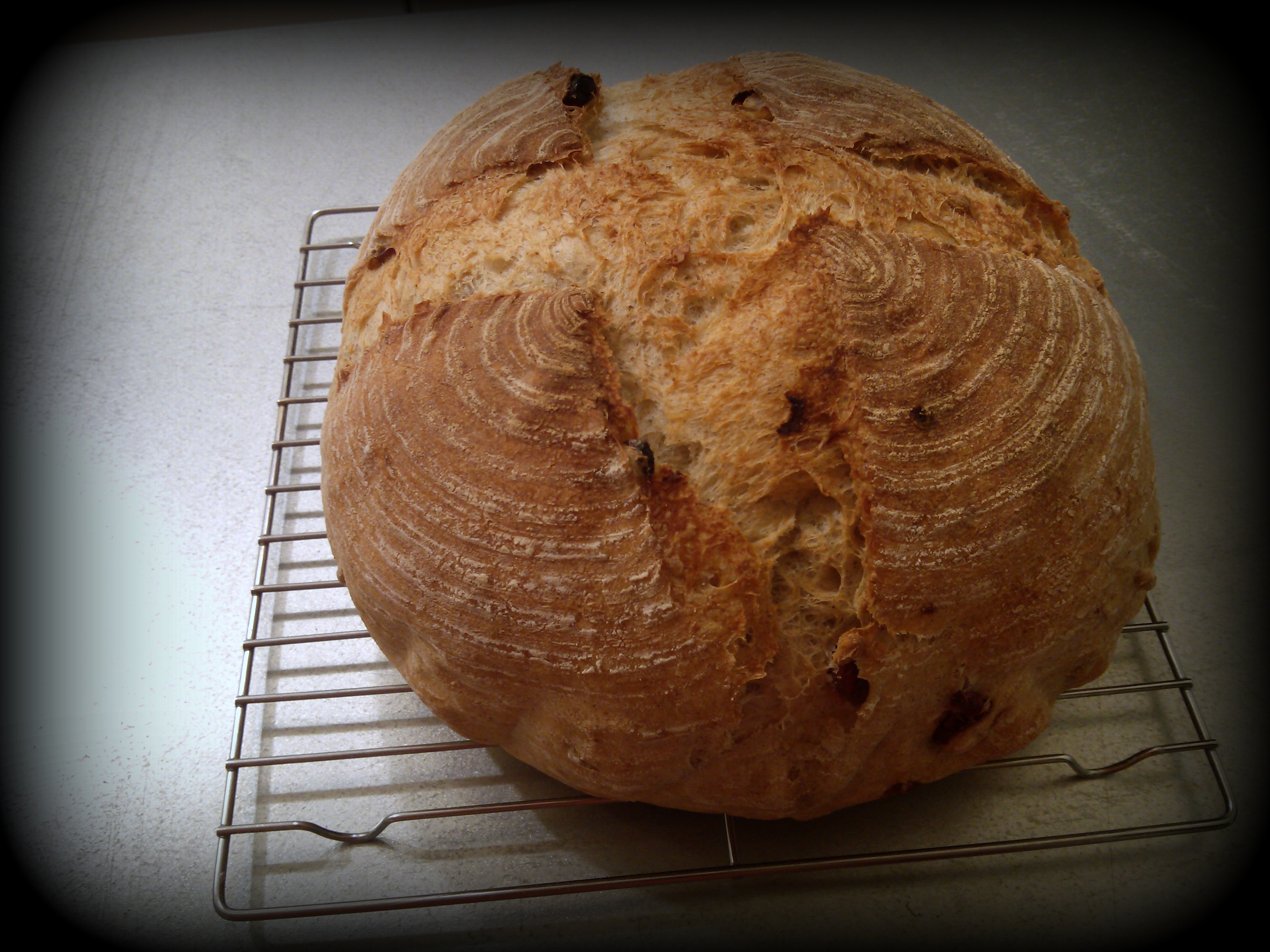
I have a long weekend coming up. No work on Monday. I’ll be baking. One of the most enjoyable parts of baking for me is giving away what I make. The harder the bread was to make, the more challenges I ran into with the recipe, the more enjoyable it is to give it away.
This weekend when I bake, I’ll be baking a bread to be donated as part of a meal for the homeless. Last weekend when I did it, I didn’t really give much thought to the people who would be eating the bread. The fun part for me was giving it away.
This weekend when I bake, I’ll make a conscious effort to work with my indifference to the plight of the homeless people who will eat the bread. I’ll work with the Just Like Me exercise. I’ll work with understanding how indifference is probably the absolute worst of the three poisons, and how it makes spiritual cultivation all but impossible.
I’m not sure how well I’ll be able to do this since growing up in the U. S. is like getting a Ph.D. in Indifference. But it is my intention that I will use baking that bread as an opportunity to soften my armor of indifference, to re-claim who I truly am, to be more in touch with my Buddha Nature of compassion.
 dharma pen
I love what you have written here and feel inspired and encouraged by it. I saw a video on Facebook a few months ago where people bought cases of water and made sandwiches and went handing it all out to random homeless people. When I saw the video, I decided to do the same thing here in Dallas, but, of course, I have yet to do it. So thank-you for your wonderful words, dear Dharma sister. I am recommitted to this particular activity (perhaps we can plan to do this together) and to working on indifference in all its other manifestations.
Wendy
I’m glad we’re able inspire each other…
Beautiful…Thank you!
Thank you…