On thinking about these times…

Currently I’m studying Heart Treasure of the Enlightened Ones with a Dharma friend, the Venerable Tashi Nyima.

This is my contemplation on the last  line of verse 11 of the root text of Heart Treasure of the Enlightened Ones.

This was my first time working with renunciation. It was interesting.

heart treasure

“Being learned these days doesn’t help the teachings—

 it just leads to more debate;

Being realized these days doesn’t help others—

it just leads to more criticism;

Being in a responsible position these days doesn’t help

govern the country well—it only spreads revolt.

Think about these times with sorrow and disgust. 


 Explain to someone else (making it my own)

When I was younger my two favorite cartoons were The Flintstones and The Jetsons. My two favorite ‘people’ shows were Star Trek and Lost in Space. I liked them because, even though I couldn’t articulate it as a child, I thought their problems were so much different than mine, so very removed. They had no constantly fighting parents, no homework, no bullies at school, no stupid dishes to wash.jetsons

The Jetsons had robots to do all the cleaning. Captain Kirk was out meeting aliens and having adventures on the edge of the universe, and even though he made trouble in every episode, things always worked out okay for Dr. Smith and the Robinsons. The Flintstones were so far back in time, they had a dinosaur for a pet and a bird with teeth for a can opener.

As an adult looking back on those stories, I can see the human drama being played out from the Stone Age all the way up to an idealized future where drudgery was wholly removed. Yet, there was still drama. How can that be? How could George Jetson fly to work in a hover craft and still have problems with his boss? Why didn’t Captain Kirk bring a message of everlasting peace to the aliens he met? After all, they were smart enough to build a star ship and beam people down to planets. Why didn’t the Robinson family become ambassadors of peace after spending all that time lost in space? And finally, how could a Stone Age man like Fred Flintstone have the same drama with his boss that a future man like George Jetson had?

The Dharma teaches us that, “Worldly pleasures are deceptive,/and bring no lasting joy, only suffering.” Even though this is our experience day in and day out, we live in a constant painful denial of this very basic truth of our lives. We reach for happiness in the material world constantly—a good meal, a good partner, a new pair of shoes—and are constantly disappointed to find that our happiness is at best, fleeting.

If we look upon these times with disgust and sorrow, and develop a mind of renunciation, then we will be ready to put our feet on a path that leads to permanent happiness.

***

Apply to a past situation (how would it have been different?)

There was a time when I believed with all my heart that Texas was Heaven, Nirvana, a place where no problem could stand in the face of such paradise. I believed that merely by being here, the problems I had outrun would simply dissipate, and I’d go on with life, reborn into a land of milk, honey, and cowboy hats. I was in the Promised Land.

The day I got here was one of the worst ice storms Dallas had seen up until then. I stood outside the Dallas airport shivering miserably in my Florida-weight clothes (because it never gets cold in Paradise) and was turned down by taxi drivers who didn’t want to risk crossing the icy bridges between Dallas and Plano. A driver finally took pity on me. By the time I go to the rental office (which was closing due to the storm) to claim my new apartment, I was grateful to be alive after slipping and sliding over very icy roads with a driver who apparently had a pressing appointment with Death. I had no food. The restaurants in the Downtown Plano area were closed due to the storm. My first meal in Texas was a giant Hershey bar and a bottle of water purchased in a gourmet candy store that hadn’t closed yet.paradise3

So began my sojourn in Paradise.

This was emblematic of what was to come. There seemed to be so many obstacles to the bliss I so richly deserved: no car, nightmares and insomnia, flashbacks, anxiety. What? I asked myself. I’m in Paradise. How can there be problems here?  I became angry, confused, disillusioned. Without the help of a very skilled therapist who explained the truth of things to me and helped me learn the skills I needed, I would have been lost in paradise.

Looking back on that time, I can notice that I behaved as though changing geographically would mean leaving my samskars behind. I believed that happiness (in the extreme) was to be found if I could only figure out the right thing to do with my life. I believed that happiness was out there somewhere for the taking. Having noticed this desperate brand of constant searching, I might have taken a step back and asked myself if I’d ever found lasting happiness in the material world. Once I’d had the courage to be honest with myself and admit that I never had, I would have been ready to begin developing a mind of renunciation.

***

Apply to an (ongoing) present situation (how does it matter today?)

monkWhen I first started learning about renunciation in the Dharma, if I’m honest, all I could think of was tonsured medieval monks wearing threadbare robes with hair shirts underneath, living in a monastery on some very cold, very isolated hill top in England. They never talk to each other. They have cold gruel for their one meal a day. They pray six times a day—including in the middle of the night! They live in little tiny rooms called cells where the only things on the dank stone walls are a miserably crucified Christ and a whip. The whip of course is for self-flagellation while penitently murmuring, ‘mea culpa’.

In a word, for me, renunciation was a synonym for denial and purification by suffering. I owe this gross misunderstanding partly to growing up Seventh Day Adventist and partly to Hollywood.

As it turned out, I came to do serious renunciation in my own life nearly by accident. After pursuing the craft of writing fiction for decades, I became so disillusioned with it that I couldn’t bear it anymore.

What’s interesting about this is I didn’t want to renounce writing. I wanted to renounce the way I was doing it, the way I was seeing it in my life. In doing this, working with it daily, I find the act of renunciation to be joyful and incredibly liberating. Now that I don’t write fiction anymore, I don’t have to read it anymore. I hadn’t even realized how unbelievably bored I was with fiction. I’ve been devouring non-fiction as fast as I can download it to my Kindle. My latest kick seems to be Tudor history. Now that I don’t write fiction anymore, I’m free to write what calls to me, rather than being caught up in deadlines, plot devices, character arcs, blah, blah, blah.

What I’ve learned is that fiction writing had become a prison. liberated2Renunciation was just setting myself free. In the same way, samsara is a prison. It is in fact inimical to who we truly are. It is utterly unnatural that we would live in a world of duality. When we begin to “Think of these times with sorrow and disgust”, we’re not giving up anything. Far from it. We are setting ourselves free of the illusions and delusions and pains of the prison of samsara and aligning ourselves with our innate perfection.

***

Apply to a potential situation (bringing it home to play)

Right now as I look for a job, my life is in transition. In this Jetson-like age, job applications are done online. There’s always a moment of anxiety before I click SUBMIT, when I say to myself, “Do I really want to do this?” Then I click the icon.

As I work with finding a new job, I haven’t thought of renunciation. I am thoroughly nauseated with my workplace, but not enough to actually want to leave. It’s more of an intellectual realization that I have to leave or burn out. I have not yet reached the level of disgust and sorrow that for me, seems to be required for renunciation.

renunciation2From this I’m learning that renunciation isn’t an act of turning away, or denying. My experience is that it’s just the opposite. It seems that renunciation is a whole-hearted embrace, an understanding of what is. And then the next step seems to be an understanding that if you continue with things as they are, it will lead to more and more suffering. Then finally, the last step seems to be renouncing the suffering.

As I go to work today, I can notice how much I suffer there. Yes. There are many good things there. There is the comfort of having a job and a steady income. There is the convenience of a ten minute drive. But the suffering of being there day in and day out has gone on for years. I’m not sure what it would take for me to renounce the suffering of the situation of my workplace.

I can breathe and look back at other times in my life when I renounced the suffering of a situation. By the time I did, things had reached a point of crisis. And when I finally did experience renunciation, it led to very positive changes. Oddly, knowing this doesn’t help.

I guess what I can take a look at is…haven’t I experienced enough sorrow and disgust with that situation to have the wisdom that renunciation of that particular suffering is the right choice? The best choice? Maybe the only choice?

On quitting the rat race…

Currently I’m studying Heart Treasure of the Enlightened Ones with a Dharma friend, the Venerable Tashi Nyima.

Here is my contemplation on the last line of verse nine of the root text. As a committed rat racer for decades of my life, I couldn’t let this one go by!

heart treasure

“In this dark age, what people think and do is vile.

 None of them will help you, they’ll deceive and trick you;

And for you to be of any help to them will be hard;

Wouldn’t it be best to quit the whole rat race?


Explain to someone else (making it my own)

Every day when we wake up, we’ve got things to do. Ever notice how you never wake up and just lie there and say to yourself, “Someday I’m going to die. What can I do today that will further my spiritual journey so that I go to my death as prepared as I can be?”

No. Never.

We turn off the third snooze on the alarm, brush our teeth, take a shower, wash our hair, and of course the “Good Morning: Here’s All the Bad News You Missed Overnight” show is babbling on in the background. Then we get in a car (or on a subway or bus), go to work, and spend our entire day caught up in petty drama that feeds our anger, resentment, frustration, and fear. rat race2

Then we go home, say a few bare words to the people who share our living arrangement du jour, turn on the TV, mindlessly absorb the government propaganda marketed as Prime Time, then, in a state of physical and mental exhaustion, we take refuge in sleep. In our dreams, we are haunted by the fears, regrets, and longings that we repressed all day long while pursing things that didn’t matter.

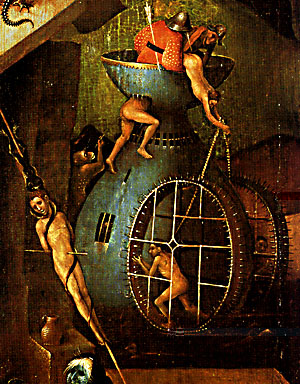
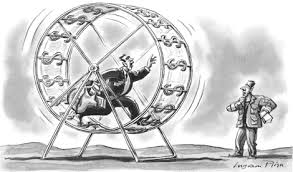
This is how we live our lives, in a kind of chronic insanity. We are like rats in a stone maze that is set atop a simmering volcano. We run and run, hoping we’ll find some relief from our chronic suffering in the next marriage, the next job, the next raise, the next new house. But as soon as we get what we chase after, we can’t enjoy it because the moment we pause, we notice how the ground under our feet is too hot to bear. When we pause in our constant chase through life, we notice our own suffering and we believe the answer is to chase after something else and rely on that to bring us happiness and relief from our suffering.

Beneath all our suffering is one inescapable thought: one day, I’m going to die. If we treat death like an enemy to outrun, we will suffer all our lives and die in regret and anxiety. Yet our culture encourages us to do just that—outrun death with the latest anti-aging cream, the latest Mor-Energy drink.

This doesn’t work.

Wouldn’t it be better to quit the whole rat race and get out of the infernally hot maze before our suffering culminates in a death that will only land us back in samsara, trapped once again in the cycle of birth and death?

***

Apply to a past situation (how would it have been different?)

There was a time when I wanted to write a bestseller. It wasn’t so much that I wanted to make millions. The money was almost an aside. What I really wanted was to be happy. I believed that selling millions of books would make me happy because it would free me of the corporate world. Then, I told myself, all my problems would be solved. I’ll experience untold bliss.

Looking back on that time in my life, I can notice how my unhappiness had very little to do with the corporate world. Blaming my job for my suffering was a little like blaming a stage for a bad play. I could have noticed that the actual cause of my unhappiness was my own internal drama, and my job was just the stage where it was being played out.

drama4Having noticed this, I could have taken a step back from rabidly chasing after the goal of being a happy bestseller, and taken a look at the causes of my suffering. Had I done this, I might have noticed how Hope and Fear had starring roles in my personal drama. I might have noticed that everything I did was hooked into either desperate hope of success or desperate fear of failure.

In noticing this, I might have seen how my suffering was arising from a constant ping-pong back and forth between hoping for what I feared I wouldn’t get and fearing what I hoped wouldn’t happen.

Once I’d seen this, I could have taken a step back, breathed, and let a moment of peace and clarity arise in my confused mind. In that moment, I might have recognized that hope and fear were thoughts based on a fantasy future, an outcome I could never know. I might have noticed that even if I became a bestseller, I’d still be cruelly haunted by even bigger hopes and fears. I might have noticed that I could, at any time, choose to let go of both hope and fear, because my grip on them was all that gave them substance.

***

Apply to an (ongoing) present situation (how does it matter today?)

Here I find myself back with Salem. A funny thing’s happened with that particular mental representation. It’s no longer the biggest concern in my life.

As I deal with that particular drama in my life, my most helpful strategy has been to simply let go. And boy was that hard! In the beginning, I was determined to have things my way: I was sure that the only way was for her to smarten up.

As it turns out, I’m the one who smartened up. As I’ve dealt with this ongoing drama day in and day out, I’ve finally recognized that it was my own afflicted emotions that were drawing me in and hooking me. I recognized and experienced that I could make a choice not to go with those emotions. I began to see that the entire tempest in a teapot was being stirred by me chasing after one thing: wanting Salem to be different than what she is.

Yeah. Sure. One day she’ll wake up. But in the meantime, I’ve got work to do.

In the past couple of weeks, I’ve seen that the only way for me to work with that situation is to “quit the whole rat race”. I do this by recognizing my afflicted emotions when they arise, experiencing fully that incredibly powerful tug to act on them…and then refraining. This is the only thing that has worked.quit2

Sometimes I only have to do this once a day. Sometimes it’s moment to moment.  But whenever I do it, I recite a verse of Dharma from my stack of index cards on my desk (the Dharma Brigade), and this re-focuses my mind. I’m able to see the rat race for what it is: an invitation to deepen my suffering in samsara. Each time I turn down the invitation, it’s easier to do it next time.

Afflicted emotions still arise, but not nearly with the strength or urgency they once did. I have by no means become Mother Teresa in that situation. The urge to throttle Salem still comes up, but these days I’m aware it’s a thought, and I’m more and more willing to give impermanence a chance to prove itself.

***

Apply to a potential situation (bringing it home to play)

As I look for a new job, it’s hard to drop the ‘rat race’ point of view. Looking for a new job, there’s no way to avoid competition. Just in the act of applying, I’m already competing.

I think the biggest pitfall for me to work with in seeking a new job is the Panacea Outlook. It comes up again and again. I have constant thoughts that when I leave this job, I’ll escape Salem for good. I’ll be happier in my work day. But gradually, especially as I work with Heart Treasure of the Enlightened Ones, I’m coming to see that there’s only one way that any job (inside the corporate world or outside of it) will be the cause of happiness for me.

At this stage in my spiritual cultivation, a job will only be a cause of happiness if I can bring that job to the path. Sitting here in the early morning, in pre-dawn darkness, with city sounds outside and faraway, that seems very obvious. But when I’m caught up in the job-seeking drama, it’s easy to lose sight of that.

path3Little by little as I study the Dharma, contemplate, meditate, pray, and practice, I start to question my decision to leave my job at all. If I’m honest with myself, the driving reason behind leaving was to put Salem behind me. But not only do I now understand how impossible that is, I no longer have a need to do that.

I ask myself now, is it possible that I’m confusing quitting the whole rat race with leaving my job? And if what I really want to do is learn to rely on my own effort, isn’t the turbulence of my workplace the perfect training ground?

As I go to work tomorrow, I’ll take time to notice…where is the rat race happening? Is it happening in the building? The people I encounter? The emails I answer? If I left my job, aside from geography, what would change? Isn’t it all the path? Will my causes for happiness increase by exiting the situation of my job? Or is the thought of leaving a part of my rat race, my illusory pursuit of happiness?

Where is the rat race? It is, of course, an appearance in my confused mind. Tomorrow at work I can notice that when peace and clarity arises, the rat race dissolves, revealing its true illusory nature.

On ruining our own lives…

Currently I’m studying Heart Treasure of the Enlightened Ones with a Dharma friend, the Venerable Tashi Nyima.

This is my contemplation on the last two lines of verse eight of the root text. I made the assumption that the “essence of the Dhama” refers to the idea that the only way to be truly happy is to work for the happiness / enlightenment of all sentient beings. This contemplation is written from that point of view.

heart treasure

“Of course what we want is our own good,

So we have to be honest with our own selves:

If we don’t accomplish the essence of the Dharma for our own sake,

Won’t we be ruining our own life?”


Explain to someone else (making it my own)

How many times do we say, “I’m doing this so that someone else can be happy? How much happiness I get out of this doesn’t really matter” and really, honest-to-god mean it? If we’re honest with ourselves, the answer is almost never. And if we do mean it, the underlying belief is that not wanting our own happiness will lead to being happy.

The Dharma teaches that the only way to successfully work for our own happiness is to work tirelessly for the happiness of others. How can that be? Isn’t that a total contradiction? Worse, isn’t that a kind of martyrdom?

Well, not exactly.

If we take a look, what’s being said is to work for the happiness of all sentient beings. That includes my happiness, too. That includes my enlightenment, too. That includes freeing myself from suffering, too.

guard3Our idea of working solely for our own happiness or for the happiness of a very small family group comes from the wrong view of separation. Let’s say that we could somehow achieve our own happiness. That’s it. You’re there. You’ve arrived. You’re happy. Now what? Well, unless you live in a very tall, very isolated tower, or a in very deep cave, your happiness won’t last. As you go out into the world, you’ll find yourself clinging to your happiness in a world of suffering. You would soon find that your ‘happiness’ had become something to defend, rather than something to be enjoyed. And wouldn’t that ruin your own life, your happiness?

On the other hand, if we work for the happiness of others with the view that there is no separation between you and other, then there’s nothing to cling to. There’s nothing to hoard. How many of us have ever said to ourselves, “I found this really great wonderful thing, but I’m not going to share it with myself?”

No. Of course not. Once we recognize that separation is a wrong view, we see that the only way to work for our own happiness is to work for the happiness of the so-called ‘other’.

***

Apply to a past situation (how would it have been different?)

I went through a couple of years in my life, recovery, rebuilding my life, after a pretty hellish decade. During that time, my sole aim was to be happy. I didn’t think about anyone else. In fact, I tried vehemently to keep everyone else out of my happy world. I was on the Happiness Mission and it was all about me.

Looking back on those years, I can notice how I suffered quite a bit. Happiness was always elusive. Even though I was doing all the things I was told in twice-weekly therapy sessions—assert your independence, realize it wasn’t your fault, educate yourself about what happened, do small things for yourself, blah, blah, blah—I wasn’t happy. I’ll grant that I wasn’t suffering as much. But I didn’t walk away from my old life to turn the pot of my misery down from a hellish, vigorous boil to a roiling simmer.

This complete inability to find happiness I viewed as yet another of my personal failings. Looking back, I can notice that in fact, there was a great deal of happiness in my new life, but I spent all my time grasping onto it, holdinhanging on3g on for dear life, afraid it would slip away. This led to a lot of suffering because of course, it did slip away, as everything does in the phenomenal world.

Had I been able to take just a half step back from my frantic grasping, I may have noticed how there were millions of women and men and children all over the world, just like me. And just like me, they wanted to be free of the misery they were living through. If I could have seen that, I might have noticed that working for my own happiness, working with my own karma, might mean that someday I would have a chance to help them find a way out.

I believe that had I worked this way, finding happiness would have become a less burdensome task and a far more joyous one, because I would have been working from the perspective of my own natural perfection.

***

Apply to an (ongoing) present situation (how does it matter today?)

The biggest ongoing situation in my life right now is finding a job. It is incredibly hard to stay grounded in the Dharma as I go through this process. I find myself with thoughts of laying ambush, “Just wait till I’m not here anymore…you’ll see”, or thoughts of my next job as the ultimate panacea, “When I get out of here, this happy bs will be over”. I find myself wishing for the suffering of others. These thoughts and afflicted emotions are very painful. In working toward my own happiness (being free of my current job), I am sowing the seeds of my own future unhappiness. Because of course, wherever I go, there I’ll be…with all my karmic formations.

If I take a step back from my desperate, clawing need to get out of my current job situation, I can notice that every single person I see at work every day is seeking happiness. I can notice that by feeding my thoughts of ambush and resentment, I am contributing to their suffering. I’m not particularly a happy-face at work. It will probably be to their great relief when I leave.

helping hand3Having noticed these things, I can ask myself a few questions. Wouldn’t it be better to work toward the happiness of others, even now, in a place where I feel so miserable? If I’m able to do that, with just one person each day, then haven’t I increased my own happiness? Yes. I have. There’s no separation.

When I leave my job, when I leave this lifetime, what state of mind do I want to take with me? What obscurations do I want to travel with? Do I want to take with me a state of mind that is wrathful, vengeful, and actually seeds my future (or my next life) with unhappiness? Or, do I want to take with me a state of mind that cultivates working for my own happiness by working for the happiness of others?

Since there’s no real separation, whatever I do to others, I do to myself. From this point of view, am I not ruining any chance of my own happiness whenever I harbor thoughts of ambush, or resentment, or vengeance?

As Dilgo Khyentse says, it’s time to do myself a big favor, and think about it.

***

Apply to a potential situation (bringing it home to play)

In about an hour, I have to go to work. That very thought fills me with despair and a brand of desperate unhappiness.

Today, as with every day, every moment of my life, I have a choice. I can work with this unhappiness in a way that will increase my suffering, or I can work with it in a way that will increase my peace and clarity. I’m already quite experienced with increasing my suffering. It works admirably well. So perhaps it’s time for a different approach.

When I go to work today, and these thoughts come up, I can realize that every person within my sight at that moment is feeling something similar. It may be a sick child, a bad marriage, a mortgage payment that can’t be made—whatever. The point is, just like me, they’re suffering. The point is, just like me, they want a way out of their suffering.

If I were walking down the street and I saw someone lying on the sidewalk bleeding, and in terrible pain, it wouldn’t occur to me to kick them in the wound, then go on my way. No. I would offer words of comfort. I would dial 911 and call for experts to come and alleviate this stranger’s suffering.

Today at work, I might remember that the people I see are no less wounded, and to my knowledge, none of them know the Dharma. None of them know there’s a way out of suffering.

But I do.compassion

Today at work when afflicted emotions arise, I’m going to breathe and silently say, “May we all be free of suffering and the causes of suffering. May we all embrace happiness and the causes of happiness.” I don’t know if this will work, but I do know it will be better than what I’ve been doing up to now.

Through this experience of looking for a job, I’m coming to see that our wrong view includes the idea that there is a specific, localized cause of unhappiness. But this experience is teaching me that this isn’t so. The true cause of our suffering is samsara itself.

The true cause of our happiness, therefore, must be to work for the happiness of all sentient beings, which would dissolve samsara and the causes of it.

On leaving everything behind…

Currently I’m studying Heart Treasure of the Enlightened Ones with a Dharma friend, the Venerable Tashi Nyima.

This is my contemplation on the last two lines of verse seven of the root text.

heart treasure

“Not long ago, your consciousness was wandering alone,

Swept along by karma, it took this present birth.

Soon, like a hair pulled out of butter,

Leaving everything behind, you’ll go on again alone.”

Explain to someone else (making it my own)

We become attached to so many things in our life, not least of all our bodies. We live our lives as though attachment were some kind of cosmic Krazy Glue, and if we just became attached enough, we could magically keep all the things, and people, and animals, and states of mind that we become attached to forever. But attachment isn’t magic. It’s poison. It slowly, over a lifetime, poisons our view by deluding us into believing that all we see, hear, and experience has some inherent, lasting reality. Attachment deludes us into believing that samsara is how things have always been, and how they will always be.

But these lines remind us that who we truly are doesn’t belong in samsara any more castaway2than a strand of hair belongs in butter. Or to use a 21st century Texan analogy, who we truly are doesn’t belong in samsara any more than an apartment building belongs in the middle of I-75. If that were to happen somehow, we’d immediately recognize it as ‘wrong,’, ‘not belonging’, and immediate steps would be taken to remove the building. Why? Because the nature of I-75 is for cars to be able to move freely from one place to another without impediment.

In the same way, it is our nature to be perfect. No. We are already perfect, yet we find ourselves caught in the delusions of samsara. Since we are not of samsara, merely in it, it will sooner or later eject us; our true nature will cause us to be pulled out. When that happens, as it inevitably will, we will leave behind everything, including our bodies. These lines remind us that, as Jesus put it in one of the gospels, this world is not our home. This is not who we truly are. Therefore, no matter how attached we become, we will be pulled out, and all that we thought we had will fall away.

Apply to a past situation (how would it have been different?)

I thought I would write romance forever; especially after beginning to study the Dharma. I thought, no, there’s one thing in my life that will last forever. I’ll write romance till the day I die. And I’ll have the same passion I’ve always had to write it.

Today, as I write this, I see that it’s true: nothing lasts forever, no matter how much we want it to. I still write romance, but nowadays I see it as a business transaction, a way to make money and get out of debt, then stop. The most important lesson I’m learning in writing romance is that there will come a day when I simply can’t bear to write it anymore.

fossilLooking back on the time when I thought I’d write romance forever, unto the very end of time itself, I can see how attached I’d become to the idea of writing romance forever. Here was something in the whirlwind we call life that was rock steady. I could count on it not changing, just staying the same forever. I can notice that as I changed, what I wrote couldn’t change (because forever means NO CHANGE), and so fiction writing became more of a burden than a pleasure. It gradually became an artifact into which I had to breathe life, a kind of living fossil in my life.

Having noticed that, I could have taken a step back and noticed that the real issue, what was causing me suffering, was that I didn’t want to leave behind the idea of being a romance writer. I could have noticed that more effort went into sustaining that idea than went into the actual (mediocre) writing of the stories. Seeing this, I could have worked with letting go of the idea of writing romance. I could have gradually worked with that attachment, touched in on the incredible pain that comes with attachment, the fear, the angst, and just asked myself, were those habits the kind of habits I wanted to strengthen? I could have asked myself, in a month, or a year from now, do I want to be more attached to this idea or less attached? I could have noticed that attachment is a choice, and I was choosing suffering over peace and clarity.

Apply to an (ongoing) present situation (how does it matter today?)

Writing has been the single most important thing in my life since about the fourth grade when I first saw the movie The Diary of Anne Frank and decided I wanted a journal. Today I still write fiction. But I write it from a different perspective.

I no longer have the wrong view that I’ll write romance forever. I have the realization that I’ll probably write the rest of this lifetime, but I have no idea what I’ll write. In working with writing this way, coming very slowly to the wisdom that it is impermanent, insubstantial, it gives me a way to work with what these lines are trying to get us to see.

If all that we experience is a mental representation, then all of us were drawn back to samsara by our attachment to an idea. Whether it’s an idea of fear, of wealth, of love, of victory—it doesn’t matter. Since all phenomena lack inherent existence, we will sooner or later come free, come unmoored from whatever we’re attached to. And the moment that happens, “like a hair pulled from butter”, we’ll “leave everything behind” and go on alone. This happens at certain stages in our lives, whether it’s a divorce, sending our kids off to college or leaving a job. We go on alone.

Even if we can avoid ever going through any of those situations, no one can avoid death. Kings die. Paupers die. We all die, and we go on alone.

I have come to regard fiction writing as something that is both pleasurable and sand through fingersprofitable. But each day, I work with being less and less attached to it. I remind myself that it’s impermanent, insubstantial. Doing this was at first quite terrifying. But now I’m finding that letting go has a certain exhilarating quality to it, as though I’m living that part of my life as it was intended to be: moving toward having neither hope nor fear of the outcome.

Apply to a potential situation (bringing it home to play)

I’m reading a book about Henry VIII. For a man of his time, he had everything: wealth, power, good looks, women. But the one thing he couldn’t have was a male heir. Then toward the end of his life, in an age without opiate painkillers, he spent nearly every waking moment in terrible pain. Death, when it came, must have been a relief.

In the west, we’re very conditioned to believe that leaving things behind is a bad thing. Oh sure, we give lip service to “time to move on”. But what we actually do is hang on by our fingernails until things get so bad, it’s unbearable not to move on.

This is what I’ve done at my work place. I blame Salem a lot, but I’m coming to see that she’s just what’s pulling me out of that particularly rancid butter. From this I am learning how attached we can become to our own suffering. Even though I literally have anxiety attacks so bad that it’s hard to breathe just at the thought of going to work, I don’t want to leave my job. I want to stay because it’s the evil I know.

On Tuesday when I go to work, I can notice how every irritant that comes up is simply me being yanked out of the butter. I can notice how utterly attached I am to all the time I’ve put in there. I can notice how it’s terrifying to think of leaving everything behind and going on alone.

moving onAs these emotions come up and I work with attachment, I can notice how one day it won’t be a job I’m leaving behind. One day it’ll be my body I’m leaving behind. And the more attached I am to anything at all (like being a romance writer), the harder that will be, and the more likely I’ll be to wander alone and end up getting swept along by my karma right back into samsara, into the cycle of birth and death.

Again.

On wandering alone…

Currently I’m studying Heart Treasure of the Enlightened Ones with a Dharma friend, the Venerable Tashi Nyima.

This is my contemplation on the first two lines of verse 7 of the root text of Heart Treasure of the Enlightened Ones.

heart treasure

Not long ago, your consciousness was wandering along,

Swept along by karma, it took this present birth.

Soon, like a hair pulled out of butter,

Leaving everything behind, you’ll go on alone.”


Explain to someone else (making it my own)

“Consciousness” and “alone” both imply duality. You cannot be alone unless there is something or someone to be alone from. “Consciousness” demands an object to be conscious of. This first line talks about our experience in the bardo after the death of the body.

Our thought stream continues, uninterrupted, much the same way our thoughts continue uninterrupted, and far more vivid, when we sleep. So, what’s wandering? I think it’s ground consciousness, all our habits, our karmic formations, still held very tightly together like a ball of tightly tangled yarn that rolls along in the bardo, probably careening off the walls.

tornado

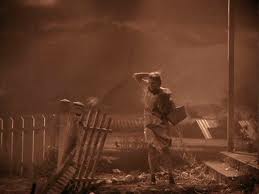
This thought stream must project a pretty terrifying reality, because here we find ourselves, driven out of the bardo, right back into the cycle of birth and death again. We’ve all had a brief chance to escape, right at the moment of death, but we missed it, and our karma swept us back into the cycle of birth and death, like the tornado that swept Dorothy and Toto into Oz.

All that we experience is a mental representation in the mind. Our consciousness—our thoughts about who we are, what the world is—is always essentially alone. In the bardo, after death, all that will accompany us is our deeds, words, and actions: our karma.

We are alone in our wanderings through lifetime after lifetime, and we will wander alone after death. But, if we practice in our lifetime, we will have one unfailing support, even after death: the Dharma.

***

Apply to a past situation (how would it have been different?)

We spend entire lifetimes in samsara being swept along by karma. Not recognizing this, we plant the same seeds of unhappiness over and over, and then when the bitter fruit ripens and hangs low, we say, “Why me? What have I done to deserve this?” Well, if it’s happening, it’s not so much that you deserve it, as much as your past actions have made it inevitable, unavoidable.

If I had had a better understanding of karma about four years ago, when I had an excellent opportunity to leave my current job, I would have left and not looked back. There was a situation at work that I chose to handle by digging in my heels and hanging on grimly to my workplace, choosing to move to a different position in the company.

Looking back at that time, I can notice how the very minute shift I made to a different position had done nothing but plant seeds for future suffering. I had not addressed anything but the external situation.

I can look back and see that, not only was it a bad change, my suffering increased and has continued to increase until I am in a kind of Dante-like Inferno, being devoured alive tormentby fire-breathing demons.

If I look at the text, and bring it to the level of everyday life, what I see is that I used to regard leaving my job as a kind of death, as though I would be cast out to wander along in desolation beyond imagining. I let fear (my own karma) sweep me along into an unfortunate rebirth ( a new position in the same workplace) and now…the suffering has amplified tenfold.

I look back, and I see that I could have simply let go of clinging to my workplace as though I were a drowning man clinging to the Titanic’s wreckage.

If I had done that, my karma would have swept me along to a new birth. I don’t know what that would have been, but I believe it would have been less suffering than the suffering I have brought on by clinging grimly to a situation that is outworn.

***

Apply to an (ongoing) present situation (how does it matter today?)

Looking for a job is my ongoing situation, even when I’m not actively doing it.

I notice that my perspective on where I am now is subtly changing each day because I know I’m leaving. I view my current workplace more and more as a place to extricate myself from rather than as a place to vest myself in.

I am very mindful of how I work with afflicted emotions that arise like anger, frustration, resentment. I work very hard with these afflicted emotions because I know when I leave my current job, all I’ll take with me are my habits. Viewing my work situation as a road of exit is paradoxically leading to a more satisfying experience of being there. Why? Because everything that comes up, I see as an opportunity to practice, to become stronger in the habits I want to take with me when I go.

long path2In samsara we are all walking a road of exit. No one gets out alive. Before we took a body, we wandered alone. We were driven by our fears, our desires, our clinging—in short, our karma, to return to samsara.

Knowing this, wouldn’t it better to live our life as what it really it is? Prayers remind us, “…I walk toward my end / A culprit to the scaffold.” Yes. Exactly. And knowing this, isn’t it best to live our life as a road of exit? I think this shift in perspective could lead to a very fulfilling life because every circumstance that came up would be a chance to practice and strengthen the habits we want to take with us when we exit.

Ultimately, of course, we don’t want to take any habits (karmic formations) into death. But I think living your life as a path of exit is a good place to start moving toward zero karma.

***

Apply to a potential situation (bringing it home to play)

This one’s easy.

I’m going to die. Maybe today, maybe tomorrow…maybe next year, maybe in ten years.

I don’t think it matters that we don’t know our precise moment of expiration. That would be barbaric actually, like what they do to Death Row prisoners.

I believe that for my spiritual path to take on more depth there needs to be a move from the intellectual knowledge of death to the wisdom of realizing my own approaching death.

This wisdom can be wonderfully liberating, because then my feet would be on a road of exit. In the small-scale exit from my workplace, I’ve found the wisdom of exit gives me so much clarity and a growing equanimity in that situation. I would like that same clarity and equanimity in samsara.

I study, contemplate, meditate, but not seriously. Certainly not as much as I could.

So today, to make this more immediate, I’m going to experiment. Throughout the day, I’ll gently, compassionately remind myself that each step I take, each act I do, each thought—I am walking toward my end. And seen from that perspective, how is what I’m doing strengthening a good habit? How am I preparing for the moment when I will find myself untethered from this body and wandering alone in the bardo?

Sounds kinda creepy.

But I’m very curious about the outcome of today’s experiment in living life as a path of exit. My prediction is that it will lead to living life more fully…but…we’ll see.

As I study the Dharma, I tend to think of rebirth as something big and grand and so sowing seeds3incredibly amazing that it can only, exclusively happen after death. But, as I study more, I see that rebirth is something that happens every moment. Every breath we take is brand new. Every thought is brand new. We are constantly, unceasingly being reborn into a new life. Therefore at any moment, we have a chance to shift our karma by planting seeds (causes) of happiness and allowing seeds (causes) of suffering to wither.

If we do this diligently, with fervor, I wonder if that means that eventually the wind of our karma would blow us beyond the cycle of birth and death? Or, would there eventually be no wind at all, and we could go where we wanted?

On the land of man-eating demons…

Currently I’m studying Heart Treasure of the Enlightened Ones with a Dharma friend, the Venerable Tashi Nyima.

This is my contemplation on the second two lines of verse 6 of the root text of Heart Treasure of the Enlightened Ones.

heart treasure

“Alas! How depressing to see the beings of this degenerate age!

Alas! Can anyone trust what anyone says?

It’s like living in a land of vicious man-eating demons–

Think about it, and do yourself a big favor.”


Explain to someone else (making it my own)

Okay. So, seriously, I haven’t seen any man-eating demons lately. Or have I? Things in our world seem very normal to us because we don’t really spend any time thinking about how things are. We’re kind of like fish in an ocean who stop seeing the water because…well…doesn’t everyone breathe water? Isn’t that just how things are?

Not exactly.

mirror mirrorWe have entire industries whose sole purpose is to create a world that doesn’t exist. How do they do that? It’s kind of easy. They hide bad, ugly, things–the things no one wants to think about. We could call all of these industries by one name, according to their purpose. They are the Institutes of Don’t Blow My Trip.

And what’s our trip in America? Perfection and beauty at whatever the cost.

Prisons hide the people whose unskillful acts were so egregious they got snagged by the so-called justice system.

We have nursing homes because well…getting old is scary. It’s unavoidable. Unless you die. And let’s not even go there. Instead, let’s put those suffering from old age far away. Let’s put hide them in “communities” like those Century Village ghettoes.

Funeral homes. Now this is big business. Let’s hide the dead. After all, who wants to even think about dying when there’s life to be lived, and retirement plans to be saved for?

The Institutes of Don’t Blow My Trip are everywhere, like frosting on rotten cake. We don’t have man-eating demons walking around demanding our flesh, but look where we find ourselves.

Our true nature is perfection. Yet we find ourselves locked into the cycle of birth and death, suffering the pangs of age and disease lifetime after lifetime. Talk about the wrong side of town. We’re surrounded by man-eating demons who lure us through lifetime after lifetime, promising that if we just chase after one more chimera, this time we’ll find lasting, permanent happiness.

No.

We won’t.

It’s time to do ourselves a favor and think about that.

***

Apply to a past situation (how would it have been different?)

The last book I finished writing was my biggest insight into how easy it is to fool ourselves into believing  that lasting, permanent happiness can be found in samsara. I wrote that book fully with the intent of it being the book that would start my writing career. I focused all my energies on writing it.

What I can notice looking back at those two years of my life is that not only was I surrounded by man-eating demons, I was feeding them with my expectations. The demons were getting fatter and fatter as I finished the book. By the time it was finished, they were King Kong size. When they turned on me, I was already caught in their gnashing teeth of disappointment and disillusion before I recognized them for what they were: chimeras in samsara.pot of gold

When I see myself in that time of my life, I can notice how absolutely  blinded I was by the idea of escaping the corporate world and finding (at last) permanent happiness in moving from e-books to print books. I can notice that I was feeding an illusion, that I was setting a HUGE appointment with disappointment. Having noticed that, I could have taken a step back from the book project and asked myself a few questions.

Who are the writers on the New York Times Bestseller list? Well, basically, they’re people with extraordinary karma that happens to manifest in being a bestselling writer because the causes and conditions are right in this lifetime. It has little to do with writing talent, and much to do with “luck”.

Would I really want to spend the next 10, 20, 30 years of my life writing about vampires? And it would have to be vampires. The reading public typecasts writers and they’re extremely unforgiving of changes in story genre. Unforgiving as in, your books won’t sell, and your publisher will not renew your contract.

What would I accomplish by changing my outer situation? After all, where I go, I take my man-eating demons with me, right? Was the corporate world the problem?

Had I taken a step back at any time in the process of writing a book that I no longer care about, I could have ended my suffering much sooner.

***

Apply to an (ongoing) present situation (how does it matter today?)

The ongoing situation in my life right now is working with Salem [a co-worker] day in and day out. In working with the ‘Salem’ state of mind this week, I was able to see it as an unending process, rather than as a problem to be solved and somehow set aside, out of my way. Can’t she see I’m on a spiritual path here and I have bigger fish to fry? Bigger dragons to slay?

The text talks about a land of vicious man-eating demons, which is what my mind can feel like when Salem triggers me. But in that context, I’m learning that the man-eating demons can’t really pounce on me and devour me. They have no power unless I empower them with my discursive thoughts and lie down and feed myself to them. And that hurts. A lot.

This week, I found a better way. It was so obvious, I don’t  know why I didn’t see it before. All I did was stop trying to outrun the demons. I’d say to myself…what is the state of my mind right now? Anger. (or aggression or resentment or …whatever) And…that’s okay. Then I’d do mantra, breathe, teach myself the Dharma on the spot. All this time, I’ve been viewing the arising of afflicted emotions as a failure on my part—I’m not doing this whole Dharma thing right or else I wouldn’t be thinking homicidal thoughts right now. Okay. Homicidal is an exaggeration, but thoughts of consignment to Dante-like Hell for Salem is a pretty close description of my state of mind.

tiger and childWhat I discovered this week is that the man-eating demons lose their power when we acknowledge them, in other words, when we see them. But seeing them is a process, not a one-time thing. I also noticed that the man-eating demons were blinding me. There were long moments this week when I felt great compassion for Salem, and how she is utterly driven by her afflicted emotions, particularly fear. Those moments are getting more frequent and they last longer.

From my experience this week, I’m starting to see that the power of acknowledgement is true in samsara in general. How different would our lives be if we just said—You know what? I’m going to get old if I live long enough. And no matter how long I live, I’m going to die. No matter hard I look, I’m not going to find lasting happiness in a better job, a nicer car, a nicer house, a less-wrinkled face. So why don’t I just turn my energies elsewhere?

I think seeing the suffering of living in samsara for what it is—continuous and without end—and accepting that, liberates us from fighting the truth of things and lets us go looking for the truth of things.

***

Apply to a potential situation (bringing it home to play)

So, this week I feel like I’ve made a big discovery, or maybe it’s more like I experienced an idea I knew intellectually. We are all living in a land of vicious man-eating demons. Seeing these demons for what they are is a process, it’s the beginning of our path, maybe even the root of our first yearnings for renunciation.

Having noticed this, when I go to work tomorrow, I will view the afflicted emotions that Salem triggers differently. For one thing, I know I’m leaving my job. That is definitely a road of exit for me. So really, the only purpose Salem can serve at this stage in my life and in my spiritual growth is to blow my trip, over and over and over again. Every time I start thinking—wow, this Dharma stuff is easy. Say a few prayers, do a little meditation, a little contemplation, a little study and, voila! Life On Buddha—Salem will be there to remind me that I ain’t all that, and it ain’t that easy.

When I work with that situation this week, I’ll work with letting go of ‘if I were getting this Dharma stuff right, I wouldn’t want to throttle her’. That just feeds the man-eating demons of disappointment. Instead I’ll work with seeing that anger, aggression, frustration arise. They just do. That’s where I am in working with my karmic formations right now. Okay. All right then. It’s happened. I catch myself feeding anger with discursive thought. Now what? Acknowledge, mantra, breath, teach myself the Dharma. Repeat as needed.

I don’t know if this will work. I never do.  But nevertheless, it is a great comfort just knowing there is a method I can apply. It’s so much better than feeling enslaved or imprisoned or defeated by my afflicted emotions.  And the truth is, that for the rest of the time I have left in this body, there will be a Salem. In this land of vicious man-eating demons where ninety-nine percent of the people you meet are completely enslaved by their afflicted emotions, ‘Salem’ is inevitable.

And the wonderful thing about the text is that it gives us a remedy for where we find ourselves, caught between birth and death, drawing farther from one with each breath, and hoping like hell to outrun the other. The remedy? Do ourselves a big favor, and think about it.thinking

On being in this degenerate age…

Currently I’m studying Heart Treasure of the Enlightened Ones with a Dharma friend, the Venerable Tashi Nyima.

This is my contemplation on the first two lines of verse 6 of the root text of Heart Treasure of the Enlightened Ones.

heart treasure

Alas! How depressing to see the beings of this degenerate age!
Alas! Can anyone trust what anyone says?
It’s like living in a land of vicious man-eating demons–
Think about it, and do yourself a big favor.”


Explain to someone else (making it my own)

You know how you’re just walking along in Walmart or Target or wherever, then all of a sudden you overhear a couple having a vicious fight? I mean awful, terrible things spew from their mouths in seconds. Then they retreat into a sulky silence which feels like two wounded tigers retiring to lick their wounds and consider a better strategy for an even deeper, more clawing strike next time.

I like to think about light, and romance and peace, and  love. Heck. I write romance. And in a way, witnessing these anonymous mini-nuke strikes just bursts my bubble. I used to look for the inevitable gold bands on the obligatory finger and think, “wow…a long time ago, she dressed in white, he got in a tux, they spent gads of money, and stood in a front of a whole bunch of people and promised to love one another until death parted them. Huh. Better to let common sense part them now.”

Now when I witness things like that, I think to myself, “May we all be free of suffering and the causes of suffering.”

optical illusionOne of the basic truths, maybe the only truth of samsara is that absolutely nothing is as it appears to be. It’s not even that it’s dream-like. It’s more like we’re caught in an ongoing cycle that consists of short-lived happiness, followed by terrible suffering, followed by short-lived happiness. There is never no suffering. Not ever. Yet we live as though there were, and it was a goal to be striven for.

There is an entire industry on Madison Avenue who lure people into the false hope of buying just the right dress, getting just the right body, the right partner, the right—whatever. Then, the promise goes, you’ll be happy.

But these merchants are just as caught up in the delusion as everyone else. Absolutely nothing they say can be trusted.

There is only one truth to be found in samsara, in the phenomenal world, and that is the truth of suffering. Whatever you attach yourself to, whatever you hold onto in the phenomenal world will lead to suffering. The stronger the attachment, the tighter your hold, the more suffering you’re setting yourself up for.

So, sadly, the truth is, trust no one who promises a path to happiness in samsara. See beings for what they are: deluded, afraid, desperately defending their tiny patch of samsaric happiness, and willing to inflict whatever vicious strike is necessary to hold on grimly.

Is that what we want for our lives? Do we want to spend lifetime after lifetime snapping and snarling at anyone who threatens our grip on “happiness”?

***

Apply to a past situation (how would it have been different?)

I went through a time in my life, many decades, when I thought writing fiction would lead me to ultimate happiness. And I’m not kidding around here. I’m rose colored glassestalking Nirvana, unending perpetual. Forget about peace beyond understanding, this would be happiness beyond apprehension. I was one hundred percent convinced of this. My rose-colored glasses were locked on so tight, they were melded to my eye sockets.

To this end, my life became a perpetual battle of sweeping ‘obstacles’ out of my way. What? Participate in life? Out of my way! Make way! Can’t you see I’m on my way to Nirvana here?? I was hardcore.

Then suddenly, everything in my life was ‘right’. I had the perfect job situation, the perfect zero-personal relationship situation, the perfect story to write, and the perfect plan for doing it. And, oh yeah, I was dabbling in learning this new thing: the Dharma.

Then a strange thing started happening. For the first time in decades, I started suspecting that…hmmm…there could be another way to perpetual happiness. This whole Dharma stuff…there could be something there. It had quite the ring to it.

But I steamed ahead, finished the book, and it was rejected around thirty times before I sold it.

Hmmmm….something wrong there. Book sold. No Nirvana. No happiness beyond apprehension. Agents had lied to me like back alley dogs.

But…and here was something odd…the Dharma was still there, and I could suddenly see what I’d been doing for decades of my life. Upon seeing that, truly seeing it for the first time, the suffering was epic.

As I continue to go through the quieting storm of letting go my delusions about writing fiction, I can notice that having any attachment to any idea of happiness in samsara will inevitably lead to dire consequences. It will never, ever lead to happiness.

Had I taken just a half-step back, I could have noticed how incredibly unhappy writing fiction made me because I wanted so badly to write the New York Times bestseller that would blow the charts.

Having noticed my own suffering, I might have asked myself how such unhappiness could possibly lead to happiness?

Seeing the path I was on, I could have simply shifted my perspective about fiction writing, changed my state of mind from one of…this will bring me lasting happiness… to …this is a pleasant second job, a fun way to make extra money to pay off debt, and to boot, an excellent vehicle for sharing the Dharma.

Had I seen the true state of my mind earlier, I would have gradually disentangled myself sooner. I would have seen the basic truth of samsara: the more attachment, the more suffering.

***

Apply to an (ongoing) present situation (how does it matter today?)

The biggest situation in my life right now is looking for a new job. As I look, it is so easy to fall into the thinking that a new job will bring me happiness. About a thousand times a day I think, “When I leave here then, I won’t have to put up with [fill in the blank].”

Fortunately for me, I can catch those thoughts about 80 percent of the time and realize that, unless I die at my current job and manifest from a golden lotus in the Pure Land of Bliss, wherever I go, there will be some crap to put up with. There just will be. It’s the nature of phenomenal existence.

Remembering this brings a lot of humor and lightness into my day and it turns my mind to the Dharma. Dilgo Khyentse could have been standing beside my desk writing when he said “Alas! How depressing to see the beings of this degenerate age! Alas! Can anyone trust what anyone says?”

rainbowAs ordinary people, we tend to believe quite fervently that if we could just change our outer situation, then that elusive perpetual happiness we’ve been seeking all our lives will suddenly, magically be there. We listen to our thoughts about happiness, about how we can go about finding it. But alas, we can’t trust thoughts that arise in a deluded mind.

As I go through this time of transition out of my workplace, I keep my eyes open to what habits I’m forming, because that’s what I’ll be taking with me when I leave my job, and when I leave this lifetime. I work with aggression, hope, fear and a myriad of others when they come up by breathing, doing mantra, and turning my mind to the Dharma. This works. In fact, a funny thing happens. The outer situation seems to dissolve into a totally neutral environment and I become one hundred percent aware that only my deluded thoughts are giving it a positive or negative charge. In those very fleeting moments I am filled with compassion for myself and for all of us who suffer so needlessly in samsara because we believe so much in our thoughts.

When I turn my mind to the Dharma at work, the suffering dissolves completely. And I even wonder why I should bother to leave…and go to a different shade, a different flavor of suffering.

I think when Dilgo Khyentse wrote these lines, he wrote them from a place of compassion—Alas, this is where you find yourself my friend. Let it go, renounce it and return to your true self.

***

Apply to a potential situation (bringing it home to play)

When I go to work today, Salem will be there with her usual Shakespearean drama, doing her personal best to top Lady Macbeth. I have to say, she would have done the bard proud.

In a most uncompassionate way, when I look at her, I see the horrible suffering that she inflicts on herself and others with her struggles to find happiness in samsara. I see how she has identified herself completely with her very strong ego as The Martyr Who Tries and Tries but is failed by all. And of course, since she tries and tries (her very hardest, she’ll be happy to tell anyone who has the patience to listen), then nothing is ever her fault. She is a perpetual victim, and she tries her very hardest to draw everyone around her into her drama of martyrdom.

This is brutal.

Without the Dharma and without my practice, I would have been sucked in long ago and I would be playing Antigone to her Lady Macbeth. Salem has been a big lesson in letting go. No matter what she does wrong, what mistakes I see, I do mantra and I breathe because I’m coming to clearly see that the ‘mistakes’ are simply the steps she uses to mount her stage and play out her drama.

Today, as I enter the theater of the workplace, I will keep Dilgo Khyentse’s words in the back of my mind, or maybe in a corner of my heart. I will remember, “Alas! How depressing to see the beings of this degenerate age!” I will remember that Salem is no different than me, no less a Buddha than Shakyamuni Buddha.

That I can remember these things, I have no doubt. But I don’t know that I can work with this particular being with compassion.

There’s this bread recipe that I want to make. I have all the ingredients. I have the recipe. I’ve read it over several times, almost prayerfully at this point. But I’m afraid to mix it up and try it. The flour is a special flour and it’s very expensive. I don’t want to try the recipe until I’m absolutely positive it will come out. Of course, like that, I’ll never make No Knead Oat Bread.

These lines are helping me to see the same thing is true with the situation with Salem. I fully understand intellectually that “Salem” is a mental representation, a part of myself that I blame greatly for much pain in my past.

So here I am. I’ve got Dilgo Khyentse’s great recipe in these two lines for seeing Salem compassionately, but in a way, I’m afraid to do it because…what? I’m afraid of what seeing that aspect of myself compassionately would cost me?mirror

Yeah. I think so.

So today, I’ll keep these lines in my heart, and … like baking bread…I’ll see what rises.

On warped thoughts and twisted speech…

Currently I’m studying Heart Treasure of the Enlightened Ones with a Dharma friend, the Venerable Tashi Nyima.

This is my contemplation on the final two lines of verse 5 of the root text of Heart Treasure of the Enlightened Ones.

heart treasure

“Alas for people in this age of residues!

The mind’s wholesome core of truth has withered, and people live deceitfully,

So their thoughts are warped, their speech is twisted.

They cunningly mislead others—who can trust them?”


Explain to someone else (making it my own)

When we’re sleeping and we dream, then we wake up, some dreams make us shake our head and go, “Wow! What the heck was I thinking about to dream that?” When it comes to dreams at night, we never even pause to question whether or not our night worlds are dramas played out by our thoughts. There’s even a New Age cottage industry devoted to having “good thoughts” before sleep so that our dream worlds will be pleasant.

But oddly enough, when it comes to the dramas of our day world, the so-called ‘waking world’, we accept ‘reality’ as though it were out there, somewhere independent and apart from our minds.

But wait.

dreaming mindIf our mind dreams at night, what’s it doing in the daytime when we’re ‘awake’?

The prayer of Absolute Enlightenment of the Mind reminds us that we have only one mind. Therefore, when we think of our mind’s fabulous capacity to conjure the worlds of our night time dreams, we must keep in mind that, “This same mind views the world by day…”

Wow.

So, does that mean that if we “live deceitfully”, it has an influence on our thoughts? I think it’s rather the opposite. Living deceitfully begins in the mind.

In the same way that our thoughts create and build spectacular dream worlds, our thoughts create, support, and inform our so-called ‘waking world’.

Our thoughts have become warped, our speech twisted so that we now cast onto the screen of the world an ongoing horror show of war, hunger, disregard for the lives of sentient beings, an unending relentless chase after wealth in which we brutally overrun any hint of compassion for ourselves or others.

Are our thoughts truly warped? Is our speech truly twisted? The proof is all around us in the very fabric of our waking world. We live on a planet that we have turned poisonous. We go about our lives as if all that we see will last forever. We confine spirituality to giant glass and steel edifices to be visited once weekly for a few hours.

Ask yourself, if you dreamed this world, and then woke from the dream, wouldn’t you say that you had dreamed of a place where all was madness?

***

Apply to a past situation (how would it have been different?)

Much of the time when we talk, it’s to get our way. Even if we ask a question, we have an answer in mind.

There was a situation in my past where reality wasn’t what I thought it should be. I thought if I got enough help and wrote enough letters to enough managers, I could change that.

thorTalk about warped thoughts and twisted speech. I all but tried to bludgeon reality into the shape I wanted it to be. In the end, it turned out that the manager not only had a bigger bludgeon (the Super Deluxe version), she utterly misled me and completely betrayed the trust I thought she deserved.

That situation did not change until I put down the bludgeon, and turned to my thoughts. In fact, some of the players in that particular drama are still present, but my thoughts about them have changed. In point of fact, that situation, terribly painful at the time, was the catalyst for me “accidentally” finding Pema Chodron’s “Getting Unstuck” Dharma talk on Audible, and coming to the Dharma.

Looking back at that situation, I could have noticed that my afflicted emotions were warping my thoughts, twisting my speech. I could have noticed that I was a zealot, cunningly misleading myself to believe that I was RIGHT, and in the name of that, using warped thoughts and twisted speech to inflict damage on others. Of course, I was the one most damaged as those thoughts tormented me with aggression day in and day out.

Having noticed that the situation was arising from my warped thoughts, elaborations of my afflicted emotions, I could have redirected my energy to working with my thoughts sooner, recognized them as ephemeral, impermanent, and most of all, a distorting lens on what was actually happening. Had I noticed that sooner than I did, I would have disentangled myself from the situation much, much sooner, and ended my (useless) suffering much sooner.

***

Apply to an (ongoing) present situation (how does it matter today?)

The biggest situation in my life as I write this is looking for a new job. I haven’t done that in over ten years. What I’m noticing is that each day is a mini-battle on a battleground especially constructed by mind. It’s very much like those civil war re-enactments where everyone gets in the right costumes, gets the right antique guns, and fights the very same battle that was fought over two centuries ago.

My warped thoughts, elaborations of afflicted emotions, array themselves on the Battleground of Vacillation and, armed with weapons of naked aggression, fear, resentment, frustration, they go to daily war.

Contemplating these lines, it helps me to see that our minds are extraordinarily powerful in twisting our thoughts by elaborating on afflicted emotions. Thealiens more afflicted the emotion, the more warped the thought can become, as though the mind were a nuclear furnace that could mutate a straightforward thought exponentially until it seemed as terrifying as an acid-blooded alien who wants to devour you from the inside out.

From this, I have noticed that the greatest power we give thoughts is our belief, our faith. In the past few weeks, I have been able to use the Dharam Brigade [a stack of index cards on my desk with prayer verses written on them] and mantra and breathing to detoxify my thoughts. I have been able to see through their cunning attempts to mislead me to rash decisions.

It has been a blessing to witness this furiously raging battle up close and see how the only action necessary (maybe the only effective action) is to work with our warped thoughts, just as they are. From doing that work, I come back to the lines of the text and see that it is just so with our world.

Our age of residue in which we live deceitfully and cunningly mislead ourselves and others has arisen, like a nightmare, from our warped thoughts. And this in turn gives rise to our twisted speech. It is only when we see this unflinchingly that we can begin to work with the world by working with our own minds.

***

Apply to a potential situation (bringing it home to play)

Tomorrow I expect a phone call about a job offer. If not tomorrow, then this week. Whatever happens, I know that warped thoughts will arise: ‘say yes, just say yes! Anything to be out of my workplace. Drive 40 minutes each way instead of ten minutes. Spend two or three times more on gas. Yes. Say yes. Anything to get away from Salem…And anyway, don’t they just deserve that?

Having worked with this text today, I have the capacity to clearly recognize that my own warped thoughts are creating a false view of the situation at work. To be sure, it is an uncomfortable, untenable situation. But to be misled by my warped thoughts arising from my afflicted emotions of aggression and resentment can have only one outcome: any action I take based on those thoughts will lead to more suffering than what I’m enduring now.

diamondHaving noticed that, and having understood that my warped thoughts want to give rise to twisted speech, not to mention misleading actions, when that phone call comes, I can breathe, I can do mantra, I can in this way call forth my Buddha Nature. I have one hundred percent certainty that my Buddha Nature is perfectly established, is perfectly wise, is perfectly abiding.

In working with these lines I see that our wrong view of separation gives birth in some way to our warped thoughts, our twisted speech, our deceitful living. But at the same time, paradoxically, it is clear that our Buddha Nature remains pristine, untouched.

I’m not sure how that seeming paradox plays out in our lives. But the text does help me see that unless we can see the stains, we cannot recognize our natural perfection when it shines through. Is that because we are manifest in a world that hinges on duality, and we can only indirectly know perfection by knowing its opposite?

On living deceitfully…

Currently I’m studying Heart Treasure of the Enlightened Ones with a Dharma friend, the Venerable Tashi Nyima.

This is my contemplation on the second line of verse 5 of the root text of Heart Treasure of the Enlightened Ones.

heart treasure

“Alas for people in this age of residues!

The mind’s wholesome core of truth has withered, and people live deceitfully,

So their thoughts are warped, their speech is twisted.

They cunningly mislead others—who can trust them?”


Explain to someone else (making it my own)

If we look around our world today, we see deceit in many and wondrously endless flavors. Want to look young forever? No problem. Plastic surgeons will take your money and tighten your face like a living rubber mask.

Want to have the perfect job? No problem. Pour every last ounce of your energy into the corporate plantation fields and you will get the ‘perfect job’. But by then you will have committed so many atrocities against yourself and others that you will blacken every mirror in your mansion to avoid the sight of what you’ve become.

Want to live the good life for cheap? No problem. Buy consumer goods made in China, where slavery has a new politically correct name, “offshore labor”.

Want to relax after a long day? No problem. Turn on the television, which will inundate you with an endless stream of propaganda, most of it based on you living forever while staying young and beautiful and achieving a state of bliss that includes wealth, good sex, and vacations in Paradise. Operators are Standing By.

We live in an age where the word ‘all’ has come to mean ‘me, and the people I like.’ I’m not quite sure pets are included. The animals we slaughter for food certainly aren’t included. In this age, compassion is dying a slow withering death. The wrong view of separation is so pervasive that we sponsor wholesale slaughter of beings on the other side of the planet under the name of a Just War.

We convince ourselves that if we just take the right vitamins, visit the right spas, get the right guru, chant the right prayers about light and peace, we will not die. And more important than that, I think, we somehow delude ourselves into believing that karma has nothing to do with our thoughts, deeds, or words.

icebergEssentially, we live in a state of extraordinary delusion. This constant denial of the Dharma (what is) is a full-time, high-energy pursuit, a race to outrun the truth of how things really are: birth, aging, disease, death. And this race leaves us exhausted, frantic, confused, afraid. It creates this terrible longing for something we can’t name. To cover up the pain of this confusion, this fear, this anxiety, this unbearable longing (which is nothing more than our Buddha Nature trying to come out), we live deceitfully. We live on the deck of the Titanic, rearrange the furniture, turn up our iPods and tell ourselves that the iceberg looming on the horizon is really no big deal.

***

Apply to a past situation (how would it have been different?)

Until I began studying the Dharma, every part of my life was lived deceitfully. Compassion was nearly wholly absent from my life, not for myself, and certainly not for others. I was convinced that ‘other people’ had absolutely nothing to do with me. In fact, I went out of my way to sustain that delusion.

If I had to think of one situation where I was spectacularly deceitful with myself, it would have to be romance. There was a particular relationship where no matter what happened, mind was the ultimate Spin Doctor. There was no fault I could not delude myself into seeing as a virtue.

Applying this line, I might have noticed how hard I was working to sustain the delusion. I might have noticed how feeding the delusion demanded abehind the mask moment to moment denial of compassion for myself. And that meant I could have no compassion for others. And that meant my world was very, very small and very lonely. I could have noticed how sustaining the delusions demanded to stay in that relationship put in place causes for resentment, fear, aversion, confusion, and indifference.

Having noticed this, I could have taken a step back. A half-step is all it would have taken from me to sense the sheer weight, the oppressively heavy drudgery of carrying the delusion of ‘romance’ from one breath to the next.

Having seen this, I could have worked with the truth of what stared me in the face every day. I could have seen that sustaining a delusion is as hard and back-breaking as tending furnaces in the depths of Hell. But seeing truth, stripped of delusion, if only for a moment, is as easy as seeing a daisy’s yellow petals on a sunny day. It simply is. Truth is not something to be looked for or sought out. My experience is teaching me that truth is something that becomes self-evident when we let go of delusion.

***

Apply to an (ongoing) present situation (how does it matter today?)

Each day as I get up and go to work, it is so very tempting to delude myself with thoughts like “It’s not so bad.” Such a lie. It is very bad. “I can deal with it.” So not true. It’s making me certifiably insane. And perhaps the biggest lie, “If I meditate enough, practice enough, pray enough, I’ll be able to deal with Salem.” This is a lie on par with the government claiming to have no links to the mafia. It’s a HUGE lie, a brazen deceit. It’s not that the Dharma isn’t effective; it’s simply that, as a practitioner, I’m not there yet.

In applying this line to the situation of going to work five days a week, I can know that my thoughts of aggression, and resentment, and frustration all arise from a deluded mind. My deluded mind would have me believe that these afflicted emotions, the nearly unbearable anxiety of going to work come from or are caused by ‘people’ outside of myself.

Reading this line, I know in fact that what is happening at work arises from my wrong views and afflicted emotions. I can notice that for more than a decade I have wholeheartedly participated in the deceitful dance of wrong view and afflicted emotions. I can notice that I have deceived myself into believing that I could remain in that situation forever, that I was somehow impervious to change. And now, I’m so angry that I’m subject to change, like every other element of this realm.

But now I have noticed how my mind’s wholesome core of truth has withered and how I have lived deceitfully. Each day that I wake up from the delusion of the last decade seems more painful than the last. But, with the support of the Dharma, I see that I am merely smelling the smoke of the burning house that I have lived in for over ten years. I am noticing that the burning house is blazing. This has been a blessing. It has spurred me to intelligent action.

alarm clockPerhaps that is the intent of these lines that seem so harsh and cruel at first glance—wake up! Wake up, my friends! The house is blazing! Get out of the delusion. Free yourself.

***

Apply to a potential situation (bringing it home to play)

Tomorrow morning when I wake up, I will have a different perspective on the situation at work. All along, as I’ve looked for a job, I’ve thought that the act of looking would make being at work more tolerable. It doesn’t. That was another part of me deceiving myself.

When I go to work tomorrow, I will know that I am entering a burning house. I will know that I will experience afflicted emotions all day long. And I will know something else that isn’t said in this line, but is implicit.

That burning house where flames lick at me hourly, and where I am constantly vigilant lest my afflicted emotions goad me to action, this blazing torment…is the path. I may have wrong view and afflicted emotions, and they may be the ultimate source of my torment there, but that’s not the whole story.

Even inside that burning house (maybe especially inside it), my innate perfection, my Buddha Nature is there. And this is a very good thing because Buddha-me knows the best path out of that particular burning house.

So, will I experience tomorrow the withering of my mind’s wholesome core of truth? Undoubtedly. All it will take is one word from Salem or anyone that strikes me the wrong way.

Will I live deceitfully? Oh yes. Even in the midst of that infernal torment, there will arise fleeting moments of peace, and I’ll think, “It’s not so bad. I don’t really have to leave.”

But now I know. I’ll know the house is blazing and I have got to get out. My Buddha Nature knows that and makes it known to me in no uncertain terms. And this seeing, this knowing of the truth of things will pop the bubble of delusion each time it arises, like a sharp needle to a balloon.

Post Script:path in water

This was written in early January.

Since then, I’ve come to a place where I can bring the situation in my work place to the path.

It took me almost eight months, but it was worth it for the measure of peace that I have now around that situation.